Request Demo
What are SIRT1 modulators and how do they work?
21 June 2024
SIRT1 modulators have garnered significant interest in recent years due to their potential in promoting health and longevity. SIRT1, or sirtuin 1, is a protein that plays a crucial role in cellular regulation, impacting processes such as aging, metabolism, and stress resistance. By influencing SIRT1 activity, modulators can potentially offer therapeutic benefits for a range of conditions. This post will delve into what SIRT1 modulators are, how they work, and what they are used for.
SIRT1 modulators are compounds that influence the activity of the SIRT1 protein. SIRT1 belongs to the family of sirtuins, which are NAD+-dependent deacetylases. These proteins are involved in various cellular functions, including DNA repair, gene expression, and metabolic regulation. SIRT1, in particular, has been extensively studied for its role in promoting longevity and protecting against age-related diseases.
One of the most well-known SIRT1 modulators is resveratrol, a polyphenol found in red wine, grapes, and some berries. Other modulators include synthetic compounds like SRT1720 and natural products such as quercetin and pterostilbene. These compounds can either activate or inhibit SIRT1 activity, providing a means to regulate its functions according to therapeutic needs.
SIRT1 modulators exert their effects by altering the activity of the SIRT1 protein. SIRT1 is involved in the deacetylation of various substrates, including histones, transcription factors, and other proteins. Deacetylation generally leads to a more compact and less accessible chromatin structure, resulting in the repression of gene expression. This process is crucial for maintaining cellular homeostasis and responding to metabolic stress.
When a SIRT1 activator, such as resveratrol, is introduced, it increases the deacetylase activity of SIRT1. This enhances the protein’s ability to regulate multiple cellular processes. For example, SIRT1 activation can improve mitochondrial function, reduce oxidative stress, and enhance DNA repair mechanisms. In contrast, SIRT1 inhibitors can reduce the deacetylase activity, potentially offering therapeutic benefits in conditions where SIRT1 activity is detrimental.
The mechanism by which SIRT1 modulators exert their effects involves intricate interactions with the NAD+ molecule, which is essential for SIRT1’s enzymatic activity. By influencing the availability of NAD+ or directly interacting with SIRT1, these modulators can fine-tune the protein’s activity to achieve desired therapeutic outcomes.
SIRT1 modulators have a broad range of potential applications, owing to the diverse roles that SIRT1 plays in cellular physiology. One of the most exciting areas of research is their potential to promote longevity and delay the onset of age-related diseases. Studies have shown that SIRT1 activation can mimic the effects of caloric restriction, a well-known intervention that extends lifespan in various organisms.
In addition to their anti-aging potential, SIRT1 modulators are being investigated for their role in metabolic disorders. SIRT1 activation has been shown to improve insulin sensitivity, enhance mitochondrial function, and reduce inflammation, making it a promising target for the treatment of type 2 diabetes and obesity. Clinical trials are underway to explore the efficacy of SIRT1 activators in these conditions.
Neurodegenerative diseases such as Alzheimer’s and Parkinson’s disease are another area where SIRT1 modulators show promise. SIRT1 activation can protect neurons from oxidative stress and improve cognitive function, offering a potential therapeutic strategy for these debilitating conditions.
Cardiovascular health is yet another field where SIRT1 modulators could have a significant impact. SIRT1 activation has been shown to improve endothelial function, reduce atherosclerosis, and lower blood pressure. These effects suggest that SIRT1 modulators could be beneficial in preventing and treating cardiovascular diseases.
In summary, SIRT1 modulators represent a promising avenue for therapeutic intervention in a variety of conditions. By influencing the activity of the SIRT1 protein, these compounds can potentially promote health and longevity, offering hope for the treatment of age-related diseases, metabolic disorders, neurodegenerative conditions, and cardiovascular diseases. As research continues to uncover the full potential of SIRT1 modulators, we may see new and innovative therapies emerge that can significantly enhance human health and wellbeing.
SIRT1 modulators are compounds that influence the activity of the SIRT1 protein. SIRT1 belongs to the family of sirtuins, which are NAD+-dependent deacetylases. These proteins are involved in various cellular functions, including DNA repair, gene expression, and metabolic regulation. SIRT1, in particular, has been extensively studied for its role in promoting longevity and protecting against age-related diseases.
One of the most well-known SIRT1 modulators is resveratrol, a polyphenol found in red wine, grapes, and some berries. Other modulators include synthetic compounds like SRT1720 and natural products such as quercetin and pterostilbene. These compounds can either activate or inhibit SIRT1 activity, providing a means to regulate its functions according to therapeutic needs.
SIRT1 modulators exert their effects by altering the activity of the SIRT1 protein. SIRT1 is involved in the deacetylation of various substrates, including histones, transcription factors, and other proteins. Deacetylation generally leads to a more compact and less accessible chromatin structure, resulting in the repression of gene expression. This process is crucial for maintaining cellular homeostasis and responding to metabolic stress.
When a SIRT1 activator, such as resveratrol, is introduced, it increases the deacetylase activity of SIRT1. This enhances the protein’s ability to regulate multiple cellular processes. For example, SIRT1 activation can improve mitochondrial function, reduce oxidative stress, and enhance DNA repair mechanisms. In contrast, SIRT1 inhibitors can reduce the deacetylase activity, potentially offering therapeutic benefits in conditions where SIRT1 activity is detrimental.
The mechanism by which SIRT1 modulators exert their effects involves intricate interactions with the NAD+ molecule, which is essential for SIRT1’s enzymatic activity. By influencing the availability of NAD+ or directly interacting with SIRT1, these modulators can fine-tune the protein’s activity to achieve desired therapeutic outcomes.
SIRT1 modulators have a broad range of potential applications, owing to the diverse roles that SIRT1 plays in cellular physiology. One of the most exciting areas of research is their potential to promote longevity and delay the onset of age-related diseases. Studies have shown that SIRT1 activation can mimic the effects of caloric restriction, a well-known intervention that extends lifespan in various organisms.
In addition to their anti-aging potential, SIRT1 modulators are being investigated for their role in metabolic disorders. SIRT1 activation has been shown to improve insulin sensitivity, enhance mitochondrial function, and reduce inflammation, making it a promising target for the treatment of type 2 diabetes and obesity. Clinical trials are underway to explore the efficacy of SIRT1 activators in these conditions.
Neurodegenerative diseases such as Alzheimer’s and Parkinson’s disease are another area where SIRT1 modulators show promise. SIRT1 activation can protect neurons from oxidative stress and improve cognitive function, offering a potential therapeutic strategy for these debilitating conditions.
Cardiovascular health is yet another field where SIRT1 modulators could have a significant impact. SIRT1 activation has been shown to improve endothelial function, reduce atherosclerosis, and lower blood pressure. These effects suggest that SIRT1 modulators could be beneficial in preventing and treating cardiovascular diseases.
In summary, SIRT1 modulators represent a promising avenue for therapeutic intervention in a variety of conditions. By influencing the activity of the SIRT1 protein, these compounds can potentially promote health and longevity, offering hope for the treatment of age-related diseases, metabolic disorders, neurodegenerative conditions, and cardiovascular diseases. As research continues to uncover the full potential of SIRT1 modulators, we may see new and innovative therapies emerge that can significantly enhance human health and wellbeing.
How to obtain the latest development progress of all targets?
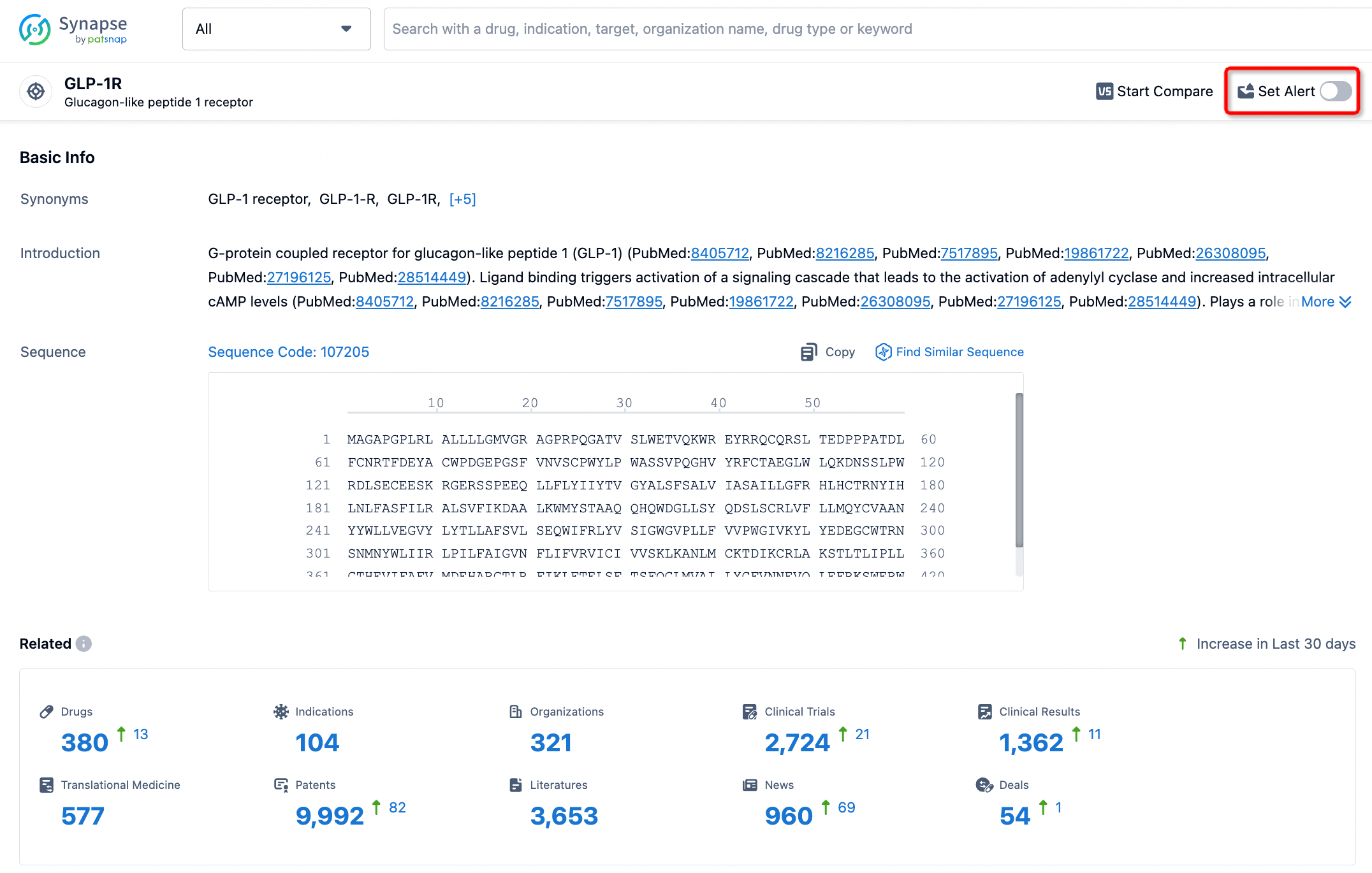
In the Synapse database, you can stay updated on the latest research and development advances of all targets. This service is accessible anytime and anywhere, with updates available daily or weekly. Use the "Set Alert" function to stay informed. Click on the image below to embark on a brand new journey of drug discovery!

Hiro LS Researcher
The AI Search Engine Built to Accelerate Biopharma Decisions
Search across billion-scale life sciences data to uncover signals, validate evidence, and act with confidence.
Ask any biopharma research question→
Get started for free today!
Accelerate Strategic R&D decision making with Synapse, Patsnap’s AI-powered Connected Innovation Intelligence Platform Built for Life Sciences Professionals.
Discover Synapse Data Servers
Synapse data is now integrated into the PatSnap LS Model Context Protocol (MCP) service. Customize your LLM agent now using our MCP server!