Request Demo
What are the side effects of Ancestim?
12 July 2024
Ancestim, also known as recombinant human stem cell factor, is a medication used primarily to mobilize hematopoietic stem cells in patients undergoing autologous peripheral blood progenitor cell transplantation. While it serves a crucial role in treatment protocols, especially for certain cancer patients, it is important to be aware of its potential side effects.
One of the most common side effects of Ancestim is allergic reactions. Patients may experience symptoms such as rash, itching, or swelling of the face, lips, or tongue. In severe cases, it can cause difficulty in breathing or anaphylaxis, a life-threatening allergic response that requires immediate medical attention.
Injection site reactions are also frequently reported by those who receive Ancestim. These reactions can include pain, redness, or swelling at the site where the medication is administered. Although these symptoms are generally mild and resolve on their own, they can be uncomfortable for patients.
Another notable side effect is flu-like symptoms. Patients may experience fever, chills, fatigue, and muscle aches, which can mimic the symptoms of the flu. These side effects are usually temporary and can be managed with supportive care, but they can still be distressing and impact the patient's quality of life.
Gastrointestinal issues such as nausea, vomiting, and diarrhea have also been observed in patients taking Ancestim. These symptoms can range from mild to severe and might require the use of additional medications to manage them effectively.
Bone pain is another reported side effect, likely due to the stimulation of bone marrow to produce more stem cells. This pain can vary in intensity and may require analgesics for relief. It is essential for patients to communicate with their healthcare providers to manage this discomfort adequately.
More severe, but less common, side effects include changes in blood pressure, either hypotension (low blood pressure) or hypertension (high blood pressure). Monitoring blood pressure regularly is crucial for patients undergoing treatment with Ancestim to detect and manage these changes promptly.
Edema, or swelling due to fluid retention, is another possible side effect. This can occur in various parts of the body, including the hands, feet, and face. While usually not life-threatening, edema can cause significant discomfort and may necessitate adjustments in the treatment regimen.
Some patients may also experience cardiac issues, such as palpitations or tachycardia (rapid heart rate). These symptoms should be reported immediately to a healthcare provider, as they may require further evaluation and intervention.
Lastly, there is a risk of developing severe cutaneous reactions, such as Stevens-Johnson syndrome or toxic epidermal necrolysis, though these are extremely rare. These conditions involve severe skin blistering and peeling and require urgent medical attention.
In conclusion, while Ancestim is an important medication for mobilizing hematopoietic stem cells, it comes with a range of potential side effects. Patients should be closely monitored by their healthcare providers to manage any adverse reactions that may arise. Open communication between patients and healthcare providers is essential to ensure that side effects are addressed promptly and effectively, allowing for the best possible outcomes in treatment.
One of the most common side effects of Ancestim is allergic reactions. Patients may experience symptoms such as rash, itching, or swelling of the face, lips, or tongue. In severe cases, it can cause difficulty in breathing or anaphylaxis, a life-threatening allergic response that requires immediate medical attention.
Injection site reactions are also frequently reported by those who receive Ancestim. These reactions can include pain, redness, or swelling at the site where the medication is administered. Although these symptoms are generally mild and resolve on their own, they can be uncomfortable for patients.
Another notable side effect is flu-like symptoms. Patients may experience fever, chills, fatigue, and muscle aches, which can mimic the symptoms of the flu. These side effects are usually temporary and can be managed with supportive care, but they can still be distressing and impact the patient's quality of life.
Gastrointestinal issues such as nausea, vomiting, and diarrhea have also been observed in patients taking Ancestim. These symptoms can range from mild to severe and might require the use of additional medications to manage them effectively.
Bone pain is another reported side effect, likely due to the stimulation of bone marrow to produce more stem cells. This pain can vary in intensity and may require analgesics for relief. It is essential for patients to communicate with their healthcare providers to manage this discomfort adequately.
More severe, but less common, side effects include changes in blood pressure, either hypotension (low blood pressure) or hypertension (high blood pressure). Monitoring blood pressure regularly is crucial for patients undergoing treatment with Ancestim to detect and manage these changes promptly.
Edema, or swelling due to fluid retention, is another possible side effect. This can occur in various parts of the body, including the hands, feet, and face. While usually not life-threatening, edema can cause significant discomfort and may necessitate adjustments in the treatment regimen.
Some patients may also experience cardiac issues, such as palpitations or tachycardia (rapid heart rate). These symptoms should be reported immediately to a healthcare provider, as they may require further evaluation and intervention.
Lastly, there is a risk of developing severe cutaneous reactions, such as Stevens-Johnson syndrome or toxic epidermal necrolysis, though these are extremely rare. These conditions involve severe skin blistering and peeling and require urgent medical attention.
In conclusion, while Ancestim is an important medication for mobilizing hematopoietic stem cells, it comes with a range of potential side effects. Patients should be closely monitored by their healthcare providers to manage any adverse reactions that may arise. Open communication between patients and healthcare providers is essential to ensure that side effects are addressed promptly and effectively, allowing for the best possible outcomes in treatment.
How to obtain the latest development progress of all drugs?
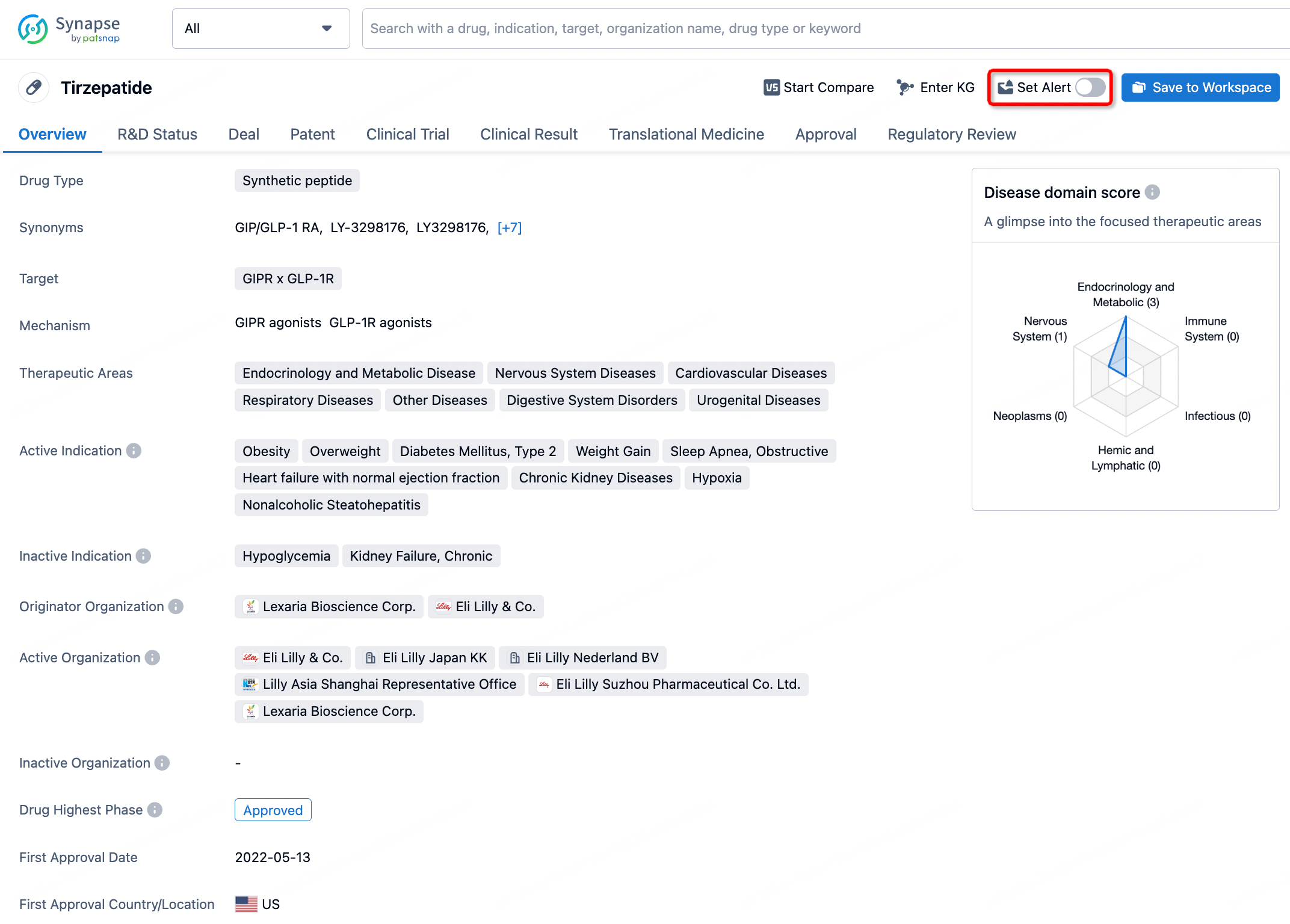
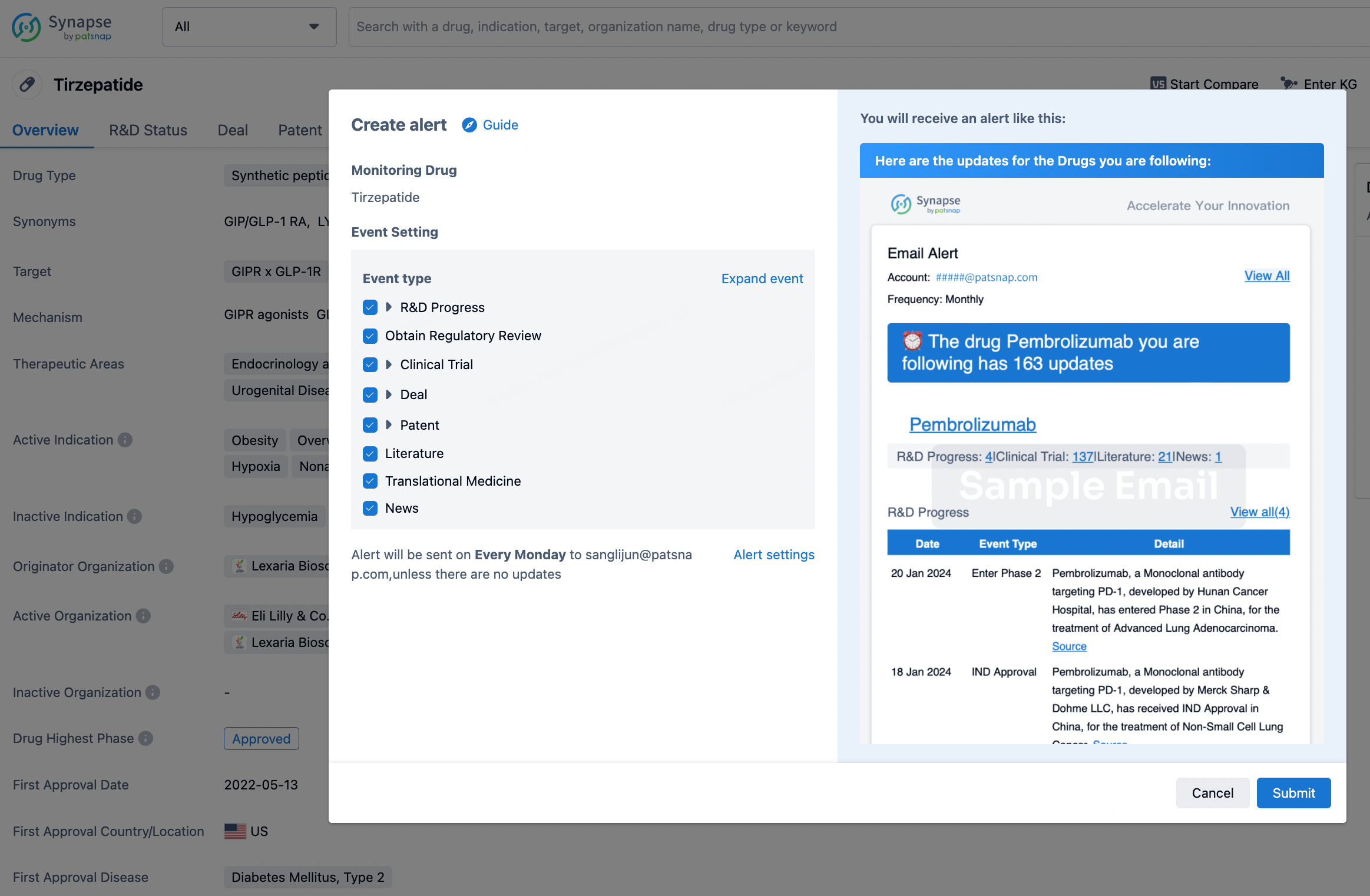
In the Synapse database, you can stay updated on the latest research and development advances of all drugs. This service is accessible anytime and anywhere, with updates available daily or weekly. Use the "Set Alert" function to stay informed. Click on the image below to embark on a brand new journey of drug discovery!

AI Agents Built for Biopharma Breakthroughs
Accelerate discovery. Empower decisions. Transform outcomes.
Get started for free today!
Accelerate Strategic R&D decision making with Synapse, PatSnap’s AI-powered Connected Innovation Intelligence Platform Built for Life Sciences Professionals.
Start your data trial now!
Synapse data is also accessible to external entities via APIs or data packages. Empower better decisions with the latest in pharmaceutical intelligence.