Request Demo
What are the side effects of Conbercept?
12 July 2024
Conbercept is a recombinant fusion protein used primarily for the treatment of neovascular age-related macular degeneration (AMD) and other retinal disorders. While Conbercept has shown considerable efficacy in improving vision and slowing disease progression, it is essential to understand the potential side effects that may accompany its use.
The administration of Conbercept is typically via intravitreal injection, which involves injecting the drug directly into the eye. This method of delivery can be associated with certain localized and systemic side effects.
Some of the common side effects observed with Conbercept include:
1. **Eye Pain:** Patients often report discomfort or pain in the eye following the injection. This is usually mild and temporary, but if the pain persists, it is important to consult a healthcare provider.
2. **Increased Intraocular Pressure:** An increase in intraocular pressure can occur shortly after the injection. This is typically monitored by the healthcare provider and can be managed if it becomes problematic.
3. **Conjunctival Hemorrhage:** This refers to bleeding in the white part of the eye, which can occur due to the injection. While it may appear alarming, it is generally not a cause for concern and resolves on its own.
4. **Floaters:** Some patients may experience the presence of floaters, which are small dark shapes that float across the visual field. These are usually temporary but can be bothersome.
5. **Infection:** Though rare, there is a risk of developing endophthalmitis, a serious eye infection, following the injection. Symptoms include severe eye pain, decreased vision, redness, and sensitivity to light. Immediate medical attention is required if these symptoms occur.
6. **Retinal Detachment:** Another rare but serious side effect is retinal detachment, where the retina peels away from its underlying layer of support tissue. Symptoms include sudden flashes of light, a shadow over the visual field, and a sudden increase in floaters. This condition requires urgent medical intervention.
7. **Inflammation:** Some patients may experience intraocular inflammation, which can manifest as redness, pain, and blurred vision. It is essential to inform the healthcare provider if these symptoms persist.
Additionally, there are some systemic side effects associated with Conbercept:
1. **Hypersensitivity Reactions:** While rare, there can be allergic reactions to Conbercept. Symptoms might include rash, itching, swelling, severe dizziness, and trouble breathing. It is crucial to seek immediate medical help if any of these symptoms are observed.
2. **Cardiovascular Events:** There is a potential, albeit low, risk of cardiovascular events such as stroke or heart attack, particularly in patients with a history of such conditions. Monitoring and managing underlying cardiovascular risk factors are important when considering Conbercept treatment.
3. **Increased Risk of Thromboembolic Events:** Similar to other anti-VEGF therapies, Conbercept may carry a risk of arterial thromboembolic events. Patients should be monitored for signs of stroke or heart attack.
It is crucial to have a thorough discussion with an ophthalmologist or retinal specialist before starting treatment with Conbercept. The healthcare provider will evaluate the benefits and risks, taking into account the patient's medical history and any pre-existing conditions.
In summary, while Conbercept is an effective treatment for AMD and other retinal disorders, it is not without potential side effects. Patients should be well-informed about these risks and maintain open communication with their healthcare provider to manage any adverse effects promptly and effectively.
The administration of Conbercept is typically via intravitreal injection, which involves injecting the drug directly into the eye. This method of delivery can be associated with certain localized and systemic side effects.
Some of the common side effects observed with Conbercept include:
1. **Eye Pain:** Patients often report discomfort or pain in the eye following the injection. This is usually mild and temporary, but if the pain persists, it is important to consult a healthcare provider.
2. **Increased Intraocular Pressure:** An increase in intraocular pressure can occur shortly after the injection. This is typically monitored by the healthcare provider and can be managed if it becomes problematic.
3. **Conjunctival Hemorrhage:** This refers to bleeding in the white part of the eye, which can occur due to the injection. While it may appear alarming, it is generally not a cause for concern and resolves on its own.
4. **Floaters:** Some patients may experience the presence of floaters, which are small dark shapes that float across the visual field. These are usually temporary but can be bothersome.
5. **Infection:** Though rare, there is a risk of developing endophthalmitis, a serious eye infection, following the injection. Symptoms include severe eye pain, decreased vision, redness, and sensitivity to light. Immediate medical attention is required if these symptoms occur.
6. **Retinal Detachment:** Another rare but serious side effect is retinal detachment, where the retina peels away from its underlying layer of support tissue. Symptoms include sudden flashes of light, a shadow over the visual field, and a sudden increase in floaters. This condition requires urgent medical intervention.
7. **Inflammation:** Some patients may experience intraocular inflammation, which can manifest as redness, pain, and blurred vision. It is essential to inform the healthcare provider if these symptoms persist.
Additionally, there are some systemic side effects associated with Conbercept:
1. **Hypersensitivity Reactions:** While rare, there can be allergic reactions to Conbercept. Symptoms might include rash, itching, swelling, severe dizziness, and trouble breathing. It is crucial to seek immediate medical help if any of these symptoms are observed.
2. **Cardiovascular Events:** There is a potential, albeit low, risk of cardiovascular events such as stroke or heart attack, particularly in patients with a history of such conditions. Monitoring and managing underlying cardiovascular risk factors are important when considering Conbercept treatment.
3. **Increased Risk of Thromboembolic Events:** Similar to other anti-VEGF therapies, Conbercept may carry a risk of arterial thromboembolic events. Patients should be monitored for signs of stroke or heart attack.
It is crucial to have a thorough discussion with an ophthalmologist or retinal specialist before starting treatment with Conbercept. The healthcare provider will evaluate the benefits and risks, taking into account the patient's medical history and any pre-existing conditions.
In summary, while Conbercept is an effective treatment for AMD and other retinal disorders, it is not without potential side effects. Patients should be well-informed about these risks and maintain open communication with their healthcare provider to manage any adverse effects promptly and effectively.
How to obtain the latest development progress of all drugs?
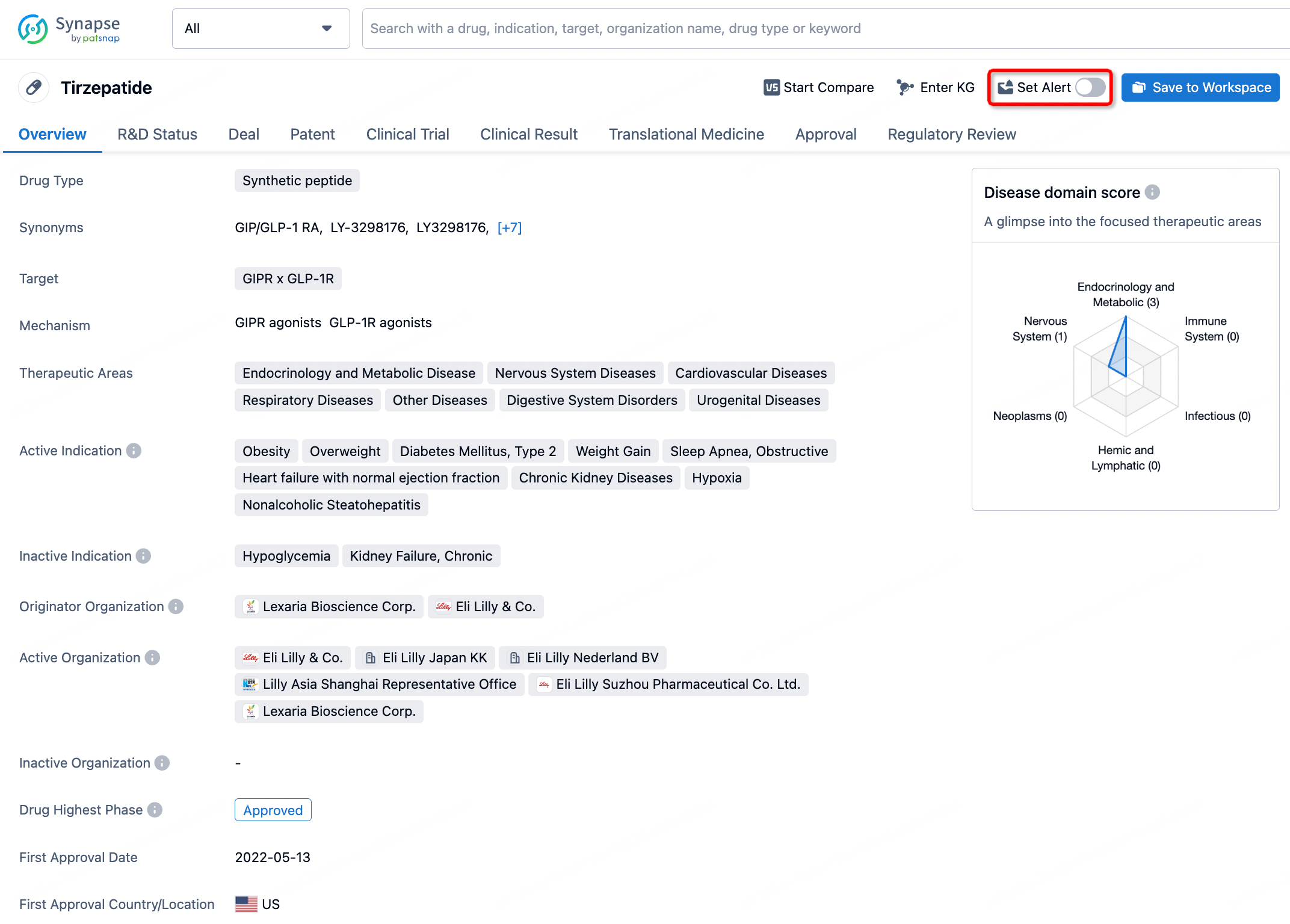
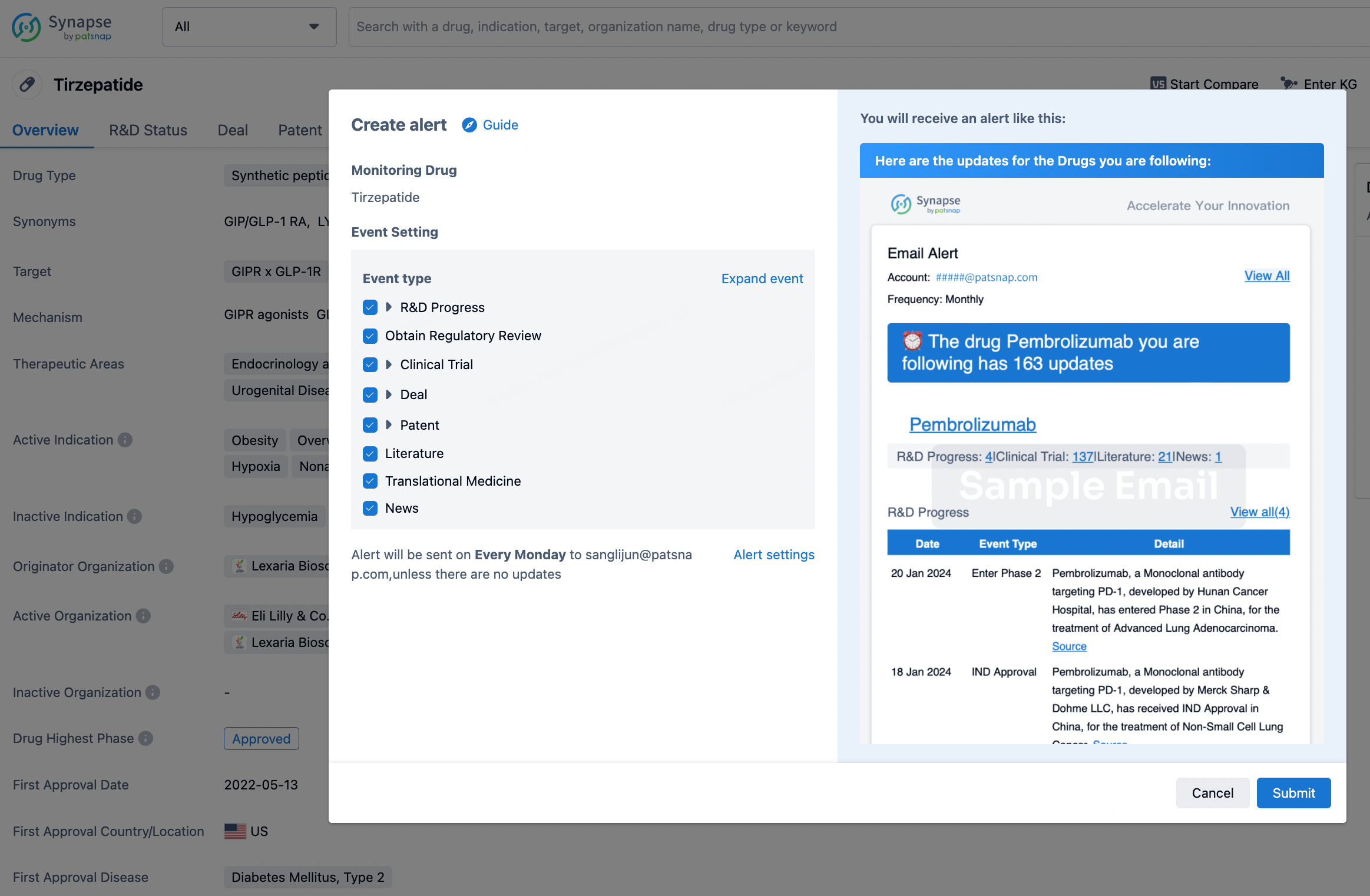
In the Synapse database, you can stay updated on the latest research and development advances of all drugs. This service is accessible anytime and anywhere, with updates available daily or weekly. Use the "Set Alert" function to stay informed. Click on the image below to embark on a brand new journey of drug discovery!

AI Agents Built for Biopharma Breakthroughs
Accelerate discovery. Empower decisions. Transform outcomes.
Get started for free today!
Accelerate Strategic R&D decision making with Synapse, PatSnap’s AI-powered Connected Innovation Intelligence Platform Built for Life Sciences Professionals.
Start your data trial now!
Synapse data is also accessible to external entities via APIs or data packages. Empower better decisions with the latest in pharmaceutical intelligence.