Request Demo
What are the side effects of Felbinac?
12 July 2024
Felbinac is a non-steroidal anti-inflammatory drug (NSAID) commonly used for its analgesic and anti-inflammatory properties. It is frequently prescribed to treat conditions such as musculoskeletal pain, arthritis, and sports injuries. While Felbinac can be effective in alleviating pain and reducing inflammation, it is important to be aware of its potential side effects. Understanding these side effects can help users make informed decisions about their treatment and know when to seek medical advice. This article explores the common and rare side effects associated with Felbinac.
One of the most frequently reported side effects of Felbinac is gastrointestinal discomfort. This can manifest as stomach pain, nausea, vomiting, and indigestion. Some individuals might experience more severe gastrointestinal issues such as ulcers or gastrointestinal bleeding. It is crucial to monitor for signs of these serious conditions, which may include black or bloody stools, severe stomach pain, or vomiting blood. Taking Felbinac with food or milk might help in reducing mild gastrointestinal discomfort, but any severe symptoms should be reported to a healthcare provider immediately.
Another common side effect is skin irritation. Since Felbinac is often applied topically, it can cause local reactions such as redness, itching, or a burning sensation at the site of application. While these symptoms are usually mild and transient, some individuals might experience more severe skin reactions like rashes or blistering. If a user develops a severe skin reaction, they should discontinue use and consult a healthcare professional.
Allergic reactions are also a potential risk with Felbinac. Symptoms of an allergic reaction can range from mild to severe and may include rash, itching, swelling (especially of the face, tongue, or throat), severe dizziness, and difficulty breathing. An allergic reaction to Felbinac constitutes a medical emergency, and immediate medical attention should be sought if any of these symptoms occur.
Hepatic side effects, although less common, can be serious. Felbinac can affect liver function, and prolonged use may lead to liver damage. Symptoms of liver issues might include yellowing of the skin or eyes (jaundice), dark urine, persistent nausea or vomiting, and severe fatigue. Regular monitoring of liver function might be recommended for individuals on long-term Felbinac therapy.
Renal side effects are also a concern, especially for individuals with pre-existing kidney conditions. Felbinac can potentially impair kidney function, leading to symptoms such as changes in urine output, swelling in the legs or ankles, and unexplained weight gain. Monitoring kidney function and staying hydrated can help mitigate some of these risks.
Cardiovascular side effects, though rare, can occur with Felbinac use. These may include increased blood pressure, fluid retention, or exacerbation of existing heart conditions. Individuals with a history of heart disease or stroke should use Felbinac with caution and under the supervision of a healthcare provider.
In some cases, Felbinac may cause dizziness or headaches. These neurological side effects are generally mild but can still impact daily functioning. Users experiencing severe or persistent headaches or dizziness should consult their healthcare provider for further evaluation.
Finally, it is essential to note that side effects can vary depending on individual factors such as age, overall health, and other medications being taken concurrently. Older adults, for example, may be more susceptible to certain side effects.
In conclusion, while Felbinac can be an effective treatment for pain and inflammation, it is important to be aware of its potential side effects. Gastrointestinal discomfort, skin irritation, allergic reactions, hepatic and renal issues, cardiovascular concerns, and neurological symptoms are among the side effects that users may experience. Consulting with a healthcare provider before starting Felbinac and monitoring for any adverse reactions during its use can help ensure safe and effective treatment.
One of the most frequently reported side effects of Felbinac is gastrointestinal discomfort. This can manifest as stomach pain, nausea, vomiting, and indigestion. Some individuals might experience more severe gastrointestinal issues such as ulcers or gastrointestinal bleeding. It is crucial to monitor for signs of these serious conditions, which may include black or bloody stools, severe stomach pain, or vomiting blood. Taking Felbinac with food or milk might help in reducing mild gastrointestinal discomfort, but any severe symptoms should be reported to a healthcare provider immediately.
Another common side effect is skin irritation. Since Felbinac is often applied topically, it can cause local reactions such as redness, itching, or a burning sensation at the site of application. While these symptoms are usually mild and transient, some individuals might experience more severe skin reactions like rashes or blistering. If a user develops a severe skin reaction, they should discontinue use and consult a healthcare professional.
Allergic reactions are also a potential risk with Felbinac. Symptoms of an allergic reaction can range from mild to severe and may include rash, itching, swelling (especially of the face, tongue, or throat), severe dizziness, and difficulty breathing. An allergic reaction to Felbinac constitutes a medical emergency, and immediate medical attention should be sought if any of these symptoms occur.
Hepatic side effects, although less common, can be serious. Felbinac can affect liver function, and prolonged use may lead to liver damage. Symptoms of liver issues might include yellowing of the skin or eyes (jaundice), dark urine, persistent nausea or vomiting, and severe fatigue. Regular monitoring of liver function might be recommended for individuals on long-term Felbinac therapy.
Renal side effects are also a concern, especially for individuals with pre-existing kidney conditions. Felbinac can potentially impair kidney function, leading to symptoms such as changes in urine output, swelling in the legs or ankles, and unexplained weight gain. Monitoring kidney function and staying hydrated can help mitigate some of these risks.
Cardiovascular side effects, though rare, can occur with Felbinac use. These may include increased blood pressure, fluid retention, or exacerbation of existing heart conditions. Individuals with a history of heart disease or stroke should use Felbinac with caution and under the supervision of a healthcare provider.
In some cases, Felbinac may cause dizziness or headaches. These neurological side effects are generally mild but can still impact daily functioning. Users experiencing severe or persistent headaches or dizziness should consult their healthcare provider for further evaluation.
Finally, it is essential to note that side effects can vary depending on individual factors such as age, overall health, and other medications being taken concurrently. Older adults, for example, may be more susceptible to certain side effects.
In conclusion, while Felbinac can be an effective treatment for pain and inflammation, it is important to be aware of its potential side effects. Gastrointestinal discomfort, skin irritation, allergic reactions, hepatic and renal issues, cardiovascular concerns, and neurological symptoms are among the side effects that users may experience. Consulting with a healthcare provider before starting Felbinac and monitoring for any adverse reactions during its use can help ensure safe and effective treatment.
How to obtain the latest development progress of all drugs?
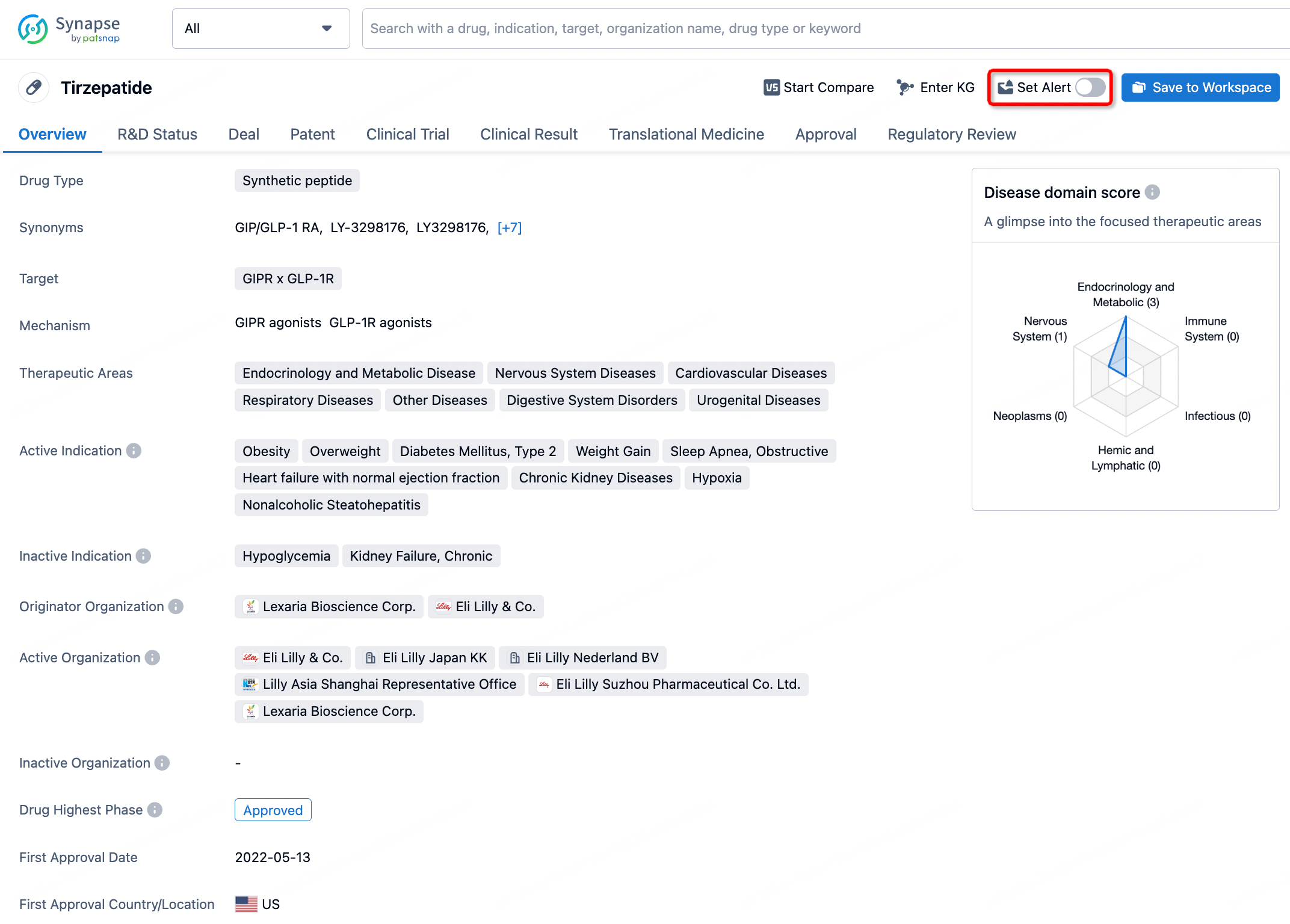
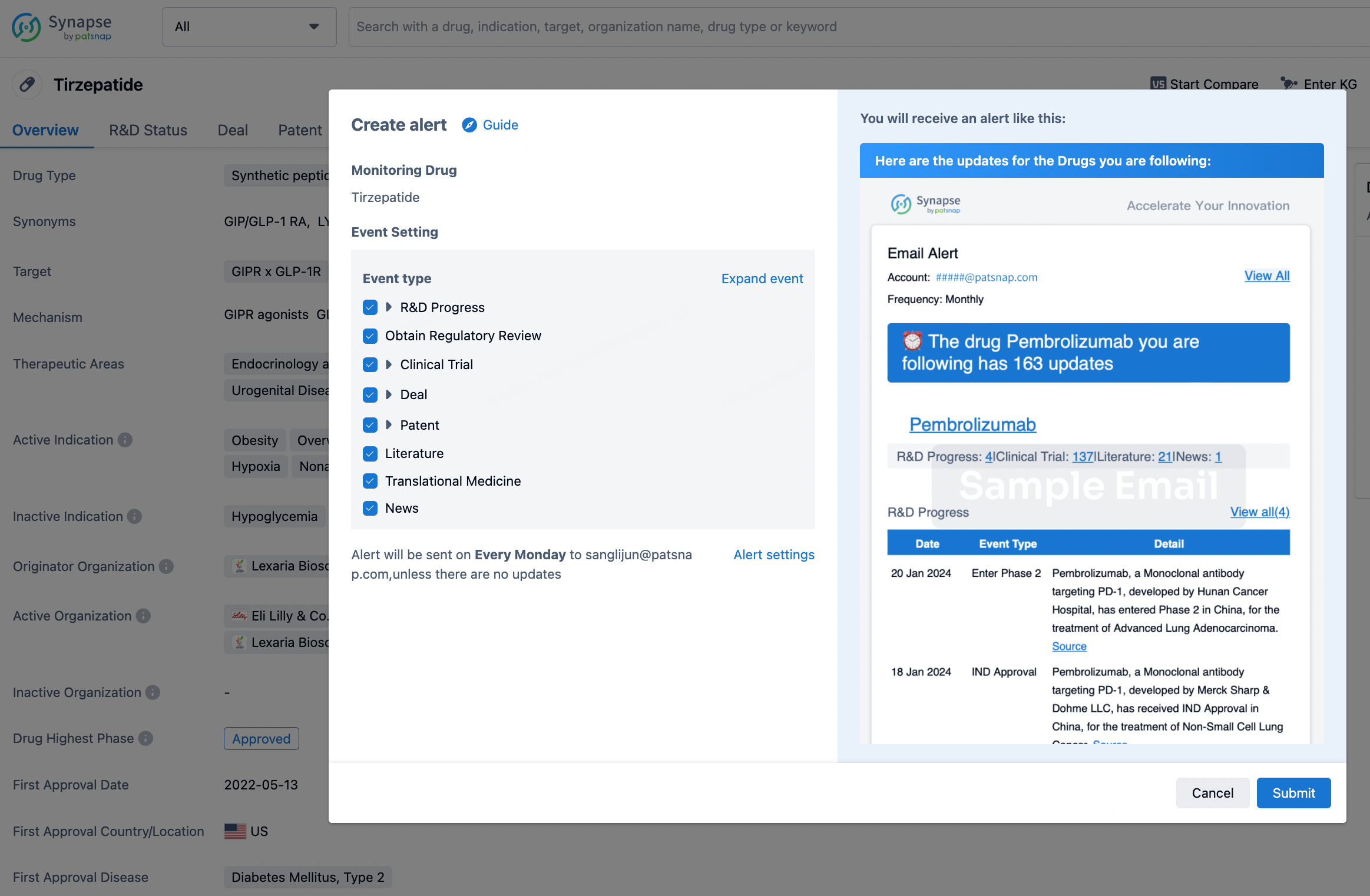
In the Synapse database, you can stay updated on the latest research and development advances of all drugs. This service is accessible anytime and anywhere, with updates available daily or weekly. Use the "Set Alert" function to stay informed. Click on the image below to embark on a brand new journey of drug discovery!
AI Agents Built for Biopharma Breakthroughs
Accelerate discovery. Empower decisions. Transform outcomes.
Get started for free today!
Accelerate Strategic R&D decision making with Synapse, PatSnap’s AI-powered Connected Innovation Intelligence Platform Built for Life Sciences Professionals.
Start your data trial now!
Synapse data is also accessible to external entities via APIs or data packages. Empower better decisions with the latest in pharmaceutical intelligence.