Request Demo
What are the side effects of Incadronate Disodium?
12 July 2024
Incadronate Disodium, also known as incadronic acid, is a bisphosphonate medication primarily used to treat and prevent bone disorders such as osteoporosis, Paget's disease, and bone metastases associated with cancer. While Incadronate Disodium can be highly effective in managing these conditions, it is important for patients and healthcare providers to be aware of its potential side effects. Understanding these side effects can help in making an informed decision regarding treatment and in managing any adverse reactions that may arise.
Common side effects of Incadronate Disodium include gastrointestinal disturbances. Patients often report symptoms such as nausea, vomiting, diarrhea, and abdominal pain. These side effects can vary in intensity, and while they are generally not severe, they can be uncomfortable and may lead some patients to discontinue the medication.
Another prevalent side effect is musculoskeletal pain. This includes pain in the bones, joints, and muscles. It is not uncommon for patients to experience mild to moderate pain in these areas, which can sometimes be managed with over-the-counter pain relievers. However, in some cases, the pain can be severe and may require medical intervention.
Incadronate Disodium can also cause hypocalcemia, a condition characterized by low levels of calcium in the blood. Symptoms of hypocalcemia may include numbness or tingling in the fingers, muscle cramps, and spasms. It is crucial for patients taking Incadronate Disodium to have their calcium levels monitored regularly and to ensure an adequate intake of calcium and vitamin D.
Esophageal irritation is another possible side effect. Some patients may experience difficulty swallowing, heartburn, or esophagitis (inflammation of the esophagus). To minimize the risk of esophageal irritation, it is recommended to take Incadronate Disodium with a full glass of water and to avoid lying down for at least 30 minutes after taking the medication.
Less common but more serious side effects include osteonecrosis of the jaw (ONJ) and atypical femoral fractures. ONJ is a condition where the jawbone starts to weaken and die, often presenting with symptoms such as jaw pain, swelling, and exposed bone. Atypical femoral fractures are rare fractures that occur with minimal or no trauma, typically in the thigh bone. Both of these conditions require prompt medical attention and may necessitate discontinuing the medication.
Kidney function can also be affected by Incadronate Disodium. Patients with pre-existing kidney conditions or those taking high doses of the medication are at higher risk for renal impairment. Regular monitoring of kidney function is advised, and dose adjustments may be necessary.
In some instances, patients may experience allergic reactions to Incadronate Disodium. Symptoms of an allergic reaction can include rash, itching, swelling, severe dizziness, and trouble breathing. If any signs of an allergic reaction occur, it is essential to seek immediate medical attention.
Flu-like symptoms, such as fever, chills, and fatigue, have also been reported, particularly after the initial dose. These symptoms are usually transient and resolve on their own within a few days.
In conclusion, while Incadronate Disodium is an effective treatment for various bone disorders, it is associated with a range of potential side effects. Common side effects include gastrointestinal disturbances and musculoskeletal pain, while more serious risks involve conditions such as osteonecrosis of the jaw and atypical femoral fractures. Monitoring and managing these side effects through regular medical supervision and appropriate lifestyle adjustments can help mitigate risks and enhance the overall effectiveness of the treatment. Patients should maintain open communication with their healthcare providers to ensure any adverse effects are promptly addressed.
Common side effects of Incadronate Disodium include gastrointestinal disturbances. Patients often report symptoms such as nausea, vomiting, diarrhea, and abdominal pain. These side effects can vary in intensity, and while they are generally not severe, they can be uncomfortable and may lead some patients to discontinue the medication.
Another prevalent side effect is musculoskeletal pain. This includes pain in the bones, joints, and muscles. It is not uncommon for patients to experience mild to moderate pain in these areas, which can sometimes be managed with over-the-counter pain relievers. However, in some cases, the pain can be severe and may require medical intervention.
Incadronate Disodium can also cause hypocalcemia, a condition characterized by low levels of calcium in the blood. Symptoms of hypocalcemia may include numbness or tingling in the fingers, muscle cramps, and spasms. It is crucial for patients taking Incadronate Disodium to have their calcium levels monitored regularly and to ensure an adequate intake of calcium and vitamin D.
Esophageal irritation is another possible side effect. Some patients may experience difficulty swallowing, heartburn, or esophagitis (inflammation of the esophagus). To minimize the risk of esophageal irritation, it is recommended to take Incadronate Disodium with a full glass of water and to avoid lying down for at least 30 minutes after taking the medication.
Less common but more serious side effects include osteonecrosis of the jaw (ONJ) and atypical femoral fractures. ONJ is a condition where the jawbone starts to weaken and die, often presenting with symptoms such as jaw pain, swelling, and exposed bone. Atypical femoral fractures are rare fractures that occur with minimal or no trauma, typically in the thigh bone. Both of these conditions require prompt medical attention and may necessitate discontinuing the medication.
Kidney function can also be affected by Incadronate Disodium. Patients with pre-existing kidney conditions or those taking high doses of the medication are at higher risk for renal impairment. Regular monitoring of kidney function is advised, and dose adjustments may be necessary.
In some instances, patients may experience allergic reactions to Incadronate Disodium. Symptoms of an allergic reaction can include rash, itching, swelling, severe dizziness, and trouble breathing. If any signs of an allergic reaction occur, it is essential to seek immediate medical attention.
Flu-like symptoms, such as fever, chills, and fatigue, have also been reported, particularly after the initial dose. These symptoms are usually transient and resolve on their own within a few days.
In conclusion, while Incadronate Disodium is an effective treatment for various bone disorders, it is associated with a range of potential side effects. Common side effects include gastrointestinal disturbances and musculoskeletal pain, while more serious risks involve conditions such as osteonecrosis of the jaw and atypical femoral fractures. Monitoring and managing these side effects through regular medical supervision and appropriate lifestyle adjustments can help mitigate risks and enhance the overall effectiveness of the treatment. Patients should maintain open communication with their healthcare providers to ensure any adverse effects are promptly addressed.
How to obtain the latest development progress of all drugs?
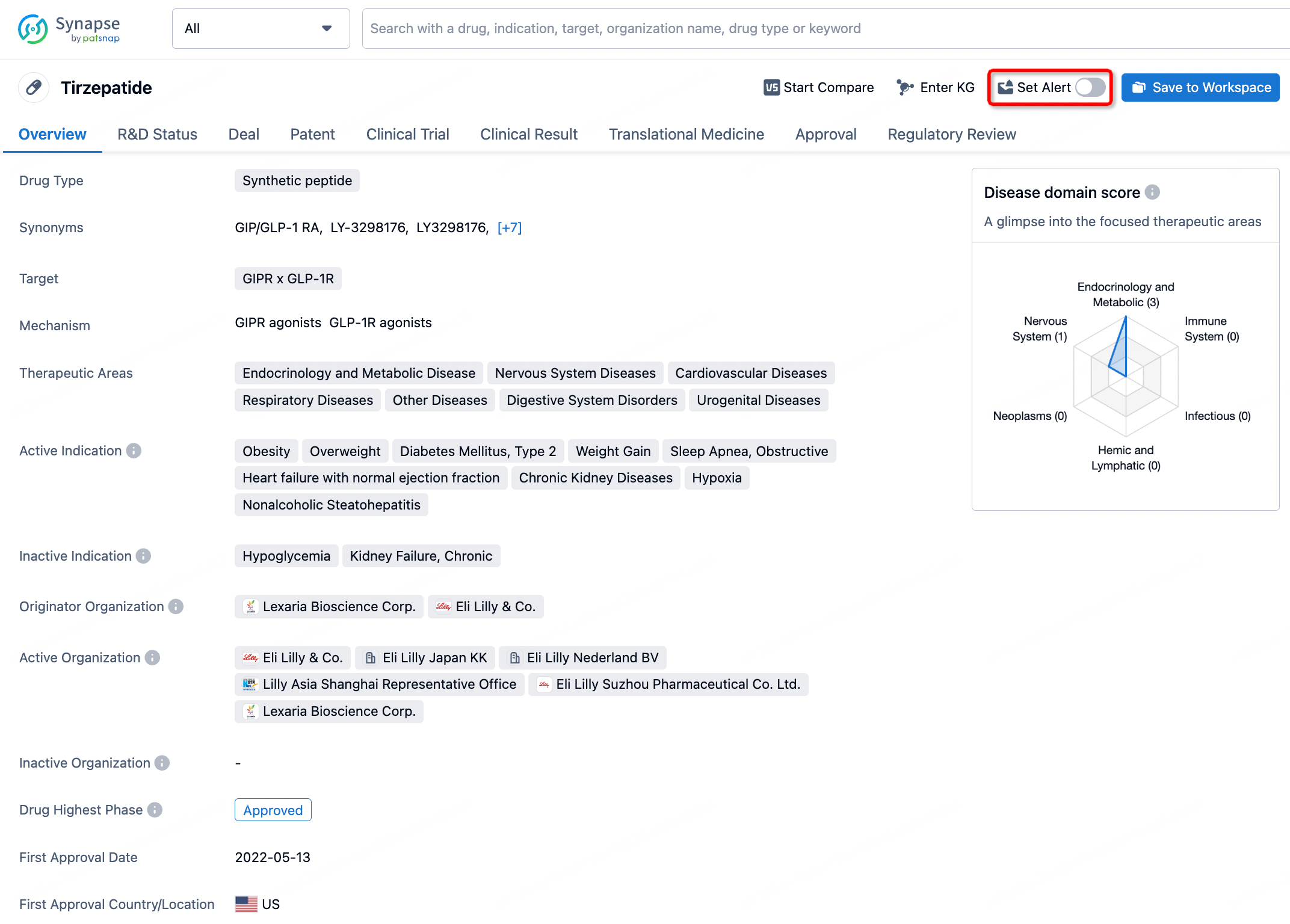
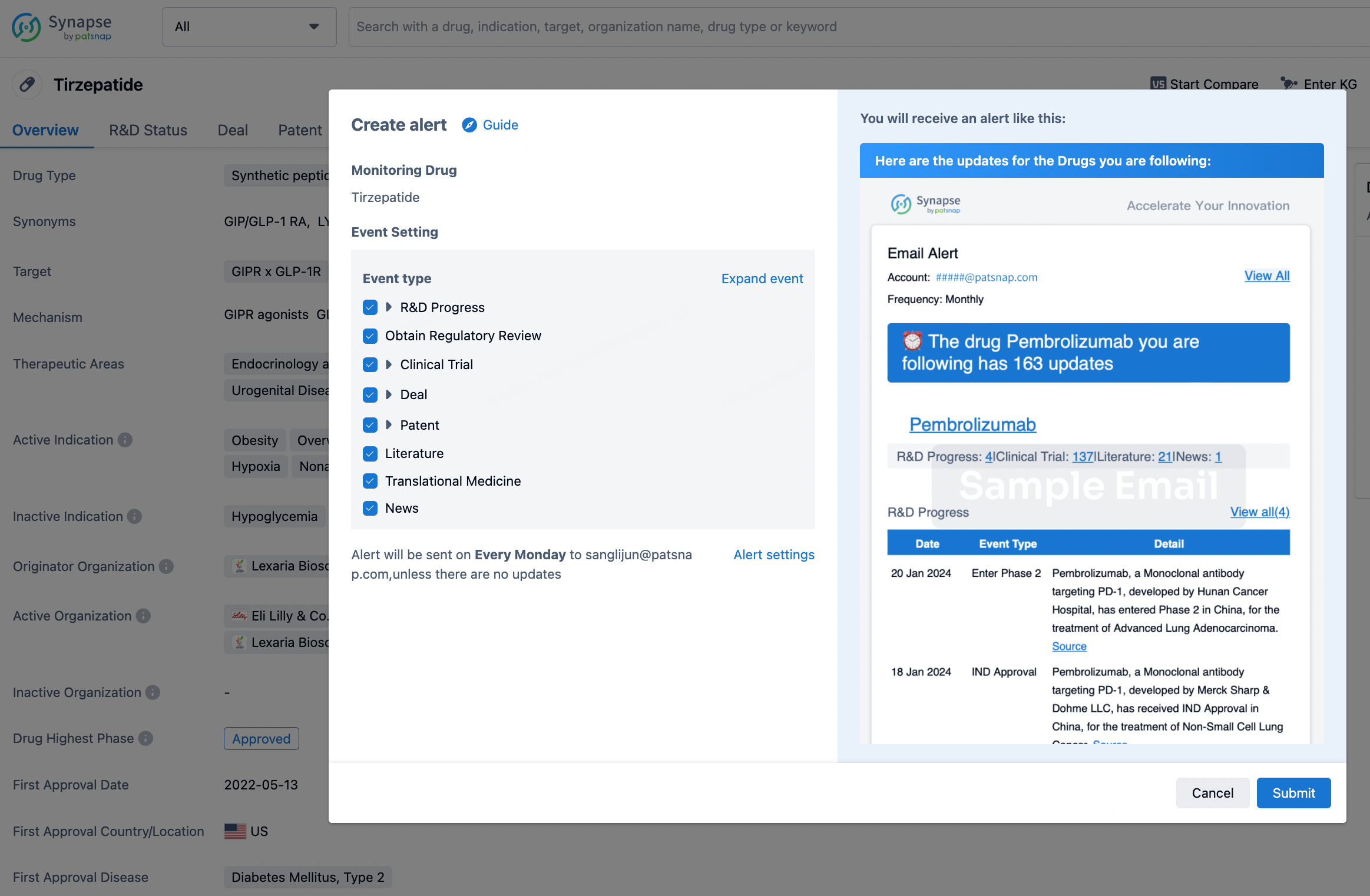
In the Synapse database, you can stay updated on the latest research and development advances of all drugs. This service is accessible anytime and anywhere, with updates available daily or weekly. Use the "Set Alert" function to stay informed. Click on the image below to embark on a brand new journey of drug discovery!

AI Agents Built for Biopharma Breakthroughs
Accelerate discovery. Empower decisions. Transform outcomes.
Get started for free today!
Accelerate Strategic R&D decision making with Synapse, PatSnap’s AI-powered Connected Innovation Intelligence Platform Built for Life Sciences Professionals.
Start your data trial now!
Synapse data is also accessible to external entities via APIs or data packages. Empower better decisions with the latest in pharmaceutical intelligence.