Request Demo
What are the side effects of Lomefloxacin Aspartate?
13 July 2024
Lomefloxacin Aspartate is a fluoroquinolone antibiotic that is used to treat various bacterial infections. While it is effective in eradicating bacteria, the drug can also cause a range of side effects. It is important for patients and healthcare providers to be aware of these potential adverse reactions to manage them effectively.
One of the most common side effects associated with Lomefloxacin Aspartate is gastrointestinal discomfort. Patients may experience nausea, vomiting, diarrhea, and abdominal pain. These symptoms are usually mild to moderate but can be bothersome. Taking the medication with food may help mitigate some of these gastrointestinal issues.
Central nervous system effects are also a concern with the use of Lomefloxacin Aspartate. Some individuals may experience headaches, dizziness, and light-headedness. In rare cases, more serious neurological effects like seizures, tremors, and confusion can occur. Patients who have a history of neurological disorders should use this medication with caution, and any new or worsening symptoms should be reported to a healthcare provider immediately.
Lomefloxacin Aspartate can also cause photosensitivity, making the skin more susceptible to sunburn. Patients taking this medication should avoid prolonged exposure to sunlight or artificial UV light and should use sunscreen and protective clothing when outdoors.
Another side effect to be aware of is the potential for allergic reactions. Symptoms of an allergic reaction can include rash, itching, swelling, and difficulty breathing. Severe allergic reactions, though rare, require immediate medical attention.
Tendinitis and tendon rupture are serious but less common side effects associated with fluoroquinolones, including Lomefloxacin Aspartate. This risk is higher in older adults, those taking corticosteroids, and individuals with kidney, heart, or lung transplants. Patients should report any signs of tendon pain, swelling, or inflammation, and should discontinue the medication if a tendon rupture is suspected.
Cardiovascular side effects may also occur. Some patients may experience palpitations, chest pain, and changes in heart rhythm, including QT prolongation. Individuals with a history of heart conditions should be monitored closely while on this medication.
Lomefloxacin Aspartate can affect blood sugar levels, potentially causing hyperglycemia or hypoglycemia. Diabetic patients should monitor their blood sugar levels regularly and consult their healthcare provider if they notice significant changes.
Hematological effects, such as changes in blood cell counts, can also occur. Though rare, conditions like leukopenia, thrombocytopenia, and anemia have been reported. Regular blood tests may be necessary to monitor for these potential changes, especially during prolonged therapy.
Renal and hepatic side effects are additional concerns. Lomefloxacin Aspartate can affect kidney and liver function, leading to conditions such as interstitial nephritis and hepatitis. Patients with preexisting kidney or liver conditions should be closely monitored, and dose adjustments may be necessary.
In conclusion, while Lomefloxacin Aspartate is an effective antibiotic for treating bacterial infections, it comes with a range of potential side effects. Patients should be aware of these possible adverse reactions and consult their healthcare provider if they experience any concerning symptoms. By being informed and vigilant, patients can manage their treatment more effectively and minimize the risk of serious side effects.
One of the most common side effects associated with Lomefloxacin Aspartate is gastrointestinal discomfort. Patients may experience nausea, vomiting, diarrhea, and abdominal pain. These symptoms are usually mild to moderate but can be bothersome. Taking the medication with food may help mitigate some of these gastrointestinal issues.
Central nervous system effects are also a concern with the use of Lomefloxacin Aspartate. Some individuals may experience headaches, dizziness, and light-headedness. In rare cases, more serious neurological effects like seizures, tremors, and confusion can occur. Patients who have a history of neurological disorders should use this medication with caution, and any new or worsening symptoms should be reported to a healthcare provider immediately.
Lomefloxacin Aspartate can also cause photosensitivity, making the skin more susceptible to sunburn. Patients taking this medication should avoid prolonged exposure to sunlight or artificial UV light and should use sunscreen and protective clothing when outdoors.
Another side effect to be aware of is the potential for allergic reactions. Symptoms of an allergic reaction can include rash, itching, swelling, and difficulty breathing. Severe allergic reactions, though rare, require immediate medical attention.
Tendinitis and tendon rupture are serious but less common side effects associated with fluoroquinolones, including Lomefloxacin Aspartate. This risk is higher in older adults, those taking corticosteroids, and individuals with kidney, heart, or lung transplants. Patients should report any signs of tendon pain, swelling, or inflammation, and should discontinue the medication if a tendon rupture is suspected.
Cardiovascular side effects may also occur. Some patients may experience palpitations, chest pain, and changes in heart rhythm, including QT prolongation. Individuals with a history of heart conditions should be monitored closely while on this medication.
Lomefloxacin Aspartate can affect blood sugar levels, potentially causing hyperglycemia or hypoglycemia. Diabetic patients should monitor their blood sugar levels regularly and consult their healthcare provider if they notice significant changes.
Hematological effects, such as changes in blood cell counts, can also occur. Though rare, conditions like leukopenia, thrombocytopenia, and anemia have been reported. Regular blood tests may be necessary to monitor for these potential changes, especially during prolonged therapy.
Renal and hepatic side effects are additional concerns. Lomefloxacin Aspartate can affect kidney and liver function, leading to conditions such as interstitial nephritis and hepatitis. Patients with preexisting kidney or liver conditions should be closely monitored, and dose adjustments may be necessary.
In conclusion, while Lomefloxacin Aspartate is an effective antibiotic for treating bacterial infections, it comes with a range of potential side effects. Patients should be aware of these possible adverse reactions and consult their healthcare provider if they experience any concerning symptoms. By being informed and vigilant, patients can manage their treatment more effectively and minimize the risk of serious side effects.
How to obtain the latest development progress of all drugs?
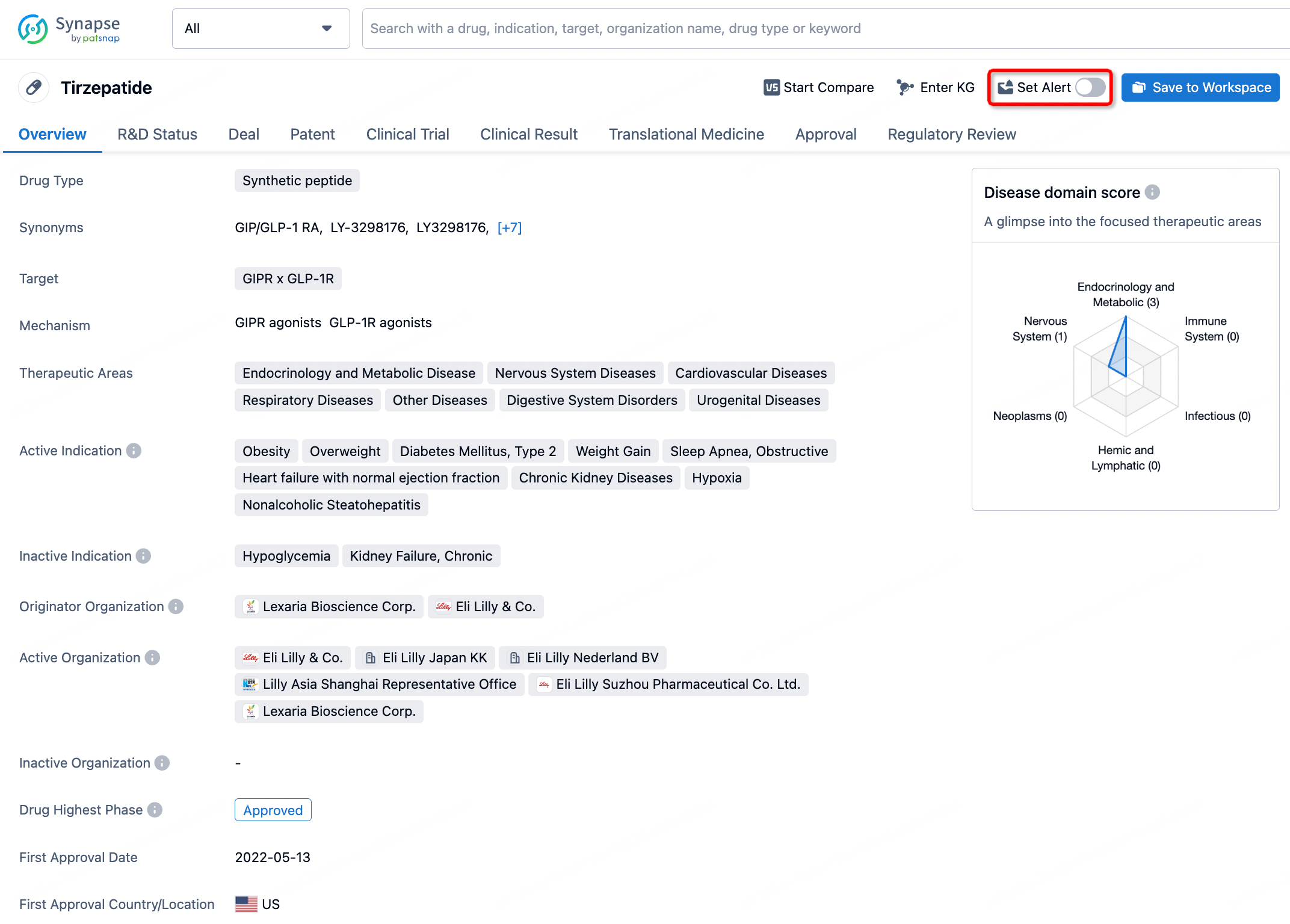
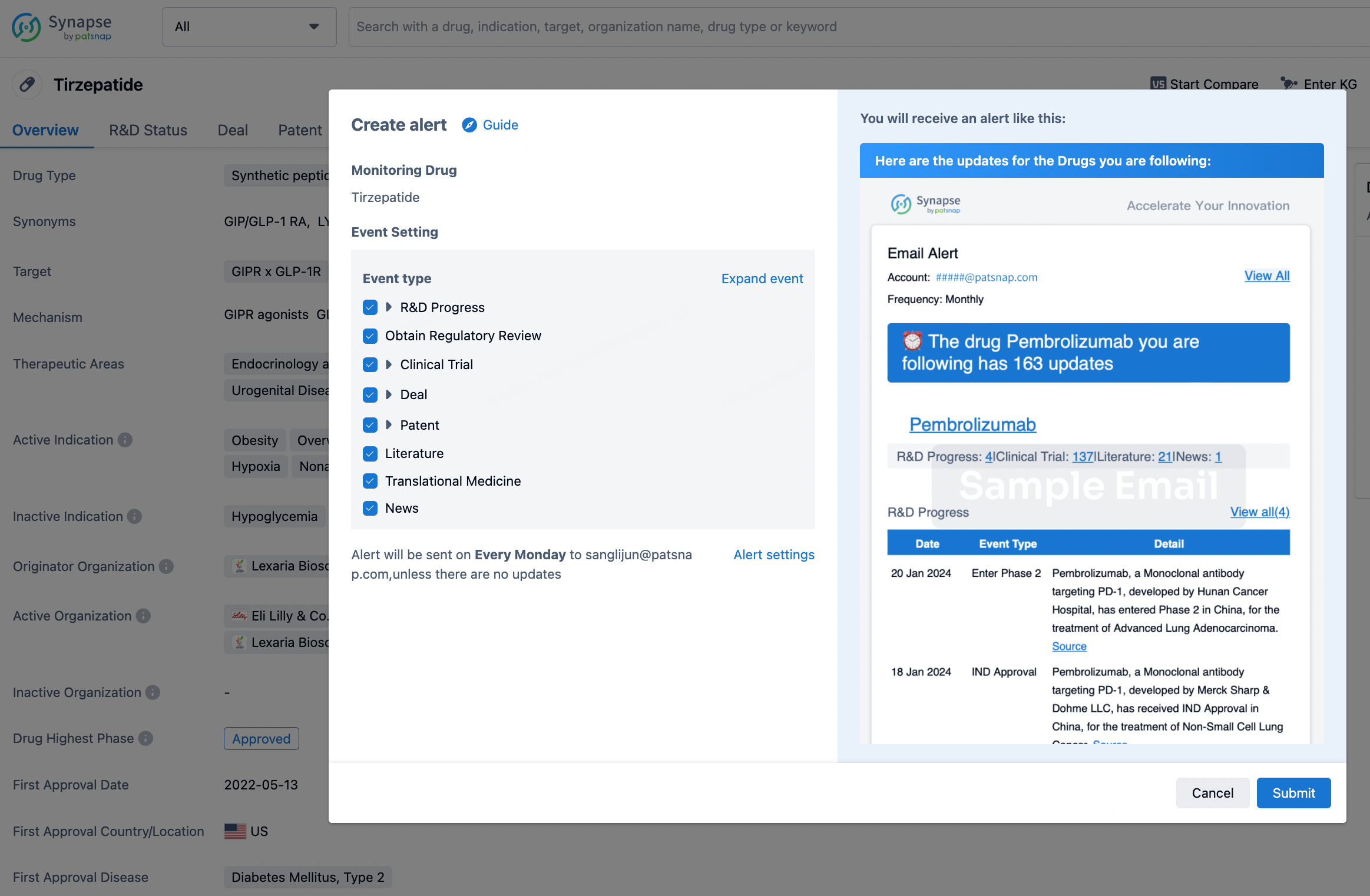
In the Synapse database, you can stay updated on the latest research and development advances of all drugs. This service is accessible anytime and anywhere, with updates available daily or weekly. Use the "Set Alert" function to stay informed. Click on the image below to embark on a brand new journey of drug discovery!

AI Agents Built for Biopharma Breakthroughs
Accelerate discovery. Empower decisions. Transform outcomes.
Get started for free today!
Accelerate Strategic R&D decision making with Synapse, PatSnap’s AI-powered Connected Innovation Intelligence Platform Built for Life Sciences Professionals.
Start your data trial now!
Synapse data is also accessible to external entities via APIs or data packages. Empower better decisions with the latest in pharmaceutical intelligence.