Request Demo
What are the side effects of Lurbinectedin?
12 July 2024
Lurbinectedin is a drug that has gained attention in the treatment of certain types of cancer, particularly small cell lung cancer. As with any medication, it is crucial to understand the potential side effects associated with its use. While Lurbinectedin has shown efficacy in treating cancer, patients may experience various adverse effects that can range from mild to severe. This article delves into the common, moderate, and severe side effects of Lurbinectedin, providing a comprehensive overview of what patients might expect.
Common Side Effects:
One of the most frequently reported side effects of Lurbinectedin is fatigue. Many patients experience a significant drop in energy levels, which can impact daily activities and overall quality of life. Additionally, nausea is another common side effect, often accompanied by vomiting. This can be managed with anti-nausea medications prescribed by healthcare providers.
Another frequent side effect is a decrease in appetite, which can lead to weight loss. Patients may find it difficult to maintain proper nutrition, which is essential for overall health and recovery. Constipation is also commonly reported, requiring patients to take preventive measures such as increased fluid intake, dietary adjustments, and sometimes laxatives.
Moderate Side Effects:
Lurbinectedin can also cause moderate side effects that require close monitoring and sometimes medical intervention. One such side effect is neutropenia, a condition characterized by a low count of neutrophils, a type of white blood cell essential for fighting infections. Neutropenia increases the risk of infections, requiring patients to be vigilant about hygiene and avoid exposure to contagious diseases.
Anemia is another moderate side effect, where the red blood cell count drops, leading to symptoms like dizziness, shortness of breath, and paleness. Platelets, the blood cells responsible for clotting, can also decrease, causing a condition known as thrombocytopenia. This condition increases the risk of bleeding and bruising easily.
Liver function abnormalities have been observed in some patients taking Lurbinectedin. Elevated liver enzymes can indicate liver stress or damage, necessitating regular blood tests to monitor liver function.
Severe Side Effects:
Though less common, Lurbinectedin can cause severe side effects that require immediate medical attention. One of the most serious is a severe allergic reaction, which can manifest as difficulty breathing, swelling of the face and throat, or a severe rash. This is a medical emergency and requires prompt treatment.
Cardiotoxicity, or damage to the heart muscle, is another severe side effect. Patients may experience symptoms like chest pain, shortness of breath, and abnormal heart rhythms. Regular cardiac monitoring is essential for patients at risk.
Severe gastrointestinal issues, such as severe diarrhea or colitis, can also occur. These conditions can lead to dehydration and require hospitalization for rehydration and management.
Conclusion:
Lurbinectedin is a potent drug with significant benefits for treating certain types of cancer, but it is not without its side effects. Patients should be aware of the range of possible adverse effects, from common issues like fatigue and nausea to more severe conditions like neutropenia and cardiotoxicity. Regular monitoring and communication with healthcare providers are essential for managing these side effects effectively. As always, the risks and benefits of any treatment should be thoroughly discussed with a healthcare provider.
Common Side Effects:
One of the most frequently reported side effects of Lurbinectedin is fatigue. Many patients experience a significant drop in energy levels, which can impact daily activities and overall quality of life. Additionally, nausea is another common side effect, often accompanied by vomiting. This can be managed with anti-nausea medications prescribed by healthcare providers.
Another frequent side effect is a decrease in appetite, which can lead to weight loss. Patients may find it difficult to maintain proper nutrition, which is essential for overall health and recovery. Constipation is also commonly reported, requiring patients to take preventive measures such as increased fluid intake, dietary adjustments, and sometimes laxatives.
Moderate Side Effects:
Lurbinectedin can also cause moderate side effects that require close monitoring and sometimes medical intervention. One such side effect is neutropenia, a condition characterized by a low count of neutrophils, a type of white blood cell essential for fighting infections. Neutropenia increases the risk of infections, requiring patients to be vigilant about hygiene and avoid exposure to contagious diseases.
Anemia is another moderate side effect, where the red blood cell count drops, leading to symptoms like dizziness, shortness of breath, and paleness. Platelets, the blood cells responsible for clotting, can also decrease, causing a condition known as thrombocytopenia. This condition increases the risk of bleeding and bruising easily.
Liver function abnormalities have been observed in some patients taking Lurbinectedin. Elevated liver enzymes can indicate liver stress or damage, necessitating regular blood tests to monitor liver function.
Severe Side Effects:
Though less common, Lurbinectedin can cause severe side effects that require immediate medical attention. One of the most serious is a severe allergic reaction, which can manifest as difficulty breathing, swelling of the face and throat, or a severe rash. This is a medical emergency and requires prompt treatment.
Cardiotoxicity, or damage to the heart muscle, is another severe side effect. Patients may experience symptoms like chest pain, shortness of breath, and abnormal heart rhythms. Regular cardiac monitoring is essential for patients at risk.
Severe gastrointestinal issues, such as severe diarrhea or colitis, can also occur. These conditions can lead to dehydration and require hospitalization for rehydration and management.
Conclusion:
Lurbinectedin is a potent drug with significant benefits for treating certain types of cancer, but it is not without its side effects. Patients should be aware of the range of possible adverse effects, from common issues like fatigue and nausea to more severe conditions like neutropenia and cardiotoxicity. Regular monitoring and communication with healthcare providers are essential for managing these side effects effectively. As always, the risks and benefits of any treatment should be thoroughly discussed with a healthcare provider.
How to obtain the latest development progress of all drugs?
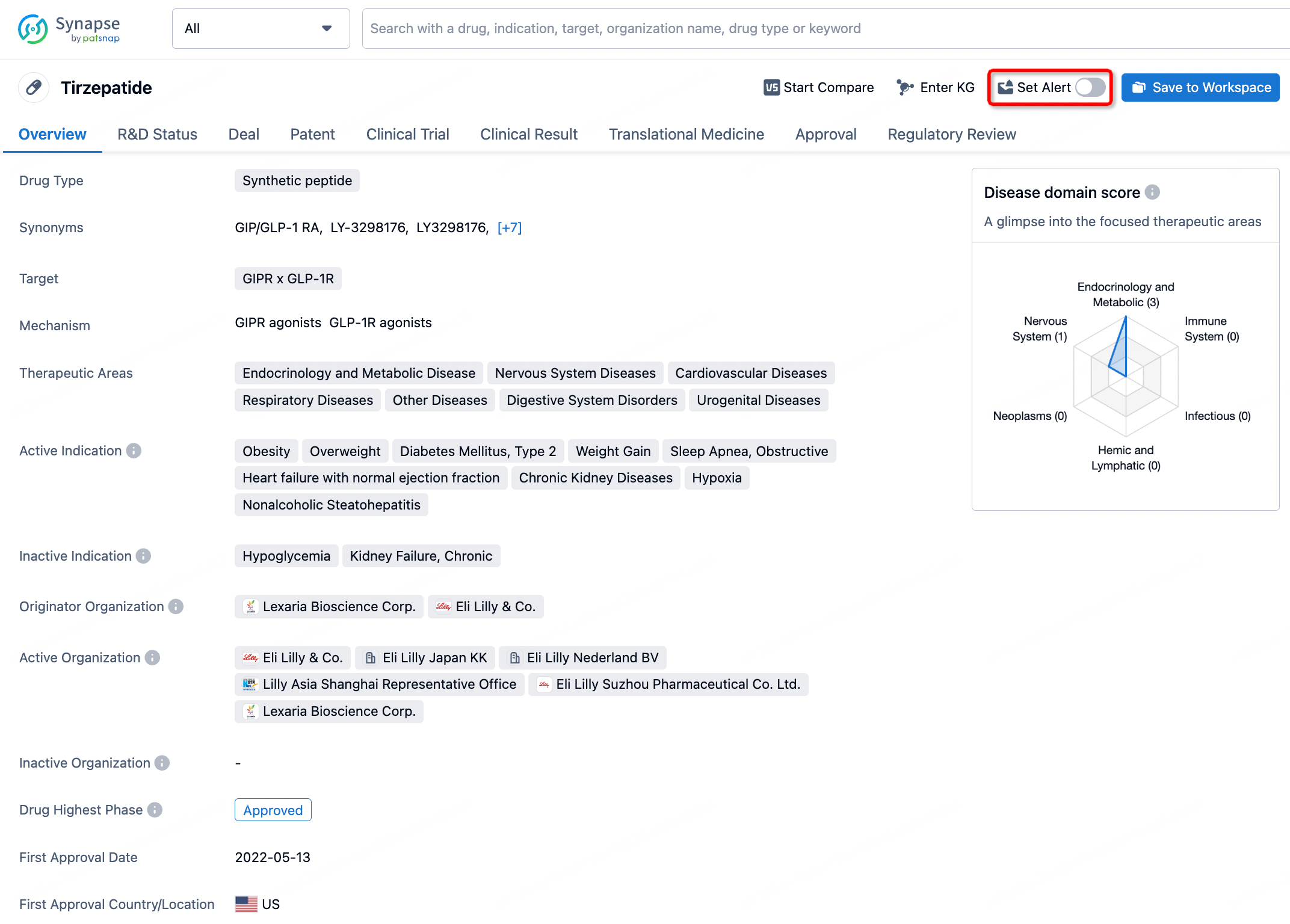
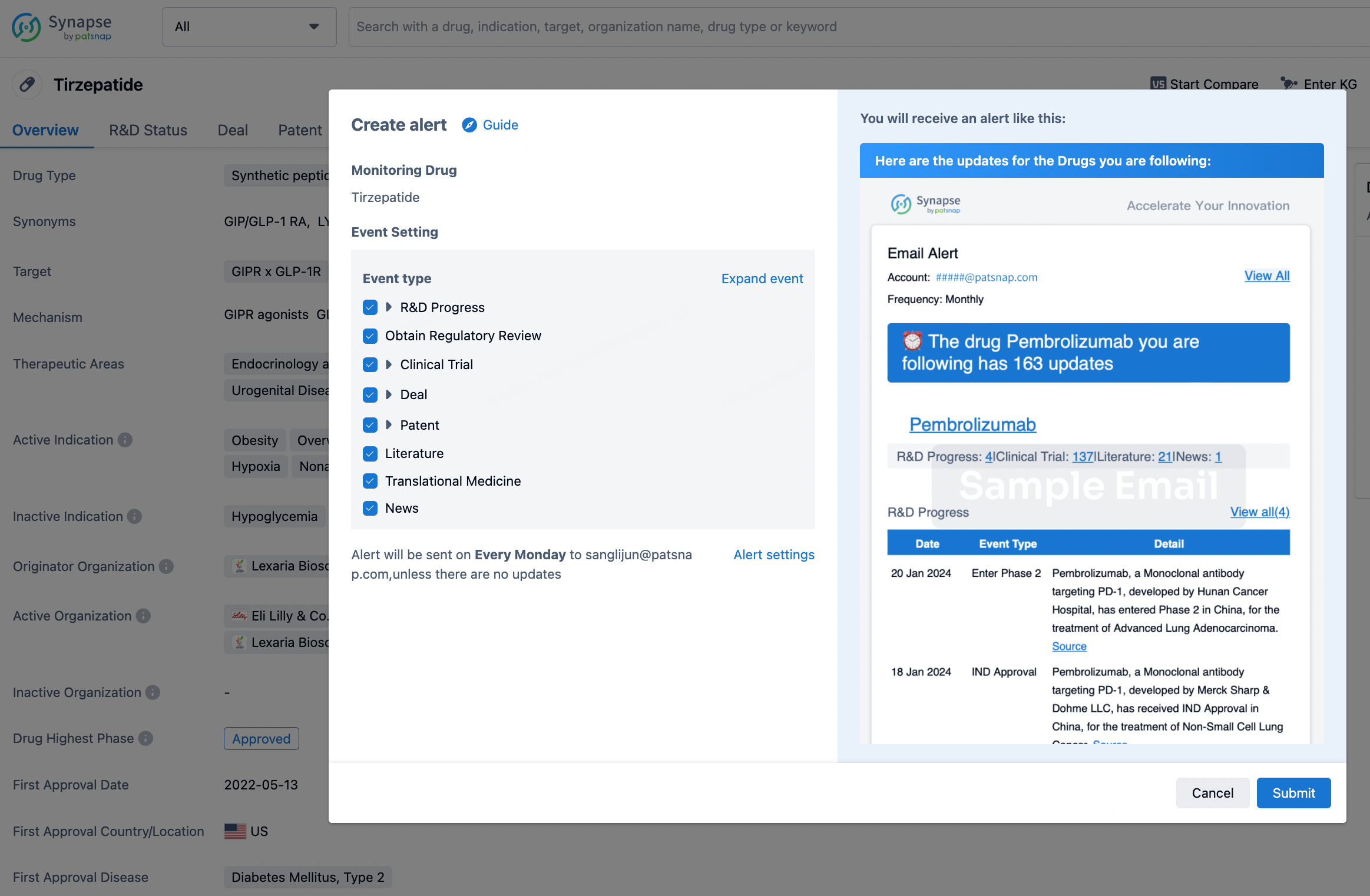
In the Synapse database, you can stay updated on the latest research and development advances of all drugs. This service is accessible anytime and anywhere, with updates available daily or weekly. Use the "Set Alert" function to stay informed. Click on the image below to embark on a brand new journey of drug discovery!

AI Agents Built for Biopharma Breakthroughs
Accelerate discovery. Empower decisions. Transform outcomes.
Get started for free today!
Accelerate Strategic R&D decision making with Synapse, PatSnap’s AI-powered Connected Innovation Intelligence Platform Built for Life Sciences Professionals.
Start your data trial now!
Synapse data is also accessible to external entities via APIs or data packages. Empower better decisions with the latest in pharmaceutical intelligence.