Request Demo
What are the side effects of Nicomorphine Hydrochloride?
15 July 2024
Nicomorphine Hydrochloride, a powerful opioid analgesic, is used primarily for the management of severe pain, often in a clinical setting. It is a derivative of morphine and offers potent pain relief. However, like other opioids, it comes with a range of potential side effects that can impact the body's various systems. Understanding these side effects is crucial for both patients and healthcare providers to ensure its safe and effective use.
One of the most common side effects of Nicomorphine Hydrochloride is respiratory depression. This occurs because opioids, including Nicomorphine, can significantly slow down the respiratory rate, leading to inadequate ventilation. In severe cases, this can result in hypoxia or even respiratory arrest, which can be life-threatening. Therefore, patients on Nicomorphine must be closely monitored for any signs of breathing difficulty.
Another significant side effect is the potential for addiction and dependence. Nicomorphine, like other opioids, has a high potential for abuse. Prolonged use can lead to physical and psychological dependence, making it challenging for patients to discontinue use without experiencing withdrawal symptoms. These symptoms can include agitation, anxiety, muscle aches, and sweating, among others.
Gastrointestinal issues are also commonly reported. Nicomorphine Hydrochloride can cause nausea, vomiting, and constipation. These symptoms occur because opioids slow down gastrointestinal motility, making it harder for the stomach and intestines to process food effectively. Constipation can be particularly troublesome and may require additional medications or dietary changes to manage.
Drowsiness and sedation are other frequent side effects. While Nicomorphine is effective at relieving pain, it also depresses the central nervous system, leading to feelings of drowsiness or even profound sedation. This can impair cognitive and motor functions, making activities such as driving or operating heavy machinery dangerous.
Cardiovascular effects can also occur. Nicomorphine may cause hypotension, or low blood pressure, especially when administered intravenously. This can lead to symptoms such as dizziness, fainting, and light-headedness. In some cases, it may also cause bradycardia, a slower than normal heart rate.
Itching and sweating are additional side effects that patients might experience. These can range from mild to severe and are usually due to the release of histamines in the body. While not life-threatening, these symptoms can be quite uncomfortable and may require symptomatic treatment.
It is also important to note that Nicomorphine can cause various psychological effects. Patients may experience euphoria, which is one reason for its high potential for abuse. However, they may also experience dysphoria, anxiety, and hallucinations, especially at higher doses or with prolonged use.
Lastly, like all medications, allergic reactions to Nicomorphine Hydrochloride are possible, though rare. Symptoms of an allergic reaction can include rash, itching, swelling, severe dizziness, and trouble breathing. Immediate medical attention is required if any of these symptoms occur.
In summary, while Nicomorphine Hydrochloride is an effective analgesic for severe pain, it comes with a range of potential side effects that must be carefully managed. These include respiratory depression, addiction, gastrointestinal issues, drowsiness, cardiovascular effects, itching, sweating, and psychological effects. Both patients and healthcare providers should be aware of these side effects to use the medication safely and effectively.
One of the most common side effects of Nicomorphine Hydrochloride is respiratory depression. This occurs because opioids, including Nicomorphine, can significantly slow down the respiratory rate, leading to inadequate ventilation. In severe cases, this can result in hypoxia or even respiratory arrest, which can be life-threatening. Therefore, patients on Nicomorphine must be closely monitored for any signs of breathing difficulty.
Another significant side effect is the potential for addiction and dependence. Nicomorphine, like other opioids, has a high potential for abuse. Prolonged use can lead to physical and psychological dependence, making it challenging for patients to discontinue use without experiencing withdrawal symptoms. These symptoms can include agitation, anxiety, muscle aches, and sweating, among others.
Gastrointestinal issues are also commonly reported. Nicomorphine Hydrochloride can cause nausea, vomiting, and constipation. These symptoms occur because opioids slow down gastrointestinal motility, making it harder for the stomach and intestines to process food effectively. Constipation can be particularly troublesome and may require additional medications or dietary changes to manage.
Drowsiness and sedation are other frequent side effects. While Nicomorphine is effective at relieving pain, it also depresses the central nervous system, leading to feelings of drowsiness or even profound sedation. This can impair cognitive and motor functions, making activities such as driving or operating heavy machinery dangerous.
Cardiovascular effects can also occur. Nicomorphine may cause hypotension, or low blood pressure, especially when administered intravenously. This can lead to symptoms such as dizziness, fainting, and light-headedness. In some cases, it may also cause bradycardia, a slower than normal heart rate.
Itching and sweating are additional side effects that patients might experience. These can range from mild to severe and are usually due to the release of histamines in the body. While not life-threatening, these symptoms can be quite uncomfortable and may require symptomatic treatment.
It is also important to note that Nicomorphine can cause various psychological effects. Patients may experience euphoria, which is one reason for its high potential for abuse. However, they may also experience dysphoria, anxiety, and hallucinations, especially at higher doses or with prolonged use.
Lastly, like all medications, allergic reactions to Nicomorphine Hydrochloride are possible, though rare. Symptoms of an allergic reaction can include rash, itching, swelling, severe dizziness, and trouble breathing. Immediate medical attention is required if any of these symptoms occur.
In summary, while Nicomorphine Hydrochloride is an effective analgesic for severe pain, it comes with a range of potential side effects that must be carefully managed. These include respiratory depression, addiction, gastrointestinal issues, drowsiness, cardiovascular effects, itching, sweating, and psychological effects. Both patients and healthcare providers should be aware of these side effects to use the medication safely and effectively.
How to obtain the latest development progress of all drugs?
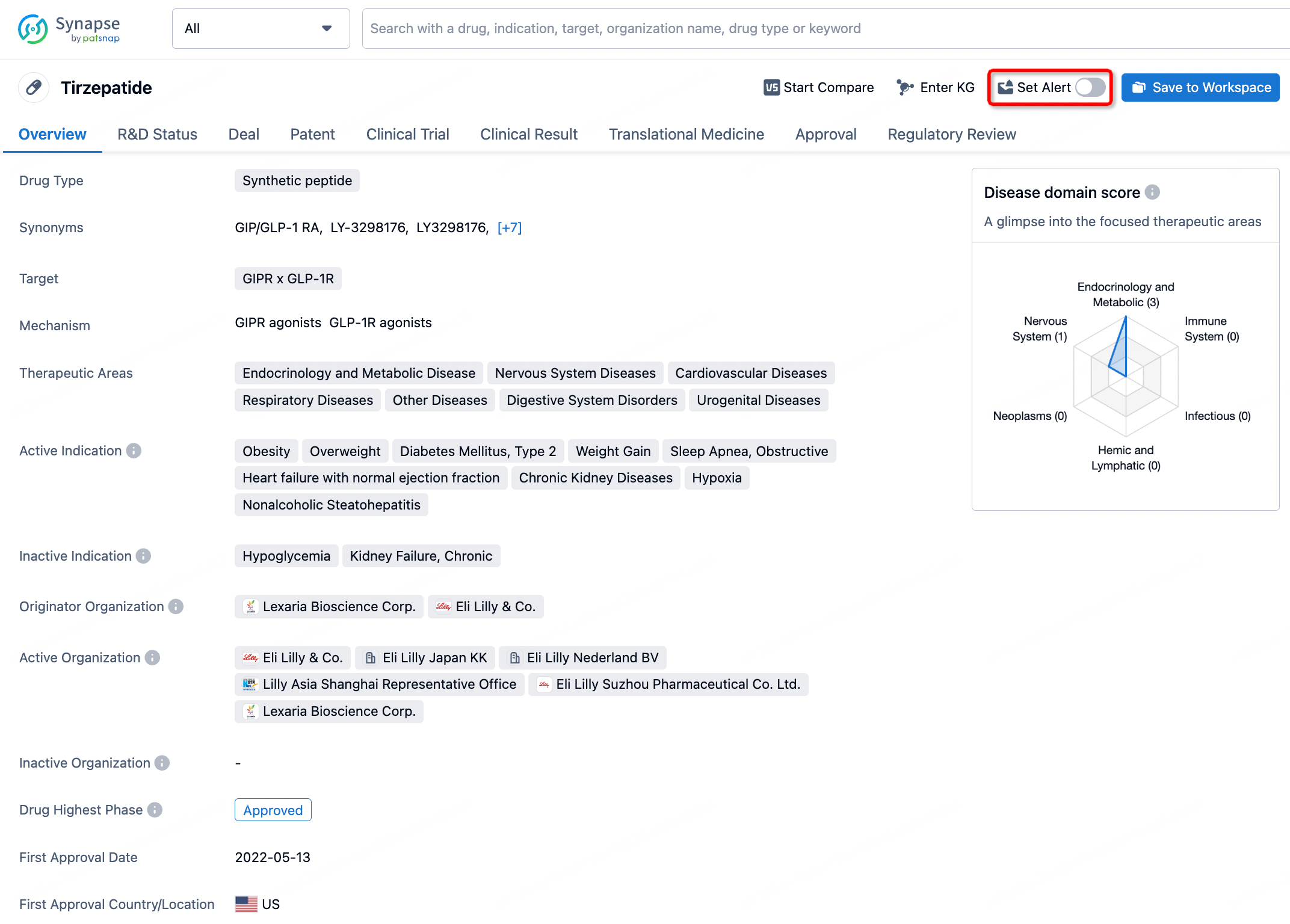
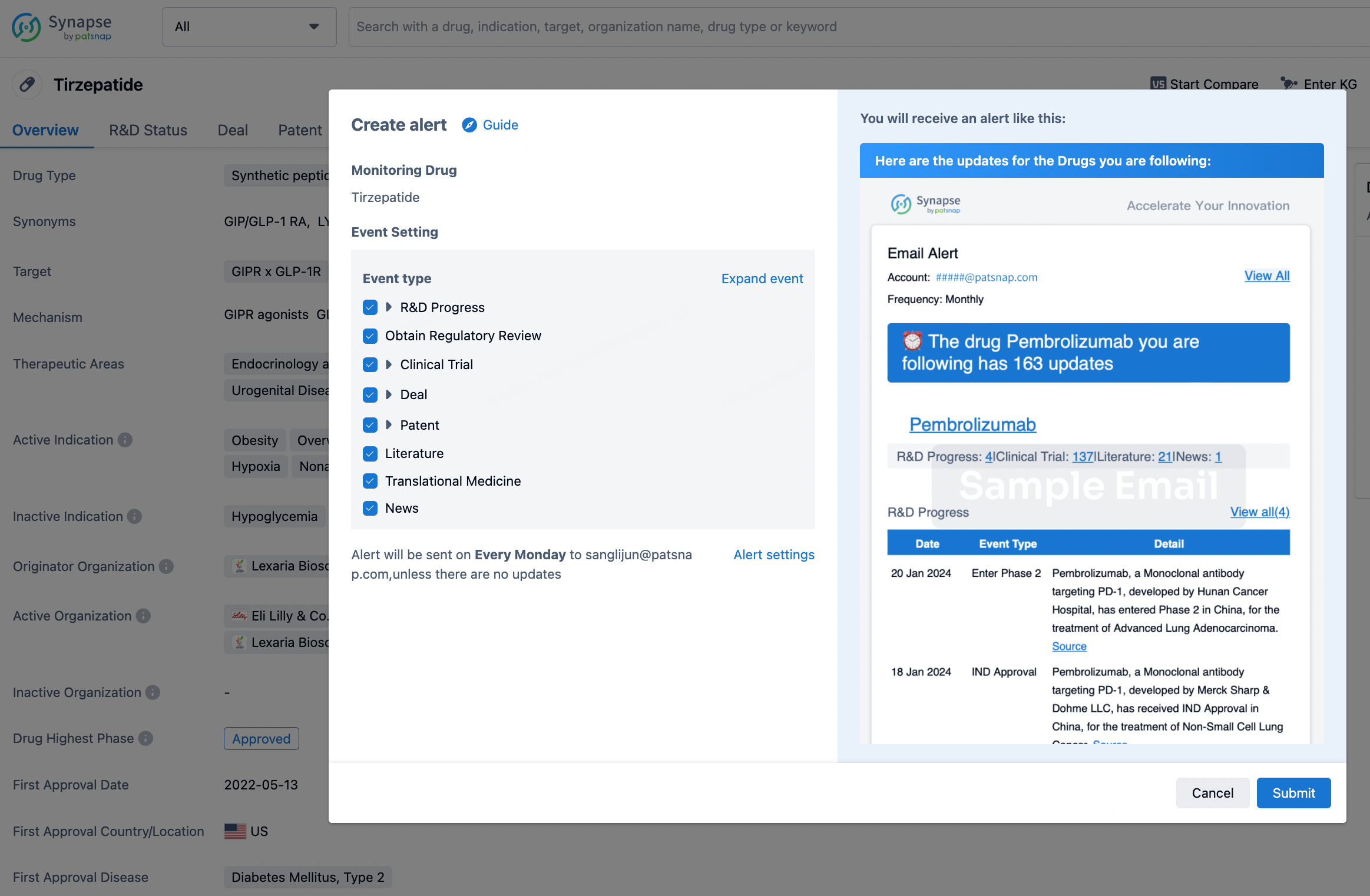
In the Synapse database, you can stay updated on the latest research and development advances of all drugs. This service is accessible anytime and anywhere, with updates available daily or weekly. Use the "Set Alert" function to stay informed. Click on the image below to embark on a brand new journey of drug discovery!

AI Agents Built for Biopharma Breakthroughs
Accelerate discovery. Empower decisions. Transform outcomes.
Get started for free today!
Accelerate Strategic R&D decision making with Synapse, PatSnap’s AI-powered Connected Innovation Intelligence Platform Built for Life Sciences Professionals.
Start your data trial now!
Synapse data is also accessible to external entities via APIs or data packages. Empower better decisions with the latest in pharmaceutical intelligence.