Request Demo
What are the side effects of Perflunafene?
15 July 2024
Perflunafene, commonly known by its chemical name perfluorooctyl bromide, is a fluorinated compound used in various medical and industrial applications. While it holds significant benefits, particularly in the field of medical imaging and as an oxygen carrier, it is essential to be aware of its potential side effects. Understanding these side effects can help users and healthcare providers make informed decisions regarding its use.
One of the primary concerns associated with perflunafene is its potential for causing respiratory issues. Inhalation of this compound, especially in high concentrations, can lead to respiratory discomfort, including coughing, shortness of breath, and in severe cases, respiratory distress. This is particularly relevant for individuals with pre-existing respiratory conditions such as asthma or chronic obstructive pulmonary disease (COPD). It is crucial to use it in well-ventilated areas and follow safety guidelines to minimize inhalation exposure.
Dermal exposure to perflunafene is another potential source of side effects. When the skin comes into contact with this compound, it may cause irritation, redness, and itching. Prolonged or repeated exposure can exacerbate these symptoms and may lead to more severe skin conditions such as dermatitis. It is advisable to use protective clothing and gloves when handling perflunafene to reduce the risk of skin contact.
Ingestion of perflunafene, although less common, can have serious health implications. Accidental ingestion may cause gastrointestinal distress, including nausea, vomiting, and diarrhea. In more severe cases, it can lead to systemic toxicity, affecting various organs and systems in the body. Immediate medical attention is required if ingestion is suspected, and measures should be taken to prevent accidental swallowing, especially in environments where perflunafene is used.
Another significant concern is the potential for perflunafene to cause neurological effects. Animal studies have indicated that high doses of perflunafene may lead to central nervous system depression, which can manifest as dizziness, confusion, and in extreme cases, loss of consciousness. While these effects are generally associated with high doses, it is important to exercise caution and avoid excessive exposure.
It is also worth noting that perflunafene may have environmental side effects. Due to its persistent nature and resistance to degradation, it can accumulate in the environment and potentially harm aquatic life. Disposing of perflunafene and any materials contaminated with it should follow proper hazardous waste protocols to minimize environmental impact.
In conclusion, while perflunafene offers significant advantages in medical and industrial applications, it is essential to be aware of its potential side effects. Respiratory issues, skin irritation, gastrointestinal distress, neurological effects, and environmental concerns are among the primary risks associated with its use. By adhering to safety guidelines and taking appropriate precautions, the risks can be minimized, allowing the benefits of perflunafene to be harnessed safely and effectively.
One of the primary concerns associated with perflunafene is its potential for causing respiratory issues. Inhalation of this compound, especially in high concentrations, can lead to respiratory discomfort, including coughing, shortness of breath, and in severe cases, respiratory distress. This is particularly relevant for individuals with pre-existing respiratory conditions such as asthma or chronic obstructive pulmonary disease (COPD). It is crucial to use it in well-ventilated areas and follow safety guidelines to minimize inhalation exposure.
Dermal exposure to perflunafene is another potential source of side effects. When the skin comes into contact with this compound, it may cause irritation, redness, and itching. Prolonged or repeated exposure can exacerbate these symptoms and may lead to more severe skin conditions such as dermatitis. It is advisable to use protective clothing and gloves when handling perflunafene to reduce the risk of skin contact.
Ingestion of perflunafene, although less common, can have serious health implications. Accidental ingestion may cause gastrointestinal distress, including nausea, vomiting, and diarrhea. In more severe cases, it can lead to systemic toxicity, affecting various organs and systems in the body. Immediate medical attention is required if ingestion is suspected, and measures should be taken to prevent accidental swallowing, especially in environments where perflunafene is used.
Another significant concern is the potential for perflunafene to cause neurological effects. Animal studies have indicated that high doses of perflunafene may lead to central nervous system depression, which can manifest as dizziness, confusion, and in extreme cases, loss of consciousness. While these effects are generally associated with high doses, it is important to exercise caution and avoid excessive exposure.
It is also worth noting that perflunafene may have environmental side effects. Due to its persistent nature and resistance to degradation, it can accumulate in the environment and potentially harm aquatic life. Disposing of perflunafene and any materials contaminated with it should follow proper hazardous waste protocols to minimize environmental impact.
In conclusion, while perflunafene offers significant advantages in medical and industrial applications, it is essential to be aware of its potential side effects. Respiratory issues, skin irritation, gastrointestinal distress, neurological effects, and environmental concerns are among the primary risks associated with its use. By adhering to safety guidelines and taking appropriate precautions, the risks can be minimized, allowing the benefits of perflunafene to be harnessed safely and effectively.
How to obtain the latest development progress of all drugs?
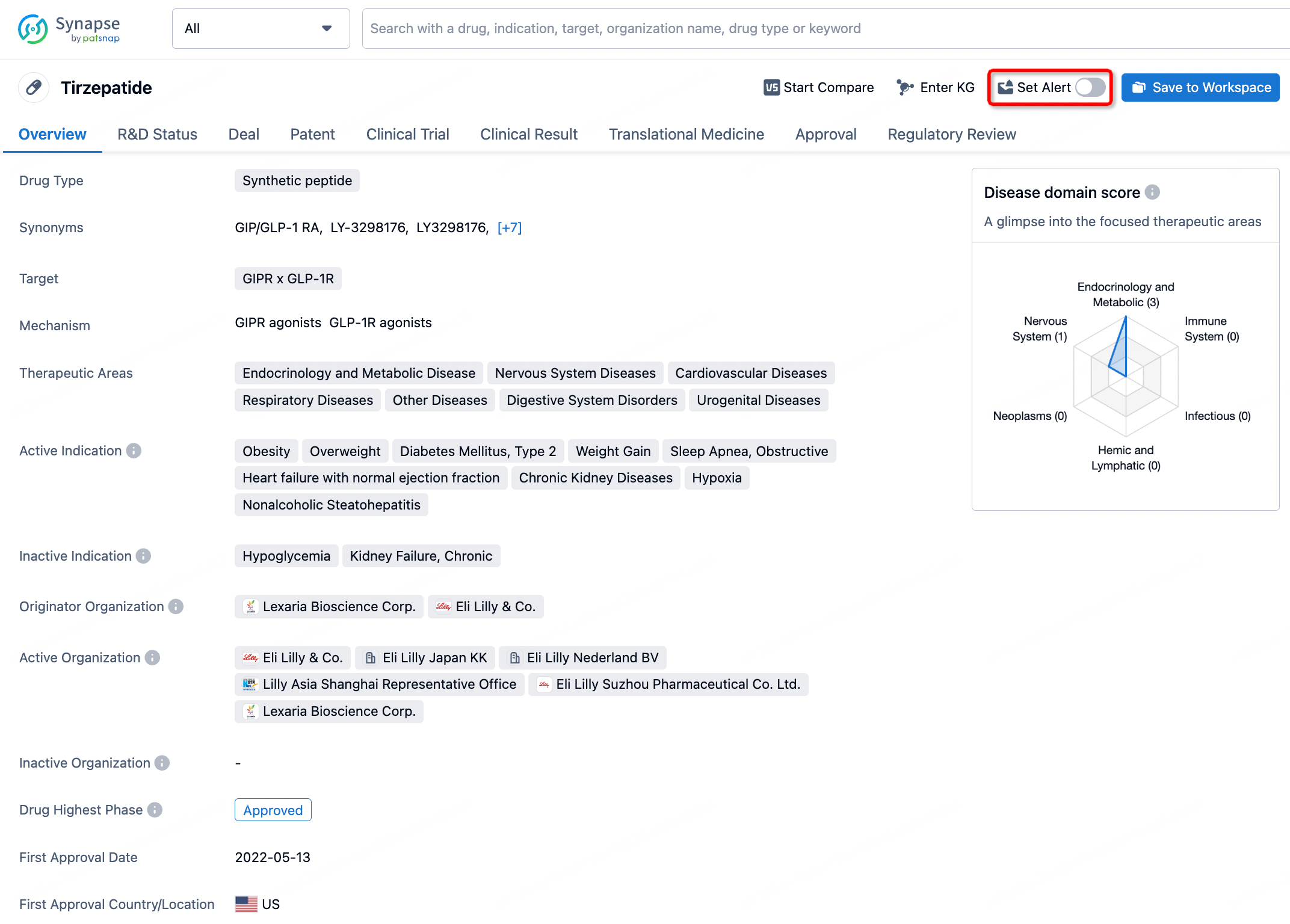
In the Synapse database, you can stay updated on the latest research and development advances of all drugs. This service is accessible anytime and anywhere, with updates available daily or weekly. Use the "Set Alert" function to stay informed. Click on the image below to embark on a brand new journey of drug discovery!


AI Agents Built for Biopharma Breakthroughs
Accelerate discovery. Empower decisions. Transform outcomes.
Get started for free today!
Accelerate Strategic R&D decision making with Synapse, PatSnap’s AI-powered Connected Innovation Intelligence Platform Built for Life Sciences Professionals.
Start your data trial now!
Synapse data is also accessible to external entities via APIs or data packages. Empower better decisions with the latest in pharmaceutical intelligence.