Request Demo
What are the side effects of raxtozinameran?
12 July 2024
Raxtozinameran is a medication that has gained considerable attention in recent years. As with any drug, while it can be effective in treating certain conditions, it also comes with a range of potential side effects. Understanding these side effects is crucial for patients and healthcare providers alike in order to make informed decisions about its use. This article delves into the various side effects associated with raxtozinameran, categorizing them based on severity and frequency.
Common Side Effects
The most frequently reported side effects of raxtozinameran are generally mild to moderate in nature. These include:
1. **Headache**: A significant number of patients report experiencing headaches after taking raxtozinameran. These headaches are usually mild and tend to subside on their own.
2. **Fatigue**: Feeling unusually tired or fatigued is another common side effect. This can affect daily activities but is typically temporary.
3. **Nausea**: Some individuals may feel nauseous after taking the medication. This can sometimes be mitigated by taking the drug with food.
4. **Dizziness**: A sensation of dizziness or lightheadedness can occur, especially when standing up quickly.
5. **Injection Site Reactions**: For those receiving raxtozinameran via injection, some local reactions such as pain, redness, or swelling at the injection site are common but usually resolve without intervention.
Moderate Side Effects
While less common, there are moderate side effects that warrant attention. These can include:
1. **Muscle Pain**: Some patients experience muscle pain or cramps that can be uncomfortable but are generally manageable with over-the-counter pain relievers.
2. **Fever**: A mild to moderate fever may develop, which usually resolves within a few days.
3. **Joint Pain**: Pain or stiffness in the joints can also occur, which may require medical advice for appropriate management.
4. **Gastrointestinal Issues**: Diarrhea or abdominal pain might be experienced by some patients, affecting their overall comfort and digestion.
Severe Side Effects
Although rare, severe side effects can occur and require immediate medical attention. These include:
1. **Anaphylaxis**: This is a severe allergic reaction that can be life-threatening. Symptoms include difficulty breathing, swelling of the face and throat, and rapid heartbeat.
2. **Severe Skin Reactions**: Conditions like Stevens-Johnson syndrome or toxic epidermal necrolysis can result in severe skin rashes, blistering, and peeling.
3. **Liver Dysfunction**: Signs of liver problems, such as jaundice (yellowing of the skin or eyes), dark urine, or severe abdominal pain, should prompt immediate medical consultation.
4. **Cardiovascular Issues**: Very rarely, patients may experience issues such as chest pain, irregular heartbeat, or significant increases in blood pressure.
5. **Neurological Effects**: Seizures or severe headaches that do not resolve could indicate serious neurological side effects.
Long-Term Side Effects
The long-term side effects of raxtozinameran are still being studied, given its relatively recent introduction. However, some potential long-term concerns include:
1. **Chronic Fatigue**: Ongoing fatigue that persists beyond the initial period of treatment.
2. **Organ Damage**: Prolonged use might lead to damage in organs such as the liver or kidneys, necessitating regular monitoring.
3. **Autoimmune Disorders**: There is a theoretical risk of developing autoimmune conditions, although more research is needed to confirm this.
Managing Side Effects
Managing the side effects of raxtozinameran involves a combination of patient self-care and professional medical advice. Patients are encouraged to:
1. **Stay Hydrated**: Drinking plenty of fluids can help alleviate symptoms like dizziness and nausea.
2. **Rest**: Adequate rest is crucial, especially when experiencing fatigue or muscle pain.
3. **Consult Healthcare Providers**: For moderate to severe side effects, prompt consultation with a healthcare provider is essential. They may adjust the dosage or recommend alternative therapies.
In conclusion, while raxtozinameran can be an effective treatment option for certain conditions, it is not without its risks. Patients should be fully informed of the potential side effects and work closely with their healthcare providers to monitor and manage any adverse reactions. By staying vigilant and proactive, the benefits of raxtozinameran can often outweigh the risks, leading to improved health outcomes.
Common Side Effects
The most frequently reported side effects of raxtozinameran are generally mild to moderate in nature. These include:
1. **Headache**: A significant number of patients report experiencing headaches after taking raxtozinameran. These headaches are usually mild and tend to subside on their own.
2. **Fatigue**: Feeling unusually tired or fatigued is another common side effect. This can affect daily activities but is typically temporary.
3. **Nausea**: Some individuals may feel nauseous after taking the medication. This can sometimes be mitigated by taking the drug with food.
4. **Dizziness**: A sensation of dizziness or lightheadedness can occur, especially when standing up quickly.
5. **Injection Site Reactions**: For those receiving raxtozinameran via injection, some local reactions such as pain, redness, or swelling at the injection site are common but usually resolve without intervention.
Moderate Side Effects
While less common, there are moderate side effects that warrant attention. These can include:
1. **Muscle Pain**: Some patients experience muscle pain or cramps that can be uncomfortable but are generally manageable with over-the-counter pain relievers.
2. **Fever**: A mild to moderate fever may develop, which usually resolves within a few days.
3. **Joint Pain**: Pain or stiffness in the joints can also occur, which may require medical advice for appropriate management.
4. **Gastrointestinal Issues**: Diarrhea or abdominal pain might be experienced by some patients, affecting their overall comfort and digestion.
Severe Side Effects
Although rare, severe side effects can occur and require immediate medical attention. These include:
1. **Anaphylaxis**: This is a severe allergic reaction that can be life-threatening. Symptoms include difficulty breathing, swelling of the face and throat, and rapid heartbeat.
2. **Severe Skin Reactions**: Conditions like Stevens-Johnson syndrome or toxic epidermal necrolysis can result in severe skin rashes, blistering, and peeling.
3. **Liver Dysfunction**: Signs of liver problems, such as jaundice (yellowing of the skin or eyes), dark urine, or severe abdominal pain, should prompt immediate medical consultation.
4. **Cardiovascular Issues**: Very rarely, patients may experience issues such as chest pain, irregular heartbeat, or significant increases in blood pressure.
5. **Neurological Effects**: Seizures or severe headaches that do not resolve could indicate serious neurological side effects.
Long-Term Side Effects
The long-term side effects of raxtozinameran are still being studied, given its relatively recent introduction. However, some potential long-term concerns include:
1. **Chronic Fatigue**: Ongoing fatigue that persists beyond the initial period of treatment.
2. **Organ Damage**: Prolonged use might lead to damage in organs such as the liver or kidneys, necessitating regular monitoring.
3. **Autoimmune Disorders**: There is a theoretical risk of developing autoimmune conditions, although more research is needed to confirm this.
Managing Side Effects
Managing the side effects of raxtozinameran involves a combination of patient self-care and professional medical advice. Patients are encouraged to:
1. **Stay Hydrated**: Drinking plenty of fluids can help alleviate symptoms like dizziness and nausea.
2. **Rest**: Adequate rest is crucial, especially when experiencing fatigue or muscle pain.
3. **Consult Healthcare Providers**: For moderate to severe side effects, prompt consultation with a healthcare provider is essential. They may adjust the dosage or recommend alternative therapies.
In conclusion, while raxtozinameran can be an effective treatment option for certain conditions, it is not without its risks. Patients should be fully informed of the potential side effects and work closely with their healthcare providers to monitor and manage any adverse reactions. By staying vigilant and proactive, the benefits of raxtozinameran can often outweigh the risks, leading to improved health outcomes.
How to obtain the latest development progress of all drugs?
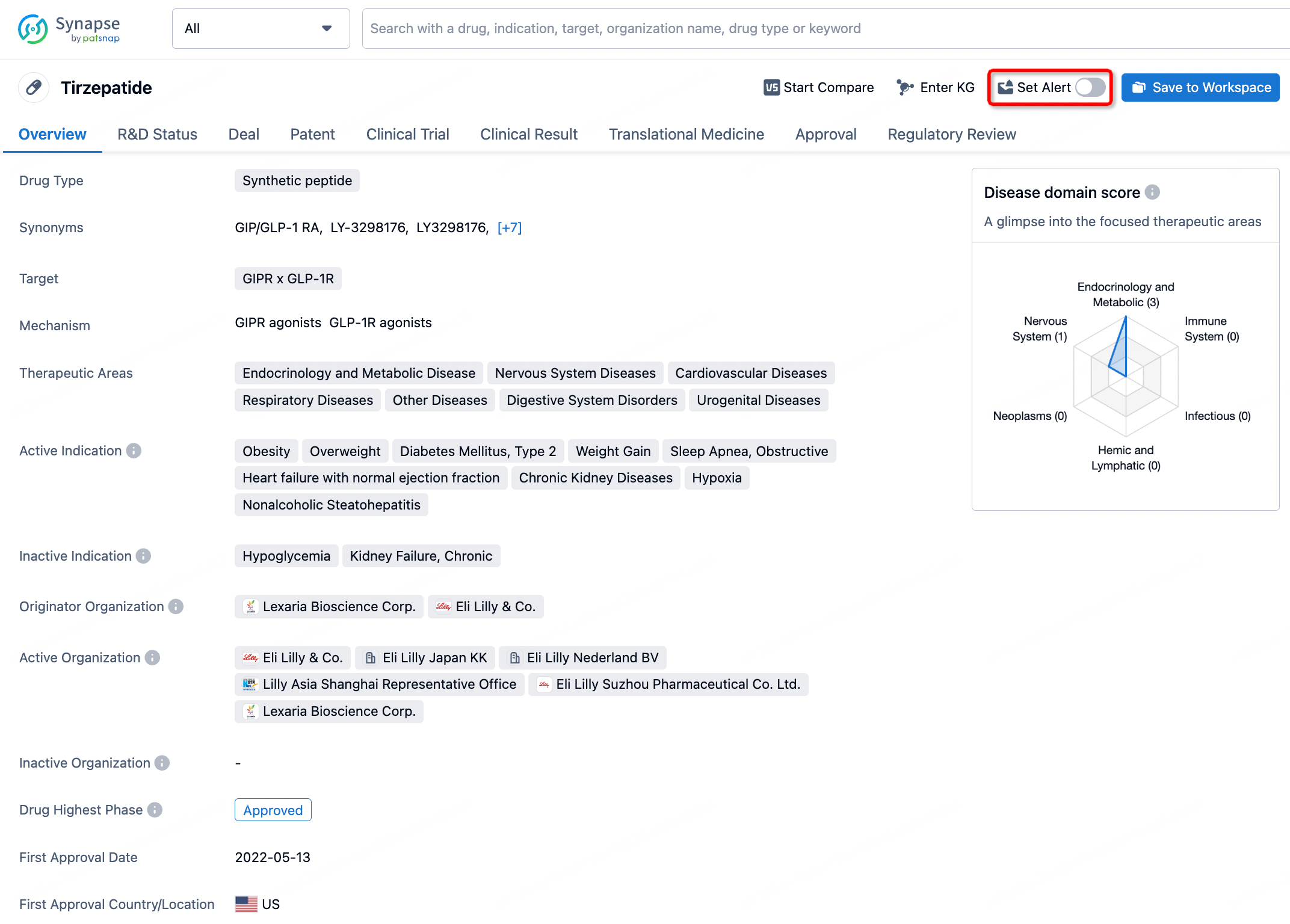
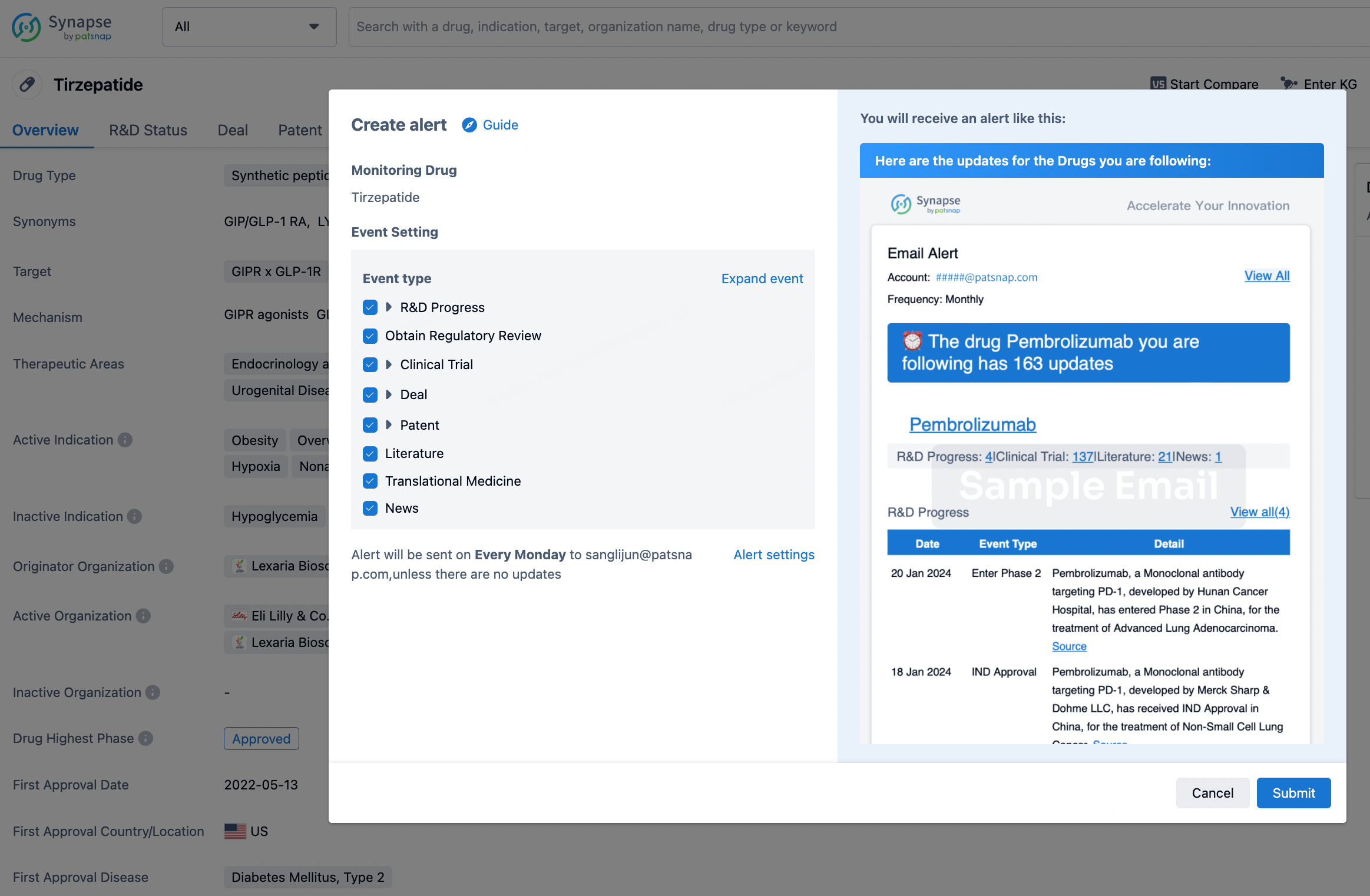
In the Synapse database, you can stay updated on the latest research and development advances of all drugs. This service is accessible anytime and anywhere, with updates available daily or weekly. Use the "Set Alert" function to stay informed. Click on the image below to embark on a brand new journey of drug discovery!

AI Agents Built for Biopharma Breakthroughs
Accelerate discovery. Empower decisions. Transform outcomes.
Get started for free today!
Accelerate Strategic R&D decision making with Synapse, PatSnap’s AI-powered Connected Innovation Intelligence Platform Built for Life Sciences Professionals.
Start your data trial now!
Synapse data is also accessible to external entities via APIs or data packages. Empower better decisions with the latest in pharmaceutical intelligence.