Request Demo
What are the side effects of rVSV-ZEBOV?
12 July 2024
The rVSV-ZEBOV vaccine, also known as Ervebo, is an investigational vaccine designed to protect against the Ebola virus, particularly the Zaire strain. It has been deployed in various outbreaks to help control the spread of this deadly virus. As with any medical intervention, it is important to understand the potential side effects that may arise from its administration.
Common side effects of rVSV-ZEBOV are generally mild to moderate and tend to resolve on their own within a few days. These include pain, swelling, and redness at the injection site. Some individuals may also experience fever, headache, fatigue, and muscle pain. These symptoms are typical of many vaccines and are indicative of the body's immune response to the vaccine.
Another side effect that has been observed is arthralgia, or joint pain, which can occur along with myalgia, or muscle pain. While these symptoms can be uncomfortable, they are usually temporary and subside without the need for medical intervention.
In some cases, individuals may experience gastrointestinal symptoms such as nausea, vomiting, and abdominal pain. These symptoms are less common but have been reported during clinical trials and real-world use of the vaccine.
More severe side effects are rare but can occur. These may include hypersensitivity reactions, such as rash, pruritus (itching), and, in very rare cases, anaphylaxis, which is a severe allergic reaction that requires immediate medical attention. It is essential for healthcare providers to screen individuals for any known allergies to components of the vaccine before administration.
Additionally, there have been isolated reports of vaccine-induced viremia, where the live, attenuated virus used in the vaccine is detected in the blood. This is generally asymptomatic and transient but highlights the need for monitoring in certain populations, such as immunocompromised individuals.
It is also worth noting that the safety profile of rVSV-ZEBOV is still being evaluated, as it continues to be used under emergency use authorizations in outbreak settings. Long-term data on side effects are still being collected, and ongoing surveillance will provide a clearer picture of any potential risks associated with the vaccine.
Overall, the benefits of rVSV-ZEBOV in preventing Ebola virus disease far outweigh the risks of side effects for most individuals. The vaccine has been a critical tool in controlling outbreaks and preventing the spread of this deadly virus. However, as with any medical intervention, it is essential to weigh the risks and benefits and to monitor for any adverse effects following vaccination.
In conclusion, while the rVSV-ZEBOV vaccine is generally well-tolerated and effective in preventing Ebola virus disease, it is associated with a range of side effects that are mostly mild to moderate in nature. These include local injection site reactions, systemic symptoms such as fever and muscle pain, gastrointestinal symptoms, and rare severe allergic reactions. Ongoing monitoring and research are essential to ensure the continued safety and efficacy of this important vaccine.
Common side effects of rVSV-ZEBOV are generally mild to moderate and tend to resolve on their own within a few days. These include pain, swelling, and redness at the injection site. Some individuals may also experience fever, headache, fatigue, and muscle pain. These symptoms are typical of many vaccines and are indicative of the body's immune response to the vaccine.
Another side effect that has been observed is arthralgia, or joint pain, which can occur along with myalgia, or muscle pain. While these symptoms can be uncomfortable, they are usually temporary and subside without the need for medical intervention.
In some cases, individuals may experience gastrointestinal symptoms such as nausea, vomiting, and abdominal pain. These symptoms are less common but have been reported during clinical trials and real-world use of the vaccine.
More severe side effects are rare but can occur. These may include hypersensitivity reactions, such as rash, pruritus (itching), and, in very rare cases, anaphylaxis, which is a severe allergic reaction that requires immediate medical attention. It is essential for healthcare providers to screen individuals for any known allergies to components of the vaccine before administration.
Additionally, there have been isolated reports of vaccine-induced viremia, where the live, attenuated virus used in the vaccine is detected in the blood. This is generally asymptomatic and transient but highlights the need for monitoring in certain populations, such as immunocompromised individuals.
It is also worth noting that the safety profile of rVSV-ZEBOV is still being evaluated, as it continues to be used under emergency use authorizations in outbreak settings. Long-term data on side effects are still being collected, and ongoing surveillance will provide a clearer picture of any potential risks associated with the vaccine.
Overall, the benefits of rVSV-ZEBOV in preventing Ebola virus disease far outweigh the risks of side effects for most individuals. The vaccine has been a critical tool in controlling outbreaks and preventing the spread of this deadly virus. However, as with any medical intervention, it is essential to weigh the risks and benefits and to monitor for any adverse effects following vaccination.
In conclusion, while the rVSV-ZEBOV vaccine is generally well-tolerated and effective in preventing Ebola virus disease, it is associated with a range of side effects that are mostly mild to moderate in nature. These include local injection site reactions, systemic symptoms such as fever and muscle pain, gastrointestinal symptoms, and rare severe allergic reactions. Ongoing monitoring and research are essential to ensure the continued safety and efficacy of this important vaccine.
How to obtain the latest development progress of all drugs?
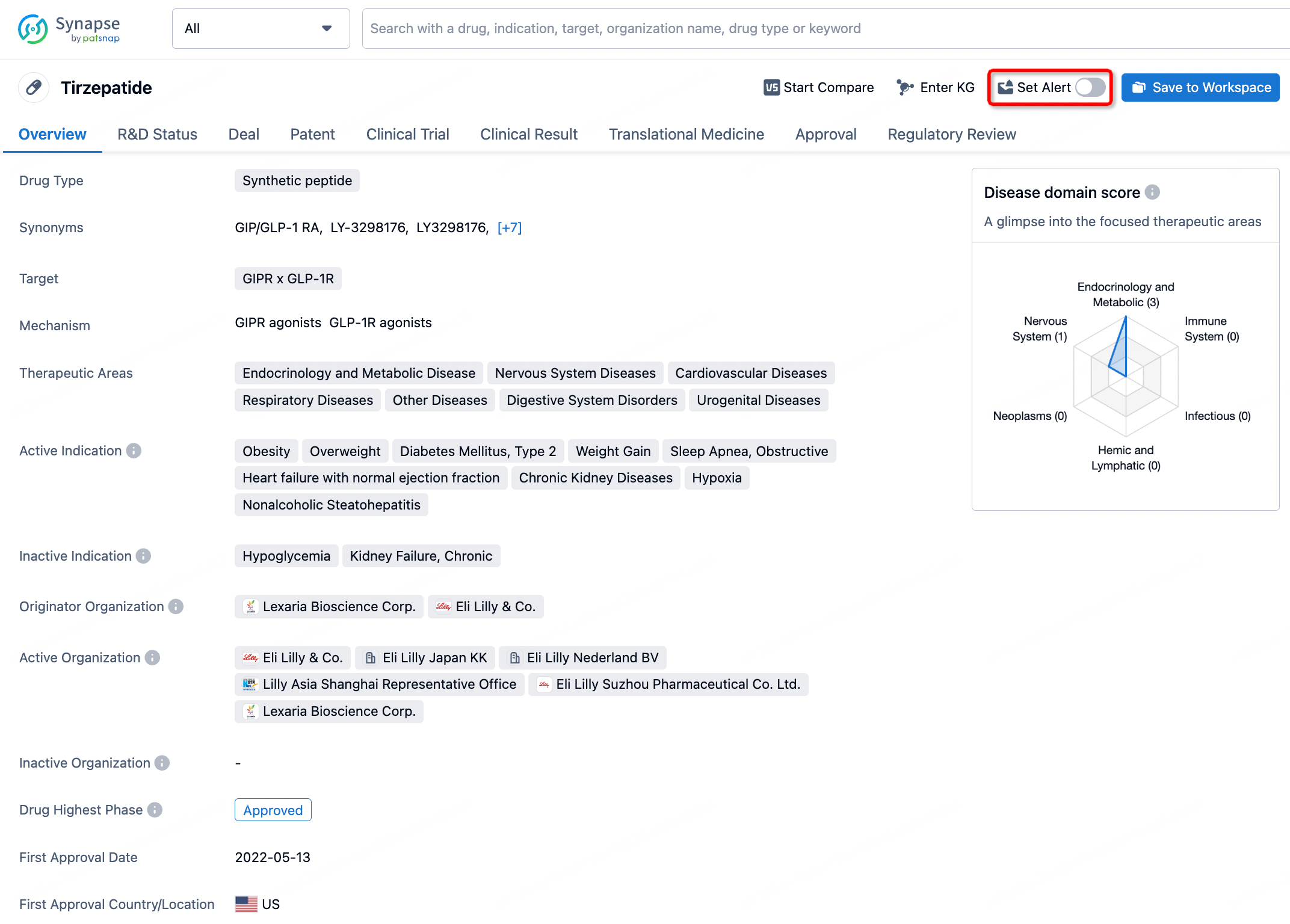
In the Synapse database, you can stay updated on the latest research and development advances of all drugs. This service is accessible anytime and anywhere, with updates available daily or weekly. Use the "Set Alert" function to stay informed. Click on the image below to embark on a brand new journey of drug discovery!

AI Agents Built for Biopharma Breakthroughs
Accelerate discovery. Empower decisions. Transform outcomes.
Get started for free today!
Accelerate Strategic R&D decision making with Synapse, PatSnap’s AI-powered Connected Innovation Intelligence Platform Built for Life Sciences Professionals.
Start your data trial now!
Synapse data is also accessible to external entities via APIs or data packages. Empower better decisions with the latest in pharmaceutical intelligence.