Request Demo
What are the side effects of Simeprevir Sodium?
12 July 2024
Simeprevir sodium is an antiviral medication primarily used in the treatment of chronic hepatitis C virus (HCV) infection. While it has been proven effective in combating HCV, patients and healthcare providers must be aware of its potential side effects to manage them appropriately.
Common side effects of simeprevir sodium can range from mild to moderate in severity. Many patients experience fatigue, headache, and nausea. These symptoms are relatively common with antiviral medications and, while uncomfortable, are often manageable with supportive care and typically diminish as the body adjusts to the medication.
Rash is another frequently reported side effect. The rash may appear as red, itchy patches on the skin and can vary from mild to severe. In some cases, the rash can become quite extensive and may lead to discontinuation of the treatment if it becomes intolerable or severe. Patients should monitor their skin closely and report any changes to their healthcare provider promptly.
Photosensitivity is a notable side effect of simeprevir sodium. Patients may become more sensitive to sunlight and can easily get sunburned. It is advisable for patients to take protective measures such as wearing sunscreen, long-sleeved clothing, and avoiding prolonged sun exposure, especially during peak hours.
Other side effects may include gastrointestinal symptoms such as diarrhea and constipation. These symptoms can disrupt daily activities but are often manageable with dietary adjustments and over-the-counter medications. Patients should maintain hydration and follow a balanced diet to help minimize these digestive disturbances.
In some cases, simeprevir sodium can cause elevated bilirubin levels. Bilirubin is a substance produced by the breakdown of red blood cells, and elevated levels can lead to jaundice, characterized by yellowing of the skin and eyes. While this side effect is typically not dangerous, it should be closely monitored by healthcare providers.
There are also more serious but less common side effects associated with simeprevir sodium. Liver-related issues, including severe liver dysfunction and hepatic decompensation, can occur, especially in patients with advanced liver disease or cirrhosis. Symptoms of liver problems may include severe fatigue, abdominal pain, and changes in mental status. Immediate medical attention is required if these symptoms arise.
Patients with pre-existing liver conditions should be closely monitored during treatment with simeprevir sodium, and dose adjustments or discontinuation may be necessary if liver-related side effects develop.
Allergic reactions, though rare, can also occur. Symptoms of an allergic reaction include difficulty breathing, swelling of the face, lips, tongue, or throat, and severe skin reactions. These symptoms require immediate medical intervention.
Additionally, it is essential to note that simeprevir sodium can interact with other medications, leading to potential side effects or reduced efficacy of the treatment. Patients should inform their healthcare provider of all medications they are taking, including over-the-counter drugs and supplements, to avoid harmful interactions.
In conclusion, while simeprevir sodium is a potent antiviral medication for treating chronic hepatitis C, it is associated with various side effects. Patients and healthcare providers must work closely to monitor and manage these side effects to ensure the safe and effective use of the medication. It is crucial for patients to report any unusual or severe symptoms to their healthcare provider promptly to receive appropriate care and adjustments to their treatment plan if necessary.
Common side effects of simeprevir sodium can range from mild to moderate in severity. Many patients experience fatigue, headache, and nausea. These symptoms are relatively common with antiviral medications and, while uncomfortable, are often manageable with supportive care and typically diminish as the body adjusts to the medication.
Rash is another frequently reported side effect. The rash may appear as red, itchy patches on the skin and can vary from mild to severe. In some cases, the rash can become quite extensive and may lead to discontinuation of the treatment if it becomes intolerable or severe. Patients should monitor their skin closely and report any changes to their healthcare provider promptly.
Photosensitivity is a notable side effect of simeprevir sodium. Patients may become more sensitive to sunlight and can easily get sunburned. It is advisable for patients to take protective measures such as wearing sunscreen, long-sleeved clothing, and avoiding prolonged sun exposure, especially during peak hours.
Other side effects may include gastrointestinal symptoms such as diarrhea and constipation. These symptoms can disrupt daily activities but are often manageable with dietary adjustments and over-the-counter medications. Patients should maintain hydration and follow a balanced diet to help minimize these digestive disturbances.
In some cases, simeprevir sodium can cause elevated bilirubin levels. Bilirubin is a substance produced by the breakdown of red blood cells, and elevated levels can lead to jaundice, characterized by yellowing of the skin and eyes. While this side effect is typically not dangerous, it should be closely monitored by healthcare providers.
There are also more serious but less common side effects associated with simeprevir sodium. Liver-related issues, including severe liver dysfunction and hepatic decompensation, can occur, especially in patients with advanced liver disease or cirrhosis. Symptoms of liver problems may include severe fatigue, abdominal pain, and changes in mental status. Immediate medical attention is required if these symptoms arise.
Patients with pre-existing liver conditions should be closely monitored during treatment with simeprevir sodium, and dose adjustments or discontinuation may be necessary if liver-related side effects develop.
Allergic reactions, though rare, can also occur. Symptoms of an allergic reaction include difficulty breathing, swelling of the face, lips, tongue, or throat, and severe skin reactions. These symptoms require immediate medical intervention.
Additionally, it is essential to note that simeprevir sodium can interact with other medications, leading to potential side effects or reduced efficacy of the treatment. Patients should inform their healthcare provider of all medications they are taking, including over-the-counter drugs and supplements, to avoid harmful interactions.
In conclusion, while simeprevir sodium is a potent antiviral medication for treating chronic hepatitis C, it is associated with various side effects. Patients and healthcare providers must work closely to monitor and manage these side effects to ensure the safe and effective use of the medication. It is crucial for patients to report any unusual or severe symptoms to their healthcare provider promptly to receive appropriate care and adjustments to their treatment plan if necessary.
How to obtain the latest development progress of all drugs?
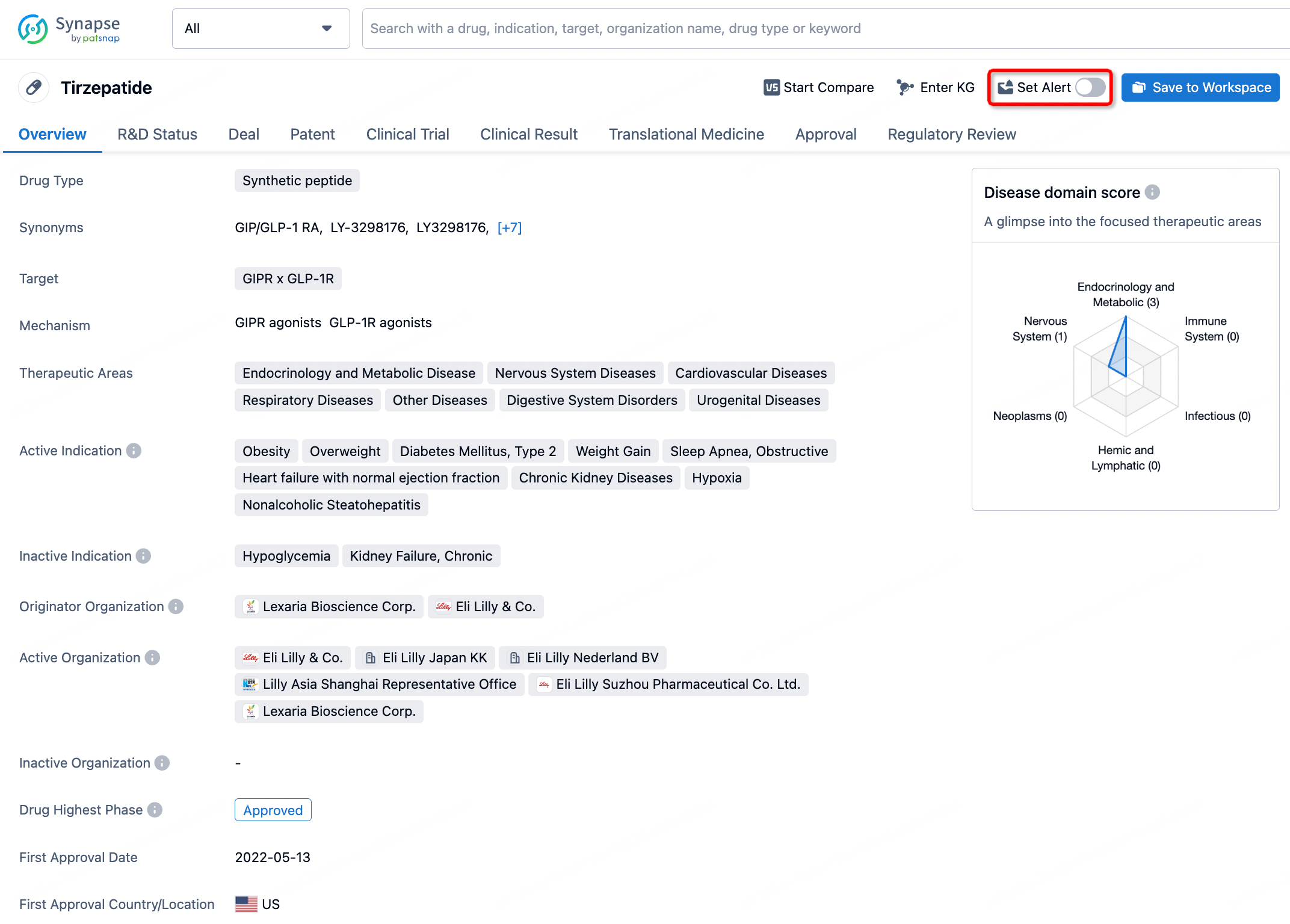
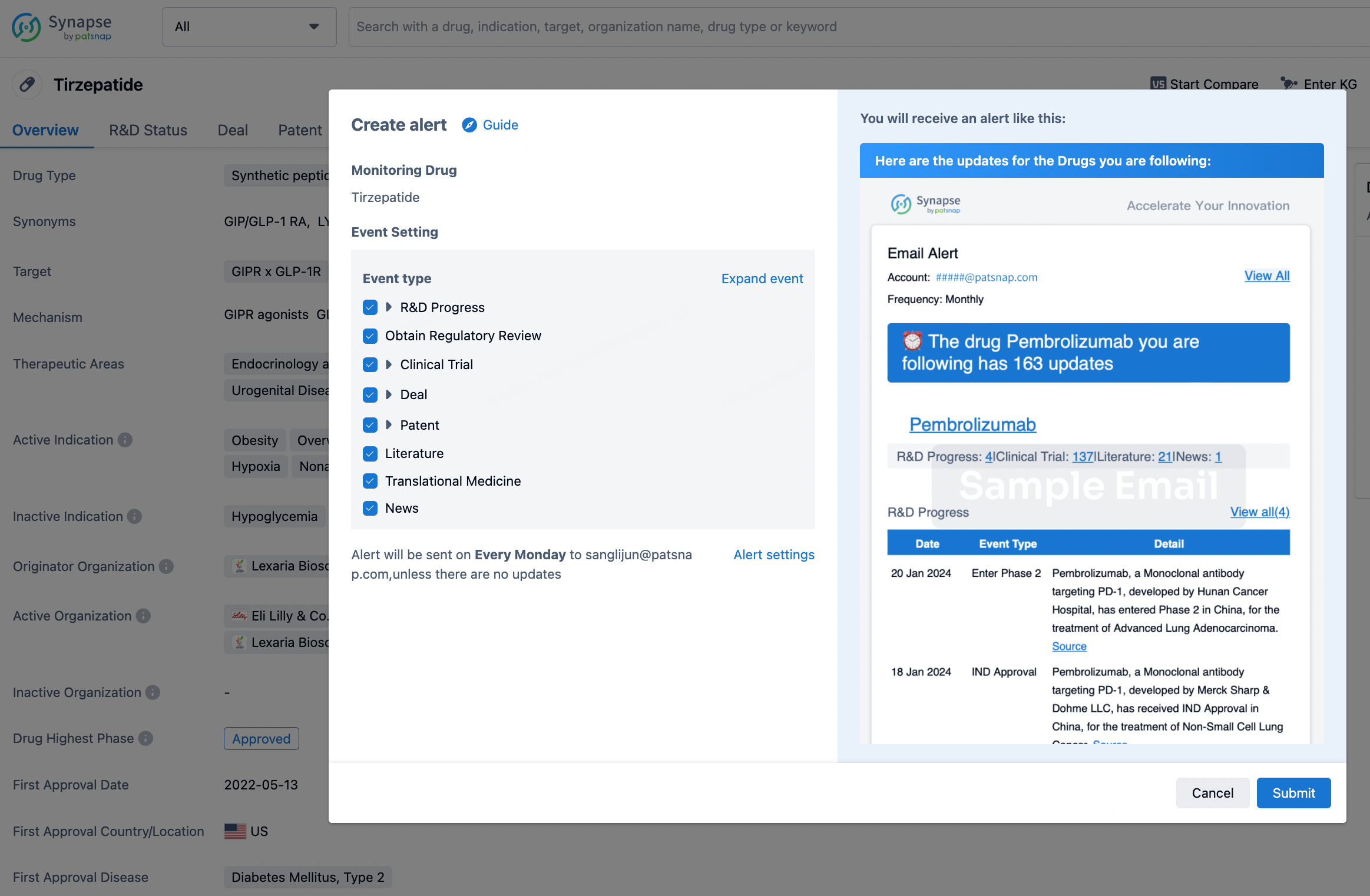
In the Synapse database, you can stay updated on the latest research and development advances of all drugs. This service is accessible anytime and anywhere, with updates available daily or weekly. Use the "Set Alert" function to stay informed. Click on the image below to embark on a brand new journey of drug discovery!

AI Agents Built for Biopharma Breakthroughs
Accelerate discovery. Empower decisions. Transform outcomes.
Get started for free today!
Accelerate Strategic R&D decision making with Synapse, PatSnap’s AI-powered Connected Innovation Intelligence Platform Built for Life Sciences Professionals.
Start your data trial now!
Synapse data is also accessible to external entities via APIs or data packages. Empower better decisions with the latest in pharmaceutical intelligence.