Request Demo
What are the side effects of Teserpaturev?
15 July 2024
Teserpaturev, a novel oncolytic virus therapy, is an emerging treatment in the field of oncology. As with any medical treatment, it is essential to understand the potential side effects before considering it as an option. Here, we will explore the side effects associated with Teserpaturev based on current clinical data and patient reports.
One of the primary side effects observed in patients receiving Teserpaturev is flu-like symptoms. These can include fever, chills, fatigue, and muscle aches. These symptoms typically occur due to the immune system's response to the viral therapy and usually subside within a few days. Patients often find relief through over-the-counter medications such as acetaminophen or ibuprofen, but it is advised to consult with a healthcare provider before taking any additional medications.
Injection site reactions are another common side effect. Patients may experience redness, swelling, pain, or warmth at the site where the virus is administered. These reactions are generally mild to moderate in intensity and temporary. Applying a cold compress to the injection site and keeping it clean can help minimize discomfort.
Gastrointestinal issues, such as nausea, vomiting, and diarrhea, have also been reported among patients. These side effects can range from mild to severe and may require medical intervention if they become persistent or unmanageable. Staying hydrated and following a bland diet may alleviate some of these symptoms.
Some patients have experienced respiratory symptoms, including cough, shortness of breath, and nasal congestion. These symptoms are usually mild and resemble those of a common cold. However, if respiratory symptoms worsen or become severe, it is crucial to seek medical attention promptly.
Another significant consideration is the potential for immune-related side effects. Because Teserpaturev functions by stimulating the immune system to attack cancer cells, there is a risk of autoimmune reactions. These reactions can manifest as rashes, thyroid dysfunctions, or even more severe conditions such as colitis or hepatitis. Continuous monitoring and regular blood tests are often required to catch these side effects early and manage them effectively.
Moreover, there is a possibility of experiencing neurological side effects, although these are less common. Patients may report headaches, dizziness, or even seizures in rare cases. Any neurological symptoms should be reported to a healthcare provider immediately, as they may require urgent attention.
Hematological side effects, such as changes in blood cell counts, have also been documented. Patients may experience anemia, leukopenia, or thrombocytopenia. Regular blood tests are essential for monitoring these conditions and ensuring they do not reach critical levels that could impact overall health.
It's important to note that the severity and occurrence of side effects can vary widely among individuals. Factors such as the patient's overall health, the stage and type of cancer being treated, and concurrent therapies can all influence the side effect profile. Therefore, personalized medical advice from oncologists and healthcare providers is crucial in managing and mitigating these side effects.
In conclusion, while Teserpaturev offers a promising avenue for cancer treatment, it is accompanied by a range of potential side effects that require careful consideration and management. Patients should be well-informed and work closely with their healthcare team to navigate the complexities of this innovative therapy.
One of the primary side effects observed in patients receiving Teserpaturev is flu-like symptoms. These can include fever, chills, fatigue, and muscle aches. These symptoms typically occur due to the immune system's response to the viral therapy and usually subside within a few days. Patients often find relief through over-the-counter medications such as acetaminophen or ibuprofen, but it is advised to consult with a healthcare provider before taking any additional medications.
Injection site reactions are another common side effect. Patients may experience redness, swelling, pain, or warmth at the site where the virus is administered. These reactions are generally mild to moderate in intensity and temporary. Applying a cold compress to the injection site and keeping it clean can help minimize discomfort.
Gastrointestinal issues, such as nausea, vomiting, and diarrhea, have also been reported among patients. These side effects can range from mild to severe and may require medical intervention if they become persistent or unmanageable. Staying hydrated and following a bland diet may alleviate some of these symptoms.
Some patients have experienced respiratory symptoms, including cough, shortness of breath, and nasal congestion. These symptoms are usually mild and resemble those of a common cold. However, if respiratory symptoms worsen or become severe, it is crucial to seek medical attention promptly.
Another significant consideration is the potential for immune-related side effects. Because Teserpaturev functions by stimulating the immune system to attack cancer cells, there is a risk of autoimmune reactions. These reactions can manifest as rashes, thyroid dysfunctions, or even more severe conditions such as colitis or hepatitis. Continuous monitoring and regular blood tests are often required to catch these side effects early and manage them effectively.
Moreover, there is a possibility of experiencing neurological side effects, although these are less common. Patients may report headaches, dizziness, or even seizures in rare cases. Any neurological symptoms should be reported to a healthcare provider immediately, as they may require urgent attention.
Hematological side effects, such as changes in blood cell counts, have also been documented. Patients may experience anemia, leukopenia, or thrombocytopenia. Regular blood tests are essential for monitoring these conditions and ensuring they do not reach critical levels that could impact overall health.
It's important to note that the severity and occurrence of side effects can vary widely among individuals. Factors such as the patient's overall health, the stage and type of cancer being treated, and concurrent therapies can all influence the side effect profile. Therefore, personalized medical advice from oncologists and healthcare providers is crucial in managing and mitigating these side effects.
In conclusion, while Teserpaturev offers a promising avenue for cancer treatment, it is accompanied by a range of potential side effects that require careful consideration and management. Patients should be well-informed and work closely with their healthcare team to navigate the complexities of this innovative therapy.
How to obtain the latest development progress of all drugs?
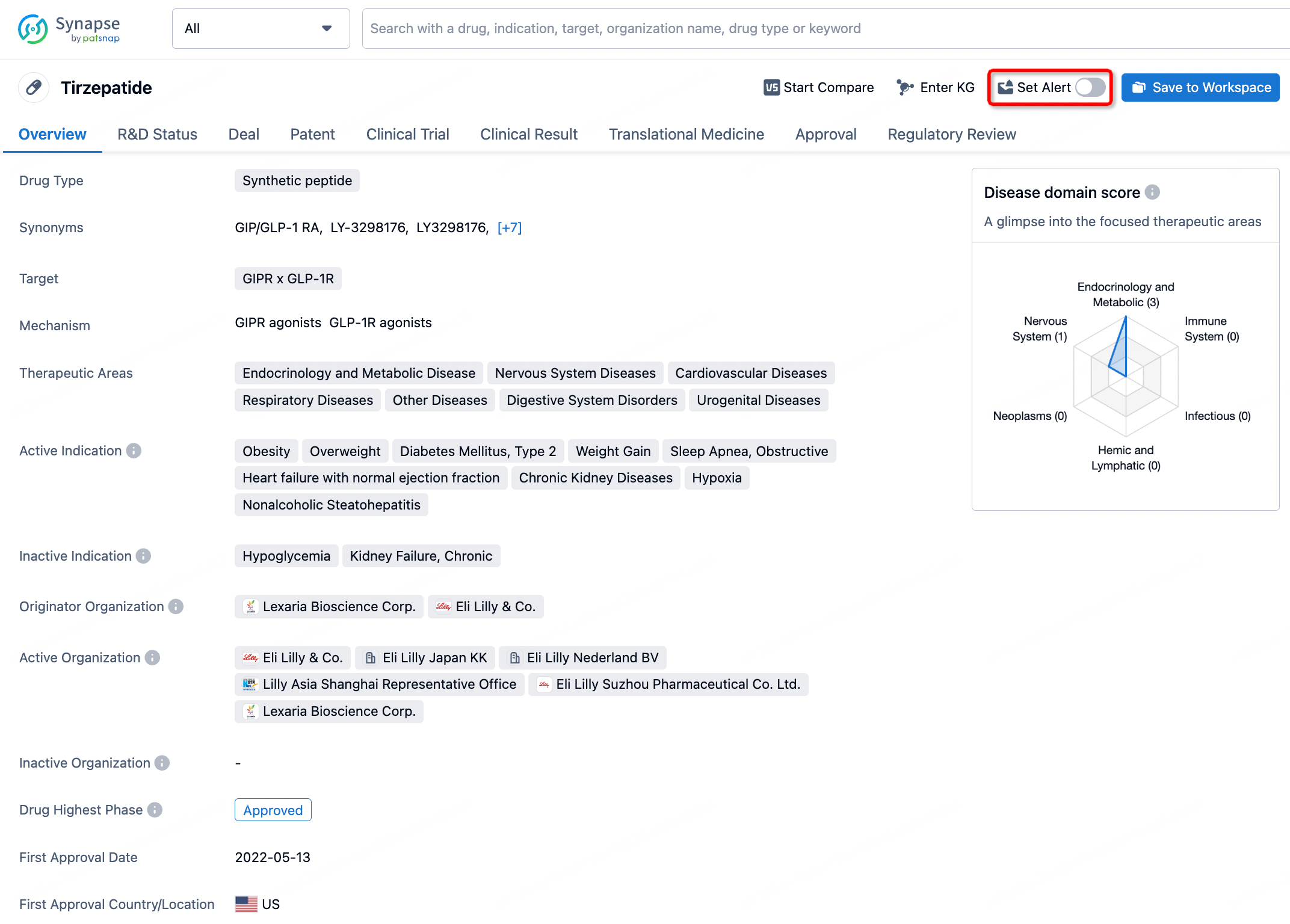
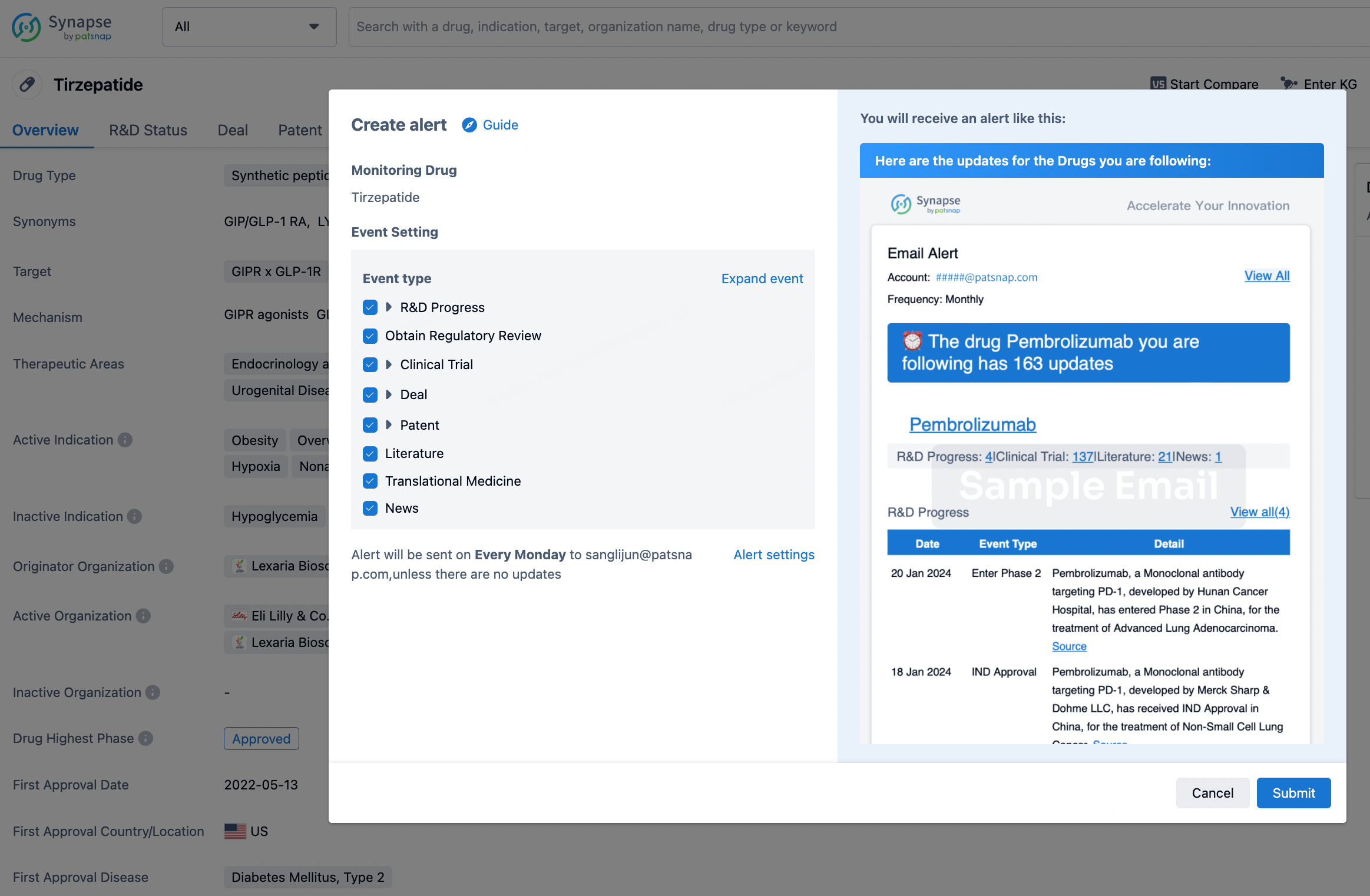
In the Synapse database, you can stay updated on the latest research and development advances of all drugs. This service is accessible anytime and anywhere, with updates available daily or weekly. Use the "Set Alert" function to stay informed. Click on the image below to embark on a brand new journey of drug discovery!

AI Agents Built for Biopharma Breakthroughs
Accelerate discovery. Empower decisions. Transform outcomes.
Get started for free today!
Accelerate Strategic R&D decision making with Synapse, PatSnap’s AI-powered Connected Innovation Intelligence Platform Built for Life Sciences Professionals.
Start your data trial now!
Synapse data is also accessible to external entities via APIs or data packages. Empower better decisions with the latest in pharmaceutical intelligence.