Request Demo
What are the side effects of Vindesine Sulfate?
12 July 2024
Vindesine Sulfate is a chemotherapy medication used in the treatment of various cancers, including leukemia, lymphomas, and certain types of solid tumors. Like many chemotherapy agents, it is designed to target and kill rapidly dividing cancer cells. However, its effects are not limited to just cancerous cells, and it can also affect normal, healthy cells that divide quickly. This can lead to a range of side effects that vary in severity and frequency among patients.
One of the most common side effects of Vindesine Sulfate is myelosuppression, which refers to the decreased production of blood cells by the bone marrow. This can lead to conditions such as anemia, characterized by fatigue and weakness; leukopenia, which increases the risk of infections; and thrombocytopenia, leading to an increased risk of bleeding and bruising. Regular blood tests are usually required to monitor these parameters and manage any complications promptly.
Another frequent side effect is peripheral neuropathy, which involves damage to the nerves outside the brain and spinal cord. Patients may experience numbness, tingling, or pain in the hands and feet. These symptoms can be particularly troubling and may persist even after treatment has ended. Physicians often have to adjust the dose or discontinue the drug if neuropathy becomes severe.
Gastrointestinal issues are also prevalent among patients receiving Vindesine Sulfate. Nausea and vomiting are common, and they are typically managed with antiemetic medications. Diarrhea and constipation can also occur and may be managed through dietary adjustments and medications. Stomatitis, or inflammation of the mouth, can cause painful sores and make eating difficult, requiring a soft diet and good oral hygiene.
Hair loss, or alopecia, is another side effect that can be distressing for patients. While this is often a temporary condition, it can significantly impact a patient’s self-esteem and quality of life. Hair usually begins to grow back after treatment has concluded, but it may take several months.
Vindesine Sulfate can also cause liver toxicity, necessitating regular liver function tests to monitor for any signs of damage. Symptoms of liver toxicity can include jaundice, dark urine, and abdominal pain. If significant liver dysfunction is detected, dosage modification or discontinuation of the drug may be required.
In some cases, patients may experience cardiovascular side effects, such as changes in heart rhythm or blood pressure. These effects are generally less common but can be serious. Monitoring cardiac function may be necessary, especially in patients with pre-existing heart conditions.
Skin reactions, such as rashes or itching, can also occur. These are generally mild but can be bothersome. Topical treatments or antihistamines may be prescribed to alleviate these symptoms.
Less commonly, Vindesine Sulfate can cause severe allergic reactions. Symptoms of an allergic reaction can include difficulty breathing, swelling of the face or throat, and severe rash. Immediate medical attention is required if an allergic reaction is suspected.
It is crucial for patients to discuss the potential side effects of Vindesine Sulfate with their healthcare provider before starting treatment. Understanding what to expect can help in managing these effects more effectively and improving the overall treatment experience. Regular monitoring and open communication with the healthcare team are essential for addressing any side effects promptly and minimizing their impact on the patient's quality of life.
In summary, while Vindesine Sulfate can be an effective chemotherapy agent, it comes with a range of potential side effects that can affect various parts of the body. These include myelosuppression, peripheral neuropathy, gastrointestinal issues, hair loss, liver toxicity, cardiovascular effects, skin reactions, and the risk of severe allergic reactions. Close monitoring and proactive management of these side effects are crucial for ensuring the best possible outcomes for patients undergoing treatment with Vindesine Sulfate.
One of the most common side effects of Vindesine Sulfate is myelosuppression, which refers to the decreased production of blood cells by the bone marrow. This can lead to conditions such as anemia, characterized by fatigue and weakness; leukopenia, which increases the risk of infections; and thrombocytopenia, leading to an increased risk of bleeding and bruising. Regular blood tests are usually required to monitor these parameters and manage any complications promptly.
Another frequent side effect is peripheral neuropathy, which involves damage to the nerves outside the brain and spinal cord. Patients may experience numbness, tingling, or pain in the hands and feet. These symptoms can be particularly troubling and may persist even after treatment has ended. Physicians often have to adjust the dose or discontinue the drug if neuropathy becomes severe.
Gastrointestinal issues are also prevalent among patients receiving Vindesine Sulfate. Nausea and vomiting are common, and they are typically managed with antiemetic medications. Diarrhea and constipation can also occur and may be managed through dietary adjustments and medications. Stomatitis, or inflammation of the mouth, can cause painful sores and make eating difficult, requiring a soft diet and good oral hygiene.
Hair loss, or alopecia, is another side effect that can be distressing for patients. While this is often a temporary condition, it can significantly impact a patient’s self-esteem and quality of life. Hair usually begins to grow back after treatment has concluded, but it may take several months.
Vindesine Sulfate can also cause liver toxicity, necessitating regular liver function tests to monitor for any signs of damage. Symptoms of liver toxicity can include jaundice, dark urine, and abdominal pain. If significant liver dysfunction is detected, dosage modification or discontinuation of the drug may be required.
In some cases, patients may experience cardiovascular side effects, such as changes in heart rhythm or blood pressure. These effects are generally less common but can be serious. Monitoring cardiac function may be necessary, especially in patients with pre-existing heart conditions.
Skin reactions, such as rashes or itching, can also occur. These are generally mild but can be bothersome. Topical treatments or antihistamines may be prescribed to alleviate these symptoms.
Less commonly, Vindesine Sulfate can cause severe allergic reactions. Symptoms of an allergic reaction can include difficulty breathing, swelling of the face or throat, and severe rash. Immediate medical attention is required if an allergic reaction is suspected.
It is crucial for patients to discuss the potential side effects of Vindesine Sulfate with their healthcare provider before starting treatment. Understanding what to expect can help in managing these effects more effectively and improving the overall treatment experience. Regular monitoring and open communication with the healthcare team are essential for addressing any side effects promptly and minimizing their impact on the patient's quality of life.
In summary, while Vindesine Sulfate can be an effective chemotherapy agent, it comes with a range of potential side effects that can affect various parts of the body. These include myelosuppression, peripheral neuropathy, gastrointestinal issues, hair loss, liver toxicity, cardiovascular effects, skin reactions, and the risk of severe allergic reactions. Close monitoring and proactive management of these side effects are crucial for ensuring the best possible outcomes for patients undergoing treatment with Vindesine Sulfate.
How to obtain the latest development progress of all drugs?
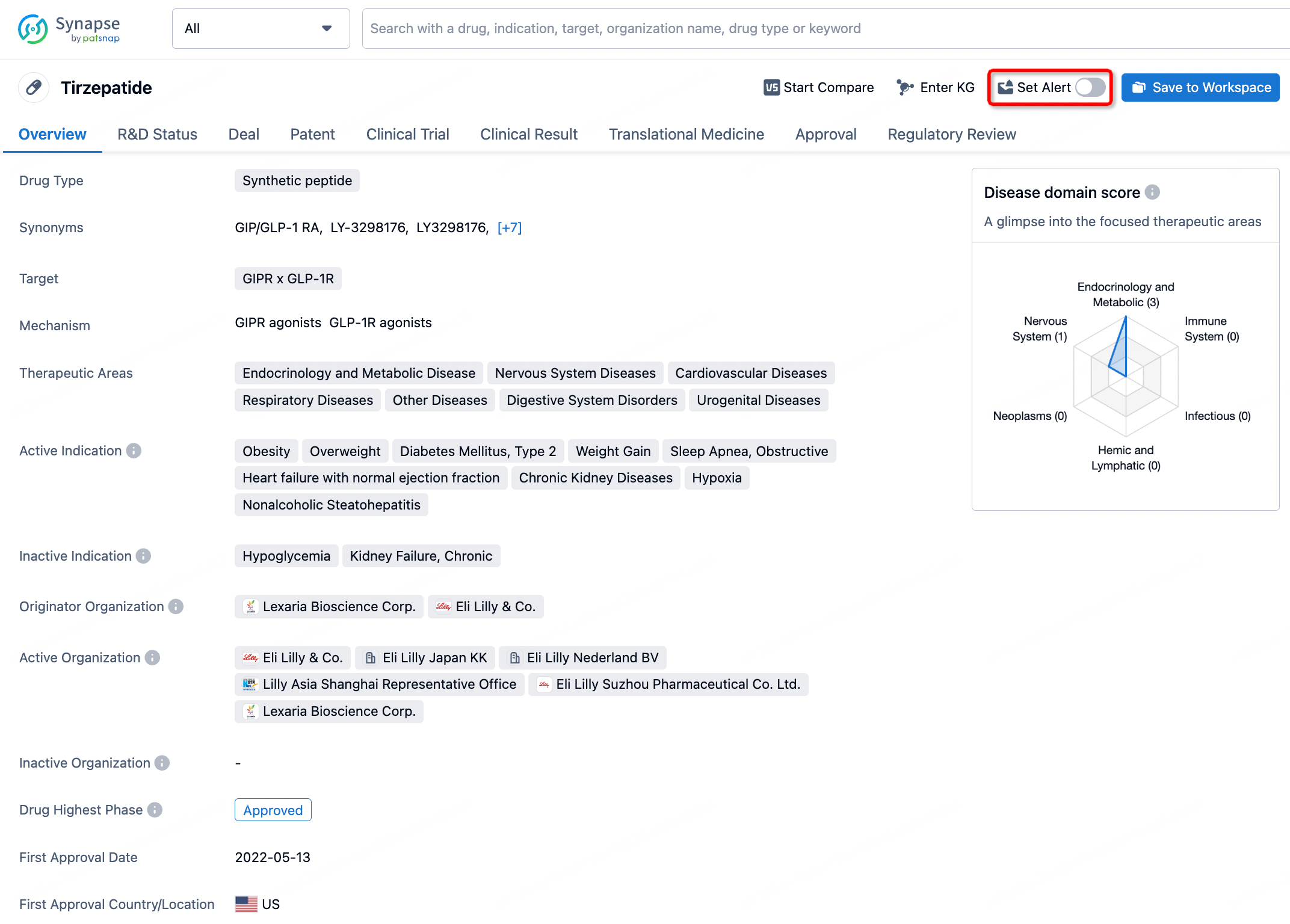
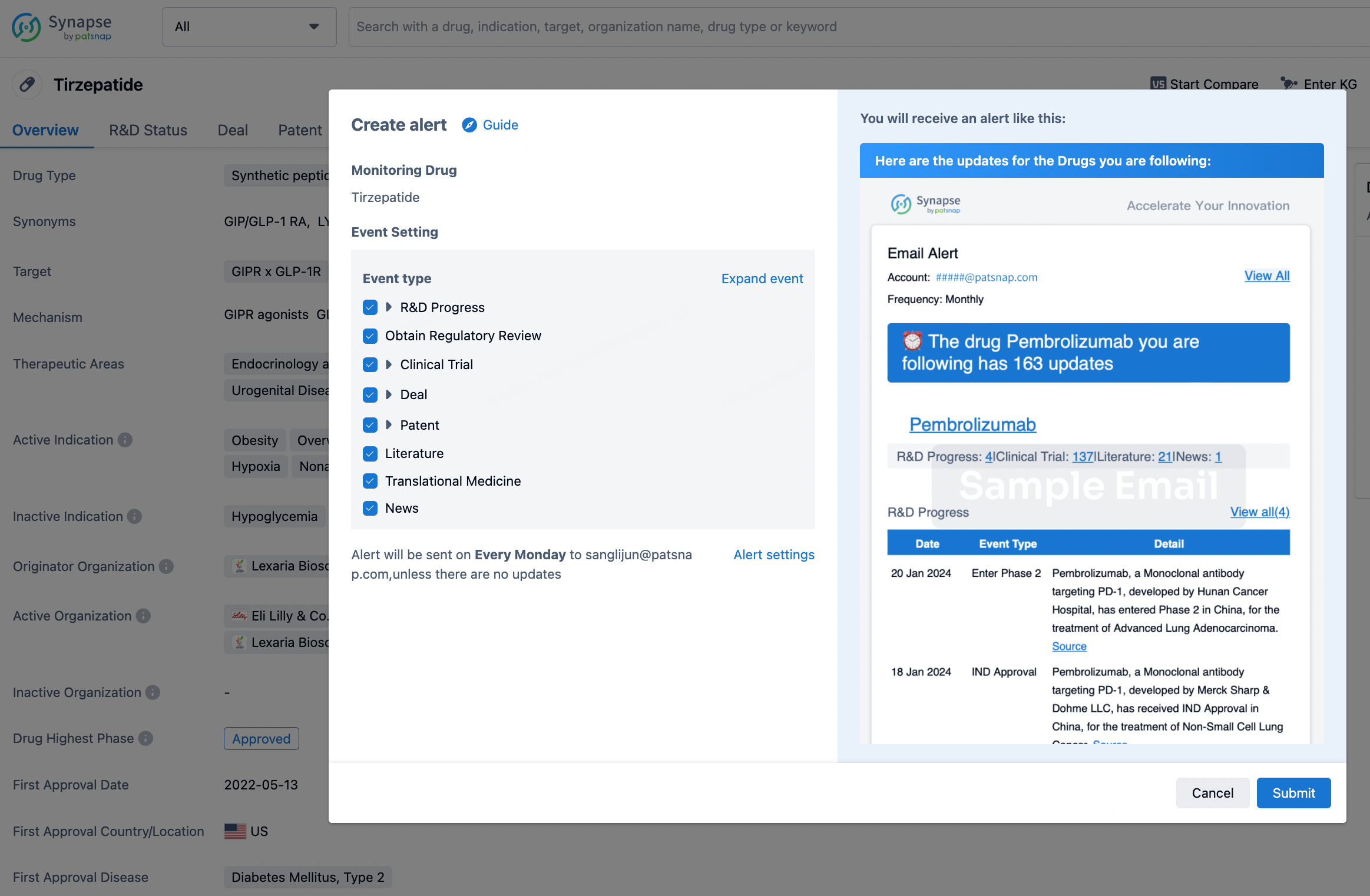
In the Synapse database, you can stay updated on the latest research and development advances of all drugs. This service is accessible anytime and anywhere, with updates available daily or weekly. Use the "Set Alert" function to stay informed. Click on the image below to embark on a brand new journey of drug discovery!
AI Agents Built for Biopharma Breakthroughs
Accelerate discovery. Empower decisions. Transform outcomes.
Get started for free today!
Accelerate Strategic R&D decision making with Synapse, PatSnap’s AI-powered Connected Innovation Intelligence Platform Built for Life Sciences Professionals.
Start your data trial now!
Synapse data is also accessible to external entities via APIs or data packages. Empower better decisions with the latest in pharmaceutical intelligence.