Request Demo
What are Tie-2 modulators and how do they work?
21 June 2024
In the dynamic landscape of biomedical research, Tie-2 modulators have emerged as a promising class of molecules, capturing the attention of scientists and clinicians alike. These modulators hold significant potential in the treatment of various vascular diseases and conditions due to their unique mechanism of action and their role in maintaining vascular stability and integrity.
Tie-2, a receptor tyrosine kinase expressed primarily in endothelial cells, plays a crucial role in the regulation of blood vessel maturation, stability, and function. It is activated by its ligands, angiopoietin-1 (Ang-1) and angiopoietin-2 (Ang-2), which bind to the receptor and elicit different biological responses. Ang-1 is generally associated with vessel stabilization and anti-inflammatory effects, while Ang-2 can either promote vessel destabilization and inflammation or act synergistically with Ang-1 depending on the context. The balance between these two ligands and their interaction with Tie-2 is critical for vascular homeostasis.
Tie-2 modulators work by either enhancing or inhibiting the activity of the Tie-2 receptor. Agonists, which activate the receptor, mimic the action of Ang-1, promoting blood vessel stabilization, reducing leakage, and exerting anti-inflammatory effects. Antagonists, on the other hand, block the receptor's activity and are generally used in contexts where it's necessary to inhibit pathological angiogenesis, such as in certain cancers.
One way agonists work is by binding to the Tie-2 receptor and inducing its dimerization and autophosphorylation, which triggers downstream signaling pathways that promote endothelial cell survival, migration, and barrier function. This can be particularly beneficial in diseases characterized by vascular leakage and inflammation, such as diabetic retinopathy and sepsis. Conversely, antagonists inhibit the receptor's ability to dimerize and activate, thereby preventing the downstream signaling that would otherwise lead to abnormal vessel growth and permeability.
The therapeutic applications of Tie-2 modulators are broad and varied. In oncology, Tie-2 antagonists can be used to inhibit tumor angiogenesis, the process by which tumors develop their own blood supply, which is essential for their growth and metastasis. By blocking the Tie-2 pathway, these antagonists can effectively starve the tumor of nutrients and oxygen, thereby inhibiting its growth and spread.
In contrast, Tie-2 agonists hold promise for the treatment of diseases characterized by impaired or dysfunctional vasculature. In diabetic retinopathy, for instance, chronic high blood sugar levels damage the blood vessels in the retina, leading to leakage, inflammation, and vision loss. Tie-2 agonists can help stabilize these blood vessels, reduce leakage, and mitigate inflammation, thereby preserving vision. Similarly, in sepsis, a life-threatening condition caused by an overwhelming immune response to infection, vascular leakage and inflammation are major problems. Here, Tie-2 agonists can help maintain the integrity of the blood vessels, reducing leakage and preventing organ damage.
Further potential applications for Tie-2 modulators include the treatment of cardiovascular diseases, psoriasis, and inflammatory bowel disease, where vascular dysfunction plays a key role in disease pathogenesis. Research is also ongoing to explore their utility in tissue engineering and regenerative medicine, where promoting vascular stability is crucial for the survival and integration of transplanted tissues.
In conclusion, Tie-2 modulators represent a versatile and powerful tool in the therapeutic arsenal against a variety of diseases characterized by vascular dysfunction. By either enhancing or inhibiting the activity of the Tie-2 receptor, these modulators can help restore vascular integrity and function, providing significant benefits in conditions ranging from cancer to chronic inflammatory diseases. As research continues to unravel the complexities of the Tie-2 pathway, the potential applications for these modulators are likely to expand, offering new hope for patients suffering from a wide range of vascular-related conditions.
Tie-2, a receptor tyrosine kinase expressed primarily in endothelial cells, plays a crucial role in the regulation of blood vessel maturation, stability, and function. It is activated by its ligands, angiopoietin-1 (Ang-1) and angiopoietin-2 (Ang-2), which bind to the receptor and elicit different biological responses. Ang-1 is generally associated with vessel stabilization and anti-inflammatory effects, while Ang-2 can either promote vessel destabilization and inflammation or act synergistically with Ang-1 depending on the context. The balance between these two ligands and their interaction with Tie-2 is critical for vascular homeostasis.
Tie-2 modulators work by either enhancing or inhibiting the activity of the Tie-2 receptor. Agonists, which activate the receptor, mimic the action of Ang-1, promoting blood vessel stabilization, reducing leakage, and exerting anti-inflammatory effects. Antagonists, on the other hand, block the receptor's activity and are generally used in contexts where it's necessary to inhibit pathological angiogenesis, such as in certain cancers.
One way agonists work is by binding to the Tie-2 receptor and inducing its dimerization and autophosphorylation, which triggers downstream signaling pathways that promote endothelial cell survival, migration, and barrier function. This can be particularly beneficial in diseases characterized by vascular leakage and inflammation, such as diabetic retinopathy and sepsis. Conversely, antagonists inhibit the receptor's ability to dimerize and activate, thereby preventing the downstream signaling that would otherwise lead to abnormal vessel growth and permeability.
The therapeutic applications of Tie-2 modulators are broad and varied. In oncology, Tie-2 antagonists can be used to inhibit tumor angiogenesis, the process by which tumors develop their own blood supply, which is essential for their growth and metastasis. By blocking the Tie-2 pathway, these antagonists can effectively starve the tumor of nutrients and oxygen, thereby inhibiting its growth and spread.
In contrast, Tie-2 agonists hold promise for the treatment of diseases characterized by impaired or dysfunctional vasculature. In diabetic retinopathy, for instance, chronic high blood sugar levels damage the blood vessels in the retina, leading to leakage, inflammation, and vision loss. Tie-2 agonists can help stabilize these blood vessels, reduce leakage, and mitigate inflammation, thereby preserving vision. Similarly, in sepsis, a life-threatening condition caused by an overwhelming immune response to infection, vascular leakage and inflammation are major problems. Here, Tie-2 agonists can help maintain the integrity of the blood vessels, reducing leakage and preventing organ damage.
Further potential applications for Tie-2 modulators include the treatment of cardiovascular diseases, psoriasis, and inflammatory bowel disease, where vascular dysfunction plays a key role in disease pathogenesis. Research is also ongoing to explore their utility in tissue engineering and regenerative medicine, where promoting vascular stability is crucial for the survival and integration of transplanted tissues.
In conclusion, Tie-2 modulators represent a versatile and powerful tool in the therapeutic arsenal against a variety of diseases characterized by vascular dysfunction. By either enhancing or inhibiting the activity of the Tie-2 receptor, these modulators can help restore vascular integrity and function, providing significant benefits in conditions ranging from cancer to chronic inflammatory diseases. As research continues to unravel the complexities of the Tie-2 pathway, the potential applications for these modulators are likely to expand, offering new hope for patients suffering from a wide range of vascular-related conditions.
How to obtain the latest development progress of all targets?
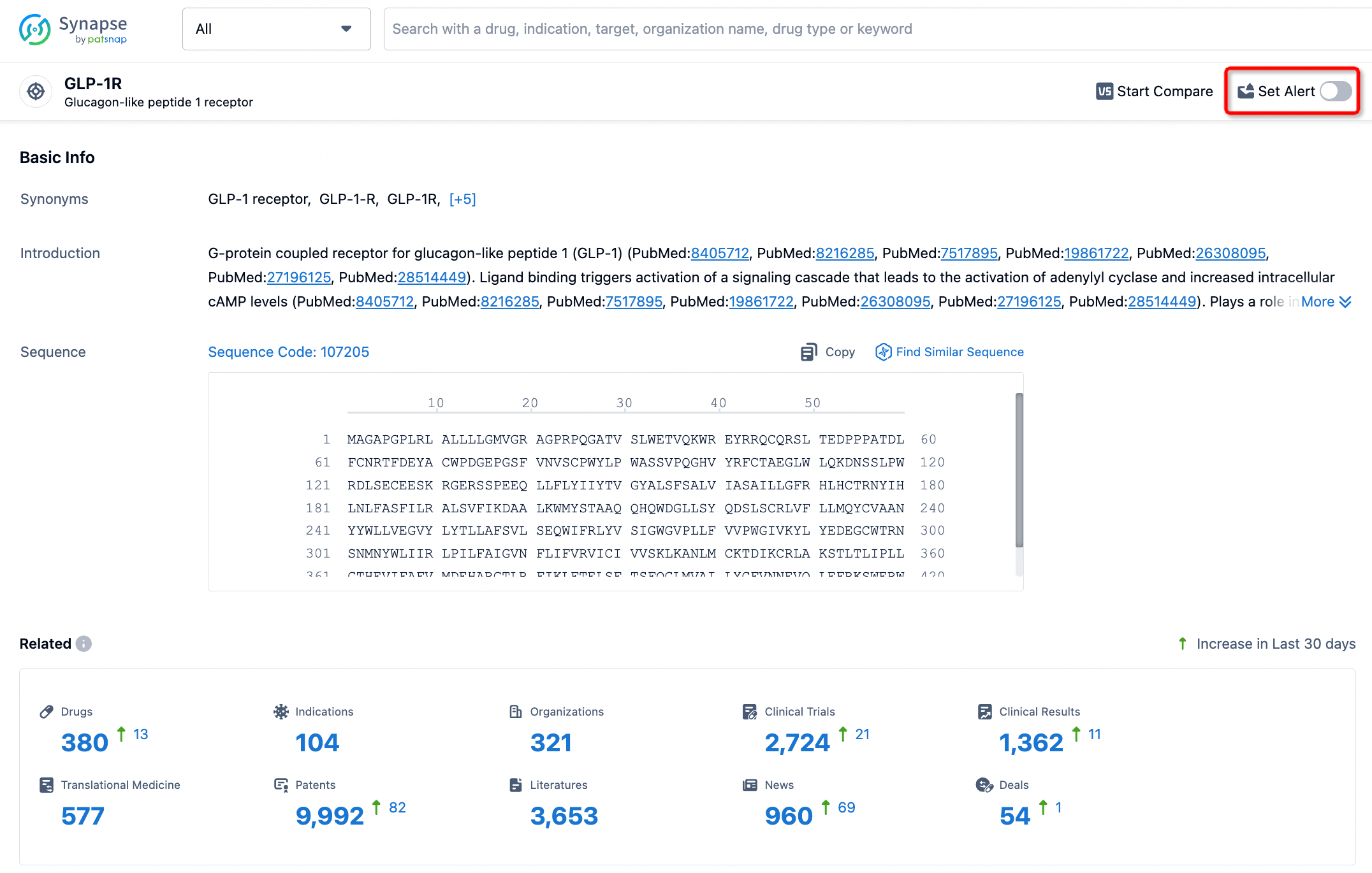
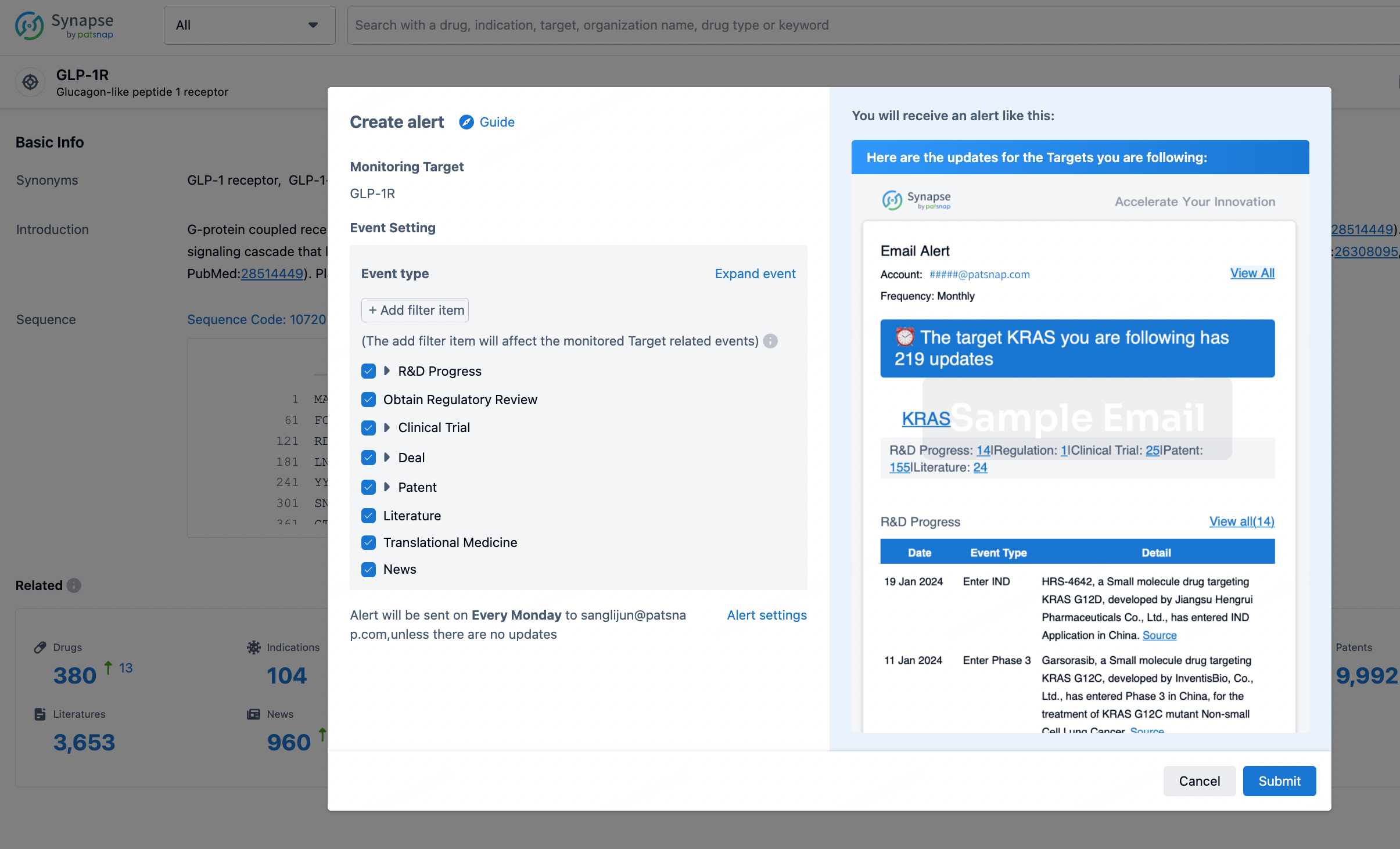
In the Synapse database, you can stay updated on the latest research and development advances of all targets. This service is accessible anytime and anywhere, with updates available daily or weekly. Use the "Set Alert" function to stay informed. Click on the image below to embark on a brand new journey of drug discovery!
Hiro LS Researcher
The AI Search Engine Built to Accelerate Biopharma Decisions
Search across billion-scale life sciences data to uncover signals, validate evidence, and act with confidence.
Ask any biopharma research question→
Get started for free today!
Accelerate Strategic R&D decision making with Synapse, Patsnap’s AI-powered Connected Innovation Intelligence Platform Built for Life Sciences Professionals.
Discover Synapse Data Servers
Synapse data is now integrated into the PatSnap LS Model Context Protocol (MCP) service. Customize your LLM agent now using our MCP server!