Request Demo
What is AD-109 used for?
28 June 2024
In the rapidly evolving world of pharmaceuticals, AD-109 stands out as a beacon of hope for patients and researchers alike. This innovative drug is being developed to target specific medical conditions with remarkable precision, making it a subject of intense study and anticipation within the medical community. AD-109 is classified as a novel therapeutic agent, primarily aimed at treating neurodegenerative disorders, with a particular focus on Alzheimer's disease. This drug is the brainchild of a collaboration between leading research institutions and pharmaceutical companies, who have combined their expertise to push the boundaries of medical science. Currently, AD-109 is in the advanced stages of clinical trials, showing promising results that could potentially revolutionize the treatment landscape for Alzheimer's and other related conditions.
AD-109 operates through a sophisticated mechanism of action that sets it apart from traditional therapies. At its core, AD-109 targets amyloid-beta plaques, which are widely recognized as a hallmark of Alzheimer's disease. These plaques are abnormal clusters of protein fragments that accumulate between nerve cells, disrupting cell function and ultimately leading to cell death. By specifically targeting these amyloid-beta plaques, AD-109 works to prevent their formation and promote their clearance from the brain. This dual-action approach not only halts the progression of the disease but also potentially reverses some of its devastating effects.
The drug employs a multifaceted strategy to achieve this. Firstly, it inhibits the enzymes responsible for producing amyloid-beta, thereby reducing the overall levels of these toxic proteins in the brain. Secondly, AD-109 enhances the activity of microglial cells, which are the brain's resident immune cells. These cells are crucial for clearing away amyloid-beta plaques and other cellular debris. By boosting the efficiency of microglial cells, AD-109 facilitates the removal of existing plaques, thereby improving neuronal function and potentially restoring cognitive abilities.
The primary indication for AD-109 is the treatment of Alzheimer's disease, a debilitating condition that affects millions of people worldwide. Alzheimer's is characterized by progressive memory loss, cognitive decline, and behavioral changes, which severely impact the quality of life of patients and their families. Despite extensive research, there are currently no cures for Alzheimer's, and existing treatments only provide symptomatic relief. In this context, AD-109 represents a significant breakthrough, offering the possibility of modifying the course of the disease rather than merely alleviating its symptoms.
In addition to Alzheimer's, AD-109 is also being investigated for its potential in treating other neurodegenerative disorders, such as Parkinson's disease and Huntington's disease. Both of these conditions share some common pathological features with Alzheimer's, including the accumulation of toxic protein aggregates and neuroinflammation. Given its mechanism of action, AD-109 holds promise for addressing these underlying pathologies and providing therapeutic benefits across a range of neurodegenerative diseases.
The research community is buzzing with excitement over the progress of AD-109. In preclinical studies, the drug demonstrated remarkable efficacy in reducing amyloid-beta levels and improving cognitive function in animal models. These encouraging results paved the way for clinical trials, which are now well underway. Early-phase clinical trials have shown that AD-109 is well-tolerated by patients, with a favorable safety profile. Moreover, preliminary data from these trials suggest that the drug is effective in slowing cognitive decline and improving daily functioning in patients with early-stage Alzheimer's disease.
As the clinical trials progress, researchers are optimistic that AD-109 could soon become a game-changer in the treatment of Alzheimer's and other neurodegenerative disorders. If successful, this drug could not only extend the lives of patients but also significantly enhance their quality of life, offering hope to millions of individuals and families affected by these devastating conditions.
In conclusion, AD-109 represents a promising advancement in the field of neurodegenerative disease research. With its targeted mechanism of action and potential to treat a range of conditions, this drug is poised to make a substantial impact on the lives of patients worldwide. As research continues to unfold, the medical community eagerly awaits the day when AD-109 becomes a standard treatment, providing much-needed relief and hope to those battling these challenging diseases.
AD-109 operates through a sophisticated mechanism of action that sets it apart from traditional therapies. At its core, AD-109 targets amyloid-beta plaques, which are widely recognized as a hallmark of Alzheimer's disease. These plaques are abnormal clusters of protein fragments that accumulate between nerve cells, disrupting cell function and ultimately leading to cell death. By specifically targeting these amyloid-beta plaques, AD-109 works to prevent their formation and promote their clearance from the brain. This dual-action approach not only halts the progression of the disease but also potentially reverses some of its devastating effects.
The drug employs a multifaceted strategy to achieve this. Firstly, it inhibits the enzymes responsible for producing amyloid-beta, thereby reducing the overall levels of these toxic proteins in the brain. Secondly, AD-109 enhances the activity of microglial cells, which are the brain's resident immune cells. These cells are crucial for clearing away amyloid-beta plaques and other cellular debris. By boosting the efficiency of microglial cells, AD-109 facilitates the removal of existing plaques, thereby improving neuronal function and potentially restoring cognitive abilities.
The primary indication for AD-109 is the treatment of Alzheimer's disease, a debilitating condition that affects millions of people worldwide. Alzheimer's is characterized by progressive memory loss, cognitive decline, and behavioral changes, which severely impact the quality of life of patients and their families. Despite extensive research, there are currently no cures for Alzheimer's, and existing treatments only provide symptomatic relief. In this context, AD-109 represents a significant breakthrough, offering the possibility of modifying the course of the disease rather than merely alleviating its symptoms.
In addition to Alzheimer's, AD-109 is also being investigated for its potential in treating other neurodegenerative disorders, such as Parkinson's disease and Huntington's disease. Both of these conditions share some common pathological features with Alzheimer's, including the accumulation of toxic protein aggregates and neuroinflammation. Given its mechanism of action, AD-109 holds promise for addressing these underlying pathologies and providing therapeutic benefits across a range of neurodegenerative diseases.
The research community is buzzing with excitement over the progress of AD-109. In preclinical studies, the drug demonstrated remarkable efficacy in reducing amyloid-beta levels and improving cognitive function in animal models. These encouraging results paved the way for clinical trials, which are now well underway. Early-phase clinical trials have shown that AD-109 is well-tolerated by patients, with a favorable safety profile. Moreover, preliminary data from these trials suggest that the drug is effective in slowing cognitive decline and improving daily functioning in patients with early-stage Alzheimer's disease.
As the clinical trials progress, researchers are optimistic that AD-109 could soon become a game-changer in the treatment of Alzheimer's and other neurodegenerative disorders. If successful, this drug could not only extend the lives of patients but also significantly enhance their quality of life, offering hope to millions of individuals and families affected by these devastating conditions.
In conclusion, AD-109 represents a promising advancement in the field of neurodegenerative disease research. With its targeted mechanism of action and potential to treat a range of conditions, this drug is poised to make a substantial impact on the lives of patients worldwide. As research continues to unfold, the medical community eagerly awaits the day when AD-109 becomes a standard treatment, providing much-needed relief and hope to those battling these challenging diseases.
How to obtain the latest development progress of all drugs?
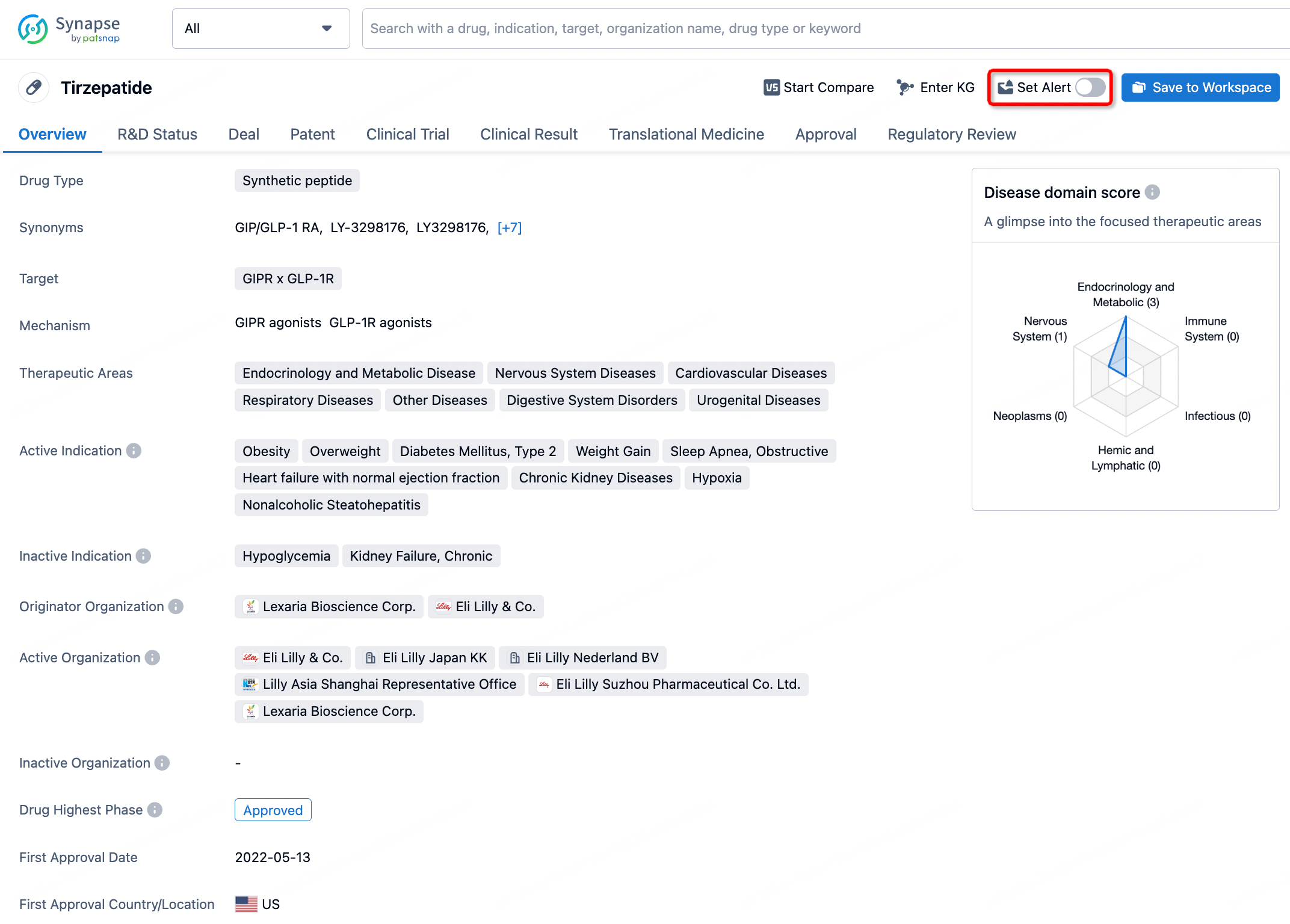
In the Synapse database, you can stay updated on the latest research and development advances of all drugs. This service is accessible anytime and anywhere, with updates available daily or weekly. Use the "Set Alert" function to stay informed. Click on the image below to embark on a brand new journey of drug discovery!

AI Agents Built for Biopharma Breakthroughs
Accelerate discovery. Empower decisions. Transform outcomes.
Get started for free today!
Accelerate Strategic R&D decision making with Synapse, PatSnap’s AI-powered Connected Innovation Intelligence Platform Built for Life Sciences Professionals.
Start your data trial now!
Synapse data is also accessible to external entities via APIs or data packages. Empower better decisions with the latest in pharmaceutical intelligence.