Request Demo
What is AD-208 used for?
28 June 2024
AD-208: Pioneering Hope in Neurodegenerative Disease Treatment
As the field of medical science continues to advance, new therapies emerge that offer hope for conditions previously deemed unmanageable. One such promising development is AD-208, a novel drug that has captured the interest of researchers and clinicians alike. AD-208 is currently under investigation by several leading research institutions and biopharmaceutical companies. This innovative therapy targets neurodegenerative diseases, particularly Alzheimer’s disease, which continues to challenge medical science with its complexity and detrimental impact on millions of lives globally. AD-208 falls under the category of disease-modifying treatments, aiming not just to alleviate symptoms but to address the underlying mechanisms driving the disease. Early research and preclinical trials have shown promising results, leading to accelerated progress into Phase I and Phase II clinical trials.
AD-208 Mechanism of Action
Understanding the mechanism of action of AD-208 requires delving into the intricate workings of the brain and the pathological processes involved in neurodegenerative diseases. Alzheimer’s disease, the primary target of AD-208, is characterized by the accumulation of amyloid-beta plaques and neurofibrillary tangles composed of tau protein. These pathological markers are associated with neuronal death, synaptic dysfunction, and cognitive decline.
AD-208 operates through a multi-faceted approach. Firstly, it aims to reduce the production and aggregation of amyloid-beta plaques. It achieves this by modulating the activity of secretases, enzymes involved in the cleavage of amyloid precursor protein (APP). By inhibiting beta-secretase and enhancing alpha-secretase activity, AD-208 reduces the formation of toxic amyloid-beta fragments while promoting the production of non-toxic, soluble APP fragments.
Secondly, AD-208 targets tau pathology, another critical hallmark of Alzheimer’s disease. It works by inhibiting the hyperphosphorylation of tau protein, preventing the formation of neurofibrillary tangles. This dual action on both amyloid-beta and tau provides a comprehensive approach to tackling the disease at multiple levels.
Moreover, AD-208 exhibits neuroprotective properties by enhancing mitochondrial function and reducing oxidative stress, which are crucial factors in neuronal survival. It also promotes synaptic plasticity, aiding in the maintenance and formation of synaptic connections, thereby supporting cognitive functions.
What is the indication of AD-208?
AD-208 is primarily indicated for the treatment of Alzheimer’s disease, a debilitating neurodegenerative disorder that leads to progressive memory loss, cognitive decline, and ultimately, a loss of independence. Alzheimer’s disease is the most common cause of dementia among older adults, and its prevalence is rising with the aging global population. Currently, available treatments provide only symptomatic relief, with no approved therapies addressing the disease's underlying pathology.
The potential of AD-208 to modify the disease course represents a significant breakthrough. By targeting both amyloid-beta and tau pathology, AD-208 offers a dual-pronged attack on the disease, potentially slowing or even halting its progression. Early clinical trials have demonstrated encouraging results, with participants showing improved cognitive function and reduced biomarker levels of amyloid-beta and tau in the brain.
In addition to Alzheimer’s disease, AD-208 may hold promise for other neurodegenerative conditions characterized by similar pathogenic mechanisms. For instance, frontotemporal dementia (FTD) and progressive supranuclear palsy (PSP) also involve tau pathology and could potentially benefit from AD-208’s tau-targeting effects. While these indications are still under investigation, the broad mechanism of action of AD-208 opens the door for its application in a range of neurodegenerative diseases.
The journey of AD-208 from the laboratory to clinical application exemplifies the power of scientific innovation and collaboration. With ongoing clinical trials and continued research, there is hope that AD-208 will pave the way for more effective treatments, offering renewed hope for patients and families affected by neurodegenerative diseases. As we await the results of further studies, the medical community remains optimistic that AD-208 could represent a new era in the fight against Alzheimer’s disease and beyond.
As the field of medical science continues to advance, new therapies emerge that offer hope for conditions previously deemed unmanageable. One such promising development is AD-208, a novel drug that has captured the interest of researchers and clinicians alike. AD-208 is currently under investigation by several leading research institutions and biopharmaceutical companies. This innovative therapy targets neurodegenerative diseases, particularly Alzheimer’s disease, which continues to challenge medical science with its complexity and detrimental impact on millions of lives globally. AD-208 falls under the category of disease-modifying treatments, aiming not just to alleviate symptoms but to address the underlying mechanisms driving the disease. Early research and preclinical trials have shown promising results, leading to accelerated progress into Phase I and Phase II clinical trials.
AD-208 Mechanism of Action
Understanding the mechanism of action of AD-208 requires delving into the intricate workings of the brain and the pathological processes involved in neurodegenerative diseases. Alzheimer’s disease, the primary target of AD-208, is characterized by the accumulation of amyloid-beta plaques and neurofibrillary tangles composed of tau protein. These pathological markers are associated with neuronal death, synaptic dysfunction, and cognitive decline.
AD-208 operates through a multi-faceted approach. Firstly, it aims to reduce the production and aggregation of amyloid-beta plaques. It achieves this by modulating the activity of secretases, enzymes involved in the cleavage of amyloid precursor protein (APP). By inhibiting beta-secretase and enhancing alpha-secretase activity, AD-208 reduces the formation of toxic amyloid-beta fragments while promoting the production of non-toxic, soluble APP fragments.
Secondly, AD-208 targets tau pathology, another critical hallmark of Alzheimer’s disease. It works by inhibiting the hyperphosphorylation of tau protein, preventing the formation of neurofibrillary tangles. This dual action on both amyloid-beta and tau provides a comprehensive approach to tackling the disease at multiple levels.
Moreover, AD-208 exhibits neuroprotective properties by enhancing mitochondrial function and reducing oxidative stress, which are crucial factors in neuronal survival. It also promotes synaptic plasticity, aiding in the maintenance and formation of synaptic connections, thereby supporting cognitive functions.
What is the indication of AD-208?
AD-208 is primarily indicated for the treatment of Alzheimer’s disease, a debilitating neurodegenerative disorder that leads to progressive memory loss, cognitive decline, and ultimately, a loss of independence. Alzheimer’s disease is the most common cause of dementia among older adults, and its prevalence is rising with the aging global population. Currently, available treatments provide only symptomatic relief, with no approved therapies addressing the disease's underlying pathology.
The potential of AD-208 to modify the disease course represents a significant breakthrough. By targeting both amyloid-beta and tau pathology, AD-208 offers a dual-pronged attack on the disease, potentially slowing or even halting its progression. Early clinical trials have demonstrated encouraging results, with participants showing improved cognitive function and reduced biomarker levels of amyloid-beta and tau in the brain.
In addition to Alzheimer’s disease, AD-208 may hold promise for other neurodegenerative conditions characterized by similar pathogenic mechanisms. For instance, frontotemporal dementia (FTD) and progressive supranuclear palsy (PSP) also involve tau pathology and could potentially benefit from AD-208’s tau-targeting effects. While these indications are still under investigation, the broad mechanism of action of AD-208 opens the door for its application in a range of neurodegenerative diseases.
The journey of AD-208 from the laboratory to clinical application exemplifies the power of scientific innovation and collaboration. With ongoing clinical trials and continued research, there is hope that AD-208 will pave the way for more effective treatments, offering renewed hope for patients and families affected by neurodegenerative diseases. As we await the results of further studies, the medical community remains optimistic that AD-208 could represent a new era in the fight against Alzheimer’s disease and beyond.
How to obtain the latest development progress of all drugs?
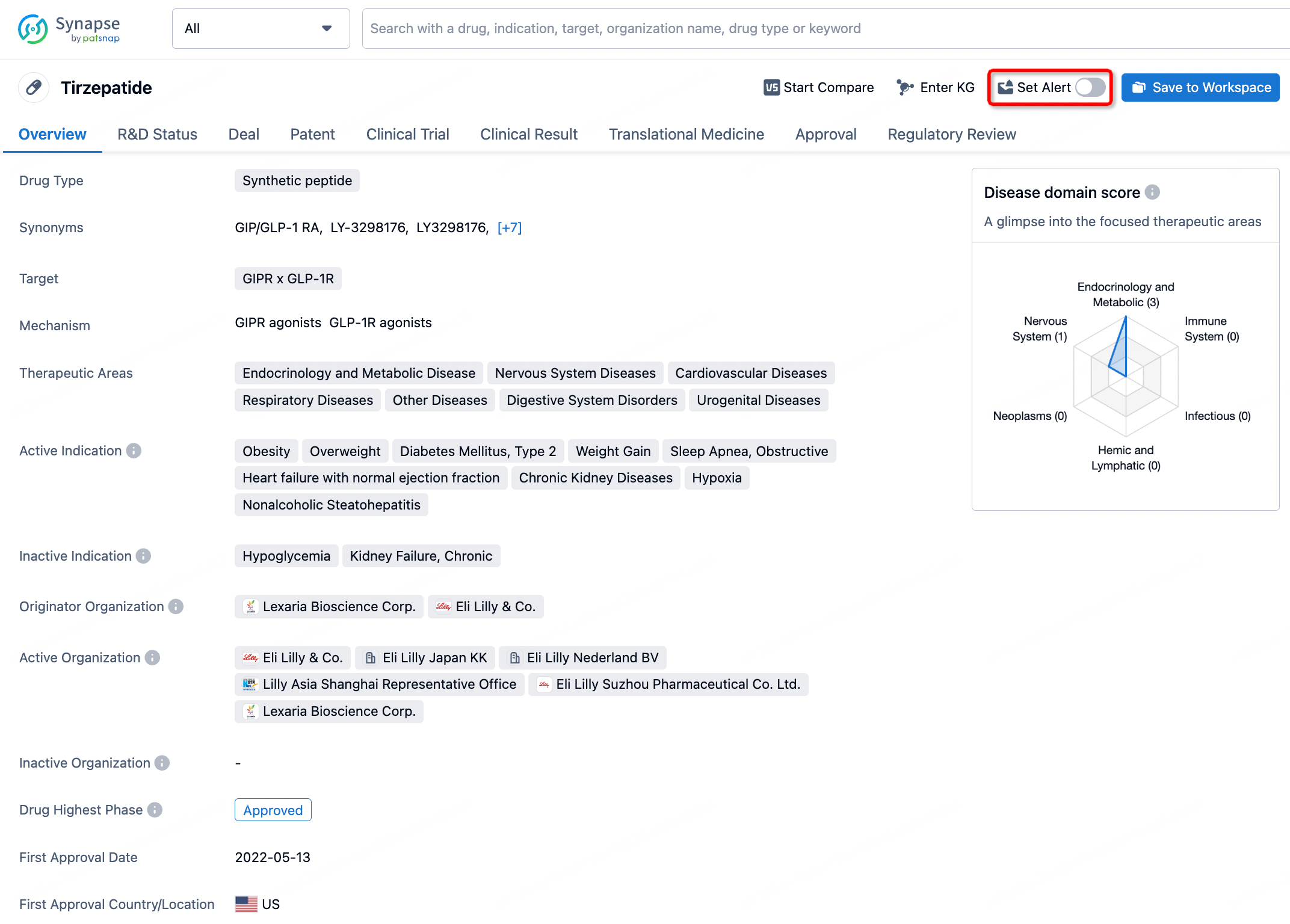
In the Synapse database, you can stay updated on the latest research and development advances of all drugs. This service is accessible anytime and anywhere, with updates available daily or weekly. Use the "Set Alert" function to stay informed. Click on the image below to embark on a brand new journey of drug discovery!

AI Agents Built for Biopharma Breakthroughs
Accelerate discovery. Empower decisions. Transform outcomes.
Get started for free today!
Accelerate Strategic R&D decision making with Synapse, PatSnap’s AI-powered Connected Innovation Intelligence Platform Built for Life Sciences Professionals.
Start your data trial now!
Synapse data is also accessible to external entities via APIs or data packages. Empower better decisions with the latest in pharmaceutical intelligence.