Request Demo
What is Amifostine used for?
14 June 2024
Amifostine, known under the trade names Ethyol, WR-2721, and others, has emerged as a pivotal drug in the field of oncology and radiation therapy. Developed primarily to mitigate the adverse effects of chemotherapeutic agents and radiotherapy, Amifostine has carved out a significant niche in cancer treatment protocols. Initially researched and developed by the Walter Reed Army Institute of Research, this cytoprotective agent has since seen extensive application in both clinical and research settings. It is primarily indicated for use in patients undergoing chemotherapy and radiation therapy, providing a protective barrier for normal tissues against the cytotoxic effects of these treatments. The drug's development has been marked by a steady stream of research that continues to uncover new potential applications and refine its efficacy and safety profiles.
Amifostine operates through a unique mechanism of action that distinguishes it from other protective agents. Once administered, Amifostine is rapidly dephosphorylated by alkaline phosphatase enzymes to its active metabolite, WR-1065, which is primarily responsible for its protective effects. This metabolite selectively accumulates in normal tissues rather than tumor tissues due to higher alkaline phosphatase activity in normal cells. WR-1065 then scavenges free radicals and induces DNA repair processes, effectively reducing the damage caused by radiation and chemotherapeutic agents. Additionally, Amifostine has been shown to enhance the immune response, adding another layer of protection for normal tissues. This selective protection ensures that the efficacy of cancer treatments remains uncompromised while minimizing collateral damage to healthy cells.
The administration of Amifostine requires careful consideration to maximize its protective benefits while minimizing potential side effects. It is typically administered intravenously, often as a rapid infusion over 15 minutes, shortly before chemotherapy or radiation therapy sessions. The timing of administration is crucial; it is generally given 30 minutes before chemotherapy and immediately prior to radiation therapy to ensure optimal tissue protection. In some cases, Amifostine can also be administered subcutaneously, although this route is less common due to a slower onset of action. The drug's protective effects are relatively rapid, with peak plasma concentrations of the active metabolite occurring within minutes of administration. This quick onset is essential for synchronizing the protective effects with the cytotoxic treatments, thereby providing maximum tissue protection precisely when it is needed most.
While Amifostine offers significant protective advantages, it is not without its side effects and contraindications. The most commonly reported side effects include nausea, vomiting, hypotension (low blood pressure), and allergic reactions. Nausea and vomiting can often be managed with antiemetic medications, but they remain a common issue that patients and healthcare providers must navigate. Hypotension is another critical concern, particularly because it can occur rapidly and require immediate medical intervention. To mitigate this risk, patients are often advised to remain well-hydrated before and after receiving Amifostine, and blood pressure is closely monitored during administration. Allergic reactions, although less common, can range from mild skin rashes to severe anaphylaxis, necessitating prompt discontinuation of the drug and appropriate medical treatment. Contraindications for Amifostine include known hypersensitivity to the drug or any of its components, severe kidney disease, and uncontrolled high blood pressure. Given these potential side effects and contraindications, the decision to use Amifostine must be carefully weighed against its benefits, with close monitoring throughout the treatment process.
Interactions with other drugs are another important consideration when using Amifostine. Some medications can enhance or diminish its protective effects or exacerbate its side effects. For instance, concurrent use of antihypertensive drugs can amplify the hypotensive effects of Amifostine, necessitating adjustments in dosing or timing. On the other hand, drugs that induce or inhibit certain liver enzymes can affect the metabolism of Amifostine, altering its efficacy and safety profile. Patients receiving nephrotoxic drugs (drugs that can damage the kidneys) may also be at increased risk of kidney-related side effects, given Amifostine's renal excretion. Moreover, the concurrent use of other chemoprotective agents or antioxidants could potentially interfere with Amifostine's mechanism of action, either enhancing or diminishing its protective effects. Therefore, a thorough review of the patient's medication regimen is essential before initiating Amifostine to avoid adverse interactions and ensure optimal therapeutic outcomes.
In conclusion, Amifostine stands as a vital agent in the arsenal against the adverse effects of cancer treatments. Its unique mechanism of action, rapid onset, and selective protection of normal tissues make it a valuable tool in oncological care. However, like any potent drug, it comes with its own set of challenges, including side effects, contraindications, and potential drug interactions. Careful administration and vigilant monitoring are crucial to harnessing the full benefits of Amifostine while minimizing its risks. As research continues to evolve, the therapeutic landscape for Amifostine is likely to expand, offering new hope for patients undergoing the rigors of chemotherapy and radiation therapy. With ongoing advancements in medical science, the future holds promise for even more refined and effective use of this remarkable protective agent.
Amifostine operates through a unique mechanism of action that distinguishes it from other protective agents. Once administered, Amifostine is rapidly dephosphorylated by alkaline phosphatase enzymes to its active metabolite, WR-1065, which is primarily responsible for its protective effects. This metabolite selectively accumulates in normal tissues rather than tumor tissues due to higher alkaline phosphatase activity in normal cells. WR-1065 then scavenges free radicals and induces DNA repair processes, effectively reducing the damage caused by radiation and chemotherapeutic agents. Additionally, Amifostine has been shown to enhance the immune response, adding another layer of protection for normal tissues. This selective protection ensures that the efficacy of cancer treatments remains uncompromised while minimizing collateral damage to healthy cells.
The administration of Amifostine requires careful consideration to maximize its protective benefits while minimizing potential side effects. It is typically administered intravenously, often as a rapid infusion over 15 minutes, shortly before chemotherapy or radiation therapy sessions. The timing of administration is crucial; it is generally given 30 minutes before chemotherapy and immediately prior to radiation therapy to ensure optimal tissue protection. In some cases, Amifostine can also be administered subcutaneously, although this route is less common due to a slower onset of action. The drug's protective effects are relatively rapid, with peak plasma concentrations of the active metabolite occurring within minutes of administration. This quick onset is essential for synchronizing the protective effects with the cytotoxic treatments, thereby providing maximum tissue protection precisely when it is needed most.
While Amifostine offers significant protective advantages, it is not without its side effects and contraindications. The most commonly reported side effects include nausea, vomiting, hypotension (low blood pressure), and allergic reactions. Nausea and vomiting can often be managed with antiemetic medications, but they remain a common issue that patients and healthcare providers must navigate. Hypotension is another critical concern, particularly because it can occur rapidly and require immediate medical intervention. To mitigate this risk, patients are often advised to remain well-hydrated before and after receiving Amifostine, and blood pressure is closely monitored during administration. Allergic reactions, although less common, can range from mild skin rashes to severe anaphylaxis, necessitating prompt discontinuation of the drug and appropriate medical treatment. Contraindications for Amifostine include known hypersensitivity to the drug or any of its components, severe kidney disease, and uncontrolled high blood pressure. Given these potential side effects and contraindications, the decision to use Amifostine must be carefully weighed against its benefits, with close monitoring throughout the treatment process.
Interactions with other drugs are another important consideration when using Amifostine. Some medications can enhance or diminish its protective effects or exacerbate its side effects. For instance, concurrent use of antihypertensive drugs can amplify the hypotensive effects of Amifostine, necessitating adjustments in dosing or timing. On the other hand, drugs that induce or inhibit certain liver enzymes can affect the metabolism of Amifostine, altering its efficacy and safety profile. Patients receiving nephrotoxic drugs (drugs that can damage the kidneys) may also be at increased risk of kidney-related side effects, given Amifostine's renal excretion. Moreover, the concurrent use of other chemoprotective agents or antioxidants could potentially interfere with Amifostine's mechanism of action, either enhancing or diminishing its protective effects. Therefore, a thorough review of the patient's medication regimen is essential before initiating Amifostine to avoid adverse interactions and ensure optimal therapeutic outcomes.
In conclusion, Amifostine stands as a vital agent in the arsenal against the adverse effects of cancer treatments. Its unique mechanism of action, rapid onset, and selective protection of normal tissues make it a valuable tool in oncological care. However, like any potent drug, it comes with its own set of challenges, including side effects, contraindications, and potential drug interactions. Careful administration and vigilant monitoring are crucial to harnessing the full benefits of Amifostine while minimizing its risks. As research continues to evolve, the therapeutic landscape for Amifostine is likely to expand, offering new hope for patients undergoing the rigors of chemotherapy and radiation therapy. With ongoing advancements in medical science, the future holds promise for even more refined and effective use of this remarkable protective agent.
How to obtain the latest development progress of all drugs?
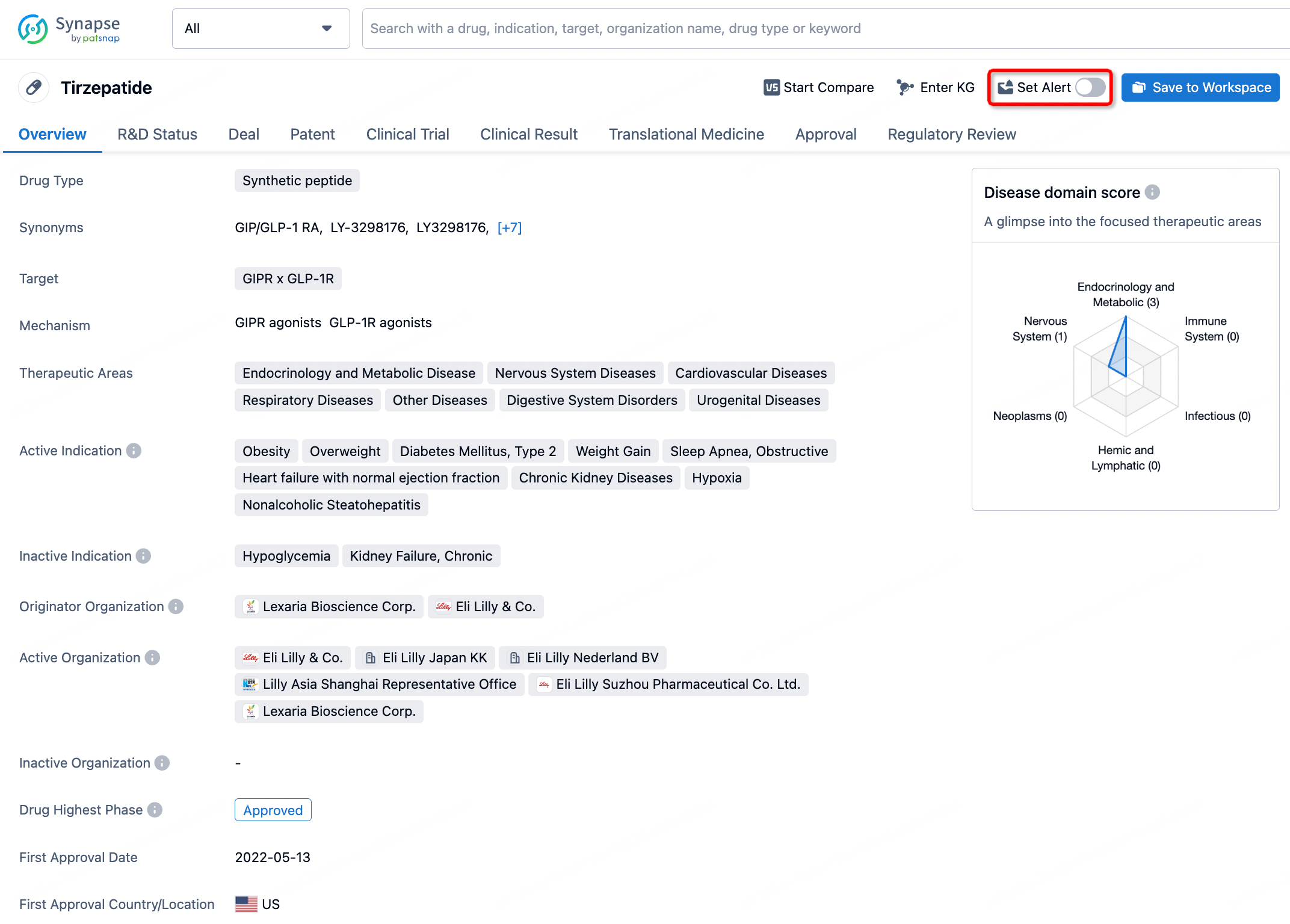
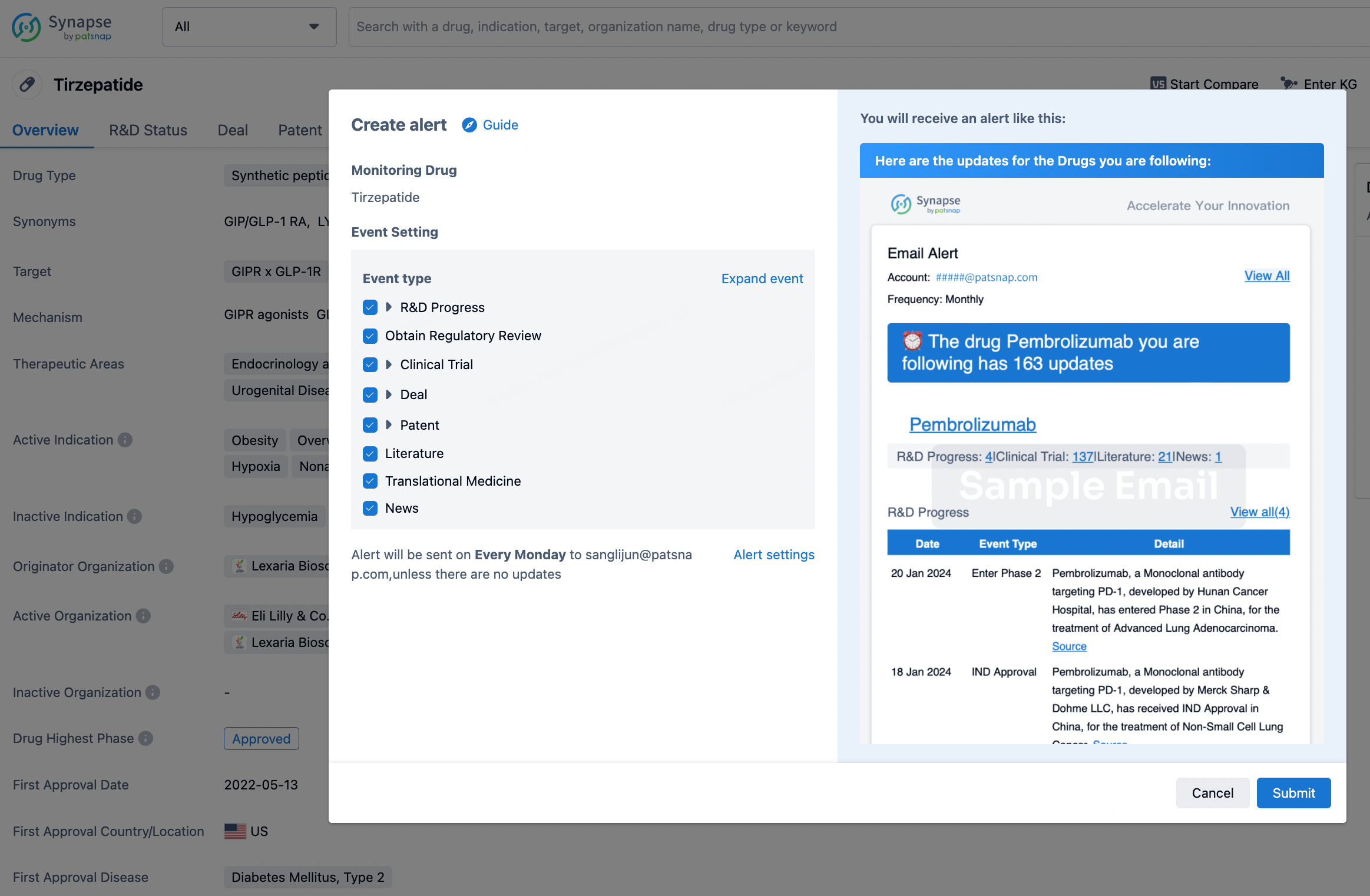
In the Synapse database, you can stay updated on the latest research and development advances of all drugs. This service is accessible anytime and anywhere, with updates available daily or weekly. Use the "Set Alert" function to stay informed. Click on the image below to embark on a brand new journey of drug discovery!
AI Agents Built for Biopharma Breakthroughs
Accelerate discovery. Empower decisions. Transform outcomes.
Get started for free today!
Accelerate Strategic R&D decision making with Synapse, PatSnap’s AI-powered Connected Innovation Intelligence Platform Built for Life Sciences Professionals.
Start your data trial now!
Synapse data is also accessible to external entities via APIs or data packages. Empower better decisions with the latest in pharmaceutical intelligence.