Request Demo
What is Bromfenac Sodium used for?
14 June 2024
Bromfenac Sodium: An In-Depth Look
Introduction to Bromfenac Sodium
Bromfenac Sodium is a nonsteroidal anti-inflammatory drug (NSAID) that has garnered significant attention in both clinical and research settings due to its efficacy in reducing inflammation and managing pain, particularly in ocular conditions. This drug is marketed under various trade names, with some of the most notable being Xibrom, Bromday, and Prolensa. Bromfenac Sodium specifically targets cyclooxygenase (COX) enzymes, which play a key role in the inflammatory process by converting arachidonic acid into prostaglandins, compounds that mediate inflammation, pain, and fever.
Research institutions worldwide have conducted extensive studies to explore the full potential and limitations of Bromfenac Sodium. Initially approved by the FDA for ophthalmic use in 2005, it has become a staple in the management of postoperative inflammation and pain in patients undergoing cataract surgery. The ongoing research focuses on optimizing dosing regimens and expanding its indications to treat other inflammatory conditions, potentially widening its therapeutic scope.
Bromfenac Sodium Mechanism of Action
The primary mechanism of action of Bromfenac Sodium centers around its ability to inhibit cyclooxygenase (COX) enzymes, specifically COX-1 and COX-2. These enzymes are crucial in the conversion of arachidonic acid to prostaglandins, which are lipid compounds that perform various functions, including the promotion of inflammation, pain, and fever. By blocking these enzymes, Bromfenac Sodium effectively reduces the production of prostaglandins, thereby alleviating inflammation and associated symptoms.
What sets Bromfenac Sodium apart from other NSAIDs is its relatively high specificity for COX-2 over COX-1. COX-2 is primarily involved in the inflammatory process, whereas COX-1 plays a role in various physiological functions, such as maintaining the gastric mucosal lining and platelet aggregation. Therefore, by selectively inhibiting COX-2, Bromfenac Sodium can provide potent anti-inflammatory effects with a potentially lower risk of gastrointestinal side effects compared to non-selective NSAIDs.
How to Use Bromfenac Sodium
Bromfenac Sodium is typically administered as an ophthalmic solution, making it highly effective for treating ocular inflammation and pain. The standard dosage involves instilling one drop of the solution into the affected eye(s) once or twice daily, depending on the specific formulation and the patient's condition. For instance, Xibrom is usually administered twice daily, whereas Bromday and Prolensa are formulated for once-daily use, offering greater convenience and potentially improving patient compliance.
The onset of action of Bromfenac Sodium is relatively quick, with patients often experiencing relief within a few hours of administration. This rapid onset makes it particularly useful in managing acute postoperative inflammation, providing timely alleviation of symptoms. In the context of cataract surgery, the medication is typically initiated one day prior to the procedure and continued for up to two weeks postoperatively, ensuring comprehensive management of inflammation and pain during the critical recovery period.
Patients should follow the prescribed dosing regimen meticulously and avoid touching the dropper tip to any surface to prevent contamination. It is also advisable to wait at least five minutes before administering any other ophthalmic medications to ensure optimal absorption and efficacy.
What is Bromfenac Sodium Side Effects
Like all medications, Bromfenac Sodium is associated with certain side effects, although not everyone will experience them. The most common side effects reported include ocular irritation, redness, and a sensation of discomfort or burning upon instillation. These symptoms are generally mild and transient, resolving without the need for additional treatment.
More severe side effects are rare but can occur. These may include corneal complications such as keratitis, corneal thinning, or perforation, particularly with prolonged use. Therefore, it is crucial to limit the duration of therapy to the prescribed period and to monitor for any signs of adverse effects. Patients with a history of corneal disease or those undergoing repeated ocular surgeries should use Bromfenac Sodium with caution.
Contraindications for the use of Bromfenac Sodium include hypersensitivity to the drug or any of its components. Patients with known allergies to other NSAIDs may also be at an increased risk of hypersensitivity reactions and should discuss this with their healthcare provider before starting treatment. Additionally, Bromfenac Sodium should be used with caution in patients with bleeding disorders or those taking anticoagulants, as NSAIDs can potentially exacerbate bleeding tendencies.
What Other Drugs Will Affect Bromfenac Sodium
Drug interactions can significantly impact the safety and efficacy of Bromfenac Sodium. While the risk of systemic interactions is relatively low due to its topical administration, there are still potential considerations to be mindful of. For instance, other NSAIDs or corticosteroids administered concomitantly may increase the risk of additive side effects, such as gastrointestinal ulcers, bleeding, or enhanced ocular irritation.
Patients taking anticoagulants, such as warfarin or direct oral anticoagulants (DOACs), should inform their healthcare provider, as NSAIDs can interfere with platelet function and potentially increase bleeding risk. Although this interaction is more relevant for systemic NSAIDs, it is still a consideration for topical agents in patients with a high baseline risk of bleeding.
Moreover, it is essential to maintain an adequate interval between the administration of different ophthalmic medications to prevent washout or reduced efficacy. Patients should follow the recommended waiting period of at least five minutes between different eye drops to ensure optimal therapeutic outcomes.
In conclusion, Bromfenac Sodium is a valuable tool in the management of ocular inflammation and pain, particularly in the postoperative setting. Its targeted mechanism of action, rapid onset of relief, and relatively favorable safety profile make it a preferable option for many patients. However, like all medications, it requires careful consideration of potential side effects, contraindications, and drug interactions to ensure its safe and effective use. Ongoing research and clinical experience will continue to refine its role in therapeutic protocols, potentially expanding its utility in the management of various inflammatory conditions.
Introduction to Bromfenac Sodium
Bromfenac Sodium is a nonsteroidal anti-inflammatory drug (NSAID) that has garnered significant attention in both clinical and research settings due to its efficacy in reducing inflammation and managing pain, particularly in ocular conditions. This drug is marketed under various trade names, with some of the most notable being Xibrom, Bromday, and Prolensa. Bromfenac Sodium specifically targets cyclooxygenase (COX) enzymes, which play a key role in the inflammatory process by converting arachidonic acid into prostaglandins, compounds that mediate inflammation, pain, and fever.
Research institutions worldwide have conducted extensive studies to explore the full potential and limitations of Bromfenac Sodium. Initially approved by the FDA for ophthalmic use in 2005, it has become a staple in the management of postoperative inflammation and pain in patients undergoing cataract surgery. The ongoing research focuses on optimizing dosing regimens and expanding its indications to treat other inflammatory conditions, potentially widening its therapeutic scope.
Bromfenac Sodium Mechanism of Action
The primary mechanism of action of Bromfenac Sodium centers around its ability to inhibit cyclooxygenase (COX) enzymes, specifically COX-1 and COX-2. These enzymes are crucial in the conversion of arachidonic acid to prostaglandins, which are lipid compounds that perform various functions, including the promotion of inflammation, pain, and fever. By blocking these enzymes, Bromfenac Sodium effectively reduces the production of prostaglandins, thereby alleviating inflammation and associated symptoms.
What sets Bromfenac Sodium apart from other NSAIDs is its relatively high specificity for COX-2 over COX-1. COX-2 is primarily involved in the inflammatory process, whereas COX-1 plays a role in various physiological functions, such as maintaining the gastric mucosal lining and platelet aggregation. Therefore, by selectively inhibiting COX-2, Bromfenac Sodium can provide potent anti-inflammatory effects with a potentially lower risk of gastrointestinal side effects compared to non-selective NSAIDs.
How to Use Bromfenac Sodium
Bromfenac Sodium is typically administered as an ophthalmic solution, making it highly effective for treating ocular inflammation and pain. The standard dosage involves instilling one drop of the solution into the affected eye(s) once or twice daily, depending on the specific formulation and the patient's condition. For instance, Xibrom is usually administered twice daily, whereas Bromday and Prolensa are formulated for once-daily use, offering greater convenience and potentially improving patient compliance.
The onset of action of Bromfenac Sodium is relatively quick, with patients often experiencing relief within a few hours of administration. This rapid onset makes it particularly useful in managing acute postoperative inflammation, providing timely alleviation of symptoms. In the context of cataract surgery, the medication is typically initiated one day prior to the procedure and continued for up to two weeks postoperatively, ensuring comprehensive management of inflammation and pain during the critical recovery period.
Patients should follow the prescribed dosing regimen meticulously and avoid touching the dropper tip to any surface to prevent contamination. It is also advisable to wait at least five minutes before administering any other ophthalmic medications to ensure optimal absorption and efficacy.
What is Bromfenac Sodium Side Effects
Like all medications, Bromfenac Sodium is associated with certain side effects, although not everyone will experience them. The most common side effects reported include ocular irritation, redness, and a sensation of discomfort or burning upon instillation. These symptoms are generally mild and transient, resolving without the need for additional treatment.
More severe side effects are rare but can occur. These may include corneal complications such as keratitis, corneal thinning, or perforation, particularly with prolonged use. Therefore, it is crucial to limit the duration of therapy to the prescribed period and to monitor for any signs of adverse effects. Patients with a history of corneal disease or those undergoing repeated ocular surgeries should use Bromfenac Sodium with caution.
Contraindications for the use of Bromfenac Sodium include hypersensitivity to the drug or any of its components. Patients with known allergies to other NSAIDs may also be at an increased risk of hypersensitivity reactions and should discuss this with their healthcare provider before starting treatment. Additionally, Bromfenac Sodium should be used with caution in patients with bleeding disorders or those taking anticoagulants, as NSAIDs can potentially exacerbate bleeding tendencies.
What Other Drugs Will Affect Bromfenac Sodium
Drug interactions can significantly impact the safety and efficacy of Bromfenac Sodium. While the risk of systemic interactions is relatively low due to its topical administration, there are still potential considerations to be mindful of. For instance, other NSAIDs or corticosteroids administered concomitantly may increase the risk of additive side effects, such as gastrointestinal ulcers, bleeding, or enhanced ocular irritation.
Patients taking anticoagulants, such as warfarin or direct oral anticoagulants (DOACs), should inform their healthcare provider, as NSAIDs can interfere with platelet function and potentially increase bleeding risk. Although this interaction is more relevant for systemic NSAIDs, it is still a consideration for topical agents in patients with a high baseline risk of bleeding.
Moreover, it is essential to maintain an adequate interval between the administration of different ophthalmic medications to prevent washout or reduced efficacy. Patients should follow the recommended waiting period of at least five minutes between different eye drops to ensure optimal therapeutic outcomes.
In conclusion, Bromfenac Sodium is a valuable tool in the management of ocular inflammation and pain, particularly in the postoperative setting. Its targeted mechanism of action, rapid onset of relief, and relatively favorable safety profile make it a preferable option for many patients. However, like all medications, it requires careful consideration of potential side effects, contraindications, and drug interactions to ensure its safe and effective use. Ongoing research and clinical experience will continue to refine its role in therapeutic protocols, potentially expanding its utility in the management of various inflammatory conditions.
How to obtain the latest development progress of all drugs?
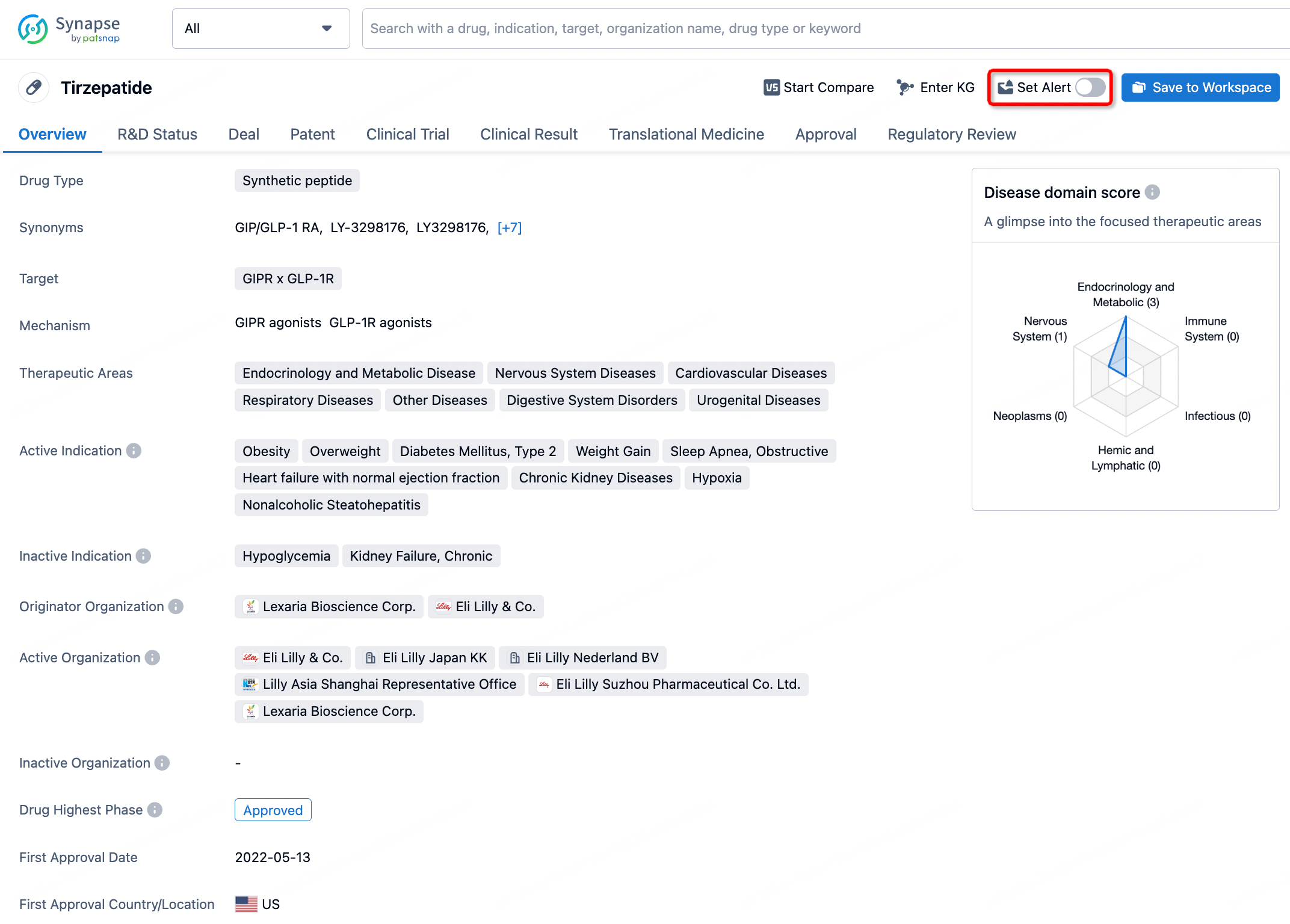
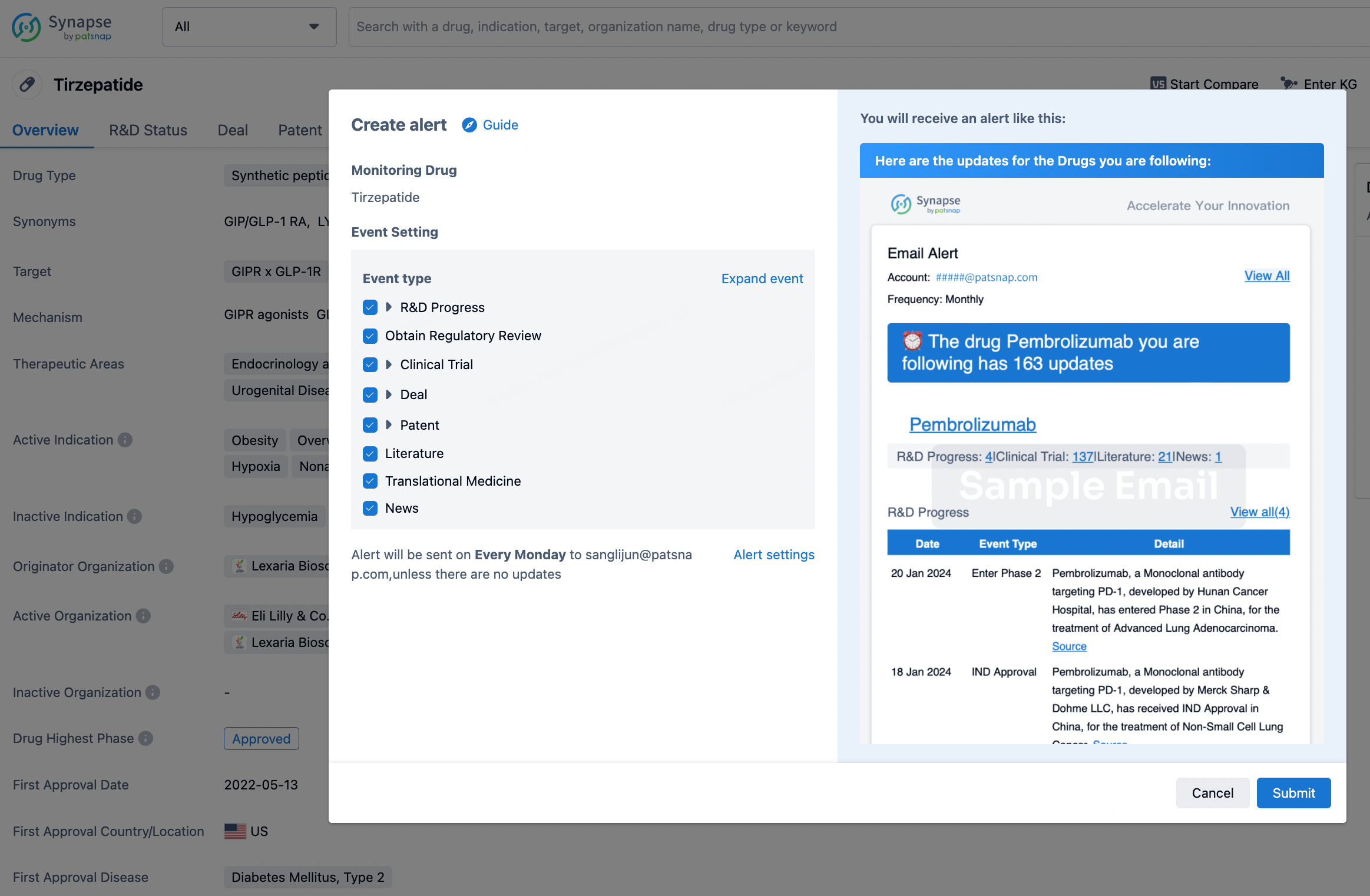
In the Synapse database, you can stay updated on the latest research and development advances of all drugs. This service is accessible anytime and anywhere, with updates available daily or weekly. Use the "Set Alert" function to stay informed. Click on the image below to embark on a brand new journey of drug discovery!
AI Agents Built for Biopharma Breakthroughs
Accelerate discovery. Empower decisions. Transform outcomes.
Get started for free today!
Accelerate Strategic R&D decision making with Synapse, PatSnap’s AI-powered Connected Innovation Intelligence Platform Built for Life Sciences Professionals.
Start your data trial now!
Synapse data is also accessible to external entities via APIs or data packages. Empower better decisions with the latest in pharmaceutical intelligence.