Request Demo
What is CIGB-845 used for?
28 June 2024
CIGB-845 is an innovative therapeutic peptide that has garnered significant attention in recent years due to its promising potential in the treatment of various medical conditions. Developed by the Center for Genetic Engineering and Biotechnology (CIGB) in Cuba, CIGB-845 is a synthetic peptide designed to target specific cellular pathways involved in disease processes. This drug falls under the category of therapeutic peptides, which are short chains of amino acids known for their ability to interact with various biological targets with high specificity and potency.
The primary indications for CIGB-845 are currently focused on neurodegenerative diseases, with a particular emphasis on conditions such as Parkinson's disease and stroke-induced brain damage. These conditions represent a significant unmet medical need, as current treatment options are limited and often only provide symptomatic relief without addressing the underlying disease mechanisms. Research into CIGB-845 has shown promising results in preclinical studies, leading to its progression into early-phase clinical trials. The peptide has demonstrated potential neuroprotective effects, suggesting it could alter disease progression and improve patient outcomes.
The mechanism of action of CIGB-845 is multi-faceted and involves several key pathways that contribute to its neuroprotective properties. One of the primary mechanisms is its ability to modulate inflammatory responses within the central nervous system. In neurodegenerative diseases, chronic inflammation is a critical factor that exacerbates neural damage. CIGB-845 has been shown to reduce the production of pro-inflammatory cytokines and other inflammatory mediators, thereby mitigating the inflammatory response and protecting neural tissues from further damage.
Another crucial aspect of CIGB-845's mechanism of action is its role in inhibiting apoptosis, or programmed cell death. In conditions like Parkinson's disease, the progressive loss of dopaminergic neurons is a hallmark feature. CIGB-845 appears to exert a protective effect on these neurons by inhibiting pathways that lead to apoptosis. This anti-apoptotic effect is crucial in preserving neuronal integrity and function, potentially slowing down the disease's progression.
Additionally, CIGB-845 has been found to enhance neurogenesis and synaptic plasticity. Neurogenesis refers to the generation of new neurons, while synaptic plasticity involves the strengthening and formation of new synaptic connections. Both processes are essential for maintaining cognitive function and recovering from neural damage. By promoting these processes, CIGB-845 not only protects existing neurons but also supports the brain's ability to repair and regenerate.
The primary indication for CIGB-845 is the treatment of Parkinson's disease, a neurodegenerative disorder characterized by the progressive loss of dopamine-producing neurons in the brain. Parkinson's disease patients experience a range of motor and non-motor symptoms, including tremors, rigidity, bradykinesia, and cognitive decline. Current treatments are primarily focused on managing symptoms through dopamine replacement therapies, which do not address the underlying neuronal loss.
CIGB-845 offers a novel approach by targeting the disease's underlying mechanisms, potentially altering its course. Preclinical studies have demonstrated that CIGB-845 can reduce neuronal loss and improve motor function in animal models of Parkinson's disease. These findings have paved the way for early-phase clinical trials aimed at evaluating its safety and efficacy in human patients.
In addition to Parkinson's disease, CIGB-845 is being explored for its potential in treating stroke-induced brain damage. Stroke is a leading cause of disability and death worldwide, and there are currently limited treatment options available for promoting recovery after the acute phase. Research has shown that CIGB-845 may help to protect neural tissue from ischemic damage and support recovery processes, offering hope for improved outcomes in stroke patients.
In conclusion, CIGB-845 represents a promising therapeutic candidate for neurodegenerative diseases, with its multifaceted mechanism of action offering potential benefits beyond symptom management. As research progresses, this innovative peptide may provide new hope for patients suffering from conditions like Parkinson's disease and stroke, addressing critical unmet needs in the field of neurology.
The primary indications for CIGB-845 are currently focused on neurodegenerative diseases, with a particular emphasis on conditions such as Parkinson's disease and stroke-induced brain damage. These conditions represent a significant unmet medical need, as current treatment options are limited and often only provide symptomatic relief without addressing the underlying disease mechanisms. Research into CIGB-845 has shown promising results in preclinical studies, leading to its progression into early-phase clinical trials. The peptide has demonstrated potential neuroprotective effects, suggesting it could alter disease progression and improve patient outcomes.
The mechanism of action of CIGB-845 is multi-faceted and involves several key pathways that contribute to its neuroprotective properties. One of the primary mechanisms is its ability to modulate inflammatory responses within the central nervous system. In neurodegenerative diseases, chronic inflammation is a critical factor that exacerbates neural damage. CIGB-845 has been shown to reduce the production of pro-inflammatory cytokines and other inflammatory mediators, thereby mitigating the inflammatory response and protecting neural tissues from further damage.
Another crucial aspect of CIGB-845's mechanism of action is its role in inhibiting apoptosis, or programmed cell death. In conditions like Parkinson's disease, the progressive loss of dopaminergic neurons is a hallmark feature. CIGB-845 appears to exert a protective effect on these neurons by inhibiting pathways that lead to apoptosis. This anti-apoptotic effect is crucial in preserving neuronal integrity and function, potentially slowing down the disease's progression.
Additionally, CIGB-845 has been found to enhance neurogenesis and synaptic plasticity. Neurogenesis refers to the generation of new neurons, while synaptic plasticity involves the strengthening and formation of new synaptic connections. Both processes are essential for maintaining cognitive function and recovering from neural damage. By promoting these processes, CIGB-845 not only protects existing neurons but also supports the brain's ability to repair and regenerate.
The primary indication for CIGB-845 is the treatment of Parkinson's disease, a neurodegenerative disorder characterized by the progressive loss of dopamine-producing neurons in the brain. Parkinson's disease patients experience a range of motor and non-motor symptoms, including tremors, rigidity, bradykinesia, and cognitive decline. Current treatments are primarily focused on managing symptoms through dopamine replacement therapies, which do not address the underlying neuronal loss.
CIGB-845 offers a novel approach by targeting the disease's underlying mechanisms, potentially altering its course. Preclinical studies have demonstrated that CIGB-845 can reduce neuronal loss and improve motor function in animal models of Parkinson's disease. These findings have paved the way for early-phase clinical trials aimed at evaluating its safety and efficacy in human patients.
In addition to Parkinson's disease, CIGB-845 is being explored for its potential in treating stroke-induced brain damage. Stroke is a leading cause of disability and death worldwide, and there are currently limited treatment options available for promoting recovery after the acute phase. Research has shown that CIGB-845 may help to protect neural tissue from ischemic damage and support recovery processes, offering hope for improved outcomes in stroke patients.
In conclusion, CIGB-845 represents a promising therapeutic candidate for neurodegenerative diseases, with its multifaceted mechanism of action offering potential benefits beyond symptom management. As research progresses, this innovative peptide may provide new hope for patients suffering from conditions like Parkinson's disease and stroke, addressing critical unmet needs in the field of neurology.
How to obtain the latest development progress of all drugs?
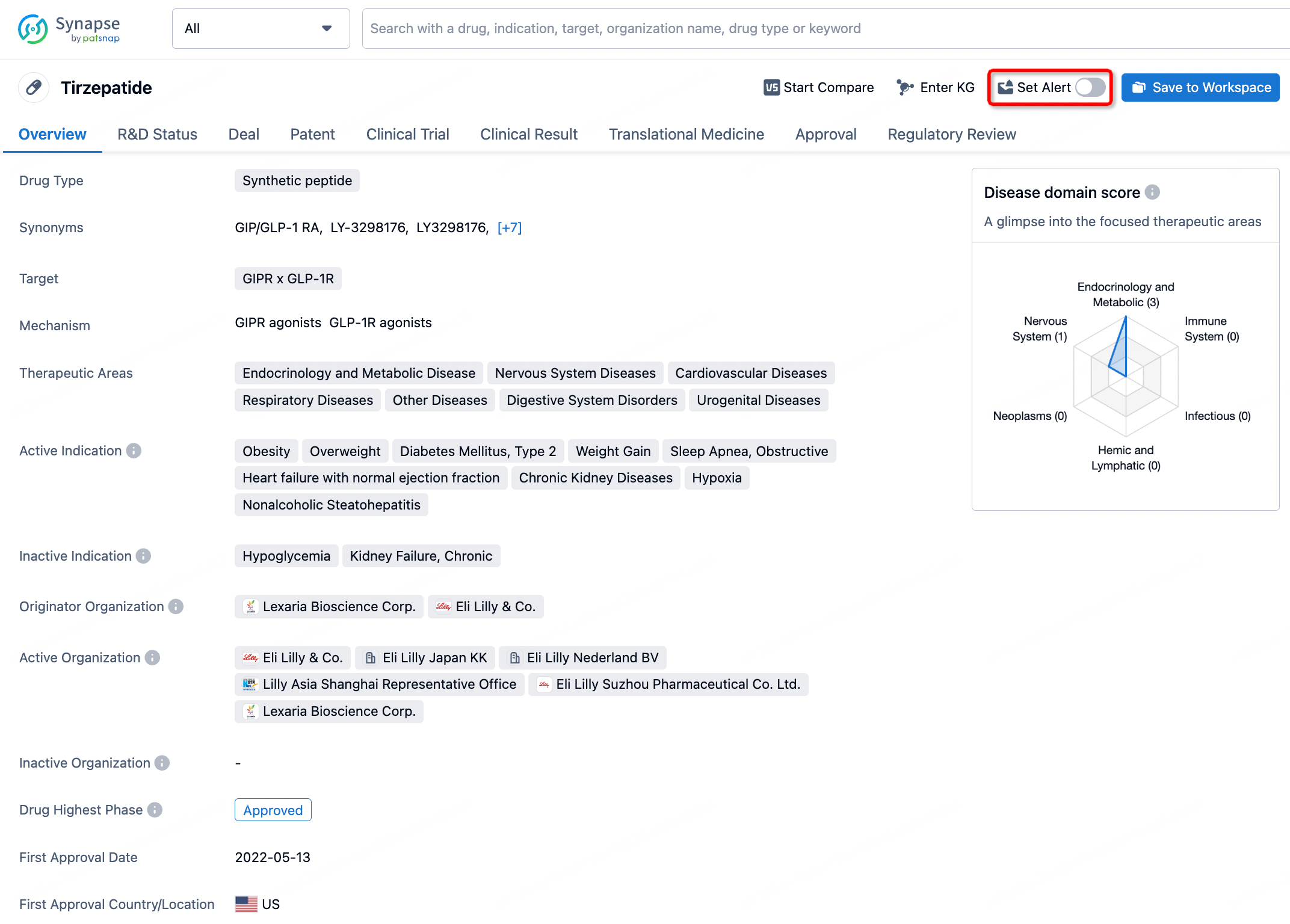
In the Synapse database, you can stay updated on the latest research and development advances of all drugs. This service is accessible anytime and anywhere, with updates available daily or weekly. Use the "Set Alert" function to stay informed. Click on the image below to embark on a brand new journey of drug discovery!


AI Agents Built for Biopharma Breakthroughs
Accelerate discovery. Empower decisions. Transform outcomes.
Get started for free today!
Accelerate Strategic R&D decision making with Synapse, PatSnap’s AI-powered Connected Innovation Intelligence Platform Built for Life Sciences Professionals.
Start your data trial now!
Synapse data is also accessible to external entities via APIs or data packages. Empower better decisions with the latest in pharmaceutical intelligence.