Request Demo
What is Cilmostim used for?
28 June 2024
Cilmostim is an innovative therapeutic candidate that’s been drawing significant attention in the pharmaceutical and medical research communities. Developed primarily by leading research institutions and biopharmaceutical companies, Cilmostim is categorized as a biologic drug, specifically a granulocyte-macrophage colony-stimulating factor (GM-CSF). This promising molecule is designed to target and modulate the immune system, making it a focal point in the treatment of various inflammatory and autoimmune conditions. While still undergoing clinical trials and extensive research, Cilmostim has shown potential in treating diseases such as rheumatoid arthritis, Crohn's disease, and multiple sclerosis. Researchers are particularly optimistic about its ability to offer a new therapeutic approach where conventional treatments have been insufficient.
Cilmostim’s mechanism of action is quite fascinating and distinct, revolving around its role as a GM-CSF. GM-CSF is a cytokine, a type of signaling protein involved in the immune response, that stimulates the survival, proliferation, and differentiation of hematopoietic progenitor cells into granulocytes and macrophages. Granulocytes and macrophages are crucial components of the immune system, responsible for fighting infections and clearing out cellular debris. Cilmostim mimics the natural GM-CSF, binding to specific receptors on the surface of target cells. This interaction activates intracellular signaling pathways that lead to the production and release of more granulocytes and macrophages, enhancing the body's immune response. By boosting the number and activity of these immune cells, Cilmostim aids in controlling and reducing inflammation, which is a common underlying factor in many autoimmune and inflammatory diseases.
The primary indication for Cilmostim is currently focused on autoimmune and inflammatory conditions. Rheumatoid arthritis (RA) is one of the key areas where Cilmostim is being tested. RA is a chronic inflammatory disorder that primarily affects joints, leading to pain, swelling, and potential joint destruction. Traditional treatments for RA include nonsteroidal anti-inflammatory drugs (NSAIDs), corticosteroids, and disease-modifying antirheumatic drugs (DMARDs). However, for many patients, these treatments are not sufficiently effective or come with significant side effects. Cilmostim offers a novel approach by directly enhancing the immune system’s ability to regulate inflammation, potentially providing relief for patients who do not respond well to existing therapies.
Another significant indication for Cilmostim is Crohn's disease, a type of inflammatory bowel disease (IBD) that causes inflammation of the digestive tract. The inflammation can lead to severe diarrhea, fatigue, weight loss, and malnutrition. Current treatments for Crohn's disease include anti-inflammatory drugs, immune system suppressors, and biologics that target specific components of the immune response. While these treatments can be effective, they do not work for everyone, and some patients may experience significant side effects. Cilmostim aims to address these gaps by promoting the proliferation of immune cells that can help manage and reduce the inflammation characteristic of Crohn's disease.
Moreover, Cilmostim is being investigated for use in multiple sclerosis (MS), a disease where the immune system attacks the protective sheath (myelin) that covers nerve fibers, causing communication problems between the brain and the rest of the body. MS can result in permanent damage or deterioration of the nerves themselves. Conventional MS treatments include immunosuppressants and medications to manage symptoms, but they often fail to halt disease progression fully. By modulating the immune response and enhancing the body’s natural defense mechanisms, Cilmostim has the potential to provide a new line of treatment that may slow or even stop the progression of MS.
In summary, Cilmostim is a promising biologic drug being explored for its potential to treat a range of autoimmune and inflammatory diseases by leveraging its mechanism as a GM-CSF. Through enhancing the immune response and reducing inflammation, Cilmostim offers hope for improved management and outcomes in conditions such as rheumatoid arthritis, Crohn's disease, and multiple sclerosis. Although still in the research phase, the progress thus far is encouraging, and the continued development of Cilmostim could lead to significant advancements in the treatment of these challenging diseases.
Cilmostim’s mechanism of action is quite fascinating and distinct, revolving around its role as a GM-CSF. GM-CSF is a cytokine, a type of signaling protein involved in the immune response, that stimulates the survival, proliferation, and differentiation of hematopoietic progenitor cells into granulocytes and macrophages. Granulocytes and macrophages are crucial components of the immune system, responsible for fighting infections and clearing out cellular debris. Cilmostim mimics the natural GM-CSF, binding to specific receptors on the surface of target cells. This interaction activates intracellular signaling pathways that lead to the production and release of more granulocytes and macrophages, enhancing the body's immune response. By boosting the number and activity of these immune cells, Cilmostim aids in controlling and reducing inflammation, which is a common underlying factor in many autoimmune and inflammatory diseases.
The primary indication for Cilmostim is currently focused on autoimmune and inflammatory conditions. Rheumatoid arthritis (RA) is one of the key areas where Cilmostim is being tested. RA is a chronic inflammatory disorder that primarily affects joints, leading to pain, swelling, and potential joint destruction. Traditional treatments for RA include nonsteroidal anti-inflammatory drugs (NSAIDs), corticosteroids, and disease-modifying antirheumatic drugs (DMARDs). However, for many patients, these treatments are not sufficiently effective or come with significant side effects. Cilmostim offers a novel approach by directly enhancing the immune system’s ability to regulate inflammation, potentially providing relief for patients who do not respond well to existing therapies.
Another significant indication for Cilmostim is Crohn's disease, a type of inflammatory bowel disease (IBD) that causes inflammation of the digestive tract. The inflammation can lead to severe diarrhea, fatigue, weight loss, and malnutrition. Current treatments for Crohn's disease include anti-inflammatory drugs, immune system suppressors, and biologics that target specific components of the immune response. While these treatments can be effective, they do not work for everyone, and some patients may experience significant side effects. Cilmostim aims to address these gaps by promoting the proliferation of immune cells that can help manage and reduce the inflammation characteristic of Crohn's disease.
Moreover, Cilmostim is being investigated for use in multiple sclerosis (MS), a disease where the immune system attacks the protective sheath (myelin) that covers nerve fibers, causing communication problems between the brain and the rest of the body. MS can result in permanent damage or deterioration of the nerves themselves. Conventional MS treatments include immunosuppressants and medications to manage symptoms, but they often fail to halt disease progression fully. By modulating the immune response and enhancing the body’s natural defense mechanisms, Cilmostim has the potential to provide a new line of treatment that may slow or even stop the progression of MS.
In summary, Cilmostim is a promising biologic drug being explored for its potential to treat a range of autoimmune and inflammatory diseases by leveraging its mechanism as a GM-CSF. Through enhancing the immune response and reducing inflammation, Cilmostim offers hope for improved management and outcomes in conditions such as rheumatoid arthritis, Crohn's disease, and multiple sclerosis. Although still in the research phase, the progress thus far is encouraging, and the continued development of Cilmostim could lead to significant advancements in the treatment of these challenging diseases.
How to obtain the latest development progress of all drugs?
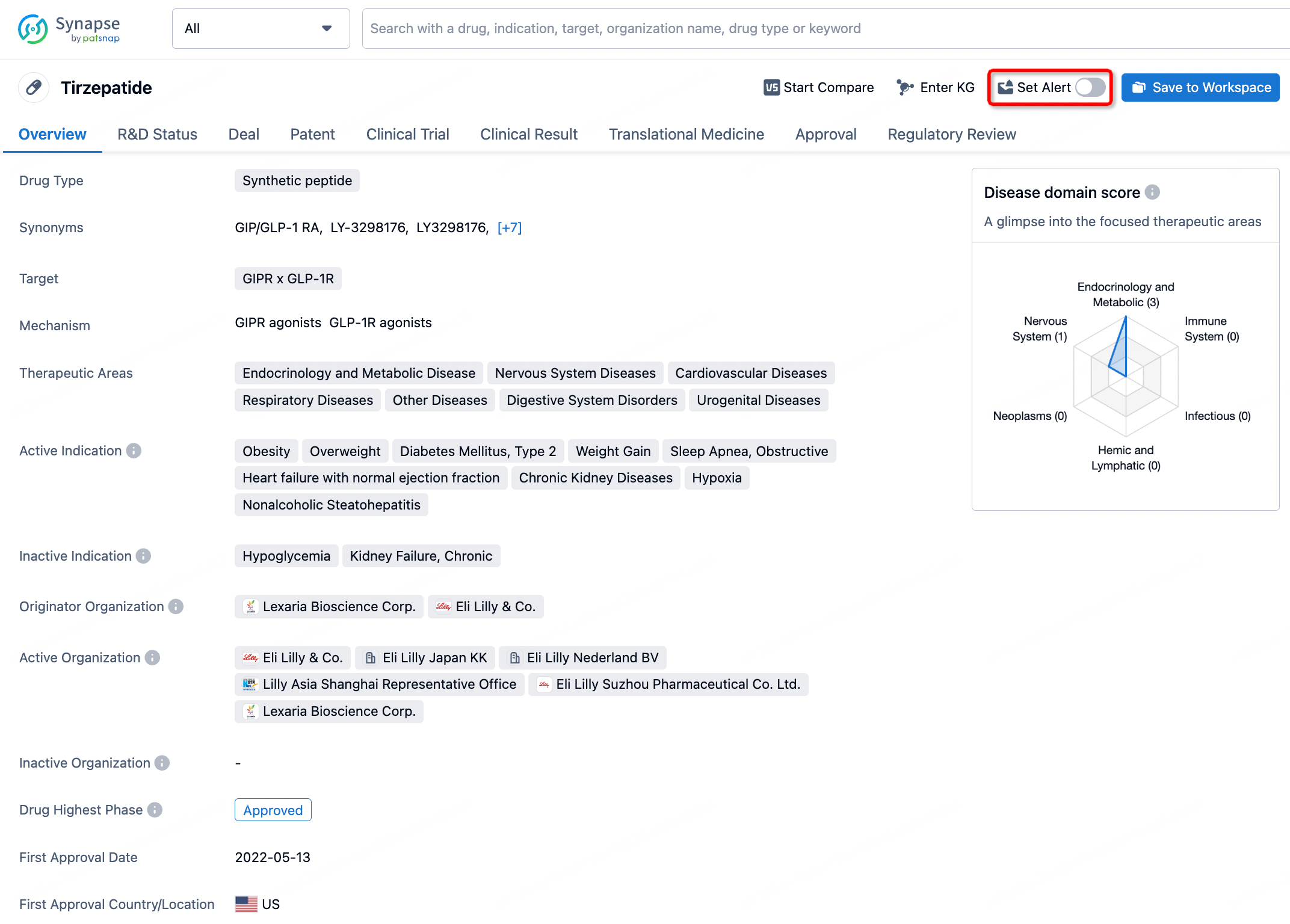
In the Synapse database, you can stay updated on the latest research and development advances of all drugs. This service is accessible anytime and anywhere, with updates available daily or weekly. Use the "Set Alert" function to stay informed. Click on the image below to embark on a brand new journey of drug discovery!


AI Agents Built for Biopharma Breakthroughs
Accelerate discovery. Empower decisions. Transform outcomes.
Get started for free today!
Accelerate Strategic R&D decision making with Synapse, PatSnap’s AI-powered Connected Innovation Intelligence Platform Built for Life Sciences Professionals.
Start your data trial now!
Synapse data is also accessible to external entities via APIs or data packages. Empower better decisions with the latest in pharmaceutical intelligence.