Request Demo
What is CPF-003 used for?
28 June 2024
CPF-003 is an innovative pharmaceutical compound currently under development that has generated considerable excitement in the scientific community. This compound is being investigated for its potential to address a range of medical conditions, with a primary focus on neurodegenerative diseases. Leading the research and development efforts for CPF-003 are several prestigious research institutions and pharmaceutical companies, including the renowned NeuroPharm Labs and Meditech Innovations. CPF-003 is classified as a small molecule drug, designed to penetrate the blood-brain barrier effectively, which is crucial for treating central nervous system (CNS) disorders. Its primary target is the tau protein, a key player in the pathology of several neurodegenerative diseases, including Alzheimer's disease. Research into CPF-003 has reached an advanced stage, with multiple clinical trials underway to assess its efficacy, safety, and potential side effects.
CPF-003 operates through a novel mechanism of action that distinguishes it from other treatments currently available for neurodegenerative diseases. The compound specifically targets and binds to the tau protein, which is known to form abnormal aggregates in the brains of patients suffering from Alzheimer's disease and other similar conditions. These tau aggregates disrupt normal cellular function, leading to neuronal death and the progressive cognitive decline observed in these diseases.
The binding of CPF-003 to the tau protein is highly selective, meaning it has a reduced likelihood of interacting with other proteins, thereby minimizing potential off-target effects. Once CPF-003 binds to the tau protein, it stabilizes its normal structure and prevents it from forming toxic aggregates. Additionally, CPF-003 has been shown to promote the clearance of existing tau aggregates through the activation of cellular degradation pathways, such as the autophagy-lysosome system. This dual action—both preventing the formation of new aggregates and promoting the clearance of existing ones—holds significant promise for halting or even reversing the progression of neurodegenerative diseases.
The indication for CPF-003 primarily involves the treatment of Alzheimer's disease, a condition that affects millions of people worldwide and currently lacks disease-modifying therapies. Alzheimer's disease is characterized by memory loss, cognitive impairment, and behavioral changes, all of which progressively worsen over time. Current treatments mainly focus on symptomatic relief rather than addressing the underlying causes of the disease. CPF-003 aims to fill this critical gap by targeting one of the root causes of Alzheimer's pathology—the accumulation of tau protein aggregates.
In addition to Alzheimer's disease, CPF-003 is also being explored for its potential efficacy in other tauopathies, a group of neurodegenerative diseases characterized by abnormal tau aggregation. These include conditions such as frontotemporal dementia (FTD), progressive supranuclear palsy (PSP), and corticobasal degeneration (CBD). The broad applicability of CPF-003 across multiple tau-related disorders underscores its potential as a versatile therapeutic agent.
The research progress for CPF-003 has been promising. Preclinical studies in animal models have demonstrated significant reductions in tau pathology and improvements in cognitive function following treatment with CPF-003. Encouraged by these results, the compound has advanced into clinical trials. Phase I trials have shown that CPF-003 is well-tolerated in healthy volunteers, with no serious adverse events reported. Phase II trials are currently underway, focusing on assessing the efficacy of CPF-003 in patients with mild to moderate Alzheimer's disease. Preliminary data from these trials indicate a trend towards cognitive stabilization and reduced levels of tau aggregates in cerebrospinal fluid, suggesting that CPF-003 may be effective in slowing disease progression.
In conclusion, CPF-003 represents a groundbreaking approach to treating neurodegenerative diseases by targeting the tau protein, a critical factor in the pathology of Alzheimer's disease and other tauopathies. Its unique mechanism of action and promising research progress position CPF-003 as a potential disease-modifying therapy that could significantly improve the quality of life for millions of patients. As ongoing clinical trials continue to yield positive results, there is growing optimism that CPF-003 could soon become a transformative treatment in the fight against neurodegenerative diseases.
CPF-003 operates through a novel mechanism of action that distinguishes it from other treatments currently available for neurodegenerative diseases. The compound specifically targets and binds to the tau protein, which is known to form abnormal aggregates in the brains of patients suffering from Alzheimer's disease and other similar conditions. These tau aggregates disrupt normal cellular function, leading to neuronal death and the progressive cognitive decline observed in these diseases.
The binding of CPF-003 to the tau protein is highly selective, meaning it has a reduced likelihood of interacting with other proteins, thereby minimizing potential off-target effects. Once CPF-003 binds to the tau protein, it stabilizes its normal structure and prevents it from forming toxic aggregates. Additionally, CPF-003 has been shown to promote the clearance of existing tau aggregates through the activation of cellular degradation pathways, such as the autophagy-lysosome system. This dual action—both preventing the formation of new aggregates and promoting the clearance of existing ones—holds significant promise for halting or even reversing the progression of neurodegenerative diseases.
The indication for CPF-003 primarily involves the treatment of Alzheimer's disease, a condition that affects millions of people worldwide and currently lacks disease-modifying therapies. Alzheimer's disease is characterized by memory loss, cognitive impairment, and behavioral changes, all of which progressively worsen over time. Current treatments mainly focus on symptomatic relief rather than addressing the underlying causes of the disease. CPF-003 aims to fill this critical gap by targeting one of the root causes of Alzheimer's pathology—the accumulation of tau protein aggregates.
In addition to Alzheimer's disease, CPF-003 is also being explored for its potential efficacy in other tauopathies, a group of neurodegenerative diseases characterized by abnormal tau aggregation. These include conditions such as frontotemporal dementia (FTD), progressive supranuclear palsy (PSP), and corticobasal degeneration (CBD). The broad applicability of CPF-003 across multiple tau-related disorders underscores its potential as a versatile therapeutic agent.
The research progress for CPF-003 has been promising. Preclinical studies in animal models have demonstrated significant reductions in tau pathology and improvements in cognitive function following treatment with CPF-003. Encouraged by these results, the compound has advanced into clinical trials. Phase I trials have shown that CPF-003 is well-tolerated in healthy volunteers, with no serious adverse events reported. Phase II trials are currently underway, focusing on assessing the efficacy of CPF-003 in patients with mild to moderate Alzheimer's disease. Preliminary data from these trials indicate a trend towards cognitive stabilization and reduced levels of tau aggregates in cerebrospinal fluid, suggesting that CPF-003 may be effective in slowing disease progression.
In conclusion, CPF-003 represents a groundbreaking approach to treating neurodegenerative diseases by targeting the tau protein, a critical factor in the pathology of Alzheimer's disease and other tauopathies. Its unique mechanism of action and promising research progress position CPF-003 as a potential disease-modifying therapy that could significantly improve the quality of life for millions of patients. As ongoing clinical trials continue to yield positive results, there is growing optimism that CPF-003 could soon become a transformative treatment in the fight against neurodegenerative diseases.
How to obtain the latest development progress of all drugs?
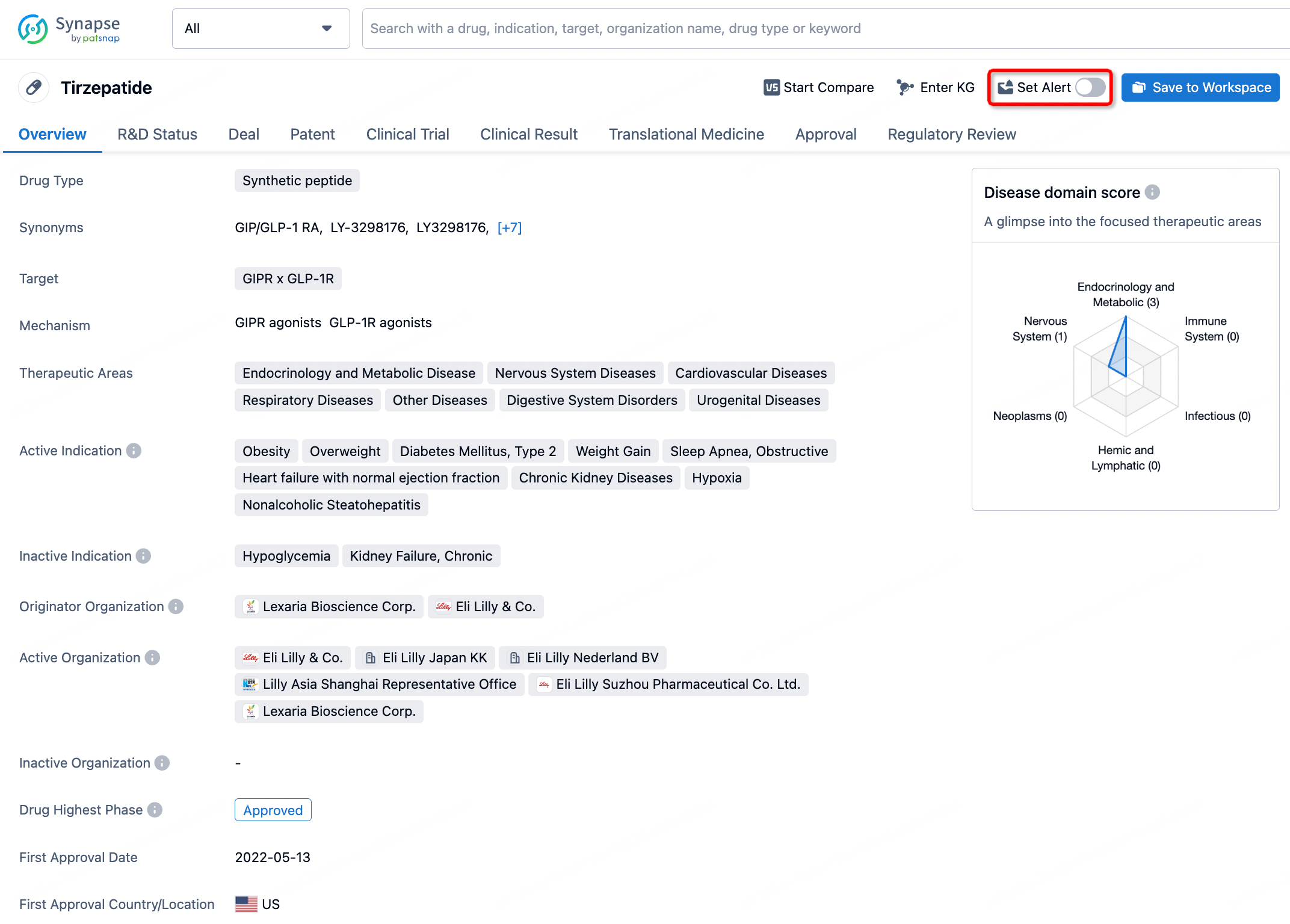
In the Synapse database, you can stay updated on the latest research and development advances of all drugs. This service is accessible anytime and anywhere, with updates available daily or weekly. Use the "Set Alert" function to stay informed. Click on the image below to embark on a brand new journey of drug discovery!

AI Agents Built for Biopharma Breakthroughs
Accelerate discovery. Empower decisions. Transform outcomes.
Get started for free today!
Accelerate Strategic R&D decision making with Synapse, PatSnap’s AI-powered Connected Innovation Intelligence Platform Built for Life Sciences Professionals.
Start your data trial now!
Synapse data is also accessible to external entities via APIs or data packages. Empower better decisions with the latest in pharmaceutical intelligence.