Request Demo
What is Cycleanine Dimethobromide used for?
15 June 2024
Cycleanine Dimethobromide is an emerging pharmaceutical compound that has garnered considerable interest within the scientific community and among medical professionals. This drug, which remains under investigation, belongs to a new class of therapeutic agents with promising implications for various medical conditions. Though it is not yet available commercially, research institutions and pharmaceutical companies are fervently exploring its potential.
Cycleanine Dimethobromide is identified by several trade names in the research domain but remains largely experimental and has not yet reached the stage of widespread clinical use. The drug has shown particular promise in targeting specific protein markers associated with chronic diseases, including certain types of cancer and inflammatory conditions. Leading research institutions globally, including some renowned universities and private pharmaceutical firms, are at the forefront of investigating Cycleanine Dimethobromide’s efficacy and safety profiles.
The primary indications for Cycleanine Dimethobromide, based on early studies, include its potential use as an anti-cancer agent and an anti-inflammatory drug. Preclinical trials have demonstrated its capacity to inhibit the growth of malignant cells and reduce inflammatory responses, making it a versatile candidate for future therapeutic applications. The research is progressing through various phases, with animal studies showing significant promise, and human trials anticipated to commence soon, pending regulatory approvals.
Cycleanine Dimethobromide operates through a complex but well-defined mechanism of action that sets it apart from other drugs in its class. The compound primarily exerts its therapeutic effects by interacting with specific cell surface receptors and intracellular pathways. It targets and binds to a protein known as Tyrosine Kinase, which plays a critical role in cell signaling and growth. By inhibiting the activity of Tyrosine Kinase, Cycleanine Dimethobromide effectively disrupts the signaling pathways that promote cancer cell proliferation and survival.
Moreover, the drug influences inflammatory pathways by modulating the activity of Nuclear Factor-kappa B (NF-kB), a protein complex involved in the cellular response to inflammation. Through this modulation, Cycleanine Dimethobromide can significantly reduce the production of pro-inflammatory cytokines, thereby alleviating symptoms associated with chronic inflammatory diseases. This dual mechanism of action positions Cycleanine Dimethobromide as a unique and potent therapeutic agent with the potential for broad-spectrum application.
The administration of Cycleanine Dimethobromide is currently being studied in multiple forms, including oral tablets and intravenous (IV) injections. The method of administration largely depends on the specific indication and the patient's condition. For cancer treatment, intravenous administration is often preferred due to its rapid onset of action and higher bioavailability. Patients typically receive the drug in a controlled clinical setting, where medical professionals can monitor their response and manage any adverse effects.
Onset time for Cycleanine Dimethobromide can vary depending on the method of administration and the patient's overall health status. When administered intravenously, the drug's effects are generally observed within a few hours, making it suitable for acute treatment scenarios. Oral administration, on the other hand, may take longer to manifest therapeutic effects, ranging from several hours to a couple of days, as the drug needs to undergo absorption and metabolism processes.
As with any pharmaceutical agent, Cycleanine Dimethobromide is not without side effects. Early research and clinical observations have identified several potential adverse effects associated with its use. Common side effects include nausea, fatigue, and mild gastrointestinal disturbances. These symptoms are generally transient and manageable with supportive care.
However, more severe side effects have also been reported, albeit less frequently. These include hepatotoxicity (liver damage), nephrotoxicity (kidney damage), and cardiotoxicity (heart damage). Due to the potential for these serious adverse effects, patients receiving Cycleanine Dimethobromide require regular monitoring of liver, kidney, and heart functions. Contraindications for the use of Cycleanine Dimethobromide include pre-existing liver or kidney disease, pregnancy, and lactation, as the drug's safety profile in these populations has not been thoroughly established.
Drug interactions are an important consideration when administering Cycleanine Dimethobromide. Certain medications can affect the way Cycleanine Dimethobromide is metabolized and excreted, potentially altering its efficacy and toxicity. Notably, drugs that induce or inhibit the cytochrome P450 enzymes can significantly impact Cycleanine Dimethobromide’s pharmacokinetics.
For instance, concomitant use of strong CYP3A4 inhibitors, such as ketoconazole, can lead to increased levels of Cycleanine Dimethobromide in the blood, raising the risk of adverse effects. Conversely, CYP3A4 inducers like rifampin can reduce the drug’s plasma concentration, potentially diminishing its therapeutic efficacy. It is crucial for healthcare providers to review a patient's medication history thoroughly before initiating treatment with Cycleanine Dimethobromide to avoid harmful drug interactions.
In summary, Cycleanine Dimethobromide represents a promising candidate in the realm of therapeutic agents, particularly for cancer and inflammatory conditions. Its unique mechanism of action and significant early research findings underscore its potential, though careful consideration of its side effects and drug interactions is imperative. As ongoing research continues to unveil new insights, Cycleanine Dimethobromide may soon transition from the experimental stage to a mainstream therapeutic option, offering hope for patients with challenging medical conditions.
Cycleanine Dimethobromide is identified by several trade names in the research domain but remains largely experimental and has not yet reached the stage of widespread clinical use. The drug has shown particular promise in targeting specific protein markers associated with chronic diseases, including certain types of cancer and inflammatory conditions. Leading research institutions globally, including some renowned universities and private pharmaceutical firms, are at the forefront of investigating Cycleanine Dimethobromide’s efficacy and safety profiles.
The primary indications for Cycleanine Dimethobromide, based on early studies, include its potential use as an anti-cancer agent and an anti-inflammatory drug. Preclinical trials have demonstrated its capacity to inhibit the growth of malignant cells and reduce inflammatory responses, making it a versatile candidate for future therapeutic applications. The research is progressing through various phases, with animal studies showing significant promise, and human trials anticipated to commence soon, pending regulatory approvals.
Cycleanine Dimethobromide operates through a complex but well-defined mechanism of action that sets it apart from other drugs in its class. The compound primarily exerts its therapeutic effects by interacting with specific cell surface receptors and intracellular pathways. It targets and binds to a protein known as Tyrosine Kinase, which plays a critical role in cell signaling and growth. By inhibiting the activity of Tyrosine Kinase, Cycleanine Dimethobromide effectively disrupts the signaling pathways that promote cancer cell proliferation and survival.
Moreover, the drug influences inflammatory pathways by modulating the activity of Nuclear Factor-kappa B (NF-kB), a protein complex involved in the cellular response to inflammation. Through this modulation, Cycleanine Dimethobromide can significantly reduce the production of pro-inflammatory cytokines, thereby alleviating symptoms associated with chronic inflammatory diseases. This dual mechanism of action positions Cycleanine Dimethobromide as a unique and potent therapeutic agent with the potential for broad-spectrum application.
The administration of Cycleanine Dimethobromide is currently being studied in multiple forms, including oral tablets and intravenous (IV) injections. The method of administration largely depends on the specific indication and the patient's condition. For cancer treatment, intravenous administration is often preferred due to its rapid onset of action and higher bioavailability. Patients typically receive the drug in a controlled clinical setting, where medical professionals can monitor their response and manage any adverse effects.
Onset time for Cycleanine Dimethobromide can vary depending on the method of administration and the patient's overall health status. When administered intravenously, the drug's effects are generally observed within a few hours, making it suitable for acute treatment scenarios. Oral administration, on the other hand, may take longer to manifest therapeutic effects, ranging from several hours to a couple of days, as the drug needs to undergo absorption and metabolism processes.
As with any pharmaceutical agent, Cycleanine Dimethobromide is not without side effects. Early research and clinical observations have identified several potential adverse effects associated with its use. Common side effects include nausea, fatigue, and mild gastrointestinal disturbances. These symptoms are generally transient and manageable with supportive care.
However, more severe side effects have also been reported, albeit less frequently. These include hepatotoxicity (liver damage), nephrotoxicity (kidney damage), and cardiotoxicity (heart damage). Due to the potential for these serious adverse effects, patients receiving Cycleanine Dimethobromide require regular monitoring of liver, kidney, and heart functions. Contraindications for the use of Cycleanine Dimethobromide include pre-existing liver or kidney disease, pregnancy, and lactation, as the drug's safety profile in these populations has not been thoroughly established.
Drug interactions are an important consideration when administering Cycleanine Dimethobromide. Certain medications can affect the way Cycleanine Dimethobromide is metabolized and excreted, potentially altering its efficacy and toxicity. Notably, drugs that induce or inhibit the cytochrome P450 enzymes can significantly impact Cycleanine Dimethobromide’s pharmacokinetics.
For instance, concomitant use of strong CYP3A4 inhibitors, such as ketoconazole, can lead to increased levels of Cycleanine Dimethobromide in the blood, raising the risk of adverse effects. Conversely, CYP3A4 inducers like rifampin can reduce the drug’s plasma concentration, potentially diminishing its therapeutic efficacy. It is crucial for healthcare providers to review a patient's medication history thoroughly before initiating treatment with Cycleanine Dimethobromide to avoid harmful drug interactions.
In summary, Cycleanine Dimethobromide represents a promising candidate in the realm of therapeutic agents, particularly for cancer and inflammatory conditions. Its unique mechanism of action and significant early research findings underscore its potential, though careful consideration of its side effects and drug interactions is imperative. As ongoing research continues to unveil new insights, Cycleanine Dimethobromide may soon transition from the experimental stage to a mainstream therapeutic option, offering hope for patients with challenging medical conditions.
How to obtain the latest development progress of all drugs?
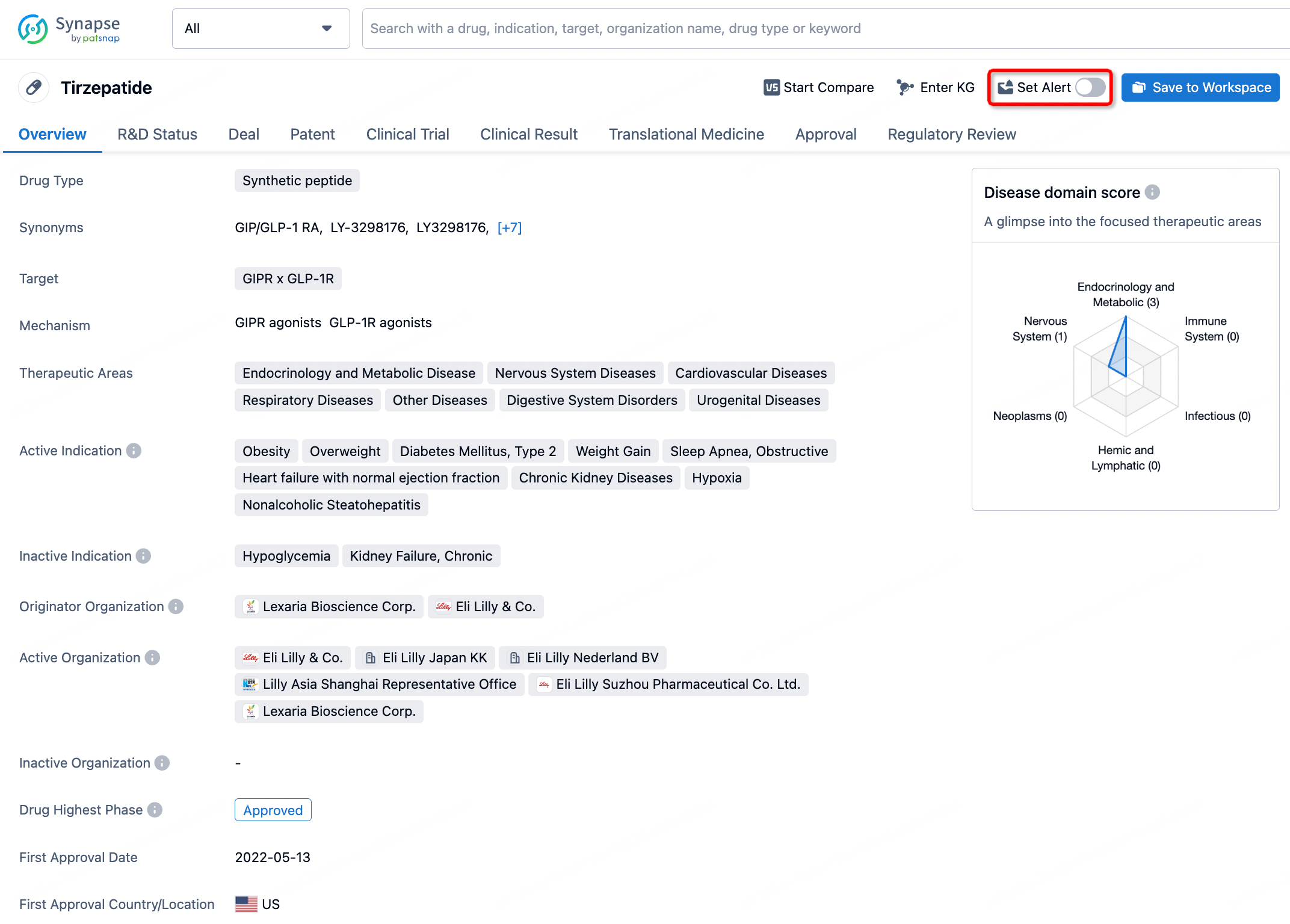
In the Synapse database, you can stay updated on the latest research and development advances of all drugs. This service is accessible anytime and anywhere, with updates available daily or weekly. Use the "Set Alert" function to stay informed. Click on the image below to embark on a brand new journey of drug discovery!


Hiro LS Researcher
The AI Search Engine Built to Accelerate Biopharma Decisions
Search across billion-scale life sciences data to uncover signals, validate evidence, and act with confidence.
Ask any biopharma research question→
Get started for free today!
Accelerate Strategic R&D decision making with Synapse, Patsnap’s AI-powered Connected Innovation Intelligence Platform Built for Life Sciences Professionals.
Discover Synapse Data Servers
Synapse data is now integrated into the PatSnap LS Model Context Protocol (MCP) service. Customize your LLM agent now using our MCP server!