Request Demo
What is Dalfopristin mesilate used for?
15 June 2024
Dalfopristin mesilate, also known by its trade name Synercid when combined with quinupristin, is an important antibiotic used in the medical field. It is primarily aimed at treating severe infections caused by Gram-positive bacteria, including methicillin-resistant Staphylococcus aureus (MRSA) and vancomycin-resistant Enterococcus faecium (VREF). Developed through collaborative research efforts, Dalfopristin mesilate fits into the class of antibiotics known as streptogramins. These drugs are particularly critical in clinical settings where other antibiotics have failed due to bacterial resistance.
The drug was initially researched and developed in the 1990s by Rhône-Poulenc Rorer, which later became part of the pharmaceutical giant Sanofi-Aventis. Over the years, numerous clinical trials and studies have validated its efficacy and safety. The FDA approved Synercid in 1999 for use in specific, complicated infections. Indications for the drug primarily include skin and soft tissue infections, as well as bloodstream infections caused by susceptible bacterial strains.
Dalfopristin mesilate works by inhibiting bacterial protein synthesis. Its mechanism of action is somewhat unique, making it particularly valuable in treating resistant bacterial strains. The drug binds to the 50S subunit of the bacterial ribosome, a crucial component in protein synthesis. By binding to this ribosomal subunit, Dalfopristin mesilate disrupts the elongation phase of protein translation. This is achieved through two main actions: inhibiting peptidyl transferase activity and preventing the proper functioning of the ribosome. When used in combination with quinupristin, the synergistic effect amplifies their antibacterial activity, resulting in more effective bacterial eradication. The combination of these two drugs disrupts bacterial protein production more efficiently than either drug could alone.
Dalfopristin mesilate is administered intravenously, often requiring a healthcare professional to oversee its delivery. The typical method of administration involves diluting the drug in a suitable intravenous fluid before infusion. The onset of action is relatively rapid, as the drug quickly reaches therapeutic concentrations in the bloodstream. A typical course of treatment may vary based on the severity of the infection and the patient's overall health but generally spans from several days to a few weeks. It's crucial to follow the prescribed treatment regimen to ensure the complete eradication of the bacterial infection and to minimize the risk of developing antibiotic resistance.
As with any potent medication, Dalfopristin mesilate comes with a range of potential side effects. Common side effects include gastrointestinal disturbances such as nausea, vomiting, and diarrhea. Some patients may also experience localized pain or inflammation at the injection site. More severe but less common side effects include myalgias (muscle pain) and arthralgias (joint pain), which can be particularly debilitating. Liver function abnormalities have also been reported, necessitating regular monitoring of liver enzymes during treatment.
Contraindications for Dalfopristin mesilate use include patients with known hypersensitivity to any component of the drug. It is also contraindicated in individuals with significant liver dysfunction, given the drug's potential to exacerbate liver conditions. Pregnant or breastfeeding women should use Dalfopristin mesilate only if the potential benefits outweigh the risks, as the safety profile in these populations is not well-established.
Drug interactions are an important consideration when administering Dalfopristin mesilate. The drug is metabolized by the liver and can interact with other medications that affect liver enzyme activity. Notably, Dalfopristin mesilate is a known inhibitor of the cytochrome P450 3A4 (CYP3A4) enzyme, which plays a role in the metabolism of many drugs. Consequently, medications that are substrates of CYP3A4 may have altered plasma concentrations when co-administered with Dalfopristin mesilate. Examples of such medications include statins, certain antiepileptics, and immunosuppressants like cyclosporine. Co-administration with these drugs may necessitate dosage adjustments and careful monitoring.
Additionally, the use of other antibiotics alongside Dalfopristin mesilate should be approached with caution. Drugs such as macrolides and ketolides, which also inhibit bacterial protein synthesis, may have additive or antagonistic effects. Physicians must carefully evaluate the risk-benefit profile when considering combination therapy with other antibiotics.
In conclusion, Dalfopristin mesilate represents a vital tool in the fight against severe bacterial infections, particularly those resistant to other antibiotics. Its unique mechanism of action and synergistic effect when combined with quinupristin make it an effective option for treating complex infections. However, careful consideration of potential side effects, contraindications, and drug interactions is essential to ensure safe and effective use. As antibiotic resistance continues to pose a significant challenge in modern medicine, Dalfopristin mesilate remains an important option in the antibiotic arsenal.
The drug was initially researched and developed in the 1990s by Rhône-Poulenc Rorer, which later became part of the pharmaceutical giant Sanofi-Aventis. Over the years, numerous clinical trials and studies have validated its efficacy and safety. The FDA approved Synercid in 1999 for use in specific, complicated infections. Indications for the drug primarily include skin and soft tissue infections, as well as bloodstream infections caused by susceptible bacterial strains.
Dalfopristin mesilate works by inhibiting bacterial protein synthesis. Its mechanism of action is somewhat unique, making it particularly valuable in treating resistant bacterial strains. The drug binds to the 50S subunit of the bacterial ribosome, a crucial component in protein synthesis. By binding to this ribosomal subunit, Dalfopristin mesilate disrupts the elongation phase of protein translation. This is achieved through two main actions: inhibiting peptidyl transferase activity and preventing the proper functioning of the ribosome. When used in combination with quinupristin, the synergistic effect amplifies their antibacterial activity, resulting in more effective bacterial eradication. The combination of these two drugs disrupts bacterial protein production more efficiently than either drug could alone.
Dalfopristin mesilate is administered intravenously, often requiring a healthcare professional to oversee its delivery. The typical method of administration involves diluting the drug in a suitable intravenous fluid before infusion. The onset of action is relatively rapid, as the drug quickly reaches therapeutic concentrations in the bloodstream. A typical course of treatment may vary based on the severity of the infection and the patient's overall health but generally spans from several days to a few weeks. It's crucial to follow the prescribed treatment regimen to ensure the complete eradication of the bacterial infection and to minimize the risk of developing antibiotic resistance.
As with any potent medication, Dalfopristin mesilate comes with a range of potential side effects. Common side effects include gastrointestinal disturbances such as nausea, vomiting, and diarrhea. Some patients may also experience localized pain or inflammation at the injection site. More severe but less common side effects include myalgias (muscle pain) and arthralgias (joint pain), which can be particularly debilitating. Liver function abnormalities have also been reported, necessitating regular monitoring of liver enzymes during treatment.
Contraindications for Dalfopristin mesilate use include patients with known hypersensitivity to any component of the drug. It is also contraindicated in individuals with significant liver dysfunction, given the drug's potential to exacerbate liver conditions. Pregnant or breastfeeding women should use Dalfopristin mesilate only if the potential benefits outweigh the risks, as the safety profile in these populations is not well-established.
Drug interactions are an important consideration when administering Dalfopristin mesilate. The drug is metabolized by the liver and can interact with other medications that affect liver enzyme activity. Notably, Dalfopristin mesilate is a known inhibitor of the cytochrome P450 3A4 (CYP3A4) enzyme, which plays a role in the metabolism of many drugs. Consequently, medications that are substrates of CYP3A4 may have altered plasma concentrations when co-administered with Dalfopristin mesilate. Examples of such medications include statins, certain antiepileptics, and immunosuppressants like cyclosporine. Co-administration with these drugs may necessitate dosage adjustments and careful monitoring.
Additionally, the use of other antibiotics alongside Dalfopristin mesilate should be approached with caution. Drugs such as macrolides and ketolides, which also inhibit bacterial protein synthesis, may have additive or antagonistic effects. Physicians must carefully evaluate the risk-benefit profile when considering combination therapy with other antibiotics.
In conclusion, Dalfopristin mesilate represents a vital tool in the fight against severe bacterial infections, particularly those resistant to other antibiotics. Its unique mechanism of action and synergistic effect when combined with quinupristin make it an effective option for treating complex infections. However, careful consideration of potential side effects, contraindications, and drug interactions is essential to ensure safe and effective use. As antibiotic resistance continues to pose a significant challenge in modern medicine, Dalfopristin mesilate remains an important option in the antibiotic arsenal.
How to obtain the latest development progress of all drugs?
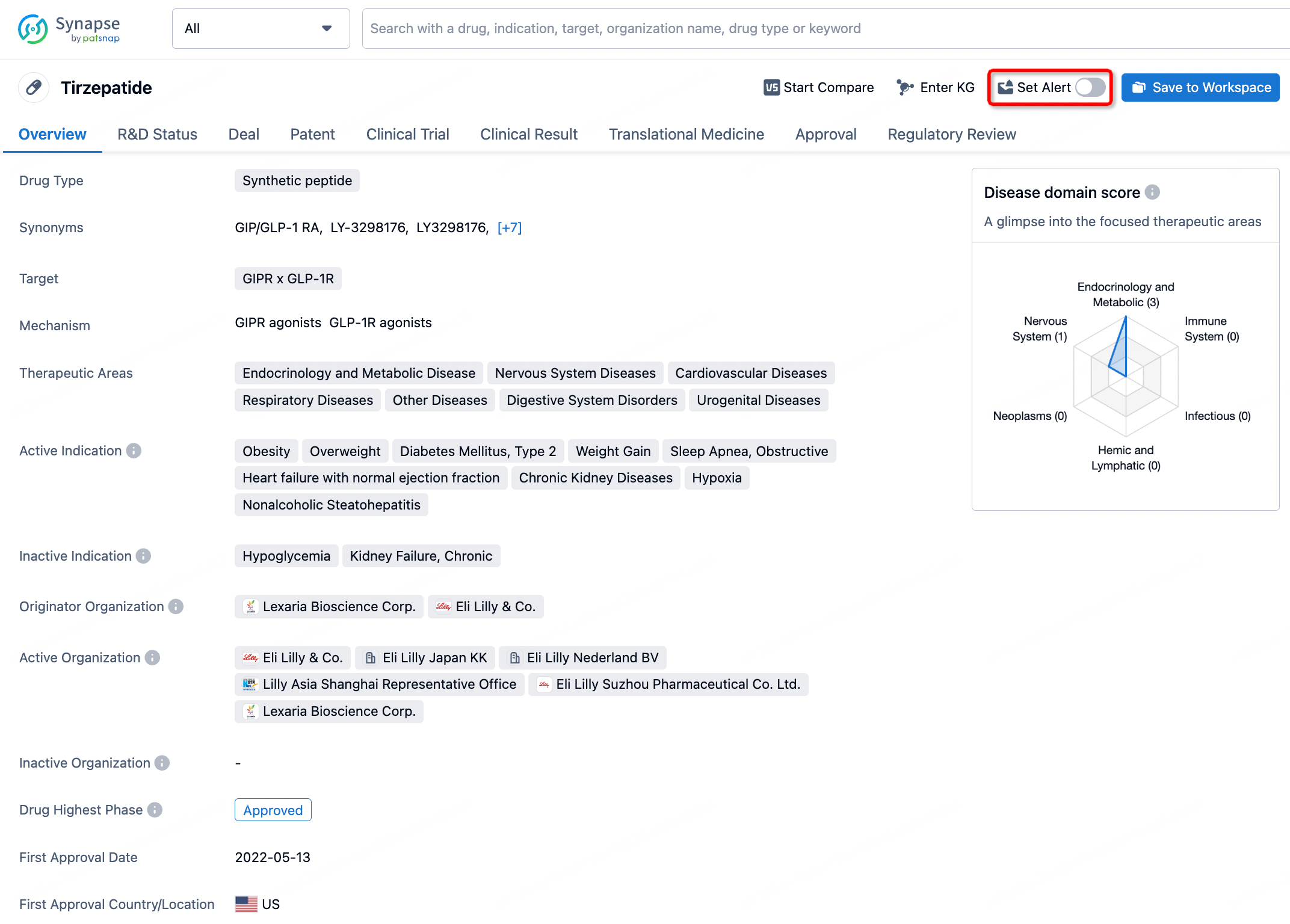
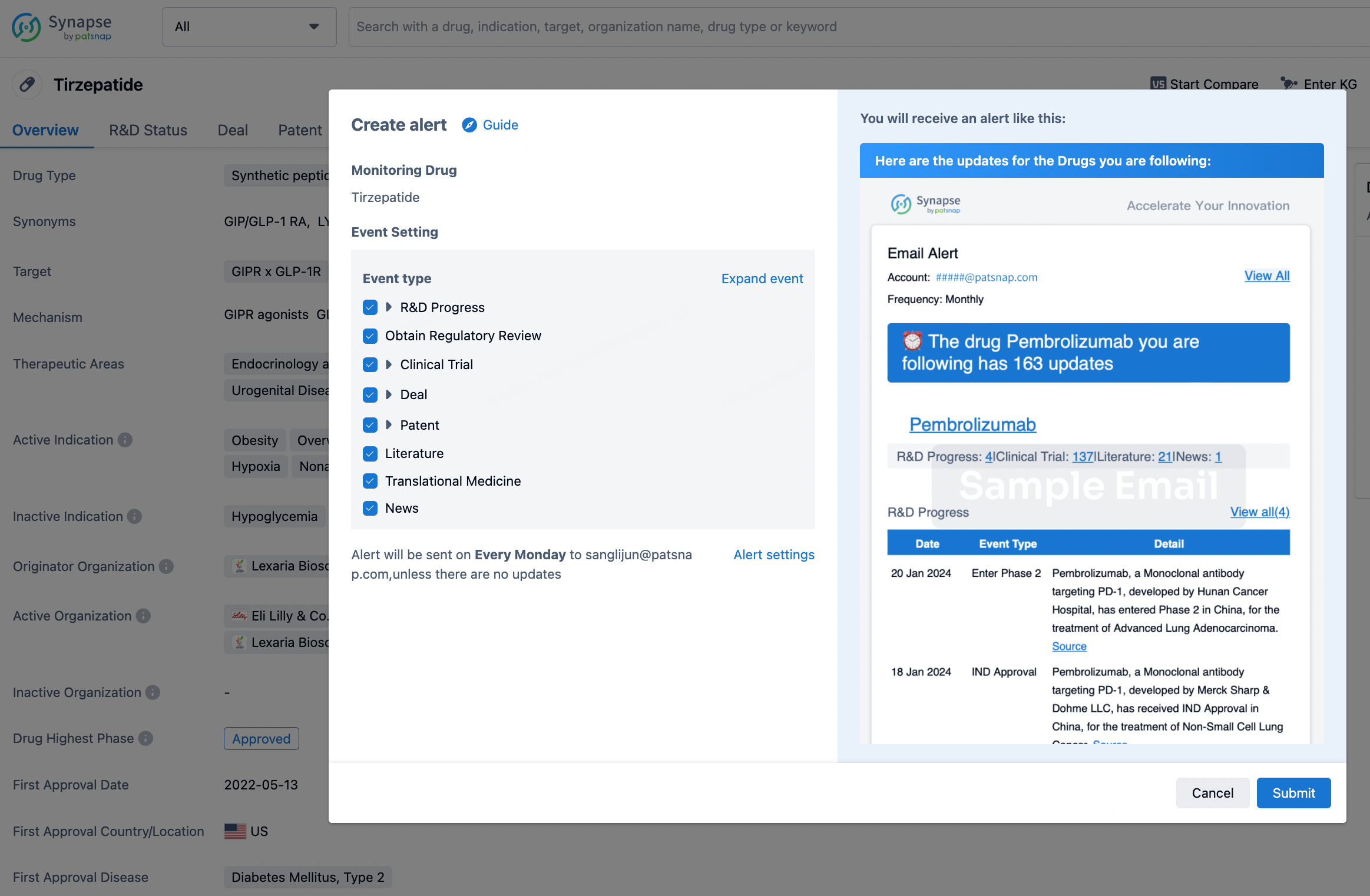
In the Synapse database, you can stay updated on the latest research and development advances of all drugs. This service is accessible anytime and anywhere, with updates available daily or weekly. Use the "Set Alert" function to stay informed. Click on the image below to embark on a brand new journey of drug discovery!

AI Agents Built for Biopharma Breakthroughs
Accelerate discovery. Empower decisions. Transform outcomes.
Get started for free today!
Accelerate Strategic R&D decision making with Synapse, PatSnap’s AI-powered Connected Innovation Intelligence Platform Built for Life Sciences Professionals.
Start your data trial now!
Synapse data is also accessible to external entities via APIs or data packages. Empower better decisions with the latest in pharmaceutical intelligence.