Request Demo
What is Ecallantide used for?
14 June 2024
Ecallantide is a recombinant protein medication that serves as a kallikrein inhibitor. It is marketed under the trade name Kalbitor and is primarily used for the treatment of acute attacks of hereditary angioedema (HAE), a rare genetic condition characterized by recurrent episodes of severe swelling. Initially developed by Dyax Corp., Ecallantide has carved a niche for itself in the therapeutic landscape for HAE. The drug received approval from the U.S. Food and Drug Administration (FDA) in 2009 and has been a game-changer for those suffering from this debilitating condition.
Hereditary angioedema is a condition that affects an estimated 1 in 50,000 individuals worldwide. The condition is caused by a deficiency or dysfunction of a protein called C1 inhibitor, leading to unregulated activity of plasma kallikrein and consequently, excessive production of bradykinin. This cascade of events results in the painful and sometimes life-threatening swelling in various parts of the body, including the face, abdomen, and airways. Ecallantide directly targets and inhibits plasma kallikrein, thereby reducing the production of bradykinin and alleviating the symptoms of HAE. The drug's development journey involved rigorous clinical trials that demonstrated its efficacy and safety, leading to its eventual market approval.
Ecallantide's mechanism of action is both specific and targeted, making it an effective treatment for HAE attacks. Plasma kallikrein plays a crucial role in the kallikrein-kinin system, which regulates blood pressure, inflammation, and pain. In patients with hereditary angioedema, uncontrolled kallikrein activity results in increased levels of bradykinin, a peptide that causes blood vessels to dilate and become more permeable, leading to swelling. Ecallantide works by binding to plasma kallikrein and inhibiting its activity. This reduces the production of bradykinin, thereby preventing the excessive vascular permeability and subsequent tissue swelling that characterize HAE attacks.
Ecallantide is administered via subcutaneous injection, usually by a healthcare professional. The drug is supplied in single-use vials, each containing 10 mg of Ecallantide in a 1 mL solution. The recommended dosage for adults and adolescents aged 12 and older is 30 mg, administered as three 10 mg injections. The injections are generally given in different sites to minimize local reactions, commonly in the abdomen, thigh, or upper arm.
The onset of action for Ecallantide is relatively fast, with many patients experiencing relief from symptoms within two hours of administration. This rapid onset is particularly beneficial for HAE patients, as timely intervention can prevent the progression of swelling and reduce the risk of complications, such as airway obstruction. It is important for patients to receive training on the proper administration technique, either from their healthcare provider or through educational programs offered by the drug manufacturer, to ensure effective and safe use of the medication.
Like all medications, Ecallantide is not without its side effects. The most common adverse reactions include injection site reactions, such as pain, redness, and swelling. These are generally mild and self-limiting. However, more serious side effects can occur, including allergic reactions. Symptoms of an allergic reaction may include rash, itching, difficulty breathing, and swelling of the face, lips, or throat. In rare cases, anaphylaxis, a severe and potentially life-threatening allergic reaction, can occur. Therefore, it is crucial for patients to be monitored for signs of an allergic reaction during and after the administration of Ecallantide.
Patients with a known history of hypersensitivity to Ecallantide or any of its components should not use the drug. Additionally, caution is advised in patients with a history of other severe allergic reactions, as they may be at increased risk for anaphylaxis. Patients with underlying medical conditions or those taking other medications should discuss their full medical history with their healthcare provider to ensure that Ecallantide is a safe and appropriate treatment option for them.
The efficacy and safety of Ecallantide can be influenced by interactions with other medications. While Ecallantide itself is not metabolized by the cytochrome P450 enzyme system and thus has a lower likelihood of drug-drug interactions through this pathway, it is always prudent to consider potential interactions with other treatments the patient may be receiving. Nonsteroidal anti-inflammatory drugs (NSAIDs) and angiotensin-converting enzyme (ACE) inhibitors, for instance, are known to affect the kinin-kallikrein system and could potentially influence the effectiveness of Ecallantide. NSAIDs can exacerbate swelling by inhibiting prostaglandins, thereby potentially diminishing the therapeutic effects of Ecallantide. Similarly, ACE inhibitors can increase bradykinin levels, potentially counteracting the bradykinin-lowering effect of Ecallantide.
Patients should provide their healthcare providers with a comprehensive list of all medications they are taking, including over-the-counter drugs, supplements, and herbal products. This ensures that potential interactions can be identified and managed appropriately. For example, corticosteroids and antihistamines, often used to manage allergic reactions, might be considered during the treatment of an HAE attack to complement Ecallantide or to manage side effects.
In conclusion, Ecallantide has emerged as a vital tool in the management of acute HAE attacks. Its targeted mechanism of action, rapid onset of relief, and relatively straightforward administration make it an advantageous option for patients suffering from this rare and challenging condition. Nonetheless, its use requires careful consideration of potential side effects and interactions with other medications, underscoring the importance of thorough consultation and monitoring by healthcare professionals. As research continues and our understanding of HAE and its treatment evolves, Ecallantide stands as a testament to the progress made in improving the quality of life for those affected by hereditary angioedema.
Hereditary angioedema is a condition that affects an estimated 1 in 50,000 individuals worldwide. The condition is caused by a deficiency or dysfunction of a protein called C1 inhibitor, leading to unregulated activity of plasma kallikrein and consequently, excessive production of bradykinin. This cascade of events results in the painful and sometimes life-threatening swelling in various parts of the body, including the face, abdomen, and airways. Ecallantide directly targets and inhibits plasma kallikrein, thereby reducing the production of bradykinin and alleviating the symptoms of HAE. The drug's development journey involved rigorous clinical trials that demonstrated its efficacy and safety, leading to its eventual market approval.
Ecallantide's mechanism of action is both specific and targeted, making it an effective treatment for HAE attacks. Plasma kallikrein plays a crucial role in the kallikrein-kinin system, which regulates blood pressure, inflammation, and pain. In patients with hereditary angioedema, uncontrolled kallikrein activity results in increased levels of bradykinin, a peptide that causes blood vessels to dilate and become more permeable, leading to swelling. Ecallantide works by binding to plasma kallikrein and inhibiting its activity. This reduces the production of bradykinin, thereby preventing the excessive vascular permeability and subsequent tissue swelling that characterize HAE attacks.
Ecallantide is administered via subcutaneous injection, usually by a healthcare professional. The drug is supplied in single-use vials, each containing 10 mg of Ecallantide in a 1 mL solution. The recommended dosage for adults and adolescents aged 12 and older is 30 mg, administered as three 10 mg injections. The injections are generally given in different sites to minimize local reactions, commonly in the abdomen, thigh, or upper arm.
The onset of action for Ecallantide is relatively fast, with many patients experiencing relief from symptoms within two hours of administration. This rapid onset is particularly beneficial for HAE patients, as timely intervention can prevent the progression of swelling and reduce the risk of complications, such as airway obstruction. It is important for patients to receive training on the proper administration technique, either from their healthcare provider or through educational programs offered by the drug manufacturer, to ensure effective and safe use of the medication.
Like all medications, Ecallantide is not without its side effects. The most common adverse reactions include injection site reactions, such as pain, redness, and swelling. These are generally mild and self-limiting. However, more serious side effects can occur, including allergic reactions. Symptoms of an allergic reaction may include rash, itching, difficulty breathing, and swelling of the face, lips, or throat. In rare cases, anaphylaxis, a severe and potentially life-threatening allergic reaction, can occur. Therefore, it is crucial for patients to be monitored for signs of an allergic reaction during and after the administration of Ecallantide.
Patients with a known history of hypersensitivity to Ecallantide or any of its components should not use the drug. Additionally, caution is advised in patients with a history of other severe allergic reactions, as they may be at increased risk for anaphylaxis. Patients with underlying medical conditions or those taking other medications should discuss their full medical history with their healthcare provider to ensure that Ecallantide is a safe and appropriate treatment option for them.
The efficacy and safety of Ecallantide can be influenced by interactions with other medications. While Ecallantide itself is not metabolized by the cytochrome P450 enzyme system and thus has a lower likelihood of drug-drug interactions through this pathway, it is always prudent to consider potential interactions with other treatments the patient may be receiving. Nonsteroidal anti-inflammatory drugs (NSAIDs) and angiotensin-converting enzyme (ACE) inhibitors, for instance, are known to affect the kinin-kallikrein system and could potentially influence the effectiveness of Ecallantide. NSAIDs can exacerbate swelling by inhibiting prostaglandins, thereby potentially diminishing the therapeutic effects of Ecallantide. Similarly, ACE inhibitors can increase bradykinin levels, potentially counteracting the bradykinin-lowering effect of Ecallantide.
Patients should provide their healthcare providers with a comprehensive list of all medications they are taking, including over-the-counter drugs, supplements, and herbal products. This ensures that potential interactions can be identified and managed appropriately. For example, corticosteroids and antihistamines, often used to manage allergic reactions, might be considered during the treatment of an HAE attack to complement Ecallantide or to manage side effects.
In conclusion, Ecallantide has emerged as a vital tool in the management of acute HAE attacks. Its targeted mechanism of action, rapid onset of relief, and relatively straightforward administration make it an advantageous option for patients suffering from this rare and challenging condition. Nonetheless, its use requires careful consideration of potential side effects and interactions with other medications, underscoring the importance of thorough consultation and monitoring by healthcare professionals. As research continues and our understanding of HAE and its treatment evolves, Ecallantide stands as a testament to the progress made in improving the quality of life for those affected by hereditary angioedema.
How to obtain the latest development progress of all drugs?
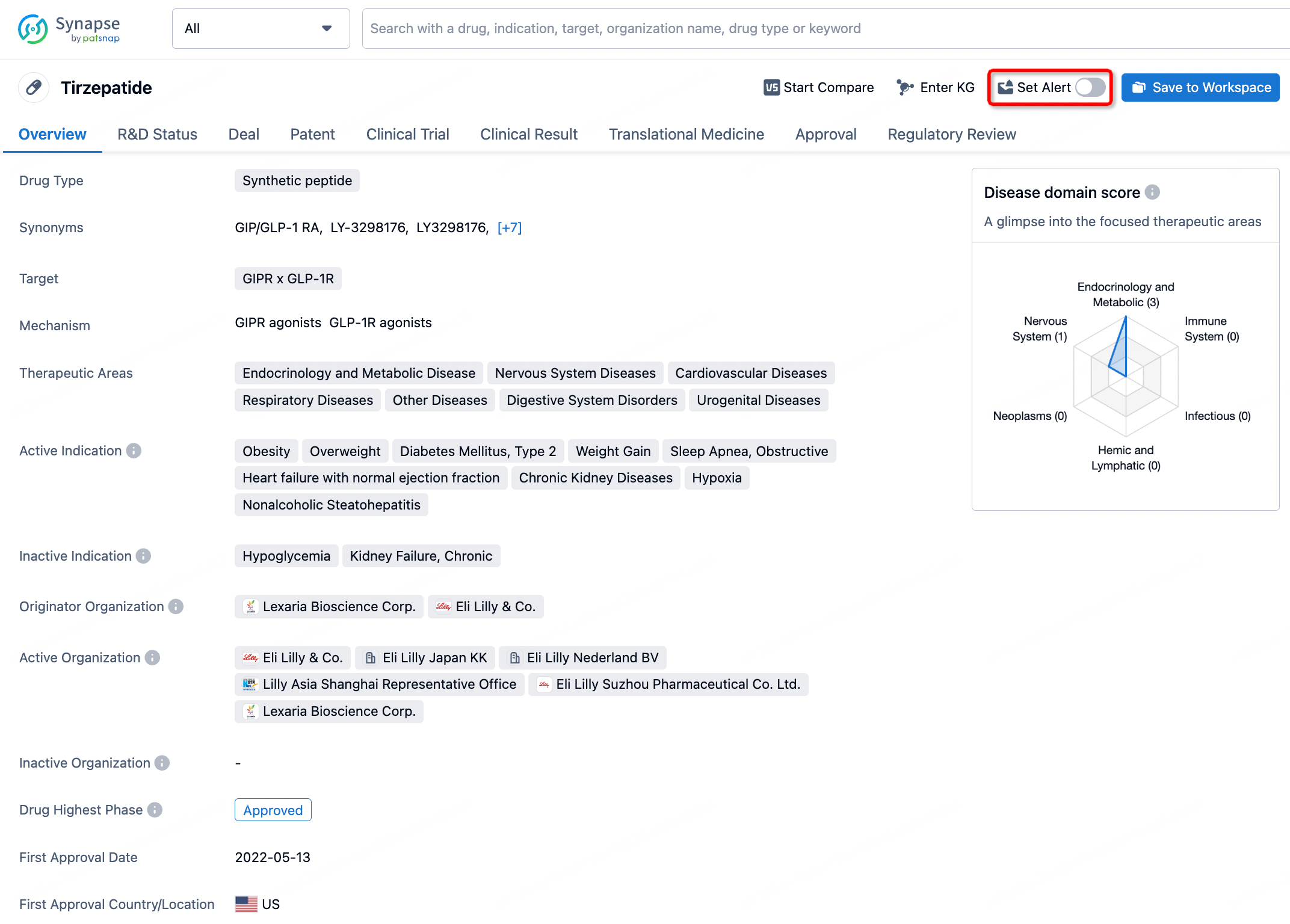
In the Synapse database, you can stay updated on the latest research and development advances of all drugs. This service is accessible anytime and anywhere, with updates available daily or weekly. Use the "Set Alert" function to stay informed. Click on the image below to embark on a brand new journey of drug discovery!

AI Agents Built for Biopharma Breakthroughs
Accelerate discovery. Empower decisions. Transform outcomes.
Get started for free today!
Accelerate Strategic R&D decision making with Synapse, PatSnap’s AI-powered Connected Innovation Intelligence Platform Built for Life Sciences Professionals.
Start your data trial now!
Synapse data is also accessible to external entities via APIs or data packages. Empower better decisions with the latest in pharmaceutical intelligence.