Request Demo
What is Eplontersen used for?
14 June 2024
Eplontersen is an innovative therapeutic agent being developed with significant potential to change the landscape of certain medical treatments. Known by its trade name, Eplontersen, this drug is primarily being researched for its efficacy in treating transthyretin amyloidosis (ATTR), a progressive and often fatal disease affecting multiple organ systems. ATTR is characterized by the accumulation of misfolded transthyretin (TTR) proteins, which leads to amyloid deposits in the heart, nervous system, and other tissues.
The development of Eplontersen is a collaborative effort, spearheaded by Ionis Pharmaceuticals and AstraZeneca—a partnership that combines Ionis's expertise in RNA-targeted therapies with AstraZeneca's extensive experience in clinical development. Eplontersen falls under the drug category of antisense oligonucleotides (ASOs), a class of therapeutics designed to target specific RNA molecules, thereby modulating gene expression. The primary indication for Eplontersen is ATTR, but ongoing research is also exploring its potential efficacy in other related conditions. As of recent updates, clinical trials are in advanced stages, with promising preliminary results showing significant reductions in TTR protein levels among treated patients.
Eplontersen operates through a highly targeted mechanism of action, which is both intricate and innovative. By leveraging antisense technology, Eplontersen specifically binds to the messenger RNA (mRNA) encoding for the TTR protein. This binding action facilitates the degradation of the mRNA, consequently preventing the translation and synthesis of the TTR protein. This reduction in TTR levels is crucial because it mitigates the formation of amyloid deposits, the primary pathological hallmark of ATTR.
The antisense oligonucleotide mechanism of Eplontersen can be broken down into a few key steps. Once administered, Eplontersen enters liver cells, where the majority of TTR synthesis occurs. Within the liver cells, Eplontersen binds with high specificity to the TTR mRNA, which is then recognized and degraded by the cell's natural enzyme systems. This degradation process significantly reduces the levels of circulating TTR protein, thereby curtailing the formation of amyloid fibrils and alleviating the symptoms associated with ATTR.
The administration of Eplontersen is designed to be patient-friendly while ensuring maximal efficacy. Eplontersen is typically administered via subcutaneous injection, which not only facilitates ease of use but also enhances patient compliance compared to more invasive delivery methods. The dosing regimen has been optimized based on clinical trial data to ensure sustained suppression of TTR protein levels.
The onset of action for Eplontersen is relatively rapid, with significant reductions in TTR levels observed within weeks of initiation. Patients generally receive the injection once every four weeks, a schedule that balances therapeutic efficacy with patient convenience. This regular administration ensures that TTR levels remain consistently low, which is critical for preventing the progression of amyloid deposition and associated clinical symptoms.
Like all therapeutic agents, Eplontersen is associated with a profile of potential side effects and contraindications that must be carefully managed. The side effects observed in clinical trials have generally been manageable and consistent with those seen in other antisense oligonucleotide therapies. Common side effects include injection site reactions, such as redness, swelling, and discomfort. These are typically mild to moderate in severity and tend to resolve spontaneously over time.
More serious adverse effects, although less common, have also been reported. These include thrombocytopenia (a reduction in platelet count), renal toxicity, and liver enzyme elevations. Regular monitoring through blood tests is essential to detect these potential issues early and to mitigate any associated risks. It is also important for patients to inform their healthcare providers about any pre-existing conditions, particularly those related to the liver, kidneys, or hematological system, as these could increase the risk of adverse effects associated with Eplontersen.
Eplontersen is contraindicated in patients with a known hypersensitivity to any of its components. Additionally, caution is advised when administering Eplontersen to pregnant or breastfeeding women, as the potential effects on fetal and neonatal development have not been fully elucidated.
Eplontersen's efficacy and safety profile can be influenced by interactions with other drugs, necessitating a comprehensive understanding of potential drug-drug interactions. Concomitant use of other medications that affect coagulation or platelet function, such as anticoagulants and antiplatelet agents, may increase the risk of bleeding complications. This is particularly relevant given Eplontersen's association with thrombocytopenia.
Patients taking nephrotoxic drugs should also be closely monitored, as the combined renal burden could exacerbate potential nephrotoxic effects. Healthcare providers should conduct a thorough review of all medications the patient is taking to identify and manage any potential interactions proactively.
Moreover, drugs that induce or inhibit the liver enzymes responsible for metabolizing Eplontersen could alter its pharmacokinetics and efficacy. It is essential for healthcare providers to stay informed about the latest research and clinical guidelines to optimize treatment regimens and ensure patient safety.
In conclusion, Eplontersen represents a promising advancement in the treatment of transthyretin amyloidosis, offering hope to patients afflicted with this debilitating condition. Its targeted mechanism of action, convenient administration route, and manageable side effect profile make it a compelling therapeutic option. Ongoing research and clinical trials will further elucidate its long-term efficacy and safety, potentially broadening its therapeutic applications. As with all medical treatments, careful consideration of patient-specific factors and potential drug interactions is essential to maximize the benefits of Eplontersen therapy.
The development of Eplontersen is a collaborative effort, spearheaded by Ionis Pharmaceuticals and AstraZeneca—a partnership that combines Ionis's expertise in RNA-targeted therapies with AstraZeneca's extensive experience in clinical development. Eplontersen falls under the drug category of antisense oligonucleotides (ASOs), a class of therapeutics designed to target specific RNA molecules, thereby modulating gene expression. The primary indication for Eplontersen is ATTR, but ongoing research is also exploring its potential efficacy in other related conditions. As of recent updates, clinical trials are in advanced stages, with promising preliminary results showing significant reductions in TTR protein levels among treated patients.
Eplontersen operates through a highly targeted mechanism of action, which is both intricate and innovative. By leveraging antisense technology, Eplontersen specifically binds to the messenger RNA (mRNA) encoding for the TTR protein. This binding action facilitates the degradation of the mRNA, consequently preventing the translation and synthesis of the TTR protein. This reduction in TTR levels is crucial because it mitigates the formation of amyloid deposits, the primary pathological hallmark of ATTR.
The antisense oligonucleotide mechanism of Eplontersen can be broken down into a few key steps. Once administered, Eplontersen enters liver cells, where the majority of TTR synthesis occurs. Within the liver cells, Eplontersen binds with high specificity to the TTR mRNA, which is then recognized and degraded by the cell's natural enzyme systems. This degradation process significantly reduces the levels of circulating TTR protein, thereby curtailing the formation of amyloid fibrils and alleviating the symptoms associated with ATTR.
The administration of Eplontersen is designed to be patient-friendly while ensuring maximal efficacy. Eplontersen is typically administered via subcutaneous injection, which not only facilitates ease of use but also enhances patient compliance compared to more invasive delivery methods. The dosing regimen has been optimized based on clinical trial data to ensure sustained suppression of TTR protein levels.
The onset of action for Eplontersen is relatively rapid, with significant reductions in TTR levels observed within weeks of initiation. Patients generally receive the injection once every four weeks, a schedule that balances therapeutic efficacy with patient convenience. This regular administration ensures that TTR levels remain consistently low, which is critical for preventing the progression of amyloid deposition and associated clinical symptoms.
Like all therapeutic agents, Eplontersen is associated with a profile of potential side effects and contraindications that must be carefully managed. The side effects observed in clinical trials have generally been manageable and consistent with those seen in other antisense oligonucleotide therapies. Common side effects include injection site reactions, such as redness, swelling, and discomfort. These are typically mild to moderate in severity and tend to resolve spontaneously over time.
More serious adverse effects, although less common, have also been reported. These include thrombocytopenia (a reduction in platelet count), renal toxicity, and liver enzyme elevations. Regular monitoring through blood tests is essential to detect these potential issues early and to mitigate any associated risks. It is also important for patients to inform their healthcare providers about any pre-existing conditions, particularly those related to the liver, kidneys, or hematological system, as these could increase the risk of adverse effects associated with Eplontersen.
Eplontersen is contraindicated in patients with a known hypersensitivity to any of its components. Additionally, caution is advised when administering Eplontersen to pregnant or breastfeeding women, as the potential effects on fetal and neonatal development have not been fully elucidated.
Eplontersen's efficacy and safety profile can be influenced by interactions with other drugs, necessitating a comprehensive understanding of potential drug-drug interactions. Concomitant use of other medications that affect coagulation or platelet function, such as anticoagulants and antiplatelet agents, may increase the risk of bleeding complications. This is particularly relevant given Eplontersen's association with thrombocytopenia.
Patients taking nephrotoxic drugs should also be closely monitored, as the combined renal burden could exacerbate potential nephrotoxic effects. Healthcare providers should conduct a thorough review of all medications the patient is taking to identify and manage any potential interactions proactively.
Moreover, drugs that induce or inhibit the liver enzymes responsible for metabolizing Eplontersen could alter its pharmacokinetics and efficacy. It is essential for healthcare providers to stay informed about the latest research and clinical guidelines to optimize treatment regimens and ensure patient safety.
In conclusion, Eplontersen represents a promising advancement in the treatment of transthyretin amyloidosis, offering hope to patients afflicted with this debilitating condition. Its targeted mechanism of action, convenient administration route, and manageable side effect profile make it a compelling therapeutic option. Ongoing research and clinical trials will further elucidate its long-term efficacy and safety, potentially broadening its therapeutic applications. As with all medical treatments, careful consideration of patient-specific factors and potential drug interactions is essential to maximize the benefits of Eplontersen therapy.
How to obtain the latest development progress of all drugs?
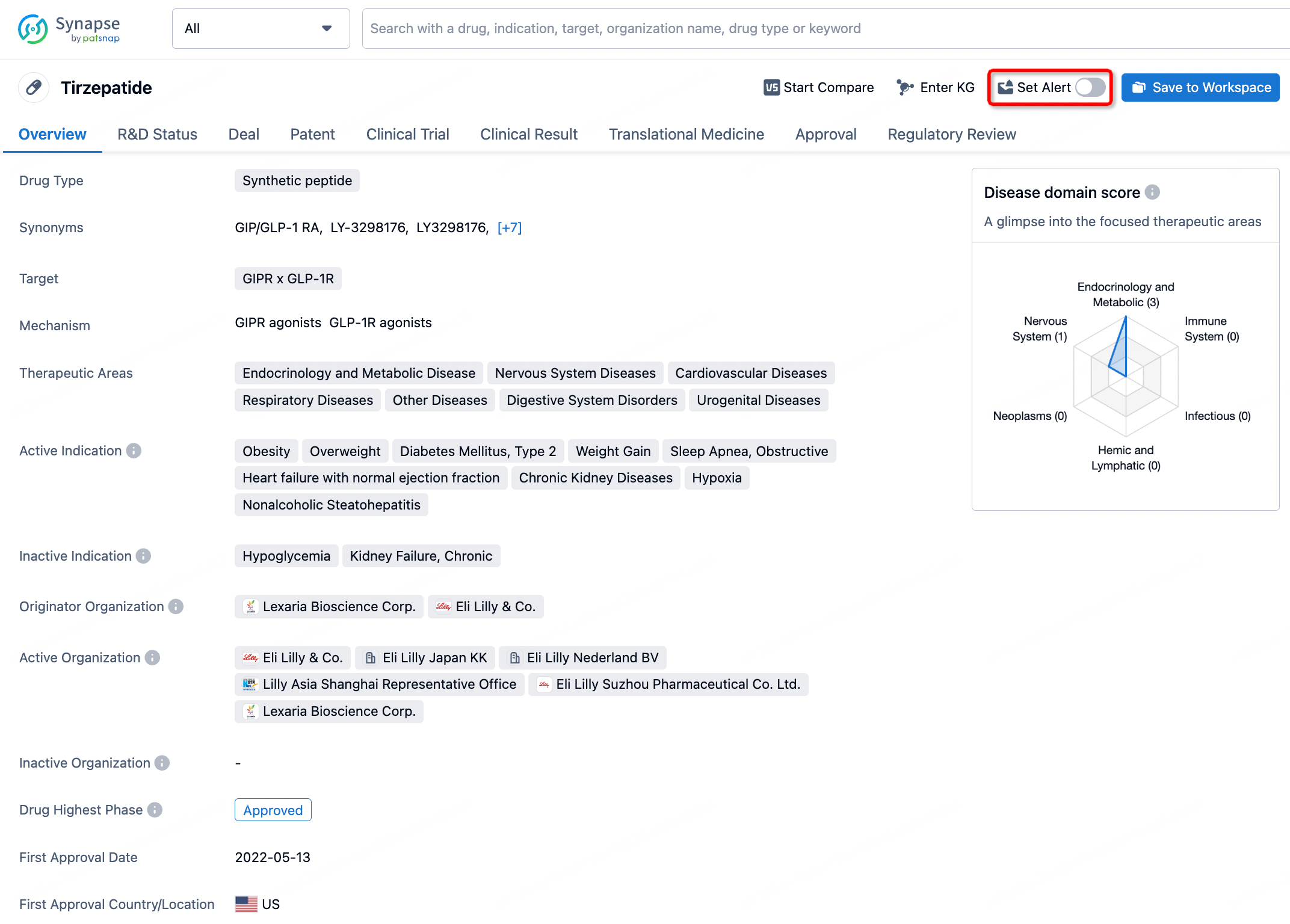
In the Synapse database, you can stay updated on the latest research and development advances of all drugs. This service is accessible anytime and anywhere, with updates available daily or weekly. Use the "Set Alert" function to stay informed. Click on the image below to embark on a brand new journey of drug discovery!

AI Agents Built for Biopharma Breakthroughs
Accelerate discovery. Empower decisions. Transform outcomes.
Get started for free today!
Accelerate Strategic R&D decision making with Synapse, PatSnap’s AI-powered Connected Innovation Intelligence Platform Built for Life Sciences Professionals.
Start your data trial now!
Synapse data is also accessible to external entities via APIs or data packages. Empower better decisions with the latest in pharmaceutical intelligence.