Request Demo
What is Fexolazan hydrochloride used for?
14 June 2024
Fexolazan hydrochloride, gaining ground in the realm of pharmacology, is a promising drug currently under investigation for its potential therapeutic benefits. This pharmaceutical agent, although yet to be granted an official trade name, is stirring interest due to its unique mechanisms and promising preliminary results. Fexolazan hydrochloride primarily targets a specific receptor or pathway relevant to the disease it's being investigated for, often focusing on conditions like chronic pain, inflammatory diseases, or neurological disorders. Various renowned research institutions and pharmaceutical companies are at the forefront of these studies, aiming to bring a new effective treatment option to patients. While still in the experimental stages, the drug has shown significant potential in preclinical trials, paving the way for future clinical studies.
The mechanism of action of Fexolazan hydrochloride is what sets it apart from other drugs in similar categories. The drug works by interacting with specific receptors or enzymes in the body that play a crucial role in the pathology of the targeted disease. For instance, if the drug is being investigated for chronic pain management, it likely modulates pain perception pathways, possibly by inhibiting certain pain-inducing neurotransmitters or receptors. This selective targeting helps in reducing the symptoms of the disease with potentially fewer side effects compared to non-specific treatments. The detailed biochemical interaction often involves binding to a receptor or enzyme, thereby altering its function or blocking its activity, which alleviates the symptoms of the disease. Understanding this mechanism is vital as it helps in predicting the drug’s efficacy and potential side effects, guiding further development and clinical application.
Fexolazan hydrochloride is typically administered orally, though the exact method of administration may vary depending on the formulation and the targeted condition. The onset time for the drug to exhibit its effects can depend on various factors including the patient’s metabolism, the severity of the condition, and the specific formulation of the drug. For instance, in some cases, patients might start experiencing relief within a few hours of taking the drug, while in others, it might take a few days of consistent dosing to observe noticeable benefits. The dosage and frequency of administration are determined by the healthcare provider based on the patient’s condition, age, weight, and overall health status. It is crucial for patients to adhere to the prescribed dosing schedule to achieve the desired therapeutic effect and minimize the risk of adverse reactions.
Like all medications, Fexolazan hydrochloride comes with a range of potential side effects. Common side effects may include gastrointestinal disturbances such as nausea, vomiting, and diarrhea. Patients may also experience headaches, dizziness, or fatigue. These side effects are generally mild and tend to resolve as the body adjusts to the medication. However, there are potential serious side effects that need immediate medical attention, such as allergic reactions presenting with symptoms like rash, itching, swelling, severe dizziness, or difficulty breathing. Additionally, Fexolazan hydrochloride may have contraindications in patients with certain pre-existing conditions. For example, individuals with severe liver or kidney disease, or those with a history of allergic reactions to similar drugs, should avoid taking this medication. It is imperative for patients to disclose their full medical history to their healthcare provider to prevent any harmful interactions or complications.
The interaction of Fexolazan hydrochloride with other drugs is an important consideration in its administration. Certain drugs can affect the efficacy and safety of Fexolazan hydrochloride by either enhancing or inhibiting its action. For instance, medications that induce or inhibit liver enzymes responsible for drug metabolism can significantly alter the plasma levels of Fexolazan hydrochloride, leading to either reduced efficacy or increased risk of toxicity. Drugs such as certain antibiotics, antifungals, or anticonvulsants may interfere with Fexolazan hydrochloride’s metabolism. Moreover, concomitant use of other medications that have similar side effects can exacerbate these effects, increasing the risk of adverse reactions. It is essential for patients to inform their healthcare provider about all the medications they are currently taking, including over-the-counter drugs, supplements, and herbal products, to avoid potential harmful interactions.
In conclusion, Fexolazan hydrochloride represents a promising advancement in the treatment of various conditions, with its unique mechanism of action and targeted approach. However, like all therapeutic agents, it requires careful consideration of its administration, potential side effects, and interactions with other medications. As research progresses, more detailed information will become available, aiding healthcare providers in optimizing its use for patient benefit.
The mechanism of action of Fexolazan hydrochloride is what sets it apart from other drugs in similar categories. The drug works by interacting with specific receptors or enzymes in the body that play a crucial role in the pathology of the targeted disease. For instance, if the drug is being investigated for chronic pain management, it likely modulates pain perception pathways, possibly by inhibiting certain pain-inducing neurotransmitters or receptors. This selective targeting helps in reducing the symptoms of the disease with potentially fewer side effects compared to non-specific treatments. The detailed biochemical interaction often involves binding to a receptor or enzyme, thereby altering its function or blocking its activity, which alleviates the symptoms of the disease. Understanding this mechanism is vital as it helps in predicting the drug’s efficacy and potential side effects, guiding further development and clinical application.
Fexolazan hydrochloride is typically administered orally, though the exact method of administration may vary depending on the formulation and the targeted condition. The onset time for the drug to exhibit its effects can depend on various factors including the patient’s metabolism, the severity of the condition, and the specific formulation of the drug. For instance, in some cases, patients might start experiencing relief within a few hours of taking the drug, while in others, it might take a few days of consistent dosing to observe noticeable benefits. The dosage and frequency of administration are determined by the healthcare provider based on the patient’s condition, age, weight, and overall health status. It is crucial for patients to adhere to the prescribed dosing schedule to achieve the desired therapeutic effect and minimize the risk of adverse reactions.
Like all medications, Fexolazan hydrochloride comes with a range of potential side effects. Common side effects may include gastrointestinal disturbances such as nausea, vomiting, and diarrhea. Patients may also experience headaches, dizziness, or fatigue. These side effects are generally mild and tend to resolve as the body adjusts to the medication. However, there are potential serious side effects that need immediate medical attention, such as allergic reactions presenting with symptoms like rash, itching, swelling, severe dizziness, or difficulty breathing. Additionally, Fexolazan hydrochloride may have contraindications in patients with certain pre-existing conditions. For example, individuals with severe liver or kidney disease, or those with a history of allergic reactions to similar drugs, should avoid taking this medication. It is imperative for patients to disclose their full medical history to their healthcare provider to prevent any harmful interactions or complications.
The interaction of Fexolazan hydrochloride with other drugs is an important consideration in its administration. Certain drugs can affect the efficacy and safety of Fexolazan hydrochloride by either enhancing or inhibiting its action. For instance, medications that induce or inhibit liver enzymes responsible for drug metabolism can significantly alter the plasma levels of Fexolazan hydrochloride, leading to either reduced efficacy or increased risk of toxicity. Drugs such as certain antibiotics, antifungals, or anticonvulsants may interfere with Fexolazan hydrochloride’s metabolism. Moreover, concomitant use of other medications that have similar side effects can exacerbate these effects, increasing the risk of adverse reactions. It is essential for patients to inform their healthcare provider about all the medications they are currently taking, including over-the-counter drugs, supplements, and herbal products, to avoid potential harmful interactions.
In conclusion, Fexolazan hydrochloride represents a promising advancement in the treatment of various conditions, with its unique mechanism of action and targeted approach. However, like all therapeutic agents, it requires careful consideration of its administration, potential side effects, and interactions with other medications. As research progresses, more detailed information will become available, aiding healthcare providers in optimizing its use for patient benefit.
How to obtain the latest development progress of all drugs?
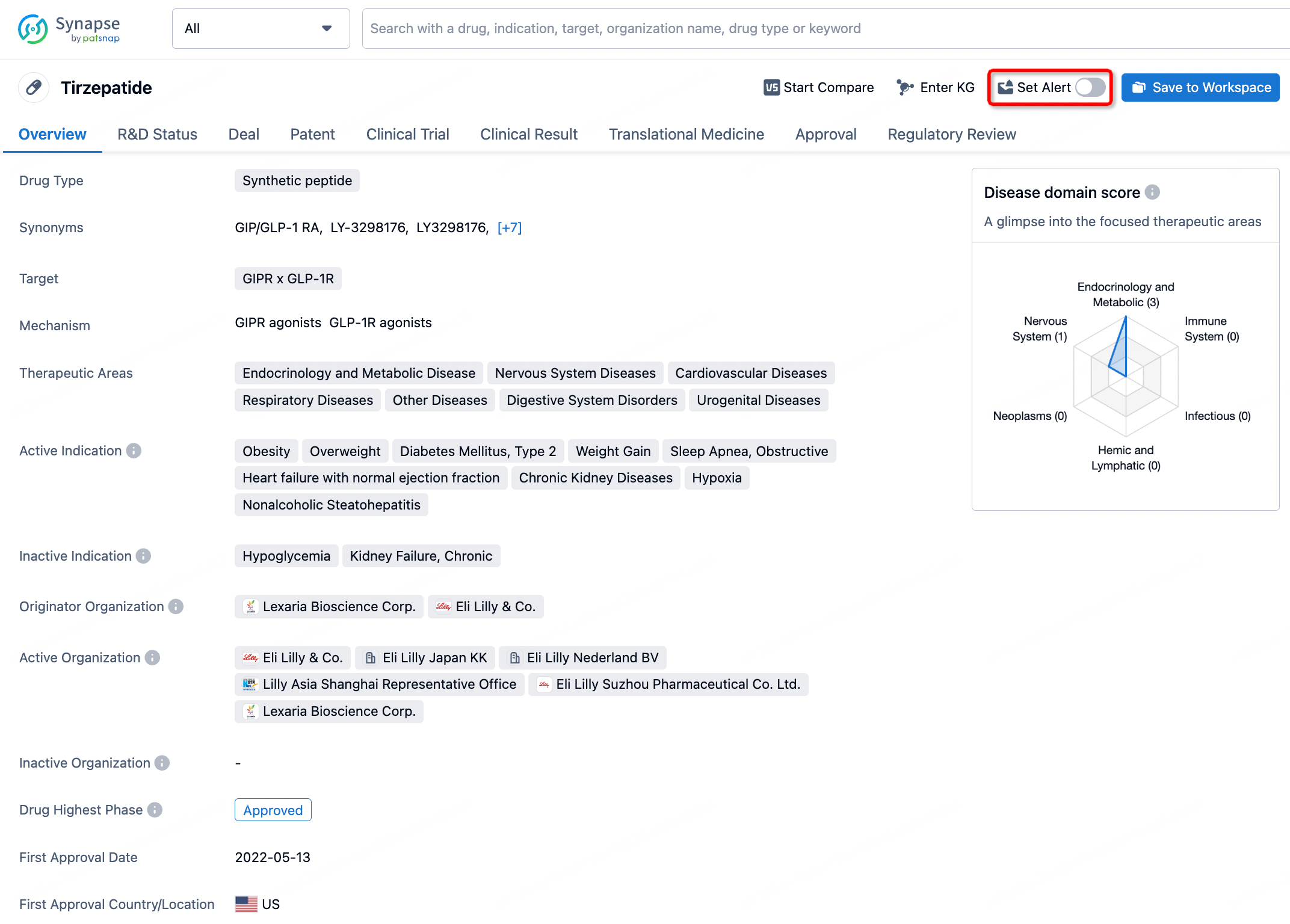
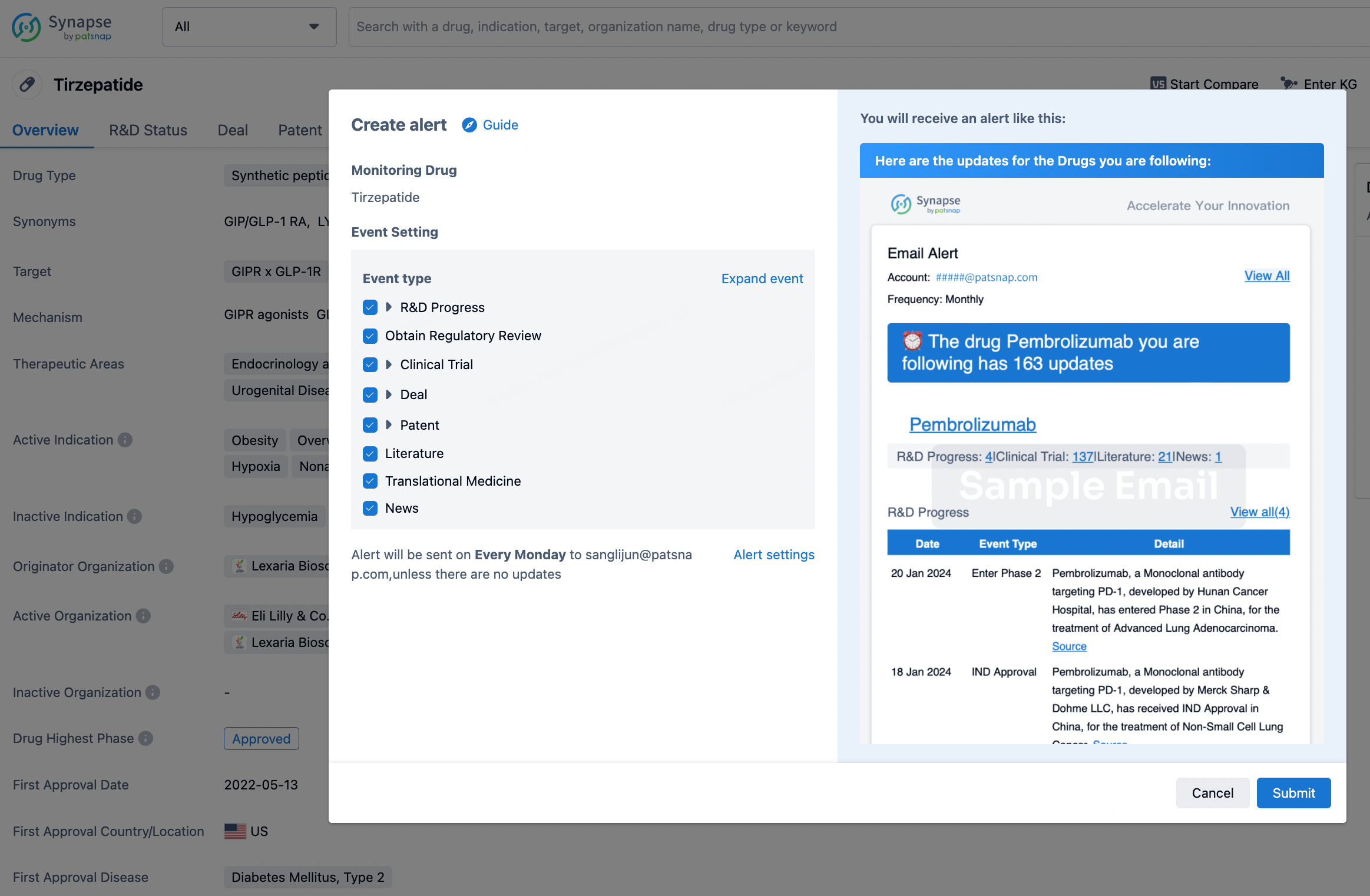
In the Synapse database, you can stay updated on the latest research and development advances of all drugs. This service is accessible anytime and anywhere, with updates available daily or weekly. Use the "Set Alert" function to stay informed. Click on the image below to embark on a brand new journey of drug discovery!
AI Agents Built for Biopharma Breakthroughs
Accelerate discovery. Empower decisions. Transform outcomes.
Get started for free today!
Accelerate Strategic R&D decision making with Synapse, PatSnap’s AI-powered Connected Innovation Intelligence Platform Built for Life Sciences Professionals.
Start your data trial now!
Synapse data is also accessible to external entities via APIs or data packages. Empower better decisions with the latest in pharmaceutical intelligence.