Request Demo
What is Genakumab used for?
28 June 2024
Genakumab is an innovative monoclonal antibody currently under development for the treatment of various inflammatory and autoimmune conditions. It has garnered significant attention in the medical community due to its selective targeting mechanism and promising therapeutic potential. The drug is primarily being researched by leading pharmaceutical companies and academic institutions dedicated to advancing treatment options for chronic diseases. Genakumab acts on specific molecular pathways implicated in inflammation, making it a powerful candidate for conditions where the immune system plays a detrimental role.
The research and development of Genakumab have been prolific, with numerous clinical trials aimed at evaluating its safety, efficacy, and potential applications. Early-phase trials have demonstrated encouraging results, leading to the initiation of larger, more comprehensive studies. Preliminary data suggest that Genakumab could offer significant benefits for patients suffering from conditions such as rheumatoid arthritis, psoriasis, and other autoimmune disorders. The drug’s development is closely monitored by regulatory authorities, and it has been granted special designations in some cases to expedite the research process due to its potential to address unmet medical needs.
Genakumab exerts its effects through a highly specific mechanism of action, which involves targeting and neutralizing a particular cytokine known as interleukin-1 beta (IL-1β). IL-1β is a pro-inflammatory cytokine that plays a crucial role in the body's immune response. While essential for responding to infections and injuries, excessive or dysregulated IL-1β activity is implicated in the pathology of many inflammatory and autoimmune diseases. By binding to IL-1β, Genakumab effectively inhibits its interaction with its receptor, thereby blocking the downstream signaling pathways that lead to inflammation and tissue damage.
This targeted inhibition of IL-1β sets Genakumab apart from other treatments that may have broader immunosuppressive effects. By focusing on a specific cytokine, Genakumab aims to reduce inflammation without broadly dampening the immune system, potentially leading to fewer side effects compared to traditional immunosuppressive therapies. This mechanism of action has been validated in preclinical studies and early human trials, which have shown significant reductions in inflammatory markers and clinical symptoms in patients treated with Genakumab.
Genakumab is primarily indicated for the treatment of autoimmune and inflammatory diseases where IL-1β plays a central role. One of the main indications being explored is rheumatoid arthritis, a chronic inflammatory disorder that causes joint pain, swelling, and potential joint destruction. Current treatments for rheumatoid arthritis often involve broad immunosuppressants or biological agents targeting other cytokines like TNF-alpha. Genakumab offers a new approach by targeting IL-1β, potentially providing relief for patients who do not respond adequately to existing therapies.
Another significant indication for Genakumab is psoriasis, a chronic skin condition characterized by red, scaly patches that can cause significant discomfort and psychological distress. Psoriasis is associated with an overactive immune response, and IL-1β is one of the cytokines involved in its pathogenesis. By inhibiting IL-1β, Genakumab has the potential to reduce the severity of psoriasis symptoms and improve patients' quality of life.
In addition to these primary indications, Genakumab is being investigated for its potential use in other inflammatory conditions, such as systemic juvenile idiopathic arthritis (SJIA) and certain autoinflammatory syndromes. These conditions are often driven by excessive IL-1β activity, making them suitable targets for Genakumab's mechanism of action. Ongoing clinical trials are evaluating the safety and efficacy of Genakumab in these populations, with the hope of expanding its therapeutic applications.
In conclusion, Genakumab represents a promising advancement in the treatment of inflammatory and autoimmune diseases. Its targeted mechanism of action against IL-1β offers a novel approach to reducing inflammation while potentially minimizing side effects. As research progresses, Genakumab may become a valuable addition to the arsenal of therapies available for conditions like rheumatoid arthritis, psoriasis, and other IL-1β-driven diseases. The continued development and clinical evaluation of Genakumab will be crucial in determining its ultimate role in patient care and its potential to improve outcomes for those suffering from chronic inflammatory conditions.
The research and development of Genakumab have been prolific, with numerous clinical trials aimed at evaluating its safety, efficacy, and potential applications. Early-phase trials have demonstrated encouraging results, leading to the initiation of larger, more comprehensive studies. Preliminary data suggest that Genakumab could offer significant benefits for patients suffering from conditions such as rheumatoid arthritis, psoriasis, and other autoimmune disorders. The drug’s development is closely monitored by regulatory authorities, and it has been granted special designations in some cases to expedite the research process due to its potential to address unmet medical needs.
Genakumab exerts its effects through a highly specific mechanism of action, which involves targeting and neutralizing a particular cytokine known as interleukin-1 beta (IL-1β). IL-1β is a pro-inflammatory cytokine that plays a crucial role in the body's immune response. While essential for responding to infections and injuries, excessive or dysregulated IL-1β activity is implicated in the pathology of many inflammatory and autoimmune diseases. By binding to IL-1β, Genakumab effectively inhibits its interaction with its receptor, thereby blocking the downstream signaling pathways that lead to inflammation and tissue damage.
This targeted inhibition of IL-1β sets Genakumab apart from other treatments that may have broader immunosuppressive effects. By focusing on a specific cytokine, Genakumab aims to reduce inflammation without broadly dampening the immune system, potentially leading to fewer side effects compared to traditional immunosuppressive therapies. This mechanism of action has been validated in preclinical studies and early human trials, which have shown significant reductions in inflammatory markers and clinical symptoms in patients treated with Genakumab.
Genakumab is primarily indicated for the treatment of autoimmune and inflammatory diseases where IL-1β plays a central role. One of the main indications being explored is rheumatoid arthritis, a chronic inflammatory disorder that causes joint pain, swelling, and potential joint destruction. Current treatments for rheumatoid arthritis often involve broad immunosuppressants or biological agents targeting other cytokines like TNF-alpha. Genakumab offers a new approach by targeting IL-1β, potentially providing relief for patients who do not respond adequately to existing therapies.
Another significant indication for Genakumab is psoriasis, a chronic skin condition characterized by red, scaly patches that can cause significant discomfort and psychological distress. Psoriasis is associated with an overactive immune response, and IL-1β is one of the cytokines involved in its pathogenesis. By inhibiting IL-1β, Genakumab has the potential to reduce the severity of psoriasis symptoms and improve patients' quality of life.
In addition to these primary indications, Genakumab is being investigated for its potential use in other inflammatory conditions, such as systemic juvenile idiopathic arthritis (SJIA) and certain autoinflammatory syndromes. These conditions are often driven by excessive IL-1β activity, making them suitable targets for Genakumab's mechanism of action. Ongoing clinical trials are evaluating the safety and efficacy of Genakumab in these populations, with the hope of expanding its therapeutic applications.
In conclusion, Genakumab represents a promising advancement in the treatment of inflammatory and autoimmune diseases. Its targeted mechanism of action against IL-1β offers a novel approach to reducing inflammation while potentially minimizing side effects. As research progresses, Genakumab may become a valuable addition to the arsenal of therapies available for conditions like rheumatoid arthritis, psoriasis, and other IL-1β-driven diseases. The continued development and clinical evaluation of Genakumab will be crucial in determining its ultimate role in patient care and its potential to improve outcomes for those suffering from chronic inflammatory conditions.
How to obtain the latest development progress of all drugs?
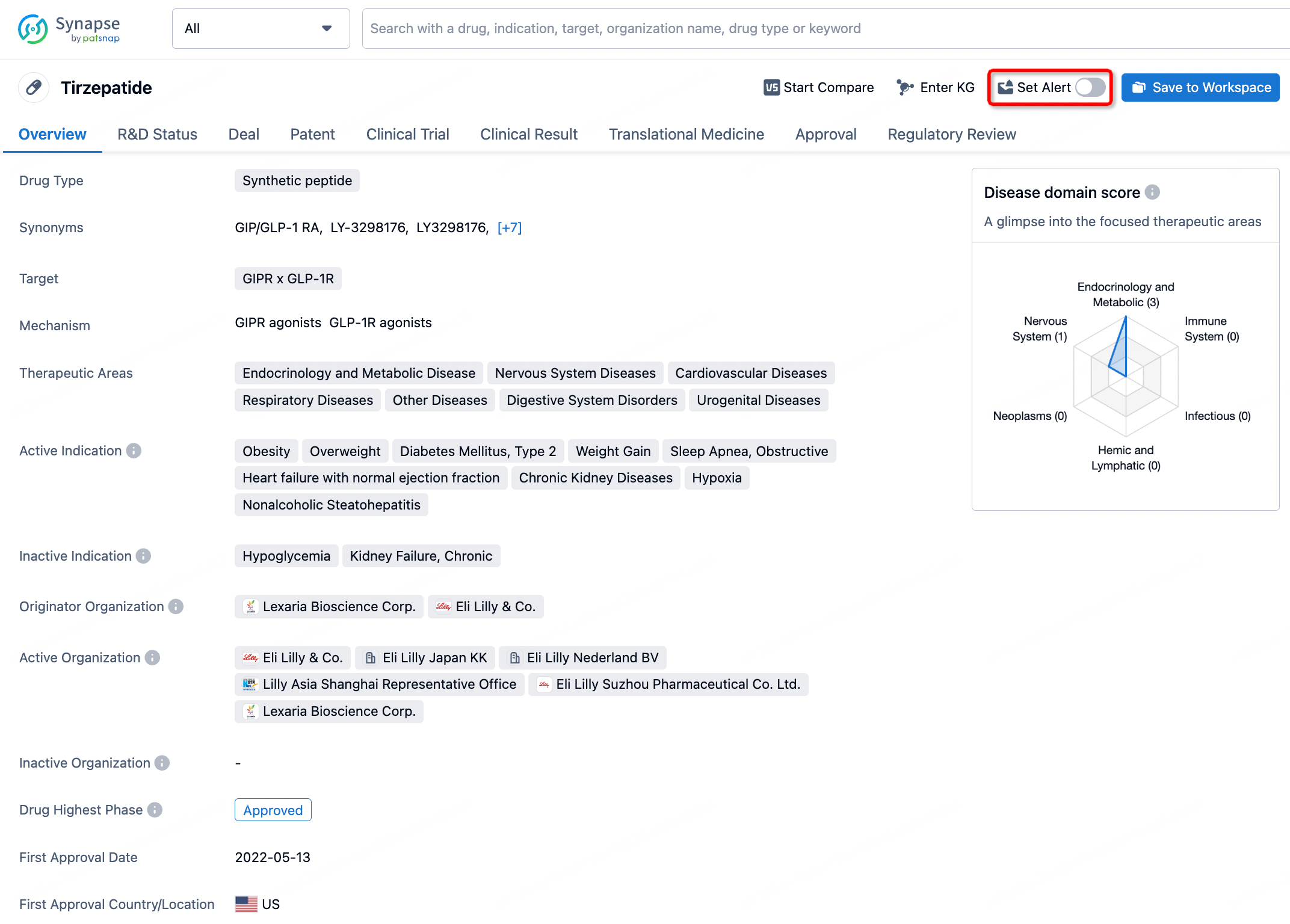
In the Synapse database, you can stay updated on the latest research and development advances of all drugs. This service is accessible anytime and anywhere, with updates available daily or weekly. Use the "Set Alert" function to stay informed. Click on the image below to embark on a brand new journey of drug discovery!


AI Agents Built for Biopharma Breakthroughs
Accelerate discovery. Empower decisions. Transform outcomes.
Get started for free today!
Accelerate Strategic R&D decision making with Synapse, PatSnap’s AI-powered Connected Innovation Intelligence Platform Built for Life Sciences Professionals.
Start your data trial now!
Synapse data is also accessible to external entities via APIs or data packages. Empower better decisions with the latest in pharmaceutical intelligence.