Request Demo
What is GP-30051 used for?
28 June 2024
GP-30051 is an emergent pharmaceutical compound that has been generating considerable interest in the medical research community. Developed by a collaborative effort involving several leading research institutions and pharmaceutical companies, GP-30051 is currently being studied as a novel drug candidate targeting various inflammatory and autoimmune diseases. As a biologic drug, GP-30051 is a monoclonal antibody designed to interfere with specific pathways critical to the inflammatory process. Early preclinical trials have shown promising results, with the drug demonstrating significant efficacy in animal models of rheumatoid arthritis, psoriasis, and inflammatory bowel disease. Currently, GP-30051 is in Phase II of clinical trials, where its safety, efficacy, and optimal dosage are being scrutinized in human subjects.
The mechanism of action for GP-30051 centers around its ability to inhibit specific cytokines that play a crucial role in the body's inflammatory response. More specifically, GP-30051 targets and neutralizes the activity of interleukin-17A (IL-17A), a pro-inflammatory cytokine that has been implicated in the pathogenesis of multiple autoimmune diseases. IL-17A is known to promote the recruitment and activation of neutrophils and other immune cells, thereby amplifying the inflammatory response. By neutralizing IL-17A, GP-30051 effectively reduces the cascade of inflammatory events, leading to decreased tissue damage and improved clinical outcomes. This targeted approach is thought to offer several advantages over traditional immunosuppressive therapies, which often come with a broad range of side effects due to their lack of specificity.
The primary indication for GP-30051 at this stage of development is rheumatoid arthritis (RA), a chronic autoimmune condition characterized by persistent inflammation of the joints, leading to pain, swelling, and eventual joint destruction. RA affects millions of people worldwide and represents a significant burden on healthcare systems due to its chronic nature and the need for long-term management. Current treatments for RA include nonsteroidal anti-inflammatory drugs (NSAIDs), corticosteroids, disease-modifying antirheumatic drugs (DMARDs), and biologics such as TNF inhibitors. However, a substantial proportion of patients either do not respond adequately to these treatments or experience adverse effects, highlighting the need for new therapeutic options.
In addition to rheumatoid arthritis, GP-30051 is being investigated for its potential use in other autoimmune and inflammatory conditions, including psoriasis and inflammatory bowel disease (IBD). Psoriasis is a chronic skin condition that causes red, scaly patches to appear on the skin, often accompanied by itching and discomfort. IBD, which includes Crohn's disease and ulcerative colitis, involves chronic inflammation of the gastrointestinal tract, leading to symptoms such as abdominal pain, diarrhea, and weight loss. In both of these conditions, IL-17A has been identified as a key driver of the inflammatory process, making it a logical target for therapeutic intervention.
The ongoing Phase II clinical trials for GP-30051 are designed to assess its safety and efficacy in patients with moderate to severe rheumatoid arthritis who have not responded adequately to existing treatments. Preliminary data from these trials have been encouraging, with many patients experiencing significant reductions in joint pain and swelling, improved physical function, and a favorable safety profile. Researchers are also monitoring various biomarkers of inflammation to gain a more comprehensive understanding of how GP-30051 modulates the immune response.
Looking ahead, if the Phase II trials continue to yield positive results, GP-30051 will likely progress to Phase III trials, which involve larger patient populations and longer study durations to further evaluate its long-term safety and efficacy. Should these trials prove successful, GP-30051 could become a valuable addition to the therapeutic arsenal for managing rheumatoid arthritis and potentially other autoimmune diseases, offering new hope for patients who have exhausted existing treatment options.
In conclusion, GP-30051 represents a promising advancement in the field of autoimmune disease treatment. By specifically targeting IL-17A, this novel monoclonal antibody has the potential to offer more effective and safer treatment options for patients with conditions such as rheumatoid arthritis, psoriasis, and inflammatory bowel disease. The ongoing clinical trials will be crucial in determining its future role in clinical practice, but the early results are certainly promising.
The mechanism of action for GP-30051 centers around its ability to inhibit specific cytokines that play a crucial role in the body's inflammatory response. More specifically, GP-30051 targets and neutralizes the activity of interleukin-17A (IL-17A), a pro-inflammatory cytokine that has been implicated in the pathogenesis of multiple autoimmune diseases. IL-17A is known to promote the recruitment and activation of neutrophils and other immune cells, thereby amplifying the inflammatory response. By neutralizing IL-17A, GP-30051 effectively reduces the cascade of inflammatory events, leading to decreased tissue damage and improved clinical outcomes. This targeted approach is thought to offer several advantages over traditional immunosuppressive therapies, which often come with a broad range of side effects due to their lack of specificity.
The primary indication for GP-30051 at this stage of development is rheumatoid arthritis (RA), a chronic autoimmune condition characterized by persistent inflammation of the joints, leading to pain, swelling, and eventual joint destruction. RA affects millions of people worldwide and represents a significant burden on healthcare systems due to its chronic nature and the need for long-term management. Current treatments for RA include nonsteroidal anti-inflammatory drugs (NSAIDs), corticosteroids, disease-modifying antirheumatic drugs (DMARDs), and biologics such as TNF inhibitors. However, a substantial proportion of patients either do not respond adequately to these treatments or experience adverse effects, highlighting the need for new therapeutic options.
In addition to rheumatoid arthritis, GP-30051 is being investigated for its potential use in other autoimmune and inflammatory conditions, including psoriasis and inflammatory bowel disease (IBD). Psoriasis is a chronic skin condition that causes red, scaly patches to appear on the skin, often accompanied by itching and discomfort. IBD, which includes Crohn's disease and ulcerative colitis, involves chronic inflammation of the gastrointestinal tract, leading to symptoms such as abdominal pain, diarrhea, and weight loss. In both of these conditions, IL-17A has been identified as a key driver of the inflammatory process, making it a logical target for therapeutic intervention.
The ongoing Phase II clinical trials for GP-30051 are designed to assess its safety and efficacy in patients with moderate to severe rheumatoid arthritis who have not responded adequately to existing treatments. Preliminary data from these trials have been encouraging, with many patients experiencing significant reductions in joint pain and swelling, improved physical function, and a favorable safety profile. Researchers are also monitoring various biomarkers of inflammation to gain a more comprehensive understanding of how GP-30051 modulates the immune response.
Looking ahead, if the Phase II trials continue to yield positive results, GP-30051 will likely progress to Phase III trials, which involve larger patient populations and longer study durations to further evaluate its long-term safety and efficacy. Should these trials prove successful, GP-30051 could become a valuable addition to the therapeutic arsenal for managing rheumatoid arthritis and potentially other autoimmune diseases, offering new hope for patients who have exhausted existing treatment options.
In conclusion, GP-30051 represents a promising advancement in the field of autoimmune disease treatment. By specifically targeting IL-17A, this novel monoclonal antibody has the potential to offer more effective and safer treatment options for patients with conditions such as rheumatoid arthritis, psoriasis, and inflammatory bowel disease. The ongoing clinical trials will be crucial in determining its future role in clinical practice, but the early results are certainly promising.
How to obtain the latest development progress of all drugs?
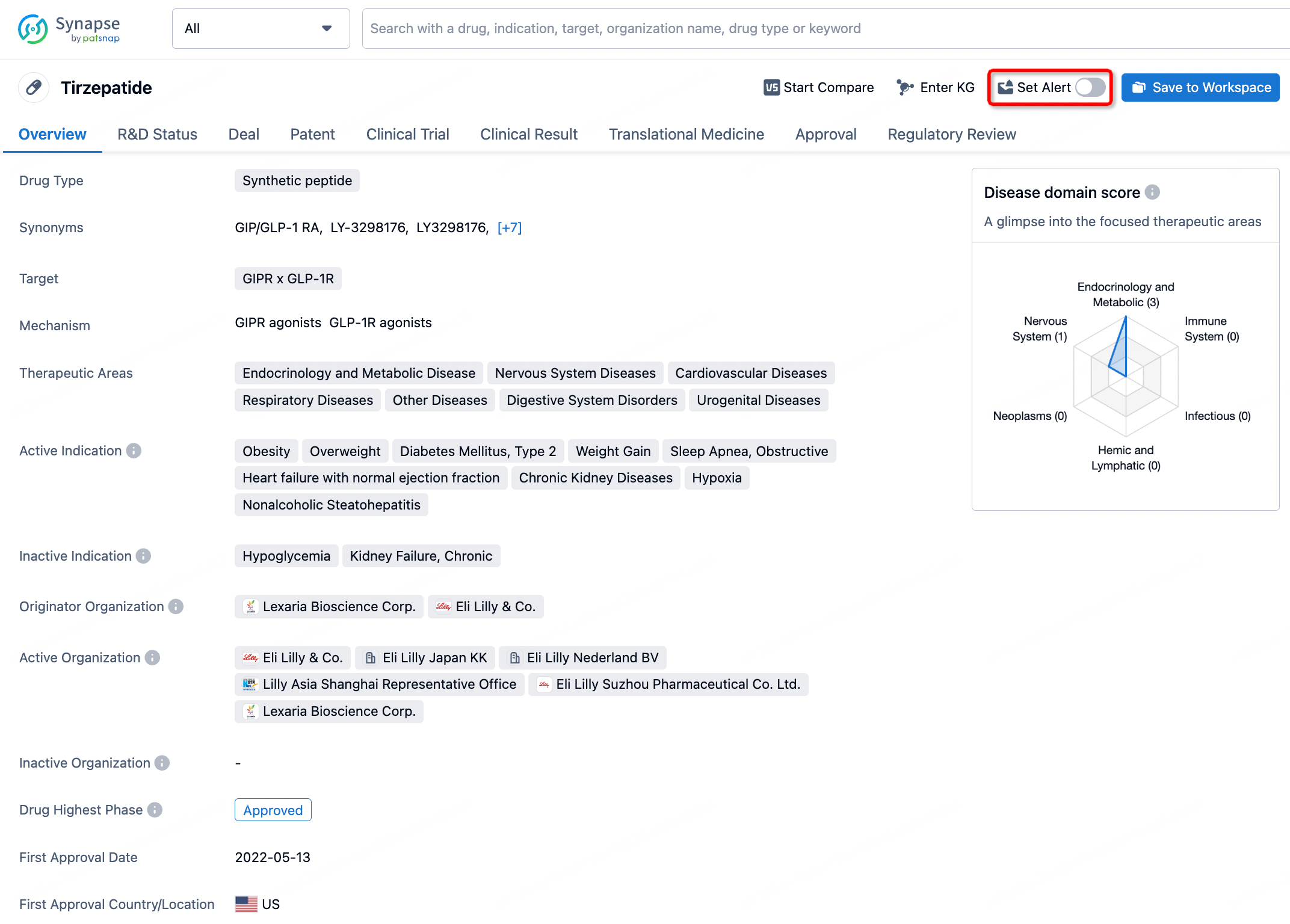
In the Synapse database, you can stay updated on the latest research and development advances of all drugs. This service is accessible anytime and anywhere, with updates available daily or weekly. Use the "Set Alert" function to stay informed. Click on the image below to embark on a brand new journey of drug discovery!


AI Agents Built for Biopharma Breakthroughs
Accelerate discovery. Empower decisions. Transform outcomes.
Get started for free today!
Accelerate Strategic R&D decision making with Synapse, PatSnap’s AI-powered Connected Innovation Intelligence Platform Built for Life Sciences Professionals.
Start your data trial now!
Synapse data is also accessible to external entities via APIs or data packages. Empower better decisions with the latest in pharmaceutical intelligence.