Request Demo
What is Mirvetuximab soravtansine used for?
14 June 2024
Mirvetuximab soravtansine, also known by its trade name Elahere, is a promising and innovative drug currently under investigation and development. Targeting folate receptor alpha (FRα), Mirvetuximab soravtansine is an antibody-drug conjugate (ADC) designed to deliver cytotoxic agents directly to cancer cells. This therapy is primarily developed and researched by ImmunoGen, Inc., a clinical-stage biotechnology company dedicated to the development of targeted cancer therapeutics. The drug is specifically indicated for the treatment of certain types of ovarian cancer, particularly epithelial ovarian cancer, primary peritoneal cancer, and fallopian tube cancer, which exhibit high levels of FRα expression. Research on Mirvetuximab soravtansine has shown significant promise, with clinical trials revealing encouraging results, leading to its accelerated approval by the FDA for patients with platinum-resistant ovarian cancer who have previously received multiple lines of chemotherapy.
Mirvetuximab soravtansine operates through a sophisticated and targeted mechanism of action that leverages the specificity of monoclonal antibodies and the potency of cytotoxic drugs. The drug is composed of three key components: a monoclonal antibody that specifically targets the folate receptor alpha, a stable linker, and a potent cytotoxic agent known as maytansinoid DM4. Upon administration, the monoclonal antibody component of Mirvetuximab soravtansine binds with high affinity to FRα, which is overexpressed on the surface of certain cancer cells. Once the antibody-drug conjugate binds to the cancer cell, it is internalized through receptor-mediated endocytosis. Inside the cancer cell, the linker is cleaved, releasing the cytotoxic DM4. DM4 subsequently binds to tubulin, a key component of the cell's cytoskeleton, inhibiting microtubule dynamics, and leading to cell cycle arrest and apoptosis. This targeted delivery mechanism ensures that the cytotoxic agent is released predominantly within cancer cells, minimizing damage to healthy tissues and enhancing the therapeutic index of the drug.
Mirvetuximab soravtansine is administered intravenously, typically as an infusion over a period of approximately 60 minutes. The dosing regimen and frequency are determined based on the patient's specific condition, body surface area, and overall treatment plan established by the healthcare provider. The onset of action can vary depending on individual patient factors and tumor characteristics. However, clinical trials have demonstrated that patients may begin to experience therapeutic effects, such as a reduction in tumor size or symptom relief, within a few weeks of starting treatment. It is crucial for patients to adhere to their scheduled infusions and follow up with their healthcare provider regularly to monitor their response to the therapy and manage any potential side effects.
Like all medications, Mirvetuximab soravtansine is associated with a range of potential side effects, some of which can be significant. Commonly reported side effects include gastrointestinal disturbances such as nausea, vomiting, and diarrhea; hematological effects such as anemia and neutropenia; and fatigue. Patients may also experience infusion-related reactions, which can include symptoms like fever, chills, and shortness of breath, particularly during the first infusion. Ocular toxicities, including blurred vision, dry eyes, and keratopathy, have also been observed and require regular monitoring by an ophthalmologist. It is important for patients to report any unusual or severe symptoms to their healthcare provider promptly. Contraindications for the use of Mirvetuximab soravtansine include known hypersensitivity to the drug or any of its components. Additionally, caution is advised when administering the drug to patients with pre-existing liver or kidney impairments, as these conditions may affect the drug's metabolism and excretion.
It is essential to consider potential drug-drug interactions when administering Mirvetuximab soravtansine to ensure patient safety and optimal therapeutic outcomes. Concurrent use of other chemotherapy agents or targeted therapies may increase the risk of additive toxicities and should be carefully managed. Medications that affect the cytochrome P450 enzyme system, particularly CYP3A4 inhibitors or inducers, may alter the metabolism of the maytansinoid DM4 component, potentially impacting the drug's efficacy or increasing the risk of toxicity. Additionally, caution is warranted when using drugs known to prolong the QT interval or those that can cause significant myelosuppression. Patients should provide their healthcare provider with a comprehensive list of all medications they are currently taking, including over-the-counter drugs, supplements, and herbal remedies, to allow for a thorough assessment of potential interactions and adjustments to the treatment regimen as needed.
In conclusion, Mirvetuximab soravtansine represents a significant advancement in the field of targeted cancer therapies, offering hope to patients with difficult-to-treat ovarian cancers. Its innovative mechanism of action allows for precise delivery of a potent cytotoxic agent to cancer cells, minimizing collateral damage to healthy tissues. While the drug has demonstrated promising efficacy in clinical trials, it is crucial for patients and healthcare providers to remain vigilant in monitoring for side effects and managing potential drug interactions. Ongoing research and development efforts continue to explore the full potential of Mirvetuximab soravtansine, with the aim of improving patient outcomes and expanding its use to other FRα-positive malignancies.
Mirvetuximab soravtansine operates through a sophisticated and targeted mechanism of action that leverages the specificity of monoclonal antibodies and the potency of cytotoxic drugs. The drug is composed of three key components: a monoclonal antibody that specifically targets the folate receptor alpha, a stable linker, and a potent cytotoxic agent known as maytansinoid DM4. Upon administration, the monoclonal antibody component of Mirvetuximab soravtansine binds with high affinity to FRα, which is overexpressed on the surface of certain cancer cells. Once the antibody-drug conjugate binds to the cancer cell, it is internalized through receptor-mediated endocytosis. Inside the cancer cell, the linker is cleaved, releasing the cytotoxic DM4. DM4 subsequently binds to tubulin, a key component of the cell's cytoskeleton, inhibiting microtubule dynamics, and leading to cell cycle arrest and apoptosis. This targeted delivery mechanism ensures that the cytotoxic agent is released predominantly within cancer cells, minimizing damage to healthy tissues and enhancing the therapeutic index of the drug.
Mirvetuximab soravtansine is administered intravenously, typically as an infusion over a period of approximately 60 minutes. The dosing regimen and frequency are determined based on the patient's specific condition, body surface area, and overall treatment plan established by the healthcare provider. The onset of action can vary depending on individual patient factors and tumor characteristics. However, clinical trials have demonstrated that patients may begin to experience therapeutic effects, such as a reduction in tumor size or symptom relief, within a few weeks of starting treatment. It is crucial for patients to adhere to their scheduled infusions and follow up with their healthcare provider regularly to monitor their response to the therapy and manage any potential side effects.
Like all medications, Mirvetuximab soravtansine is associated with a range of potential side effects, some of which can be significant. Commonly reported side effects include gastrointestinal disturbances such as nausea, vomiting, and diarrhea; hematological effects such as anemia and neutropenia; and fatigue. Patients may also experience infusion-related reactions, which can include symptoms like fever, chills, and shortness of breath, particularly during the first infusion. Ocular toxicities, including blurred vision, dry eyes, and keratopathy, have also been observed and require regular monitoring by an ophthalmologist. It is important for patients to report any unusual or severe symptoms to their healthcare provider promptly. Contraindications for the use of Mirvetuximab soravtansine include known hypersensitivity to the drug or any of its components. Additionally, caution is advised when administering the drug to patients with pre-existing liver or kidney impairments, as these conditions may affect the drug's metabolism and excretion.
It is essential to consider potential drug-drug interactions when administering Mirvetuximab soravtansine to ensure patient safety and optimal therapeutic outcomes. Concurrent use of other chemotherapy agents or targeted therapies may increase the risk of additive toxicities and should be carefully managed. Medications that affect the cytochrome P450 enzyme system, particularly CYP3A4 inhibitors or inducers, may alter the metabolism of the maytansinoid DM4 component, potentially impacting the drug's efficacy or increasing the risk of toxicity. Additionally, caution is warranted when using drugs known to prolong the QT interval or those that can cause significant myelosuppression. Patients should provide their healthcare provider with a comprehensive list of all medications they are currently taking, including over-the-counter drugs, supplements, and herbal remedies, to allow for a thorough assessment of potential interactions and adjustments to the treatment regimen as needed.
In conclusion, Mirvetuximab soravtansine represents a significant advancement in the field of targeted cancer therapies, offering hope to patients with difficult-to-treat ovarian cancers. Its innovative mechanism of action allows for precise delivery of a potent cytotoxic agent to cancer cells, minimizing collateral damage to healthy tissues. While the drug has demonstrated promising efficacy in clinical trials, it is crucial for patients and healthcare providers to remain vigilant in monitoring for side effects and managing potential drug interactions. Ongoing research and development efforts continue to explore the full potential of Mirvetuximab soravtansine, with the aim of improving patient outcomes and expanding its use to other FRα-positive malignancies.
How to obtain the latest development progress of all drugs?
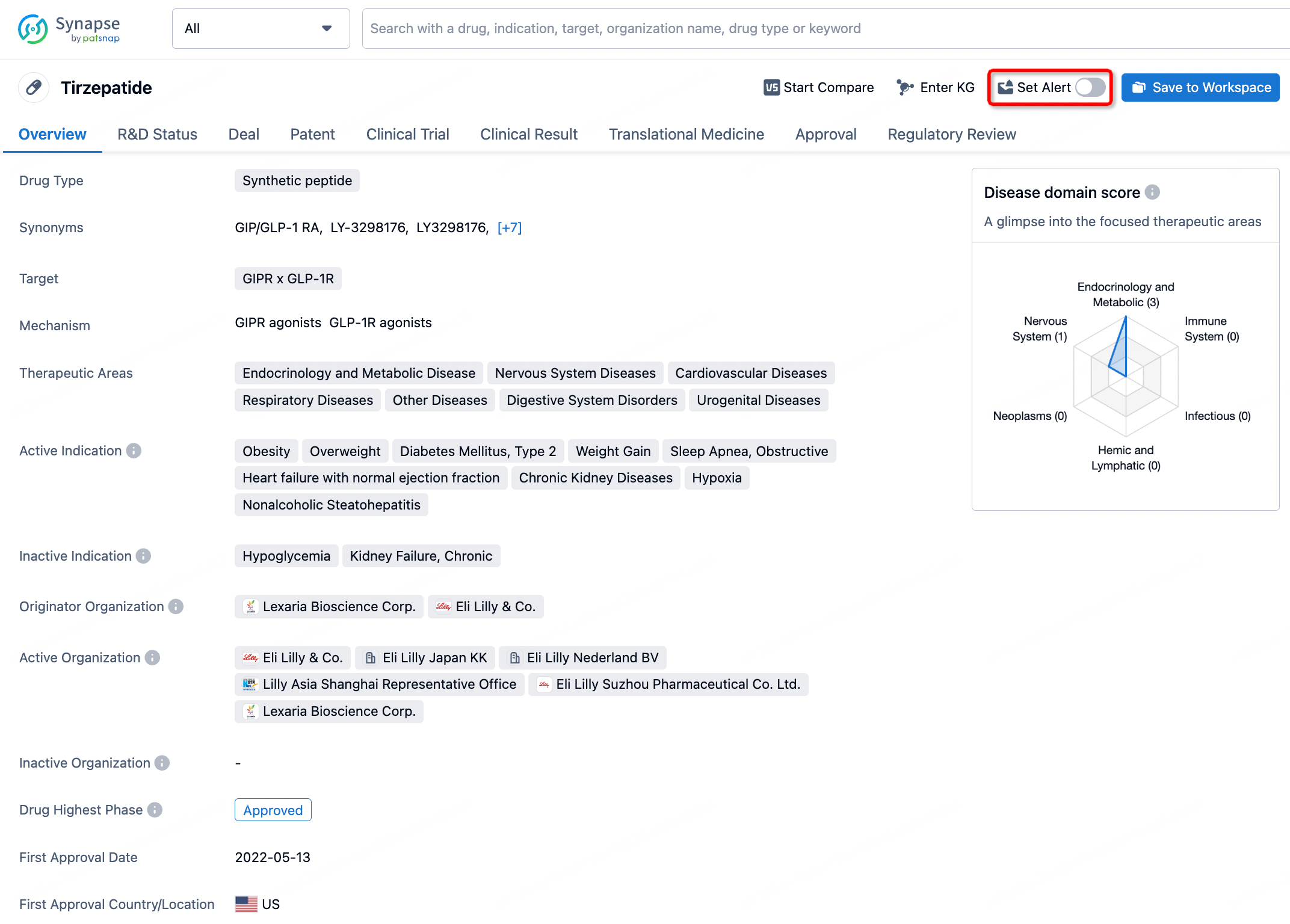
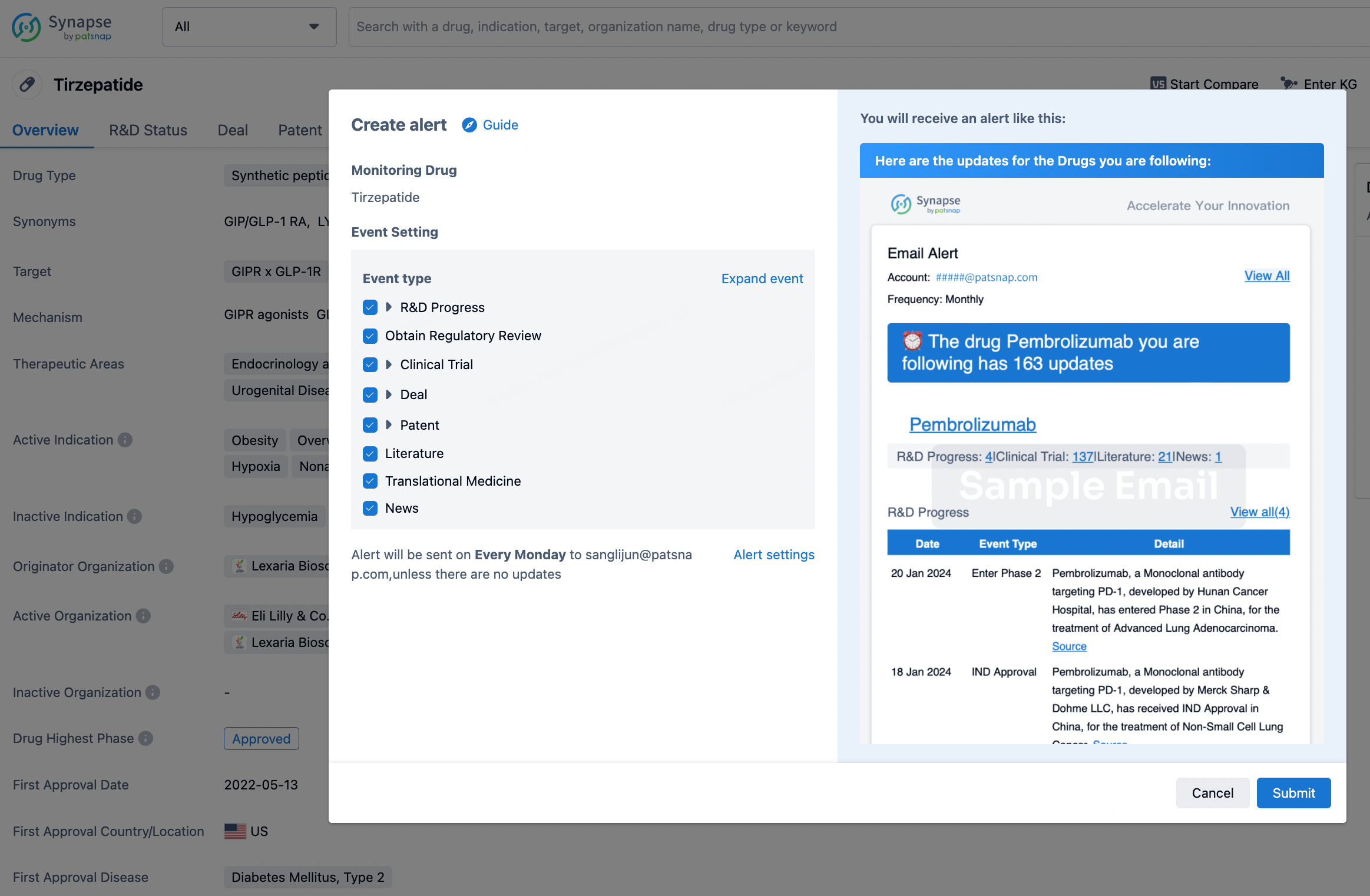
In the Synapse database, you can stay updated on the latest research and development advances of all drugs. This service is accessible anytime and anywhere, with updates available daily or weekly. Use the "Set Alert" function to stay informed. Click on the image below to embark on a brand new journey of drug discovery!
AI Agents Built for Biopharma Breakthroughs
Accelerate discovery. Empower decisions. Transform outcomes.
Get started for free today!
Accelerate Strategic R&D decision making with Synapse, PatSnap’s AI-powered Connected Innovation Intelligence Platform Built for Life Sciences Professionals.
Start your data trial now!
Synapse data is also accessible to external entities via APIs or data packages. Empower better decisions with the latest in pharmaceutical intelligence.