Request Demo
What is Namodenoson used for?
28 June 2024
Namodenoson is an innovative drug currently making waves in the field of medical research. Developed by Can-Fite BioPharma, a clinical-stage biopharmaceutical company, Namodenoson is designed as an oral drug targeting the A3 adenosine receptor (A3AR). While it holds promise for various indications, its primary focus has been on treating liver diseases such as hepatocellular carcinoma (HCC) and non-alcoholic steatohepatitis (NASH).
The journey of Namodenoson from the laboratory to clinical trials has been an eventful one. Initially identified through preclinical studies, the drug exhibited potent anti-inflammatory and anti-cancer properties. These promising initial results led to the commencement of multiple clinical trials to evaluate its safety and efficacy in human subjects. The most advanced of these trials are currently in Phase II, where the drug has shown encouraging results in reducing liver fibrosis and cancerous growths. The U.S. FDA has also granted Namodenoson Orphan Drug Designation for the treatment of HCC, which underscores its potential in addressing unmet medical needs.
Namodenoson’s mechanism of action revolves around its ability to selectively target and activate A3AR, a receptor highly expressed in cancerous and inflammatory cells but significantly less so in normal cells. This specificity reduces the likelihood of off-target effects, making the drug particularly attractive for long-term use. Upon binding to A3AR, Namodenoson initiates a cascade of intracellular events that inhibit key signaling pathways implicated in cell proliferation, inflammation, and apoptosis. More specifically, it downregulates the PI3K/Akt and NF-κB pathways, both of which play critical roles in cancer cell survival and inflammation, respectively.
One of the remarkable features of Namodenoson is its dual-action profile. In cancerous cells, it induces apoptosis, thereby reducing tumor size and preventing metastasis. Concurrently, the drug exerts anti-inflammatory effects in liver cells, mitigating the progression of liver fibrosis and cirrhosis. By addressing both cancer and inflammation, Namodenoson offers a comprehensive approach to treating liver diseases, a feature that distinguishes it from many other therapies currently in development.
Namodenoson is primarily being investigated for two main indications: hepatocellular carcinoma (HCC) and non-alcoholic steatohepatitis (NASH).
Hepatocellular carcinoma is the most common type of primary liver cancer, typically occurring in the context of chronic liver disease and cirrhosis. Despite advances in surgical techniques and targeted therapies, the prognosis for HCC remains poor, with a high rate of recurrence and limited treatment options for advanced stages. In clinical trials, Namodenoson has demonstrated a significant capacity to reduce tumor size and prolong survival in patients with advanced HCC. This has generated considerable excitement in the medical community, as it offers a potential new line of treatment for a disease with few effective therapeutic options.
Non-alcoholic steatohepatitis, on the other hand, is a severe form of non-alcoholic fatty liver disease (NAFLD) characterized by inflammation and liver cell damage, which can eventually lead to cirrhosis and liver cancer. NASH is particularly concerning due to its increasing prevalence, driven in large part by rising rates of obesity and metabolic syndrome. Current treatment options are limited and primarily focus on lifestyle modifications, such as diet and exercise. Namodenoson’s ability to reduce liver inflammation and fibrosis makes it a promising candidate for NASH treatment. Early-phase clinical trials have shown that the drug not only improves liver function but also reduces biomarkers associated with disease progression.
In summary, Namodenoson represents a beacon of hope for patients suffering from debilitating liver diseases like HCC and NASH. Its unique mechanism of action, targeting the A3 adenosine receptor, allows for a highly specific and effective intervention, minimizing side effects while maximizing therapeutic benefits. As ongoing clinical trials continue to validate its efficacy and safety, Namodenoson stands poised to become a cornerstone in the treatment arsenal for liver diseases, offering new avenues for improved patient outcomes and quality of life.
The journey of Namodenoson from the laboratory to clinical trials has been an eventful one. Initially identified through preclinical studies, the drug exhibited potent anti-inflammatory and anti-cancer properties. These promising initial results led to the commencement of multiple clinical trials to evaluate its safety and efficacy in human subjects. The most advanced of these trials are currently in Phase II, where the drug has shown encouraging results in reducing liver fibrosis and cancerous growths. The U.S. FDA has also granted Namodenoson Orphan Drug Designation for the treatment of HCC, which underscores its potential in addressing unmet medical needs.
Namodenoson’s mechanism of action revolves around its ability to selectively target and activate A3AR, a receptor highly expressed in cancerous and inflammatory cells but significantly less so in normal cells. This specificity reduces the likelihood of off-target effects, making the drug particularly attractive for long-term use. Upon binding to A3AR, Namodenoson initiates a cascade of intracellular events that inhibit key signaling pathways implicated in cell proliferation, inflammation, and apoptosis. More specifically, it downregulates the PI3K/Akt and NF-κB pathways, both of which play critical roles in cancer cell survival and inflammation, respectively.
One of the remarkable features of Namodenoson is its dual-action profile. In cancerous cells, it induces apoptosis, thereby reducing tumor size and preventing metastasis. Concurrently, the drug exerts anti-inflammatory effects in liver cells, mitigating the progression of liver fibrosis and cirrhosis. By addressing both cancer and inflammation, Namodenoson offers a comprehensive approach to treating liver diseases, a feature that distinguishes it from many other therapies currently in development.
Namodenoson is primarily being investigated for two main indications: hepatocellular carcinoma (HCC) and non-alcoholic steatohepatitis (NASH).
Hepatocellular carcinoma is the most common type of primary liver cancer, typically occurring in the context of chronic liver disease and cirrhosis. Despite advances in surgical techniques and targeted therapies, the prognosis for HCC remains poor, with a high rate of recurrence and limited treatment options for advanced stages. In clinical trials, Namodenoson has demonstrated a significant capacity to reduce tumor size and prolong survival in patients with advanced HCC. This has generated considerable excitement in the medical community, as it offers a potential new line of treatment for a disease with few effective therapeutic options.
Non-alcoholic steatohepatitis, on the other hand, is a severe form of non-alcoholic fatty liver disease (NAFLD) characterized by inflammation and liver cell damage, which can eventually lead to cirrhosis and liver cancer. NASH is particularly concerning due to its increasing prevalence, driven in large part by rising rates of obesity and metabolic syndrome. Current treatment options are limited and primarily focus on lifestyle modifications, such as diet and exercise. Namodenoson’s ability to reduce liver inflammation and fibrosis makes it a promising candidate for NASH treatment. Early-phase clinical trials have shown that the drug not only improves liver function but also reduces biomarkers associated with disease progression.
In summary, Namodenoson represents a beacon of hope for patients suffering from debilitating liver diseases like HCC and NASH. Its unique mechanism of action, targeting the A3 adenosine receptor, allows for a highly specific and effective intervention, minimizing side effects while maximizing therapeutic benefits. As ongoing clinical trials continue to validate its efficacy and safety, Namodenoson stands poised to become a cornerstone in the treatment arsenal for liver diseases, offering new avenues for improved patient outcomes and quality of life.
How to obtain the latest development progress of all drugs?
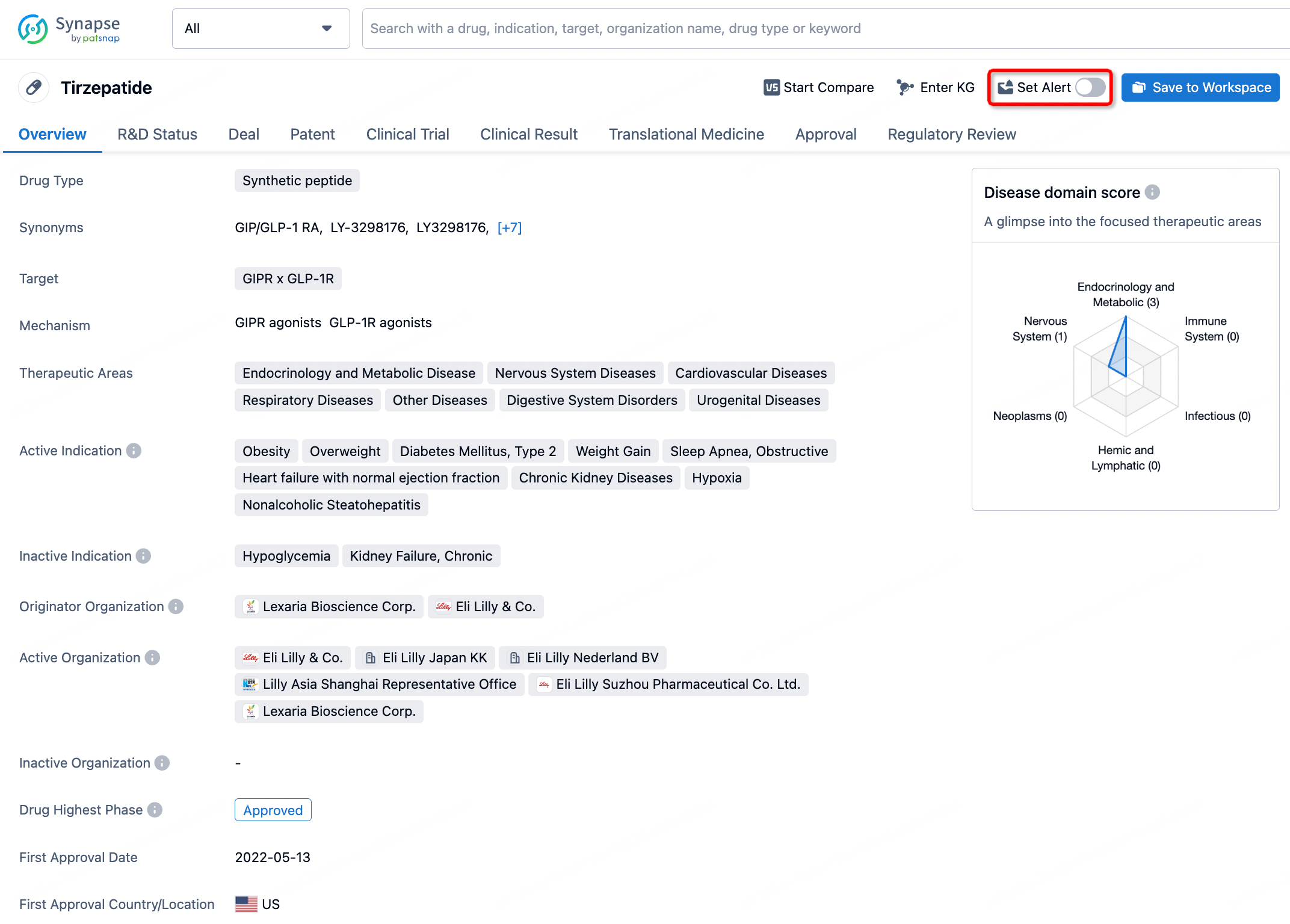
In the Synapse database, you can stay updated on the latest research and development advances of all drugs. This service is accessible anytime and anywhere, with updates available daily or weekly. Use the "Set Alert" function to stay informed. Click on the image below to embark on a brand new journey of drug discovery!

Hiro LS Researcher
The AI Search Engine Built to Accelerate Biopharma Decisions
Search across billion-scale life sciences data to uncover signals, validate evidence, and act with confidence.
Ask any biopharma research question→
Get started for free today!
Accelerate Strategic R&D decision making with Synapse, Patsnap’s AI-powered Connected Innovation Intelligence Platform Built for Life Sciences Professionals.
Discover Synapse Data Servers
Synapse data is now integrated into the PatSnap LS Model Context Protocol (MCP) service. Customize your LLM agent now using our MCP server!