Request Demo
What is Pridopidine used for?
28 June 2024
Pridopidine, a promising pharmaceutical agent, has garnered attention in the field of neurodegenerative diseases due to its unique mechanism of action and potential therapeutic benefits. Originally developed by the biopharmaceutical company Teva Pharmaceuticals, Pridopidine is classified as a small-molecule drug. It primarily targets the sigma-1 receptor (S1R), a protein involved in neuroprotection and cellular stress responses. Research institutions and universities worldwide have been actively involved in studying Pridopidine, aiming to unlock its full potential against various neurological conditions. As of now, Pridopidine has shown significant promise, particularly in the treatment of Huntington's disease (HD), with ongoing clinical trials and research further exploring its efficacy and safety.
Pridopidine operates through a distinctive mechanism of action that sets it apart from other neuroprotective agents. The drug's primary target, the sigma-1 receptor, plays a crucial role in maintaining cellular homeostasis and protecting neurons from degeneration. Sigma-1 receptors are located in the endoplasmic reticulum (ER) of cells and are known to modulate various cellular processes, including calcium signaling, protein folding, and stress responses. By binding to these receptors, Pridopidine enhances their activity, leading to increased cellular resilience against stress factors commonly observed in neurodegenerative diseases.
One of the critical aspects of Pridopidine's mechanism is its ability to stabilize calcium homeostasis within neurons. Dysregulated calcium signaling is a hallmark of many neurodegenerative conditions, contributing to cellular dysfunction and death. Pridopidine's interaction with sigma-1 receptors helps restore normal calcium levels, thereby preventing the cascade of detrimental effects caused by calcium imbalance. Additionally, Pridopidine has been shown to modulate various signaling pathways associated with neuroprotection, including the ERK and AKT pathways, further enhancing its therapeutic potential.
The primary indication for Pridopidine is Huntington's disease, a hereditary neurodegenerative disorder characterized by progressive motor dysfunction, cognitive decline, and psychiatric symptoms. HD is caused by a mutation in the huntingtin gene, leading to the production of an abnormal protein that accumulates in neurons and causes their degeneration. Currently, there is no cure for HD, and available treatments mainly focus on alleviating symptoms rather than addressing the underlying disease pathology.
Pridopidine has emerged as a potential disease-modifying treatment for HD, with the ability to target multiple aspects of the disease process. Preclinical studies have demonstrated that Pridopidine can reduce neurodegeneration, improve motor coordination, and enhance cognitive function in animal models of HD. These promising results have paved the way for clinical trials to evaluate Pridopidine's efficacy and safety in human patients.
One of the most notable clinical trials investigating Pridopidine in HD is the PRIDE-HD trial, a phase 2b study conducted across multiple centers. The trial aimed to assess the safety and efficacy of Pridopidine in patients with early-stage HD. The results from the PRIDE-HD trial indicated that Pridopidine was well-tolerated and showed potential benefits in improving motor function and overall clinical outcomes in HD patients. Although the trial did not meet its primary endpoint, the positive trends observed have encouraged further exploration of Pridopidine's potential in larger, more comprehensive studies.
In addition to Huntington's disease, Pridopidine's potential therapeutic benefits are being explored in other neurodegenerative conditions, including amyotrophic lateral sclerosis (ALS) and Parkinson's disease. The drug's ability to modulate sigma-1 receptor activity and enhance neuroprotection makes it a promising candidate for addressing the complex pathophysiology of these disorders.
In conclusion, Pridopidine represents a promising therapeutic approach for neurodegenerative diseases, particularly Huntington's disease. Its unique mechanism of action, targeting the sigma-1 receptor, offers a novel strategy for enhancing neuroprotection and cellular resilience. While clinical trials have shown encouraging results, further research is necessary to fully understand Pridopidine's potential and to establish its efficacy and safety in larger patient populations. As the scientific community continues to unravel the complexities of neurodegenerative diseases, Pridopidine remains a beacon of hope for patients and researchers alike, driving us closer to effective treatments and improved quality of life for those affected by these debilitating conditions.
Pridopidine operates through a distinctive mechanism of action that sets it apart from other neuroprotective agents. The drug's primary target, the sigma-1 receptor, plays a crucial role in maintaining cellular homeostasis and protecting neurons from degeneration. Sigma-1 receptors are located in the endoplasmic reticulum (ER) of cells and are known to modulate various cellular processes, including calcium signaling, protein folding, and stress responses. By binding to these receptors, Pridopidine enhances their activity, leading to increased cellular resilience against stress factors commonly observed in neurodegenerative diseases.
One of the critical aspects of Pridopidine's mechanism is its ability to stabilize calcium homeostasis within neurons. Dysregulated calcium signaling is a hallmark of many neurodegenerative conditions, contributing to cellular dysfunction and death. Pridopidine's interaction with sigma-1 receptors helps restore normal calcium levels, thereby preventing the cascade of detrimental effects caused by calcium imbalance. Additionally, Pridopidine has been shown to modulate various signaling pathways associated with neuroprotection, including the ERK and AKT pathways, further enhancing its therapeutic potential.
The primary indication for Pridopidine is Huntington's disease, a hereditary neurodegenerative disorder characterized by progressive motor dysfunction, cognitive decline, and psychiatric symptoms. HD is caused by a mutation in the huntingtin gene, leading to the production of an abnormal protein that accumulates in neurons and causes their degeneration. Currently, there is no cure for HD, and available treatments mainly focus on alleviating symptoms rather than addressing the underlying disease pathology.
Pridopidine has emerged as a potential disease-modifying treatment for HD, with the ability to target multiple aspects of the disease process. Preclinical studies have demonstrated that Pridopidine can reduce neurodegeneration, improve motor coordination, and enhance cognitive function in animal models of HD. These promising results have paved the way for clinical trials to evaluate Pridopidine's efficacy and safety in human patients.
One of the most notable clinical trials investigating Pridopidine in HD is the PRIDE-HD trial, a phase 2b study conducted across multiple centers. The trial aimed to assess the safety and efficacy of Pridopidine in patients with early-stage HD. The results from the PRIDE-HD trial indicated that Pridopidine was well-tolerated and showed potential benefits in improving motor function and overall clinical outcomes in HD patients. Although the trial did not meet its primary endpoint, the positive trends observed have encouraged further exploration of Pridopidine's potential in larger, more comprehensive studies.
In addition to Huntington's disease, Pridopidine's potential therapeutic benefits are being explored in other neurodegenerative conditions, including amyotrophic lateral sclerosis (ALS) and Parkinson's disease. The drug's ability to modulate sigma-1 receptor activity and enhance neuroprotection makes it a promising candidate for addressing the complex pathophysiology of these disorders.
In conclusion, Pridopidine represents a promising therapeutic approach for neurodegenerative diseases, particularly Huntington's disease. Its unique mechanism of action, targeting the sigma-1 receptor, offers a novel strategy for enhancing neuroprotection and cellular resilience. While clinical trials have shown encouraging results, further research is necessary to fully understand Pridopidine's potential and to establish its efficacy and safety in larger patient populations. As the scientific community continues to unravel the complexities of neurodegenerative diseases, Pridopidine remains a beacon of hope for patients and researchers alike, driving us closer to effective treatments and improved quality of life for those affected by these debilitating conditions.
How to obtain the latest development progress of all drugs?
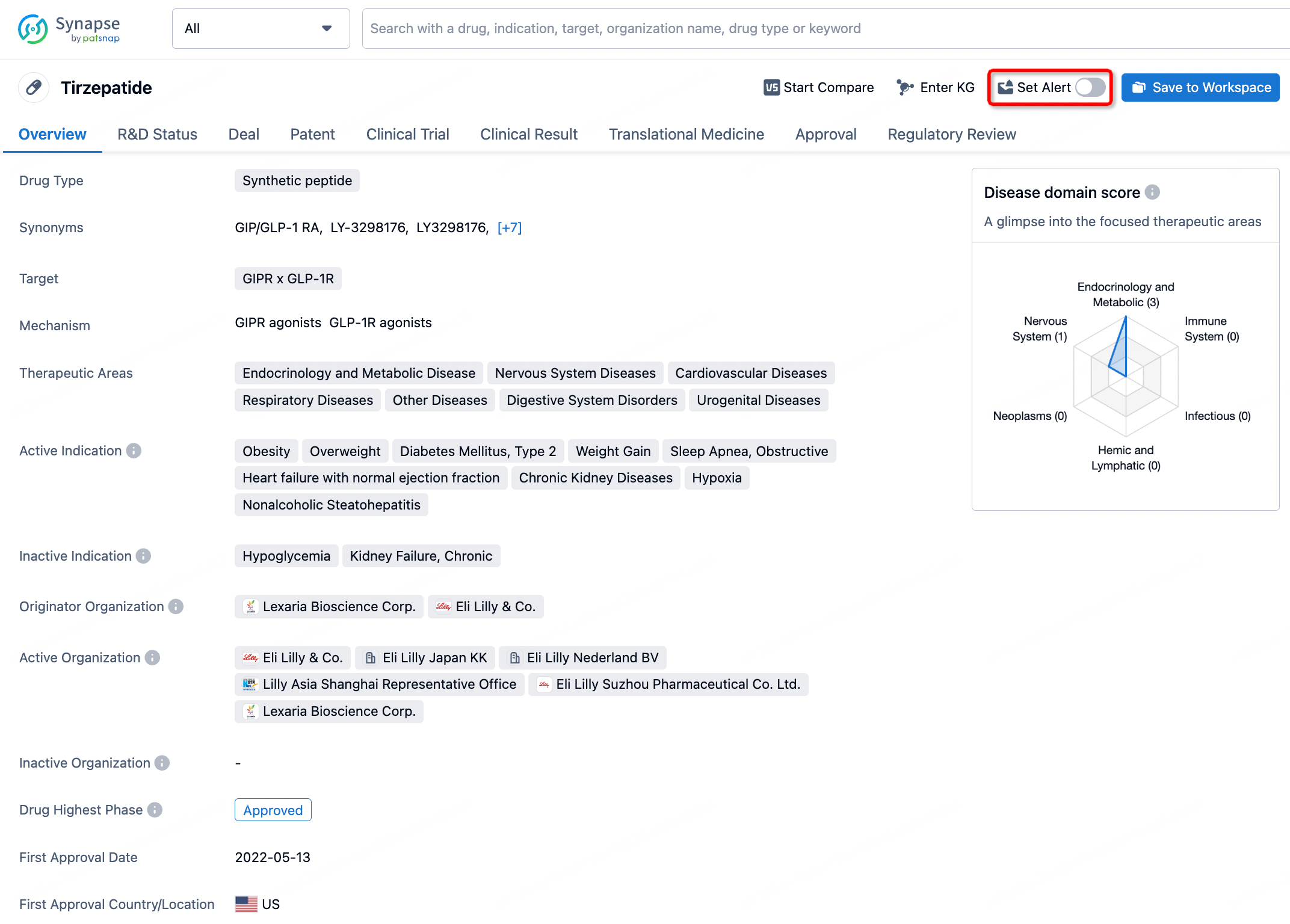
In the Synapse database, you can stay updated on the latest research and development advances of all drugs. This service is accessible anytime and anywhere, with updates available daily or weekly. Use the "Set Alert" function to stay informed. Click on the image below to embark on a brand new journey of drug discovery!


Hiro LS Researcher
The AI Search Engine Built to Accelerate Biopharma Decisions
Search across billion-scale life sciences data to uncover signals, validate evidence, and act with confidence.
Ask any biopharma research question→
Get started for free today!
Accelerate Strategic R&D decision making with Synapse, Patsnap’s AI-powered Connected Innovation Intelligence Platform Built for Life Sciences Professionals.
Discover Synapse Data Servers
Synapse data is now integrated into the PatSnap LS Model Context Protocol (MCP) service. Customize your LLM agent now using our MCP server!