Request Demo
What is the mechanism of 4-Phenylpiracetam?
18 July 2024
4-Phenylpiracetam is a nootropic compound, belonging to the racetam family, that has garnered significant interest for its cognitive-enhancing properties. The mechanism of action for 4-Phenylpiracetam is multifaceted and involves several pathways in the brain.
Firstly, 4-Phenylpiracetam is thought to modulate the activity of neurotransmitters, particularly acetylcholine and dopamine. Acetylcholine is crucial for many cognitive functions, including learning and memory. By increasing the availability of acetylcholine in the brain, 4-Phenylpiracetam enhances these functions, leading to improved memory retention and learning capabilities.
Another significant mechanism involves dopamine receptors. Dopamine is a key neurotransmitter involved in motivation, reward, and overall mood regulation. 4-Phenylpiracetam is believed to increase dopamine receptor density, thereby heightening the brain's sensitivity to dopamine. This results in increased motivation, enhanced mood, and better overall cognitive performance.
4-Phenylpiracetam also exhibits neuroprotective properties. It has been found to inhibit the effects of amnesic agents and to protect neurons from damage caused by oxidative stress. This neuroprotection is partly due to its ability to modulate glutamate receptors, particularly the NMDA subtype. By stabilizing these receptors, 4-Phenylpiracetam helps to maintain cellular integrity under stressful conditions.
Furthermore, studies have shown that 4-Phenylpiracetam can improve cerebral blood flow. Enhanced blood flow ensures that brain cells receive adequate oxygen and nutrients, which is vital for optimal cognitive function. This increased circulation can also help in the recovery of cognitive functions after brain injuries or strokes.
Additionally, 4-Phenylpiracetam's phenyl group allows it to cross the blood-brain barrier more efficiently compared to other racetams. This increased bioavailability means that lower doses are needed to achieve desired effects, reducing the risk of potential side effects.
In summary, the mechanism of action of 4-Phenylpiracetam involves the modulation of acetylcholine and dopamine neurotransmitter systems, neuroprotection through glutamate receptor stabilization, and improved cerebral blood flow. These combined effects contribute to its reputation as a potent cognitive enhancer.
Firstly, 4-Phenylpiracetam is thought to modulate the activity of neurotransmitters, particularly acetylcholine and dopamine. Acetylcholine is crucial for many cognitive functions, including learning and memory. By increasing the availability of acetylcholine in the brain, 4-Phenylpiracetam enhances these functions, leading to improved memory retention and learning capabilities.
Another significant mechanism involves dopamine receptors. Dopamine is a key neurotransmitter involved in motivation, reward, and overall mood regulation. 4-Phenylpiracetam is believed to increase dopamine receptor density, thereby heightening the brain's sensitivity to dopamine. This results in increased motivation, enhanced mood, and better overall cognitive performance.
4-Phenylpiracetam also exhibits neuroprotective properties. It has been found to inhibit the effects of amnesic agents and to protect neurons from damage caused by oxidative stress. This neuroprotection is partly due to its ability to modulate glutamate receptors, particularly the NMDA subtype. By stabilizing these receptors, 4-Phenylpiracetam helps to maintain cellular integrity under stressful conditions.
Furthermore, studies have shown that 4-Phenylpiracetam can improve cerebral blood flow. Enhanced blood flow ensures that brain cells receive adequate oxygen and nutrients, which is vital for optimal cognitive function. This increased circulation can also help in the recovery of cognitive functions after brain injuries or strokes.
Additionally, 4-Phenylpiracetam's phenyl group allows it to cross the blood-brain barrier more efficiently compared to other racetams. This increased bioavailability means that lower doses are needed to achieve desired effects, reducing the risk of potential side effects.
In summary, the mechanism of action of 4-Phenylpiracetam involves the modulation of acetylcholine and dopamine neurotransmitter systems, neuroprotection through glutamate receptor stabilization, and improved cerebral blood flow. These combined effects contribute to its reputation as a potent cognitive enhancer.
How to obtain the latest development progress of all drugs?
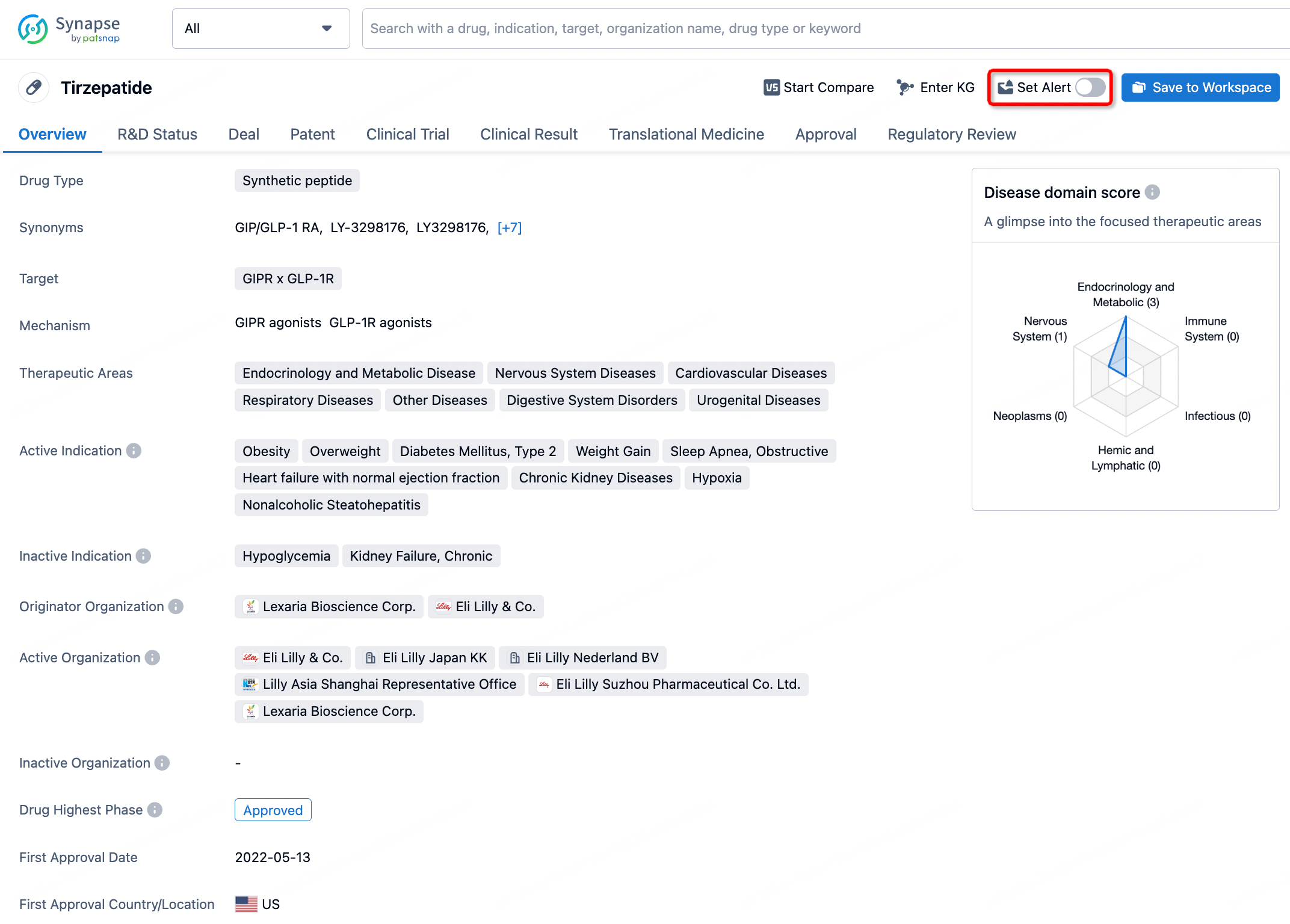
In the Synapse database, you can stay updated on the latest research and development advances of all drugs. This service is accessible anytime and anywhere, with updates available daily or weekly. Use the "Set Alert" function to stay informed. Click on the image below to embark on a brand new journey of drug discovery!


AI Agents Built for Biopharma Breakthroughs
Accelerate discovery. Empower decisions. Transform outcomes.
Get started for free today!
Accelerate Strategic R&D decision making with Synapse, PatSnap’s AI-powered Connected Innovation Intelligence Platform Built for Life Sciences Professionals.
Start your data trial now!
Synapse data is also accessible to external entities via APIs or data packages. Empower better decisions with the latest in pharmaceutical intelligence.