Request Demo
What is the mechanism of Benactyzine Methobromide?
18 July 2024
Benactyzine Methobromide, a compound belonging to the class of anticholinergic agents, primarily functions by blocking the action of acetylcholine on muscarinic receptors. This mechanism is crucial for its therapeutic effects in various medical conditions, particularly those involving the nervous system.
To understand the mechanism of Benactyzine Methobromide, it is essential to first comprehend the role of acetylcholine in the body. Acetylcholine is a neurotransmitter involved in numerous physiological processes, including muscle contraction, memory formation, and modulation of the parasympathetic nervous system. When acetylcholine binds to muscarinic receptors, it can induce a wide range of effects depending on the specific receptor subtype and the tissue in which it is located.
Benactyzine Methobromide exerts its effects by competitively inhibiting acetylcholine at muscarinic receptors. This antagonistic action prevents acetylcholine from binding to these receptors, thereby diminishing its effects. As a result, the parasympathetic nervous system's activity is reduced, leading to a decrease in bodily functions typically mediated by acetylcholine.
One of the primary therapeutic uses of Benactyzine Methobromide is in the management of conditions characterized by excessive cholinergic activity. For instance, it has been employed in the treatment of Parkinson's disease, a neurodegenerative disorder marked by reduced dopaminergic activity and relative cholinergic overactivity. By inhibiting acetylcholine, Benactyzine Methobromide helps restore the balance between dopamine and acetylcholine in the brain, thereby alleviating symptoms such as tremors and rigidity.
Moreover, Benactyzine Methobromide has found applications in treating motion sickness and certain gastrointestinal disorders. In the context of motion sickness, its anticholinergic properties help reduce the stimulation of the vestibular system, which is responsible for balance and spatial orientation. This reduction in stimulation can help prevent the nausea and vomiting associated with motion sickness. In gastrointestinal disorders, the drug's ability to decrease smooth muscle contractions can be beneficial in alleviating symptoms like abdominal cramps and hypermotility.
It is also important to note that the anticholinergic effects of Benactyzine Methobromide are not limited to therapeutic benefits. The drug can induce various side effects due to its widespread action on muscarinic receptors in different organs. Common adverse effects include dry mouth, blurred vision, constipation, and urinary retention. These occur because the drug inhibits acetylcholine's action in salivary glands, the eye's ciliary muscles, the gastrointestinal tract, and the bladder, respectively.
Additionally, central nervous system effects such as confusion, hallucinations, and memory impairment may arise, particularly in elderly patients or those with pre-existing cognitive impairment. This is because Benactyzine Methobromide can cross the blood-brain barrier and affect central muscarinic receptors.
In summary, Benactyzine Methobromide functions by blocking the action of acetylcholine on muscarinic receptors, thus reducing cholinergic activity throughout the body. This action is beneficial in treating disorders like Parkinson's disease, motion sickness, and certain gastrointestinal conditions. However, due to its broad mechanism of action, the drug can also produce a range of side effects, particularly in systems where acetylcholine plays a critical regulatory role. Understanding these mechanisms is crucial for optimizing therapeutic use and managing potential adverse effects.
To understand the mechanism of Benactyzine Methobromide, it is essential to first comprehend the role of acetylcholine in the body. Acetylcholine is a neurotransmitter involved in numerous physiological processes, including muscle contraction, memory formation, and modulation of the parasympathetic nervous system. When acetylcholine binds to muscarinic receptors, it can induce a wide range of effects depending on the specific receptor subtype and the tissue in which it is located.
Benactyzine Methobromide exerts its effects by competitively inhibiting acetylcholine at muscarinic receptors. This antagonistic action prevents acetylcholine from binding to these receptors, thereby diminishing its effects. As a result, the parasympathetic nervous system's activity is reduced, leading to a decrease in bodily functions typically mediated by acetylcholine.
One of the primary therapeutic uses of Benactyzine Methobromide is in the management of conditions characterized by excessive cholinergic activity. For instance, it has been employed in the treatment of Parkinson's disease, a neurodegenerative disorder marked by reduced dopaminergic activity and relative cholinergic overactivity. By inhibiting acetylcholine, Benactyzine Methobromide helps restore the balance between dopamine and acetylcholine in the brain, thereby alleviating symptoms such as tremors and rigidity.
Moreover, Benactyzine Methobromide has found applications in treating motion sickness and certain gastrointestinal disorders. In the context of motion sickness, its anticholinergic properties help reduce the stimulation of the vestibular system, which is responsible for balance and spatial orientation. This reduction in stimulation can help prevent the nausea and vomiting associated with motion sickness. In gastrointestinal disorders, the drug's ability to decrease smooth muscle contractions can be beneficial in alleviating symptoms like abdominal cramps and hypermotility.
It is also important to note that the anticholinergic effects of Benactyzine Methobromide are not limited to therapeutic benefits. The drug can induce various side effects due to its widespread action on muscarinic receptors in different organs. Common adverse effects include dry mouth, blurred vision, constipation, and urinary retention. These occur because the drug inhibits acetylcholine's action in salivary glands, the eye's ciliary muscles, the gastrointestinal tract, and the bladder, respectively.
Additionally, central nervous system effects such as confusion, hallucinations, and memory impairment may arise, particularly in elderly patients or those with pre-existing cognitive impairment. This is because Benactyzine Methobromide can cross the blood-brain barrier and affect central muscarinic receptors.
In summary, Benactyzine Methobromide functions by blocking the action of acetylcholine on muscarinic receptors, thus reducing cholinergic activity throughout the body. This action is beneficial in treating disorders like Parkinson's disease, motion sickness, and certain gastrointestinal conditions. However, due to its broad mechanism of action, the drug can also produce a range of side effects, particularly in systems where acetylcholine plays a critical regulatory role. Understanding these mechanisms is crucial for optimizing therapeutic use and managing potential adverse effects.
How to obtain the latest development progress of all drugs?
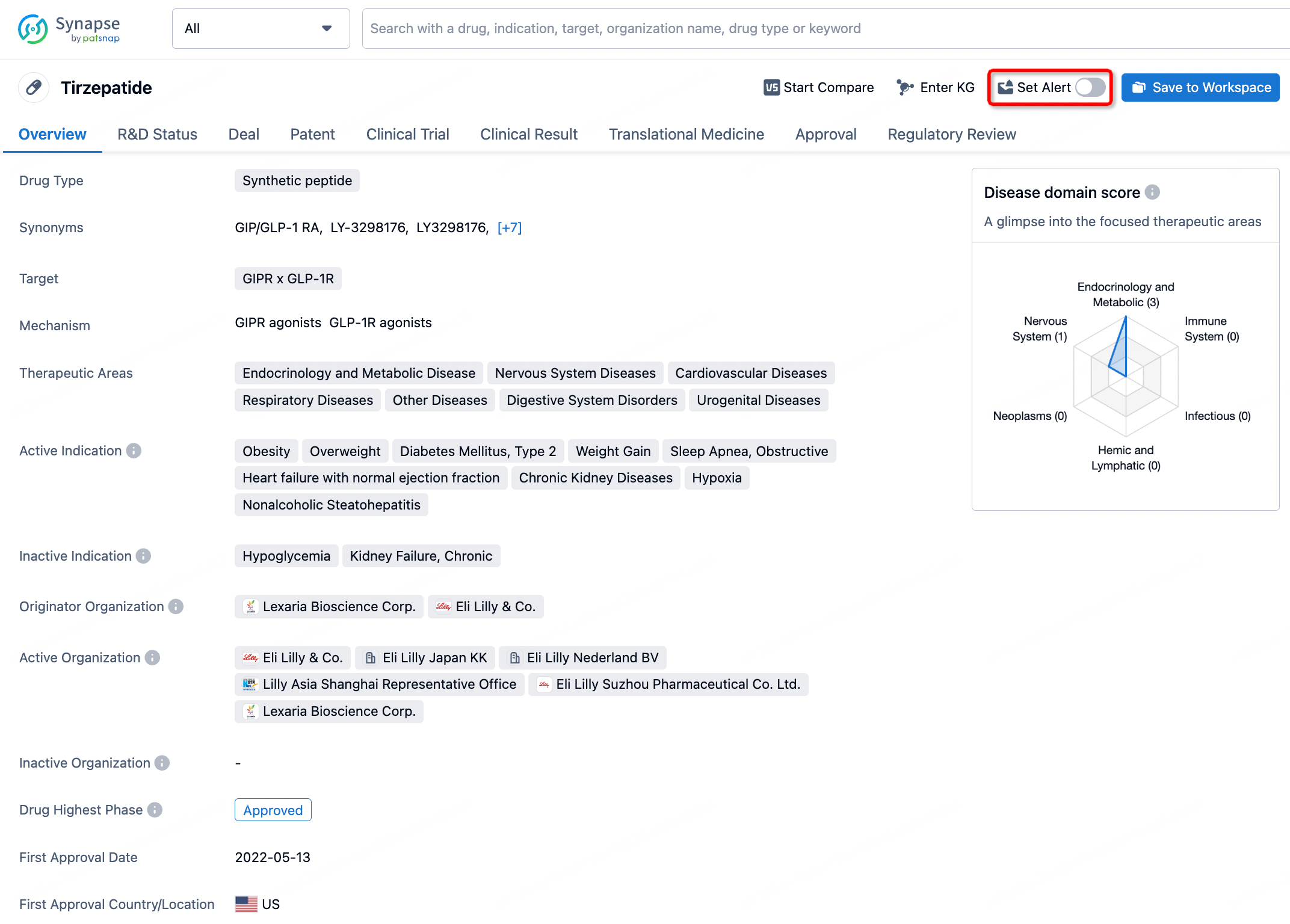
In the Synapse database, you can stay updated on the latest research and development advances of all drugs. This service is accessible anytime and anywhere, with updates available daily or weekly. Use the "Set Alert" function to stay informed. Click on the image below to embark on a brand new journey of drug discovery!


AI Agents Built for Biopharma Breakthroughs
Accelerate discovery. Empower decisions. Transform outcomes.
Get started for free today!
Accelerate Strategic R&D decision making with Synapse, PatSnap’s AI-powered Connected Innovation Intelligence Platform Built for Life Sciences Professionals.
Start your data trial now!
Synapse data is also accessible to external entities via APIs or data packages. Empower better decisions with the latest in pharmaceutical intelligence.