Request Demo
What is the mechanism of Dicalcium phosphate?
18 July 2024
Dicalcium phosphate, often abbreviated as DCP, is an important chemical compound widely used in the food and pharmaceutical industries, as well as in animal feed. Understanding the mechanism of dicalcium phosphate involves delving into its chemical composition, its role in biological systems, and its behavior in various applications.
Chemically, dicalcium phosphate is a calcium phosphate with the formula CaHPO4. It exists in two forms: anhydrous and dihydrate. The anhydrous form is obtained by heating the dihydrate form, which contains two molecules of water (CaHPO4·2H2O). The compound is known for its high bioavailability, making it particularly useful in nutritional supplements and animal feed.
In the biological context, dicalcium phosphate plays a significant role in providing essential calcium and phosphorus to organisms. Both calcium and phosphorus are vital for numerous physiological processes. Calcium is crucial for maintaining bone health, muscle contraction, nerve signaling, and blood clotting. Phosphorus, on the other hand, is a key component of DNA, RNA, and ATP, the energy currency of cells.
When dicalcium phosphate is ingested, it dissociates in the acidic environment of the stomach. The released calcium and phosphate ions are then absorbed in the small intestine. The efficiency of absorption is influenced by several factors, including the presence of vitamin D, which enhances calcium absorption, and the overall dietary balance of calcium and phosphorus.
In the food industry, dicalcium phosphate is used as a leavening agent, stabilizer, and dietary supplement. It helps in the fortification of cereals, flour, and other food products, ensuring that consumers receive an adequate intake of essential minerals. In pharmaceuticals, dicalcium phosphate acts as an excipient, aiding in the formulation of tablets and capsules by providing bulk and improving compressibility.
The mechanism of action of dicalcium phosphate in animal feed is similar to its function in human nutrition. It serves as a primary source of calcium and phosphate, which are critical for the growth, development, and maintenance of skeletal structures in animals. Adequate supplementation of these minerals in livestock diets is crucial for optimizing bone density, reproductive performance, and overall health.
In summary, dicalcium phosphate is a versatile compound with a straightforward yet vital mechanism. By dissociating into calcium and phosphate ions, it ensures the availability of these essential minerals for various physiological functions. Its applications in the food, pharmaceutical, and animal feed industries underscore its importance in promoting health and well-being across different species.
Chemically, dicalcium phosphate is a calcium phosphate with the formula CaHPO4. It exists in two forms: anhydrous and dihydrate. The anhydrous form is obtained by heating the dihydrate form, which contains two molecules of water (CaHPO4·2H2O). The compound is known for its high bioavailability, making it particularly useful in nutritional supplements and animal feed.
In the biological context, dicalcium phosphate plays a significant role in providing essential calcium and phosphorus to organisms. Both calcium and phosphorus are vital for numerous physiological processes. Calcium is crucial for maintaining bone health, muscle contraction, nerve signaling, and blood clotting. Phosphorus, on the other hand, is a key component of DNA, RNA, and ATP, the energy currency of cells.
When dicalcium phosphate is ingested, it dissociates in the acidic environment of the stomach. The released calcium and phosphate ions are then absorbed in the small intestine. The efficiency of absorption is influenced by several factors, including the presence of vitamin D, which enhances calcium absorption, and the overall dietary balance of calcium and phosphorus.
In the food industry, dicalcium phosphate is used as a leavening agent, stabilizer, and dietary supplement. It helps in the fortification of cereals, flour, and other food products, ensuring that consumers receive an adequate intake of essential minerals. In pharmaceuticals, dicalcium phosphate acts as an excipient, aiding in the formulation of tablets and capsules by providing bulk and improving compressibility.
The mechanism of action of dicalcium phosphate in animal feed is similar to its function in human nutrition. It serves as a primary source of calcium and phosphate, which are critical for the growth, development, and maintenance of skeletal structures in animals. Adequate supplementation of these minerals in livestock diets is crucial for optimizing bone density, reproductive performance, and overall health.
In summary, dicalcium phosphate is a versatile compound with a straightforward yet vital mechanism. By dissociating into calcium and phosphate ions, it ensures the availability of these essential minerals for various physiological functions. Its applications in the food, pharmaceutical, and animal feed industries underscore its importance in promoting health and well-being across different species.
How to obtain the latest development progress of all drugs?
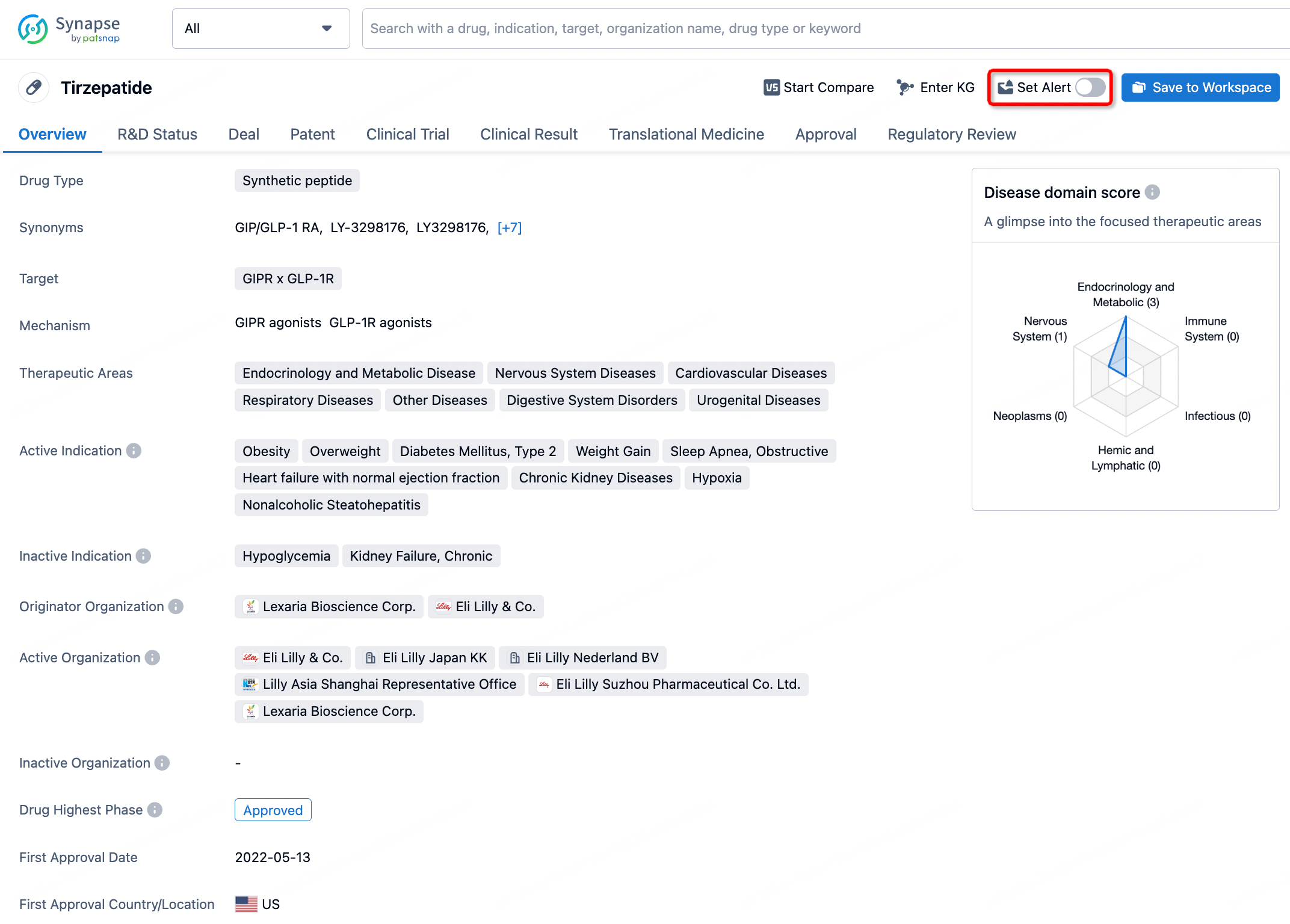
In the Synapse database, you can stay updated on the latest research and development advances of all drugs. This service is accessible anytime and anywhere, with updates available daily or weekly. Use the "Set Alert" function to stay informed. Click on the image below to embark on a brand new journey of drug discovery!


AI Agents Built for Biopharma Breakthroughs
Accelerate discovery. Empower decisions. Transform outcomes.
Get started for free today!
Accelerate Strategic R&D decision making with Synapse, PatSnap’s AI-powered Connected Innovation Intelligence Platform Built for Life Sciences Professionals.
Start your data trial now!
Synapse data is also accessible to external entities via APIs or data packages. Empower better decisions with the latest in pharmaceutical intelligence.