Request Demo
What is the mechanism of Estarabine?
17 July 2024
Estarabine, also known as cytarabine or Ara-C, is a chemotherapy agent primarily used to treat various forms of leukemia, including acute myeloid leukemia (AML), acute lymphocytic leukemia (ALL), and chronic myelogenous leukemia (CML). Its mechanism of action involves disrupting the DNA synthesis of rapidly dividing cancer cells, ultimately leading to cell death. Understanding the mechanism of Estarabine entails delving into its cellular uptake, metabolism, incorporation into DNA, and the subsequent effects on cancer cells.
Firstly, Estarabine is a nucleoside analog, specifically an analog of cytidine, which is one of the four nucleoside building blocks of DNA. When administered, Estarabine enters the bloodstream and is transported to cancer cells, where it is taken up by specialized nucleoside transporters on the cell membrane. Once inside the cell, Estarabine undergoes metabolic activation to become cytarabine triphosphate (Ara-CTP), the active form of the drug.
The conversion of Estarabine to Ara-CTP is a multi-step process. Initially, Estarabine is phosphorylated to cytarabine monophosphate (Ara-CMP) by the enzyme deoxycytidine kinase. This is followed by further phosphorylation to cytarabine diphosphate (Ara-CDP) and ultimately to Ara-CTP by the respective kinases. The accumulation of Ara-CTP within the cell is crucial for the drug's anticancer activity.
Ara-CTP structurally resembles the natural nucleotide cytidine triphosphate (CTP) and competes with it for incorporation into the growing DNA strand during the S-phase of the cell cycle. When Ara-CTP is incorporated into DNA, it interferes with the normal function of DNA polymerases, the enzymes responsible for DNA replication and repair. This incorporation results in the termination of DNA chain elongation, leading to incomplete and faulty DNA synthesis.
The disruption of DNA synthesis triggers a cascade of cellular responses. The cells recognize the faulty DNA and activate DNA damage response pathways. This can lead to cell cycle arrest, where the cell halts its progression through the cell cycle to attempt DNA repair. If the damage is irreparable, the cell undergoes apoptosis, a form of programmed cell death. Apoptosis is characterized by a series of biochemical events leading to cell shrinkage, membrane blebbing, chromatin condensation, and DNA fragmentation.
Apart from directly inducing cell death, Estarabine's incorporation into DNA can also generate secondary effects that enhance its cytotoxicity. For instance, the presence of Ara-CTP in DNA can hinder the action of DNA repair enzymes, making it difficult for the cell to rectify the damage. Furthermore, the accumulation of Ara-CTP within the cell can deplete the pool of natural nucleotides, exacerbating the stress on the cancer cell.
The efficacy of Estarabine can be influenced by various factors, including the level of nucleoside transporters and deoxycytidine kinase, which affect its uptake and activation, respectively. Additionally, cancer cells can develop resistance to Estarabine through several mechanisms, such as increased drug efflux, enhanced DNA repair capabilities, or mutations in the enzymes involved in Ara-CTP metabolism.
In summary, Estarabine's mechanism of action revolves around its role as a cytidine analog that interferes with DNA synthesis in rapidly dividing cancer cells. Through its conversion to Ara-CTP, incorporation into DNA, and the subsequent inhibition of DNA polymerases, Estarabine effectively disrupts the cell cycle and induces apoptosis in cancer cells. Understanding these mechanisms provides insight into its therapeutic potential and the challenges associated with resistance.
Firstly, Estarabine is a nucleoside analog, specifically an analog of cytidine, which is one of the four nucleoside building blocks of DNA. When administered, Estarabine enters the bloodstream and is transported to cancer cells, where it is taken up by specialized nucleoside transporters on the cell membrane. Once inside the cell, Estarabine undergoes metabolic activation to become cytarabine triphosphate (Ara-CTP), the active form of the drug.
The conversion of Estarabine to Ara-CTP is a multi-step process. Initially, Estarabine is phosphorylated to cytarabine monophosphate (Ara-CMP) by the enzyme deoxycytidine kinase. This is followed by further phosphorylation to cytarabine diphosphate (Ara-CDP) and ultimately to Ara-CTP by the respective kinases. The accumulation of Ara-CTP within the cell is crucial for the drug's anticancer activity.
Ara-CTP structurally resembles the natural nucleotide cytidine triphosphate (CTP) and competes with it for incorporation into the growing DNA strand during the S-phase of the cell cycle. When Ara-CTP is incorporated into DNA, it interferes with the normal function of DNA polymerases, the enzymes responsible for DNA replication and repair. This incorporation results in the termination of DNA chain elongation, leading to incomplete and faulty DNA synthesis.
The disruption of DNA synthesis triggers a cascade of cellular responses. The cells recognize the faulty DNA and activate DNA damage response pathways. This can lead to cell cycle arrest, where the cell halts its progression through the cell cycle to attempt DNA repair. If the damage is irreparable, the cell undergoes apoptosis, a form of programmed cell death. Apoptosis is characterized by a series of biochemical events leading to cell shrinkage, membrane blebbing, chromatin condensation, and DNA fragmentation.
Apart from directly inducing cell death, Estarabine's incorporation into DNA can also generate secondary effects that enhance its cytotoxicity. For instance, the presence of Ara-CTP in DNA can hinder the action of DNA repair enzymes, making it difficult for the cell to rectify the damage. Furthermore, the accumulation of Ara-CTP within the cell can deplete the pool of natural nucleotides, exacerbating the stress on the cancer cell.
The efficacy of Estarabine can be influenced by various factors, including the level of nucleoside transporters and deoxycytidine kinase, which affect its uptake and activation, respectively. Additionally, cancer cells can develop resistance to Estarabine through several mechanisms, such as increased drug efflux, enhanced DNA repair capabilities, or mutations in the enzymes involved in Ara-CTP metabolism.
In summary, Estarabine's mechanism of action revolves around its role as a cytidine analog that interferes with DNA synthesis in rapidly dividing cancer cells. Through its conversion to Ara-CTP, incorporation into DNA, and the subsequent inhibition of DNA polymerases, Estarabine effectively disrupts the cell cycle and induces apoptosis in cancer cells. Understanding these mechanisms provides insight into its therapeutic potential and the challenges associated with resistance.
How to obtain the latest development progress of all drugs?
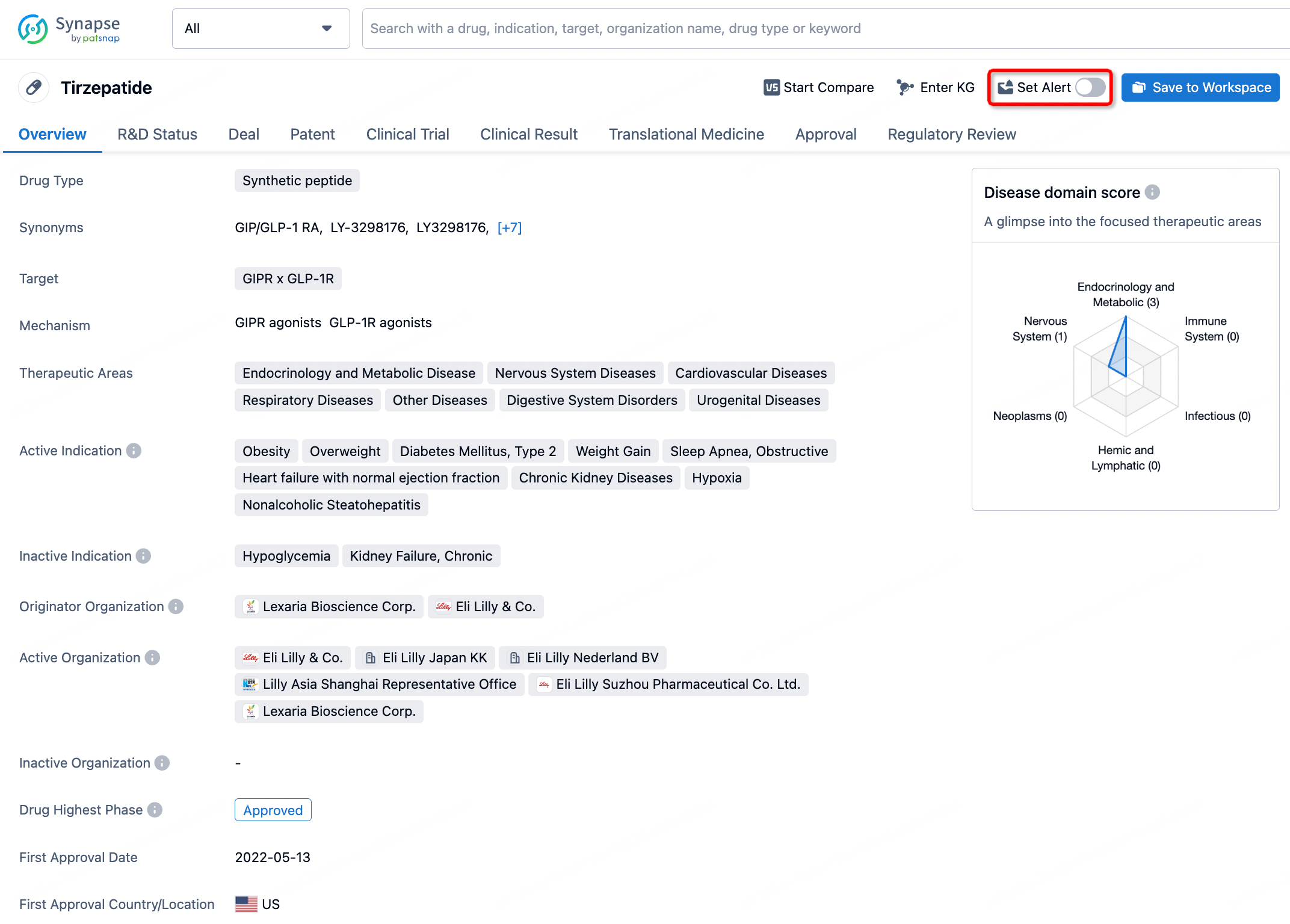
In the Synapse database, you can stay updated on the latest research and development advances of all drugs. This service is accessible anytime and anywhere, with updates available daily or weekly. Use the "Set Alert" function to stay informed. Click on the image below to embark on a brand new journey of drug discovery!


AI Agents Built for Biopharma Breakthroughs
Accelerate discovery. Empower decisions. Transform outcomes.
Get started for free today!
Accelerate Strategic R&D decision making with Synapse, PatSnap’s AI-powered Connected Innovation Intelligence Platform Built for Life Sciences Professionals.
Start your data trial now!
Synapse data is also accessible to external entities via APIs or data packages. Empower better decisions with the latest in pharmaceutical intelligence.