Request Demo
What is the mechanism of Fruquintinib?
17 July 2024
Fruquintinib is a potent and highly selective inhibitor of vascular endothelial growth factor receptors (VEGFR) 1, 2, and 3. These receptors play a crucial role in the process of angiogenesis, which is the formation of new blood vessels from pre-existing ones. Angiogenesis is a vital process in both normal physiology and in the pathogenesis of various diseases, most notably cancer. By inhibiting these receptors, Fruquintinib disrupts the blood supply to tumors, effectively starving them of the necessary nutrients and oxygen required for growth and survival.
The primary mechanism of Fruquintinib centers around its interaction with VEGFR tyrosine kinases. These receptors, when activated by their ligands—vascular endothelial growth factors (VEGFs)—undergo dimerization and autophosphorylation, initiating a cascade of downstream signaling pathways. These pathways include the Ras/Raf/MEK/ERK and PI3K/AKT/mTOR pathways, both of which are critical for cell proliferation, migration, and survival. By binding to the ATP-binding site of VEGFR1, VEGFR2, and VEGFR3, Fruquintinib prevents the receptors' activation and subsequent signal transduction.
The inhibition of VEGFR2 is particularly significant because it is the primary mediator of VEGF-induced angiogenesis. Blocking VEGFR2 disrupts the endothelial cell functions necessary for new blood vessel formation, thereby inhibiting tumor vascularization. This effect is crucial in the context of cancer therapy since tumors rely heavily on a robust blood supply to sustain rapid growth and metastasis.
Additionally, Fruquintinib's selectivity for VEGFRs minimizes off-target effects that are often associated with other tyrosine kinase inhibitors, which can affect a broader range of receptors and lead to significant side effects. This selectivity translates to a better safety profile and enhanced tolerability, making Fruquintinib a promising candidate for long-term cancer treatment.
Fruquintinib has demonstrated efficacy in various preclinical and clinical studies, particularly in colorectal cancer. In these studies, patients treated with Fruquintinib exhibited significant reductions in tumor size and progression compared to those receiving placebo or other treatments. The drug's ability to specifically target and inhibit angiogenesis in tumors underscores its potential as a cornerstone in anti-angiogenic cancer therapy.
In summary, Fruquintinib operates through the selective inhibition of VEGFR1, VEGFR2, and VEGFR3, effectively blocking the angiogenic pathways that are essential for tumor growth and progression. By starving tumors of their blood supply, Fruquintinib offers a targeted therapeutic approach with a favorable safety profile, providing hope for improved outcomes in cancer patients.
The primary mechanism of Fruquintinib centers around its interaction with VEGFR tyrosine kinases. These receptors, when activated by their ligands—vascular endothelial growth factors (VEGFs)—undergo dimerization and autophosphorylation, initiating a cascade of downstream signaling pathways. These pathways include the Ras/Raf/MEK/ERK and PI3K/AKT/mTOR pathways, both of which are critical for cell proliferation, migration, and survival. By binding to the ATP-binding site of VEGFR1, VEGFR2, and VEGFR3, Fruquintinib prevents the receptors' activation and subsequent signal transduction.
The inhibition of VEGFR2 is particularly significant because it is the primary mediator of VEGF-induced angiogenesis. Blocking VEGFR2 disrupts the endothelial cell functions necessary for new blood vessel formation, thereby inhibiting tumor vascularization. This effect is crucial in the context of cancer therapy since tumors rely heavily on a robust blood supply to sustain rapid growth and metastasis.
Additionally, Fruquintinib's selectivity for VEGFRs minimizes off-target effects that are often associated with other tyrosine kinase inhibitors, which can affect a broader range of receptors and lead to significant side effects. This selectivity translates to a better safety profile and enhanced tolerability, making Fruquintinib a promising candidate for long-term cancer treatment.
Fruquintinib has demonstrated efficacy in various preclinical and clinical studies, particularly in colorectal cancer. In these studies, patients treated with Fruquintinib exhibited significant reductions in tumor size and progression compared to those receiving placebo or other treatments. The drug's ability to specifically target and inhibit angiogenesis in tumors underscores its potential as a cornerstone in anti-angiogenic cancer therapy.
In summary, Fruquintinib operates through the selective inhibition of VEGFR1, VEGFR2, and VEGFR3, effectively blocking the angiogenic pathways that are essential for tumor growth and progression. By starving tumors of their blood supply, Fruquintinib offers a targeted therapeutic approach with a favorable safety profile, providing hope for improved outcomes in cancer patients.
How to obtain the latest development progress of all drugs?
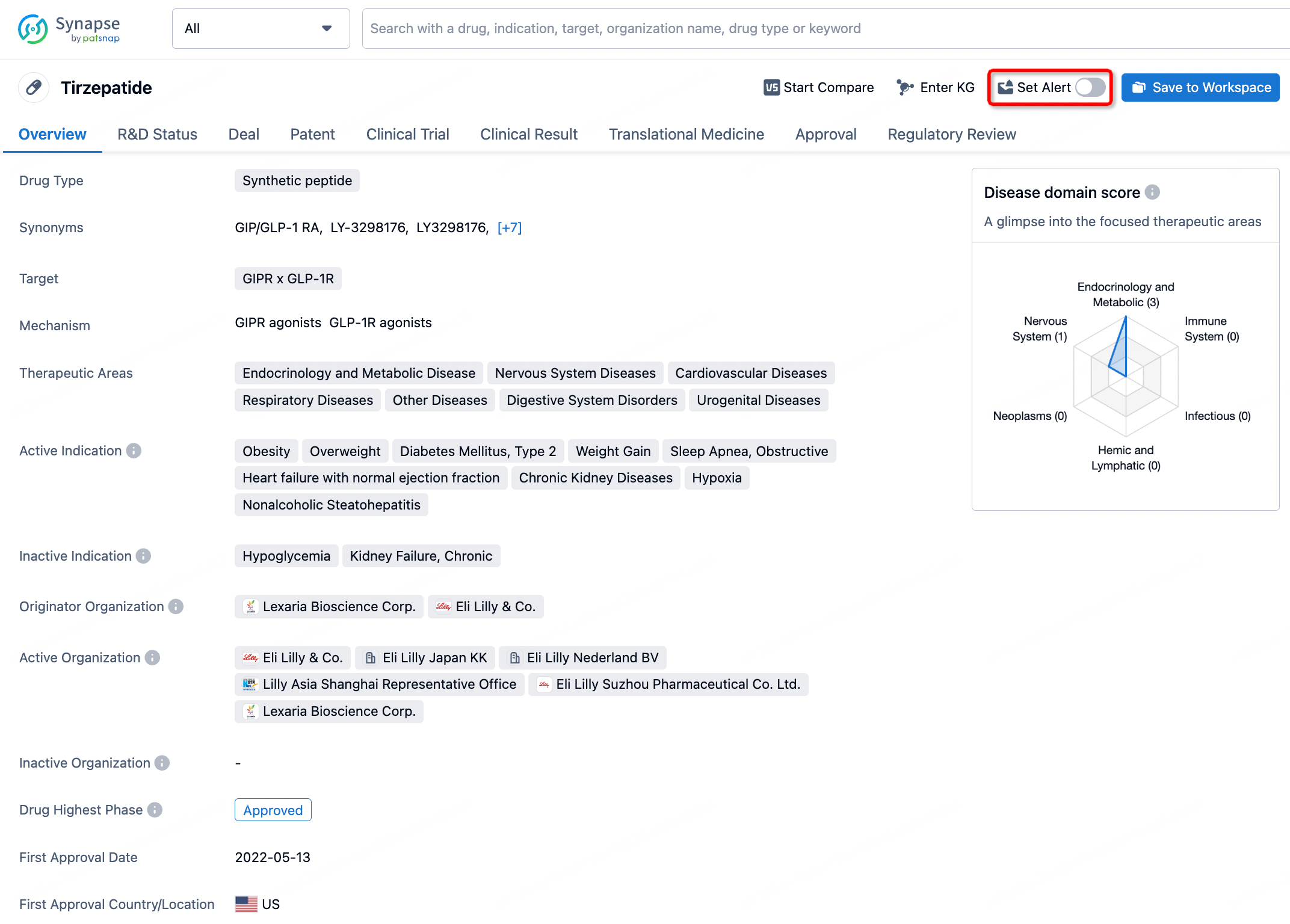
In the Synapse database, you can stay updated on the latest research and development advances of all drugs. This service is accessible anytime and anywhere, with updates available daily or weekly. Use the "Set Alert" function to stay informed. Click on the image below to embark on a brand new journey of drug discovery!

AI Agents Built for Biopharma Breakthroughs
Accelerate discovery. Empower decisions. Transform outcomes.
Get started for free today!
Accelerate Strategic R&D decision making with Synapse, PatSnap’s AI-powered Connected Innovation Intelligence Platform Built for Life Sciences Professionals.
Start your data trial now!
Synapse data is also accessible to external entities via APIs or data packages. Empower better decisions with the latest in pharmaceutical intelligence.