Request Demo
What is the mechanism of Ifenprodil Tartrate?
17 July 2024
Ifenprodil Tartrate is a pharmaceutical compound primarily known for its role as an NMDA (N-methyl-D-aspartate) receptor antagonist. Its mechanism of action is multifaceted, engaging various biochemical pathways that contribute to its therapeutic effects. This article delves into the mechanism of Ifenprodil Tartrate, explaining how it works at the cellular level to influence physiological and potentially pathological processes.
At the core of its mechanism, Ifenprodil Tartrate targets the NMDA receptors, which are integral components of the central nervous system. NMDA receptors are a subtype of glutamate receptors, which are critical for synaptic plasticity, a process underlying learning and memory. These receptors are ion channels that allow the flow of calcium (Ca2+), sodium (Na+), and potassium (K+) ions when activated. However, excessive activation of NMDA receptors can lead to excitotoxicity, a condition that can cause neuronal damage and is implicated in various neurodegenerative diseases.
Ifenprodil Tartrate binds selectively to the NR2B subunit of NMDA receptors. By doing so, it inhibits the overactivation of these receptors, thus preventing excessive calcium influx into neurons. This selective antagonism helps to modulate synaptic transmission and protect neurons from excitotoxic damage. The binding of Ifenprodil to the NR2B subunit induces a conformational change in the receptor, which reduces its activity without completely blocking it. This nuanced inhibition is crucial for maintaining the delicate balance between necessary synaptic activity and harmful overexcitation.
Beyond its primary action on NMDA receptors, Ifenprodil Tartrate also exhibits affinity for other receptors and ion channels. For instance, it has been shown to interact with sigma receptors, which are involved in neuroprotection and modulation of neurotransmitter systems. This interaction may contribute to its neuroprotective properties, further enhancing its therapeutic potential.
Additionally, Ifenprodil Tartrate has been found to affect voltage-gated calcium channels (VGCCs). These channels are crucial for the regulation of calcium entry into cells, influencing various cellular processes, including neurotransmitter release, muscle contraction, and gene expression. By modulating VGCCs, Ifenprodil Tartrate can influence neuronal excitability and neuroplasticity, adding another layer to its pharmacological profile.
The therapeutic applications of Ifenprodil Tartrate primarily revolve around its neuroprotective and anti-excitotoxic properties. It has been investigated for its potential in treating conditions such as ischemic stroke, traumatic brain injury, and neurodegenerative diseases like Alzheimer's and Parkinson's disease. By mitigating excitotoxic damage, Ifenprodil Tartrate aims to preserve neuronal function and improve clinical outcomes in these conditions.
Moreover, recent research has explored the potential of Ifenprodil Tartrate in addressing conditions like chronic pain and depression. Both of these conditions have been linked to dysregulation of glutamatergic neurotransmission and NMDA receptor activity. By modulating NR2B subunit-containing NMDA receptors, Ifenprodil Tartrate might offer a novel therapeutic strategy for managing these complex disorders.
In conclusion, Ifenprodil Tartrate's mechanism of action is primarily centered around its selective inhibition of the NR2B subunit of NMDA receptors, which helps prevent excitotoxic neuronal damage. Its interactions with sigma receptors and voltage-gated calcium channels further contribute to its neuroprotective and modulatory effects. These multifaceted actions underline its potential in treating a range of neurological and psychiatric conditions, making it a compound of significant interest in the field of neuropharmacology.
At the core of its mechanism, Ifenprodil Tartrate targets the NMDA receptors, which are integral components of the central nervous system. NMDA receptors are a subtype of glutamate receptors, which are critical for synaptic plasticity, a process underlying learning and memory. These receptors are ion channels that allow the flow of calcium (Ca2+), sodium (Na+), and potassium (K+) ions when activated. However, excessive activation of NMDA receptors can lead to excitotoxicity, a condition that can cause neuronal damage and is implicated in various neurodegenerative diseases.
Ifenprodil Tartrate binds selectively to the NR2B subunit of NMDA receptors. By doing so, it inhibits the overactivation of these receptors, thus preventing excessive calcium influx into neurons. This selective antagonism helps to modulate synaptic transmission and protect neurons from excitotoxic damage. The binding of Ifenprodil to the NR2B subunit induces a conformational change in the receptor, which reduces its activity without completely blocking it. This nuanced inhibition is crucial for maintaining the delicate balance between necessary synaptic activity and harmful overexcitation.
Beyond its primary action on NMDA receptors, Ifenprodil Tartrate also exhibits affinity for other receptors and ion channels. For instance, it has been shown to interact with sigma receptors, which are involved in neuroprotection and modulation of neurotransmitter systems. This interaction may contribute to its neuroprotective properties, further enhancing its therapeutic potential.
Additionally, Ifenprodil Tartrate has been found to affect voltage-gated calcium channels (VGCCs). These channels are crucial for the regulation of calcium entry into cells, influencing various cellular processes, including neurotransmitter release, muscle contraction, and gene expression. By modulating VGCCs, Ifenprodil Tartrate can influence neuronal excitability and neuroplasticity, adding another layer to its pharmacological profile.
The therapeutic applications of Ifenprodil Tartrate primarily revolve around its neuroprotective and anti-excitotoxic properties. It has been investigated for its potential in treating conditions such as ischemic stroke, traumatic brain injury, and neurodegenerative diseases like Alzheimer's and Parkinson's disease. By mitigating excitotoxic damage, Ifenprodil Tartrate aims to preserve neuronal function and improve clinical outcomes in these conditions.
Moreover, recent research has explored the potential of Ifenprodil Tartrate in addressing conditions like chronic pain and depression. Both of these conditions have been linked to dysregulation of glutamatergic neurotransmission and NMDA receptor activity. By modulating NR2B subunit-containing NMDA receptors, Ifenprodil Tartrate might offer a novel therapeutic strategy for managing these complex disorders.
In conclusion, Ifenprodil Tartrate's mechanism of action is primarily centered around its selective inhibition of the NR2B subunit of NMDA receptors, which helps prevent excitotoxic neuronal damage. Its interactions with sigma receptors and voltage-gated calcium channels further contribute to its neuroprotective and modulatory effects. These multifaceted actions underline its potential in treating a range of neurological and psychiatric conditions, making it a compound of significant interest in the field of neuropharmacology.
How to obtain the latest development progress of all drugs?
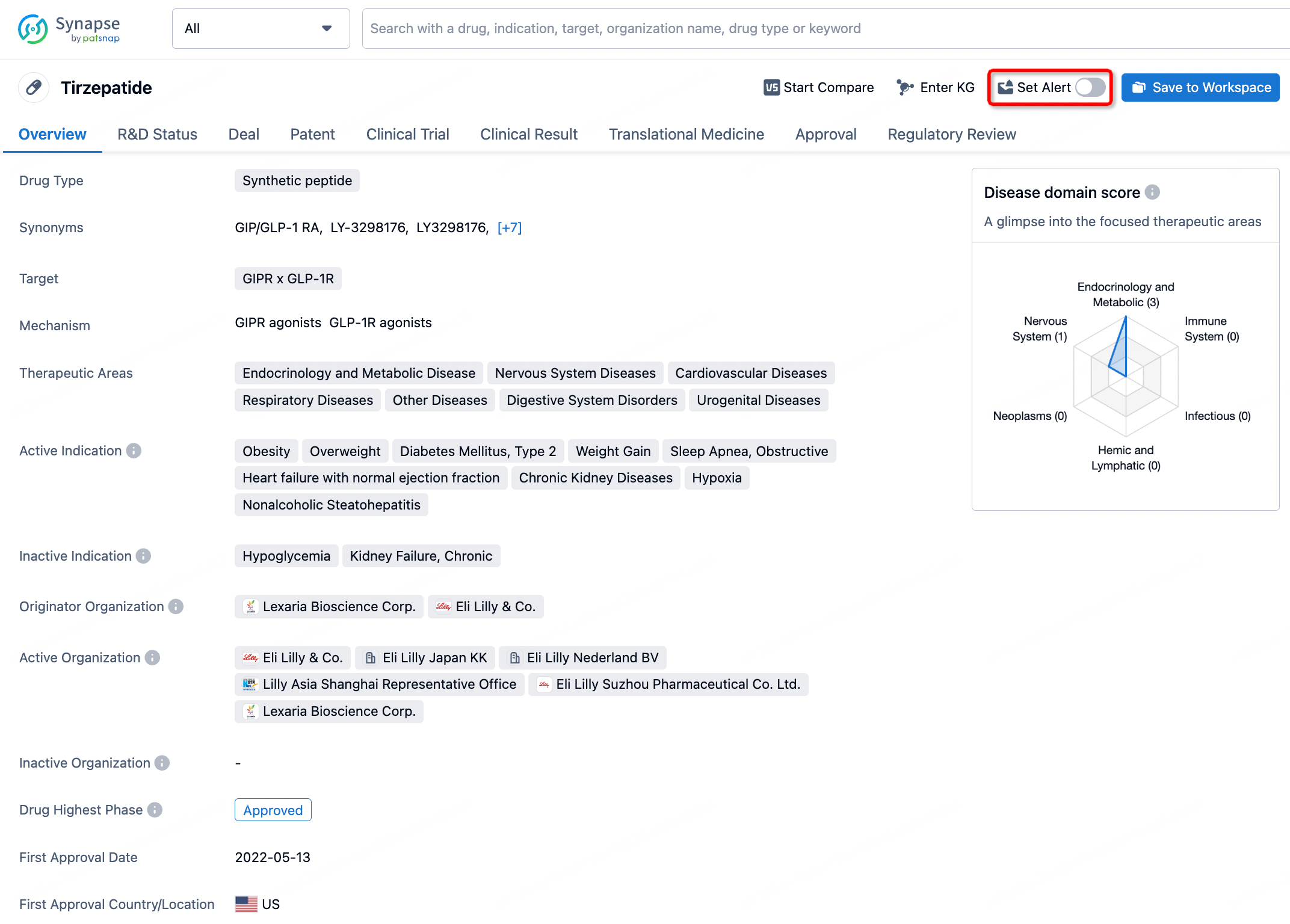
In the Synapse database, you can stay updated on the latest research and development advances of all drugs. This service is accessible anytime and anywhere, with updates available daily or weekly. Use the "Set Alert" function to stay informed. Click on the image below to embark on a brand new journey of drug discovery!


AI Agents Built for Biopharma Breakthroughs
Accelerate discovery. Empower decisions. Transform outcomes.
Get started for free today!
Accelerate Strategic R&D decision making with Synapse, PatSnap’s AI-powered Connected Innovation Intelligence Platform Built for Life Sciences Professionals.
Start your data trial now!
Synapse data is also accessible to external entities via APIs or data packages. Empower better decisions with the latest in pharmaceutical intelligence.