Request Demo
What is the mechanism of Levocarnitine Chloride?
18 July 2024
Levocarnitine, also known as L-carnitine, is a naturally occurring amino acid derivative that plays a crucial role in the metabolism of fats in the body. The chloride version, Levocarnitine Chloride, is often used in supplements and medical treatments. Understanding the mechanism of Levocarnitine Chloride involves delving into its role in cellular energy production and fat metabolism.
Levocarnitine is synthesized in the human body from the amino acids lysine and methionine, and it is primarily stored in skeletal muscles, heart, and brain. The primary function of Levocarnitine Chloride is to facilitate the transport of long-chain fatty acids into the mitochondria, the powerhouses of cells, where they are oxidized to produce energy.
The mechanism begins at the cellular level with the entry of fatty acids into the cell. These fatty acids need to be activated before they can be transported into the mitochondria. This activation process involves the conversion of fatty acids into acyl-CoA by the enzyme acyl-CoA synthetase. This conversion requires ATP, and the resultant molecule, acyl-CoA, is essential for the next step in the process.
Once the fatty acid is converted into acyl-CoA, it needs to be transported across the mitochondrial membrane. This is where Levocarnitine Chloride comes into play. Levocarnitine binds to the acyl group of acyl-CoA, forming acylcarnitine. This reaction is catalyzed by the enzyme carnitine palmitoyltransferase I (CPT I), situated on the outer mitochondrial membrane.
The acylcarnitine is then shuttled across the mitochondrial membrane by a translocase enzyme located in the inner mitochondrial membrane. Once inside the mitochondria, the acyl group is transferred back to CoA, reforming acyl-CoA. This transfer is facilitated by carnitine palmitoyltransferase II (CPT II), which is located on the inner mitochondrial membrane.
With the acyl-CoA now inside the mitochondria, it can undergo beta-oxidation, a series of reactions that break down the fatty acid chain into acetyl-CoA units. These acetyl-CoA units enter the citric acid cycle (Krebs cycle), leading to the production of ATP, which is the primary energy currency of the cell. During this process, electron carriers NADH and FADH2 are generated, which further contribute to ATP production through oxidative phosphorylation.
Levocarnitine Chloride not only assists in fatty acid transport but also helps in the removal of excess acyl groups from the mitochondria, preventing their accumulation, which can be toxic to cells. By facilitating the transport and subsequent oxidation of fatty acids, Levocarnitine Chloride plays a critical role in energy production, especially in tissues with high-energy demands such as the heart and skeletal muscles.
Moreover, Levocarnitine Chloride has been shown to have antioxidant properties, helping to reduce oxidative stress in cells. This is particularly important in conditions where oxidative stress is elevated, such as in certain metabolic disorders and during intense physical exercise.
In clinical settings, Levocarnitine Chloride is used to treat primary and secondary carnitine deficiencies. Primary deficiency is often due to genetic mutations affecting carnitine transport or biosynthesis, while secondary deficiency can result from metabolic disorders, certain medications, or inadequate dietary intake.
In conclusion, the mechanism of Levocarnitine Chloride involves its crucial role in the transport of long-chain fatty acids into the mitochondria for energy production. By facilitating this process, Levocarnitine Chloride ensures efficient metabolism of fats, helps maintain cellular energy balance, and protects cells from oxidative damage. This multifaceted mechanism underscores the vital importance of Levocarnitine in both health and disease management.
Levocarnitine is synthesized in the human body from the amino acids lysine and methionine, and it is primarily stored in skeletal muscles, heart, and brain. The primary function of Levocarnitine Chloride is to facilitate the transport of long-chain fatty acids into the mitochondria, the powerhouses of cells, where they are oxidized to produce energy.
The mechanism begins at the cellular level with the entry of fatty acids into the cell. These fatty acids need to be activated before they can be transported into the mitochondria. This activation process involves the conversion of fatty acids into acyl-CoA by the enzyme acyl-CoA synthetase. This conversion requires ATP, and the resultant molecule, acyl-CoA, is essential for the next step in the process.
Once the fatty acid is converted into acyl-CoA, it needs to be transported across the mitochondrial membrane. This is where Levocarnitine Chloride comes into play. Levocarnitine binds to the acyl group of acyl-CoA, forming acylcarnitine. This reaction is catalyzed by the enzyme carnitine palmitoyltransferase I (CPT I), situated on the outer mitochondrial membrane.
The acylcarnitine is then shuttled across the mitochondrial membrane by a translocase enzyme located in the inner mitochondrial membrane. Once inside the mitochondria, the acyl group is transferred back to CoA, reforming acyl-CoA. This transfer is facilitated by carnitine palmitoyltransferase II (CPT II), which is located on the inner mitochondrial membrane.
With the acyl-CoA now inside the mitochondria, it can undergo beta-oxidation, a series of reactions that break down the fatty acid chain into acetyl-CoA units. These acetyl-CoA units enter the citric acid cycle (Krebs cycle), leading to the production of ATP, which is the primary energy currency of the cell. During this process, electron carriers NADH and FADH2 are generated, which further contribute to ATP production through oxidative phosphorylation.
Levocarnitine Chloride not only assists in fatty acid transport but also helps in the removal of excess acyl groups from the mitochondria, preventing their accumulation, which can be toxic to cells. By facilitating the transport and subsequent oxidation of fatty acids, Levocarnitine Chloride plays a critical role in energy production, especially in tissues with high-energy demands such as the heart and skeletal muscles.
Moreover, Levocarnitine Chloride has been shown to have antioxidant properties, helping to reduce oxidative stress in cells. This is particularly important in conditions where oxidative stress is elevated, such as in certain metabolic disorders and during intense physical exercise.
In clinical settings, Levocarnitine Chloride is used to treat primary and secondary carnitine deficiencies. Primary deficiency is often due to genetic mutations affecting carnitine transport or biosynthesis, while secondary deficiency can result from metabolic disorders, certain medications, or inadequate dietary intake.
In conclusion, the mechanism of Levocarnitine Chloride involves its crucial role in the transport of long-chain fatty acids into the mitochondria for energy production. By facilitating this process, Levocarnitine Chloride ensures efficient metabolism of fats, helps maintain cellular energy balance, and protects cells from oxidative damage. This multifaceted mechanism underscores the vital importance of Levocarnitine in both health and disease management.
How to obtain the latest development progress of all drugs?
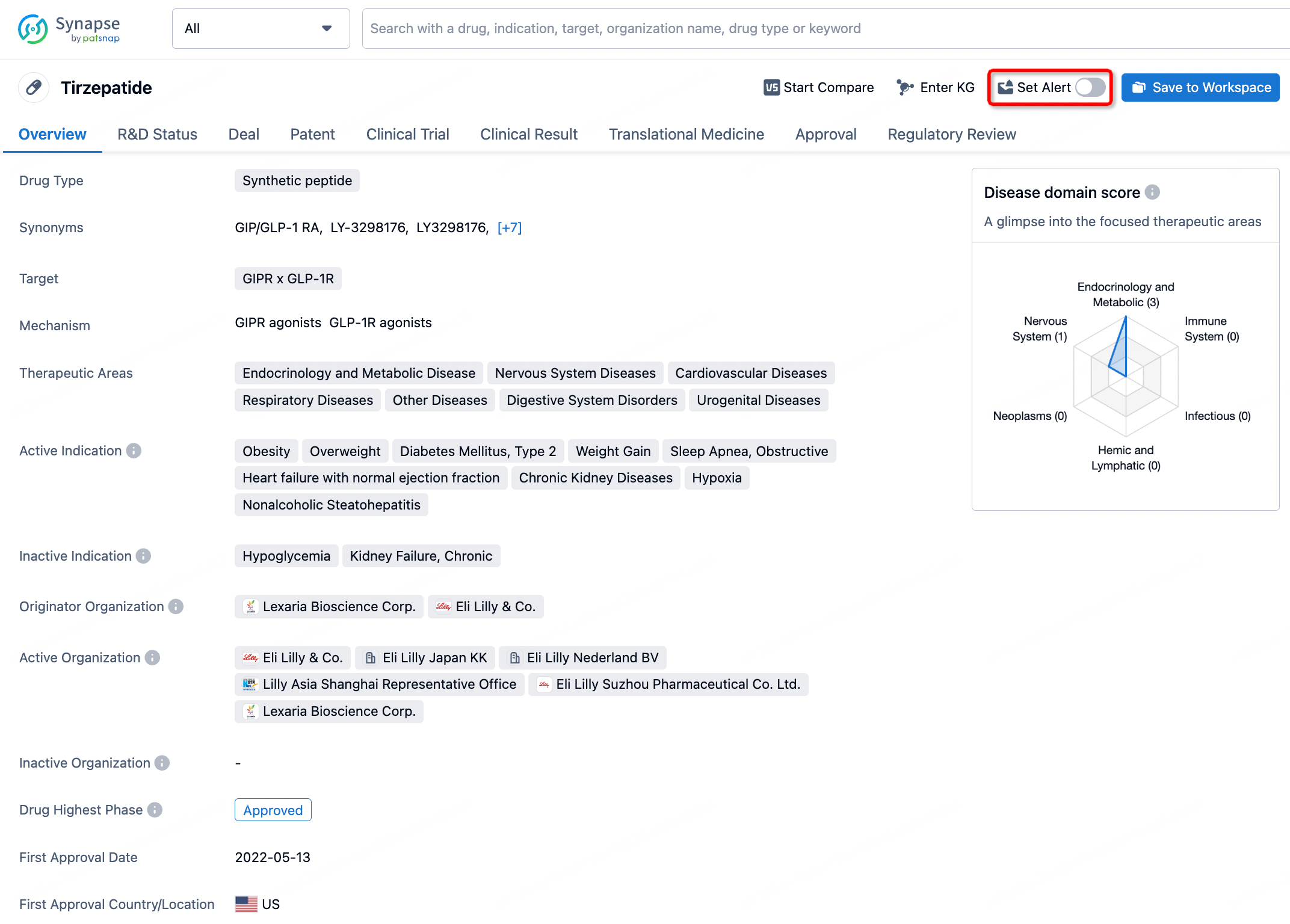
In the Synapse database, you can stay updated on the latest research and development advances of all drugs. This service is accessible anytime and anywhere, with updates available daily or weekly. Use the "Set Alert" function to stay informed. Click on the image below to embark on a brand new journey of drug discovery!


AI Agents Built for Biopharma Breakthroughs
Accelerate discovery. Empower decisions. Transform outcomes.
Get started for free today!
Accelerate Strategic R&D decision making with Synapse, PatSnap’s AI-powered Connected Innovation Intelligence Platform Built for Life Sciences Professionals.
Start your data trial now!
Synapse data is also accessible to external entities via APIs or data packages. Empower better decisions with the latest in pharmaceutical intelligence.