Request Demo
What is the mechanism of Nemonoxacin Malate?
17 July 2024
Nemonoxacin Malate is an advanced non-fluorinated quinolone antibacterial agent that has garnered attention for its potent activity against a broad spectrum of bacterial pathogens, including those resistant to other quinolone antibiotics. Understanding its mechanism of action is crucial for appreciating its clinical efficacy and potential role in antimicrobial therapy.
The mechanism of action of Nemonoxacin Malate is primarily centered around its ability to inhibit bacterial DNA replication, transcription, repair, and recombination. This is achieved through its interaction with bacterial enzymes DNA gyrase and topoisomerase IV, which are essential for bacterial DNA processes.
DNA gyrase is a type II topoisomerase that introduces negative supercoils into DNA, which is necessary for the condensation of the bacterial chromosome and the initiation of DNA replication. Nemonoxacin Malate binds to the DNA-DNA gyrase complex, stabilizing it in such a way that it prevents the relegation of the cleaved DNA strands. This stabilization leads to the accumulation of DNA breaks, which is lethal to the bacterial cell.
Similarly, topoisomerase IV is involved in the separation of interlinked daughter chromosomes during bacterial cell division. By inhibiting topoisomerase IV, Nemonoxacin Malate prevents the proper segregation of replicated DNA, thereby inhibiting bacterial cell division and propagation.
One of the notable aspects of Nemonoxacin Malate is its enhanced binding affinity for these target enzymes compared to older quinolones. This increased affinity is largely due to structural modifications in Nemonoxacin Malate that enable it to form more stable complexes with DNA gyrase and topoisomerase IV, even in bacteria that have developed resistance to other quinolones through mutations in the quinolone-resistance determining regions (QRDR) of these enzymes.
Moreover, Nemonoxacin Malate exhibits additional advantages such as minimal phototoxicity and lower potential for resistance development, attributed to its non-fluorinated structure. These properties make it a promising candidate for treating infections caused by multidrug-resistant bacteria, including methicillin-resistant Staphylococcus aureus (MRSA) and penicillin-resistant Streptococcus pneumoniae.
In summary, Nemonoxacin Malate exerts its antibacterial effects by targeting and inhibiting bacterial DNA gyrase and topoisomerase IV, leading to the disruption of critical DNA processes and bacterial cell death. Its structural attributes confer a higher binding affinity and a broader spectrum of activity, positioning it as a potent agent in the fight against resistant bacterial infections.
The mechanism of action of Nemonoxacin Malate is primarily centered around its ability to inhibit bacterial DNA replication, transcription, repair, and recombination. This is achieved through its interaction with bacterial enzymes DNA gyrase and topoisomerase IV, which are essential for bacterial DNA processes.
DNA gyrase is a type II topoisomerase that introduces negative supercoils into DNA, which is necessary for the condensation of the bacterial chromosome and the initiation of DNA replication. Nemonoxacin Malate binds to the DNA-DNA gyrase complex, stabilizing it in such a way that it prevents the relegation of the cleaved DNA strands. This stabilization leads to the accumulation of DNA breaks, which is lethal to the bacterial cell.
Similarly, topoisomerase IV is involved in the separation of interlinked daughter chromosomes during bacterial cell division. By inhibiting topoisomerase IV, Nemonoxacin Malate prevents the proper segregation of replicated DNA, thereby inhibiting bacterial cell division and propagation.
One of the notable aspects of Nemonoxacin Malate is its enhanced binding affinity for these target enzymes compared to older quinolones. This increased affinity is largely due to structural modifications in Nemonoxacin Malate that enable it to form more stable complexes with DNA gyrase and topoisomerase IV, even in bacteria that have developed resistance to other quinolones through mutations in the quinolone-resistance determining regions (QRDR) of these enzymes.
Moreover, Nemonoxacin Malate exhibits additional advantages such as minimal phototoxicity and lower potential for resistance development, attributed to its non-fluorinated structure. These properties make it a promising candidate for treating infections caused by multidrug-resistant bacteria, including methicillin-resistant Staphylococcus aureus (MRSA) and penicillin-resistant Streptococcus pneumoniae.
In summary, Nemonoxacin Malate exerts its antibacterial effects by targeting and inhibiting bacterial DNA gyrase and topoisomerase IV, leading to the disruption of critical DNA processes and bacterial cell death. Its structural attributes confer a higher binding affinity and a broader spectrum of activity, positioning it as a potent agent in the fight against resistant bacterial infections.
How to obtain the latest development progress of all drugs?
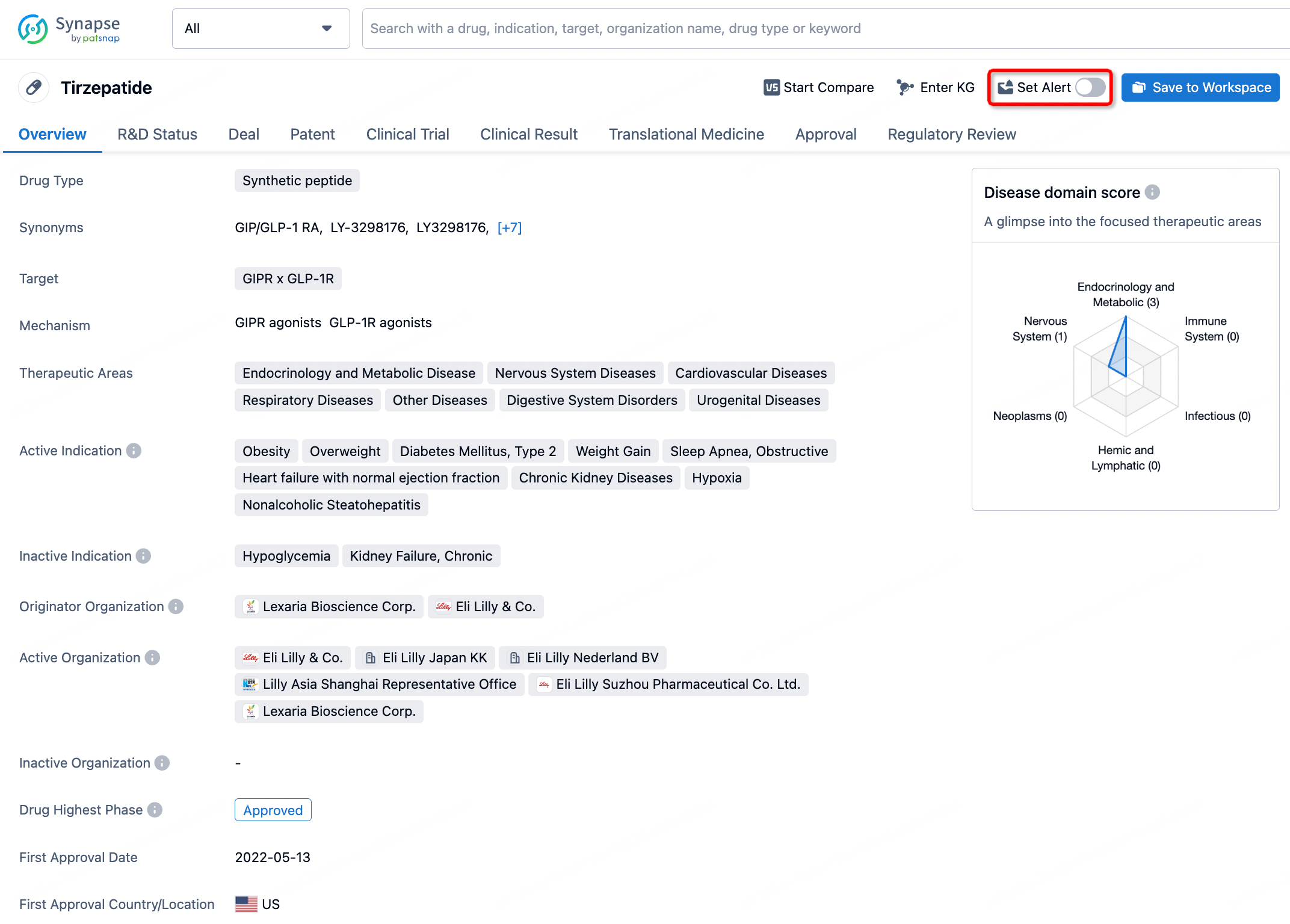
In the Synapse database, you can stay updated on the latest research and development advances of all drugs. This service is accessible anytime and anywhere, with updates available daily or weekly. Use the "Set Alert" function to stay informed. Click on the image below to embark on a brand new journey of drug discovery!


AI Agents Built for Biopharma Breakthroughs
Accelerate discovery. Empower decisions. Transform outcomes.
Get started for free today!
Accelerate Strategic R&D decision making with Synapse, PatSnap’s AI-powered Connected Innovation Intelligence Platform Built for Life Sciences Professionals.
Start your data trial now!
Synapse data is also accessible to external entities via APIs or data packages. Empower better decisions with the latest in pharmaceutical intelligence.