Request Demo
What is the mechanism of Nicomorphine Hydrochloride?
18 July 2024
Nicomorphine hydrochloride is an opioid analgesic that shares many pharmacological properties with other opioid drugs such as morphine and heroin. It is often used for the management of severe pain, including that associated with cancer and other chronic conditions. Understanding the mechanism of action of nicomorphine hydrochloride involves exploring how it interacts with the central nervous system, particularly the opioid receptors, as well as its pharmacokinetics and metabolism.
Nicomorphine hydrochloride exerts its analgesic effects primarily by binding to and activating the mu-opioid receptors (MORs) in the brain and spinal cord. The mu-opioid receptors are part of the endogenous opioid system, which naturally modulates pain and reward pathways. When nicomorphine hydrochloride binds to these receptors, it mimics the action of endogenous opioid peptides such as endorphins and enkephalins. This binding induces a conformational change in the receptor, activating intracellular signaling pathways that lead to analgesia.
Upon binding to the mu-opioid receptors, nicomorphine hydrochloride inhibits the release of neurotransmitters such as substance P and glutamate in the dorsal horn of the spinal cord. This inhibition decreases the transmission of pain signals from the periphery to the brain. Additionally, activation of mu-opioid receptors in the brainstem modulates the descending inhibitory pathways, further reducing the perception of pain.
Nicomorphine hydrochloride also has effects on the mesolimbic reward pathway. By acting on the ventral tegmental area (VTA) and the nucleus accumbens, it increases the release of dopamine, which can contribute to its euphoric and potentially addictive properties. This mechanism is similar to that of other opioids, which is why caution is necessary when prescribing and using nicomorphine hydrochloride.
Pharmacokinetics play a crucial role in the onset, duration, and intensity of the effects of nicomorphine hydrochloride. After administration, the drug is rapidly absorbed and distributed throughout the body, crossing the blood-brain barrier to reach the central nervous system. Nicomorphine hydrochloride is metabolized primarily in the liver by enzymes such as cytochrome P450. It undergoes deacetylation to form morphine and other metabolites, which are then excreted via the kidneys.
The metabolism of nicomorphine hydrochloride involves the formation of active and inactive metabolites. The active metabolites, including morphine, contribute to its analgesic effects. However, the presence of these metabolites also means that the pharmacological profile of nicomorphine hydrochloride can be influenced by individual variations in metabolic enzyme activity, genetic factors, and potential interactions with other drugs.
In summary, the mechanism of nicomorphine hydrochloride involves binding to mu-opioid receptors in the central nervous system, inhibiting pain signal transmission, and modulating reward pathways. Its pharmacokinetics, including rapid absorption, metabolism to active metabolites, and excretion, play a significant role in determining its efficacy and potential for abuse. Understanding these mechanisms is essential for optimizing its clinical use while minimizing the risks associated with opioid therapy.
Nicomorphine hydrochloride exerts its analgesic effects primarily by binding to and activating the mu-opioid receptors (MORs) in the brain and spinal cord. The mu-opioid receptors are part of the endogenous opioid system, which naturally modulates pain and reward pathways. When nicomorphine hydrochloride binds to these receptors, it mimics the action of endogenous opioid peptides such as endorphins and enkephalins. This binding induces a conformational change in the receptor, activating intracellular signaling pathways that lead to analgesia.
Upon binding to the mu-opioid receptors, nicomorphine hydrochloride inhibits the release of neurotransmitters such as substance P and glutamate in the dorsal horn of the spinal cord. This inhibition decreases the transmission of pain signals from the periphery to the brain. Additionally, activation of mu-opioid receptors in the brainstem modulates the descending inhibitory pathways, further reducing the perception of pain.
Nicomorphine hydrochloride also has effects on the mesolimbic reward pathway. By acting on the ventral tegmental area (VTA) and the nucleus accumbens, it increases the release of dopamine, which can contribute to its euphoric and potentially addictive properties. This mechanism is similar to that of other opioids, which is why caution is necessary when prescribing and using nicomorphine hydrochloride.
Pharmacokinetics play a crucial role in the onset, duration, and intensity of the effects of nicomorphine hydrochloride. After administration, the drug is rapidly absorbed and distributed throughout the body, crossing the blood-brain barrier to reach the central nervous system. Nicomorphine hydrochloride is metabolized primarily in the liver by enzymes such as cytochrome P450. It undergoes deacetylation to form morphine and other metabolites, which are then excreted via the kidneys.
The metabolism of nicomorphine hydrochloride involves the formation of active and inactive metabolites. The active metabolites, including morphine, contribute to its analgesic effects. However, the presence of these metabolites also means that the pharmacological profile of nicomorphine hydrochloride can be influenced by individual variations in metabolic enzyme activity, genetic factors, and potential interactions with other drugs.
In summary, the mechanism of nicomorphine hydrochloride involves binding to mu-opioid receptors in the central nervous system, inhibiting pain signal transmission, and modulating reward pathways. Its pharmacokinetics, including rapid absorption, metabolism to active metabolites, and excretion, play a significant role in determining its efficacy and potential for abuse. Understanding these mechanisms is essential for optimizing its clinical use while minimizing the risks associated with opioid therapy.
How to obtain the latest development progress of all drugs?
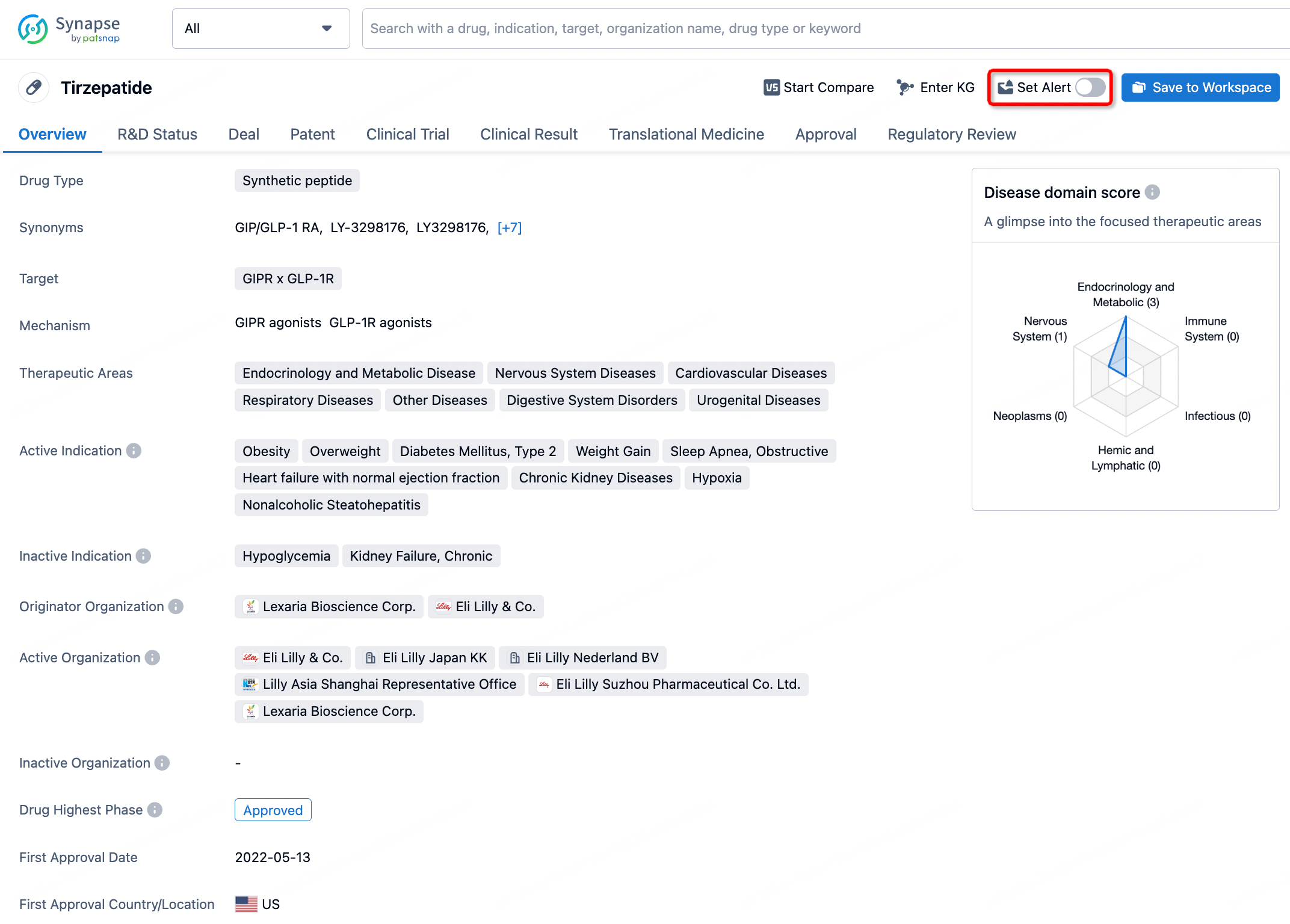
In the Synapse database, you can stay updated on the latest research and development advances of all drugs. This service is accessible anytime and anywhere, with updates available daily or weekly. Use the "Set Alert" function to stay informed. Click on the image below to embark on a brand new journey of drug discovery!


AI Agents Built for Biopharma Breakthroughs
Accelerate discovery. Empower decisions. Transform outcomes.
Get started for free today!
Accelerate Strategic R&D decision making with Synapse, PatSnap’s AI-powered Connected Innovation Intelligence Platform Built for Life Sciences Professionals.
Start your data trial now!
Synapse data is also accessible to external entities via APIs or data packages. Empower better decisions with the latest in pharmaceutical intelligence.