Request Demo
What is the mechanism of Olutasidenib?
17 July 2024
Olutasidenib is a novel therapeutic agent that has garnered significant interest in the field of oncology, particularly for its potential role in treating acute myeloid leukemia (AML). The mechanism of action of Olutasidenib is centered around its targeted inhibition of mutant isocitrate dehydrogenase 1 (IDH1) enzymes, which are frequently implicated in a variety of cancers, including AML.
Mutations in the IDH1 enzyme play a crucial role in cancer pathogenesis by altering cellular metabolism. Normally, IDH1 is responsible for the conversion of isocitrate to alpha-ketoglutarate (α-KG) in the cytoplasm. However, when mutated, IDH1 gains a neomorphic function, leading to the production of an oncometabolite called 2-hydroxyglutarate (2-HG) instead of α-KG. Elevated levels of 2-HG have been shown to interfere with various cellular processes, including histone and DNA demethylation, which in turn disrupts normal cellular differentiation and promotes oncogenic transformation.
Olutasidenib specifically targets and inhibits the mutant forms of the IDH1 enzyme, thereby reducing the production of 2-HG. By lowering 2-HG levels, Olutasidenib helps to restore normal cellular differentiation processes that are disrupted by the presence of the oncometabolite. This restoration of differentiation is particularly significant in AML, where the differentiation blockade is a hallmark of the disease.
The inhibition of mutant IDH1 by Olutasidenib leads to several downstream effects that contribute to its therapeutic efficacy. Firstly, the reduction in 2-HG levels alleviates the suppression of TET2, an enzyme involved in DNA demethylation. Reactivation of TET2 helps in the re-establishment of normal DNA methylation patterns, which is crucial for the differentiation and function of hematopoietic cells. Secondly, the normalization of histone demethylation processes helps to restore proper gene expression profiles, further supporting the re-differentiation of leukemic cells into mature blood cells.
Preclinical studies and clinical trials have demonstrated the efficacy of Olutasidenib in reducing leukemic cell burden and promoting disease remission in patients with IDH1-mutant AML. The drug has shown a favorable safety profile and has been well-tolerated in patients, making it a promising option for targeted therapy in this subset of AML patients.
In summary, Olutasidenib exerts its therapeutic effects by specifically inhibiting mutant IDH1 enzymes, thereby reducing the production of the oncometabolite 2-HG. This inhibition restores normal cellular differentiation processes by reactivating key epigenetic regulators and normalizing gene expression patterns. The targeted approach of Olutasidenib holds significant promise for improving outcomes in patients with IDH1-mutant acute myeloid leukemia.
Mutations in the IDH1 enzyme play a crucial role in cancer pathogenesis by altering cellular metabolism. Normally, IDH1 is responsible for the conversion of isocitrate to alpha-ketoglutarate (α-KG) in the cytoplasm. However, when mutated, IDH1 gains a neomorphic function, leading to the production of an oncometabolite called 2-hydroxyglutarate (2-HG) instead of α-KG. Elevated levels of 2-HG have been shown to interfere with various cellular processes, including histone and DNA demethylation, which in turn disrupts normal cellular differentiation and promotes oncogenic transformation.
Olutasidenib specifically targets and inhibits the mutant forms of the IDH1 enzyme, thereby reducing the production of 2-HG. By lowering 2-HG levels, Olutasidenib helps to restore normal cellular differentiation processes that are disrupted by the presence of the oncometabolite. This restoration of differentiation is particularly significant in AML, where the differentiation blockade is a hallmark of the disease.
The inhibition of mutant IDH1 by Olutasidenib leads to several downstream effects that contribute to its therapeutic efficacy. Firstly, the reduction in 2-HG levels alleviates the suppression of TET2, an enzyme involved in DNA demethylation. Reactivation of TET2 helps in the re-establishment of normal DNA methylation patterns, which is crucial for the differentiation and function of hematopoietic cells. Secondly, the normalization of histone demethylation processes helps to restore proper gene expression profiles, further supporting the re-differentiation of leukemic cells into mature blood cells.
Preclinical studies and clinical trials have demonstrated the efficacy of Olutasidenib in reducing leukemic cell burden and promoting disease remission in patients with IDH1-mutant AML. The drug has shown a favorable safety profile and has been well-tolerated in patients, making it a promising option for targeted therapy in this subset of AML patients.
In summary, Olutasidenib exerts its therapeutic effects by specifically inhibiting mutant IDH1 enzymes, thereby reducing the production of the oncometabolite 2-HG. This inhibition restores normal cellular differentiation processes by reactivating key epigenetic regulators and normalizing gene expression patterns. The targeted approach of Olutasidenib holds significant promise for improving outcomes in patients with IDH1-mutant acute myeloid leukemia.
How to obtain the latest development progress of all drugs?
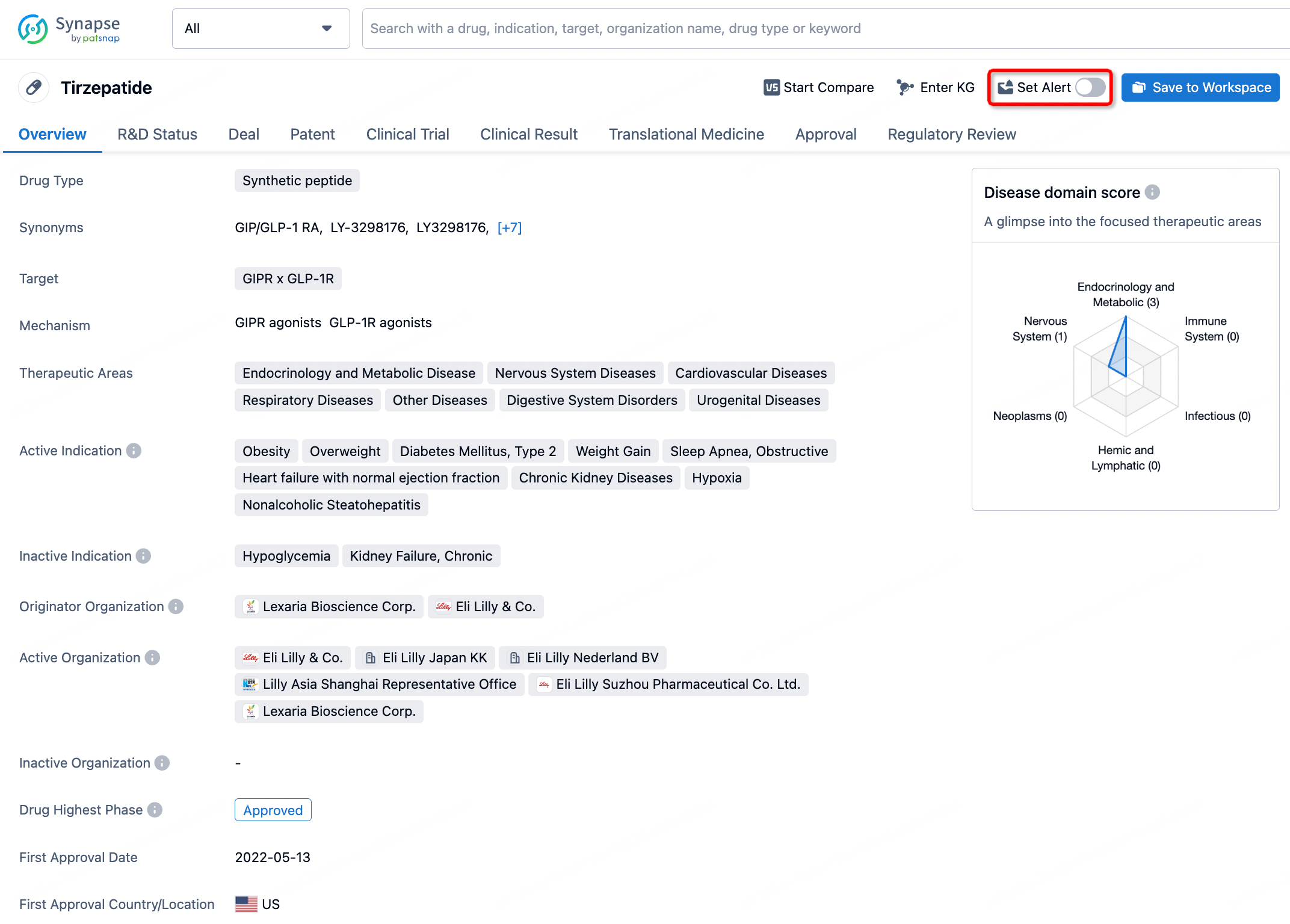
In the Synapse database, you can stay updated on the latest research and development advances of all drugs. This service is accessible anytime and anywhere, with updates available daily or weekly. Use the "Set Alert" function to stay informed. Click on the image below to embark on a brand new journey of drug discovery!


AI Agents Built for Biopharma Breakthroughs
Accelerate discovery. Empower decisions. Transform outcomes.
Get started for free today!
Accelerate Strategic R&D decision making with Synapse, PatSnap’s AI-powered Connected Innovation Intelligence Platform Built for Life Sciences Professionals.
Start your data trial now!
Synapse data is also accessible to external entities via APIs or data packages. Empower better decisions with the latest in pharmaceutical intelligence.