Request Demo
What is the mechanism of Paliperidone?
17 July 2024
Paliperidone, known chemically as 9-hydroxyrisperidone, is an atypical antipsychotic medication primarily used to manage schizophrenia and schizoaffective disorders. Understanding its mechanism of action helps in comprehending how it exerts its therapeutic effects and why it is effective in treating these mental health conditions.
Paliperidone primarily acts by modulating the activity of neurotransmitters in the brain, especially dopamine and serotonin. These neurotransmitters play critical roles in regulating mood, perception, and cognition, and their imbalance is frequently implicated in psychiatric disorders.
The primary mechanism of paliperidone is its antagonistic effect on dopamine D2 receptors. Dopamine is a neurotransmitter associated with pleasure, reward, and motor function, but excessive dopamine activity, particularly in the mesolimbic pathway, is thought to contribute to the positive symptoms of schizophrenia such as delusions and hallucinations. By blocking D2 receptors, paliperidone reduces the hyperactivity of dopamine, thereby alleviating these symptoms.
Additionally, paliperidone exhibits a strong antagonistic action on serotonin 5-HT2A receptors. Serotonin is another key neurotransmitter involved in mood regulation, and its dysregulation can contribute to both positive and negative symptoms of schizophrenia. The blockade of 5-HT2A receptors by paliperidone is believed to help improve mood and reduce negative symptoms like social withdrawal and apathy.
Paliperidone also has a moderate affinity for other neurotransmitter receptors, including alpha-1 and alpha-2 adrenergic receptors, as well as histamine H1 receptors. The blockade of alpha-1 adrenergic receptors can lead to orthostatic hypotension, a common side effect of the drug, while the inhibition of histamine H1 receptors can contribute to sedation and weight gain. However, these ancillary effects on additional receptors can also aid in reducing anxiety and agitation, enhancing the overall therapeutic profile of paliperidone.
An important aspect of paliperidone’s pharmacokinetics is its extended-release formulation, which allows for once-daily dosing. This formulation ensures a steady release of the drug into the bloodstream, maintaining consistent therapeutic levels and improving patient adherence to the medication regimen.
Paliperidone is metabolized primarily by renal excretion, which differentiates it from many other antipsychotics that are extensively metabolized by the liver. This characteristic is particularly beneficial for patients with hepatic impairment, as it reduces the risk of hepatotoxicity and drug interactions.
Moreover, paliperidone's pharmacodynamics are relatively stable across various populations, although dose adjustments may be necessary for individuals with significant renal impairment. The drug's efficacy and safety profile have been well-documented in clinical studies, demonstrating significant improvements in both positive and negative symptoms of schizophrenia.
In conclusion, the mechanism of paliperidone involves the antagonism of dopamine D2 and serotonin 5-HT2A receptors, with additional effects on adrenergic and histaminergic receptors. Its pharmacokinetic properties, particularly its extended-release formulation and renal excretion, contribute to its effectiveness and tolerability in treating schizophrenia and schizoaffective disorders. Understanding these mechanisms provides insight into how paliperidone helps manage complex psychiatric symptoms and improves the quality of life for individuals with these mental health conditions.
Paliperidone primarily acts by modulating the activity of neurotransmitters in the brain, especially dopamine and serotonin. These neurotransmitters play critical roles in regulating mood, perception, and cognition, and their imbalance is frequently implicated in psychiatric disorders.
The primary mechanism of paliperidone is its antagonistic effect on dopamine D2 receptors. Dopamine is a neurotransmitter associated with pleasure, reward, and motor function, but excessive dopamine activity, particularly in the mesolimbic pathway, is thought to contribute to the positive symptoms of schizophrenia such as delusions and hallucinations. By blocking D2 receptors, paliperidone reduces the hyperactivity of dopamine, thereby alleviating these symptoms.
Additionally, paliperidone exhibits a strong antagonistic action on serotonin 5-HT2A receptors. Serotonin is another key neurotransmitter involved in mood regulation, and its dysregulation can contribute to both positive and negative symptoms of schizophrenia. The blockade of 5-HT2A receptors by paliperidone is believed to help improve mood and reduce negative symptoms like social withdrawal and apathy.
Paliperidone also has a moderate affinity for other neurotransmitter receptors, including alpha-1 and alpha-2 adrenergic receptors, as well as histamine H1 receptors. The blockade of alpha-1 adrenergic receptors can lead to orthostatic hypotension, a common side effect of the drug, while the inhibition of histamine H1 receptors can contribute to sedation and weight gain. However, these ancillary effects on additional receptors can also aid in reducing anxiety and agitation, enhancing the overall therapeutic profile of paliperidone.
An important aspect of paliperidone’s pharmacokinetics is its extended-release formulation, which allows for once-daily dosing. This formulation ensures a steady release of the drug into the bloodstream, maintaining consistent therapeutic levels and improving patient adherence to the medication regimen.
Paliperidone is metabolized primarily by renal excretion, which differentiates it from many other antipsychotics that are extensively metabolized by the liver. This characteristic is particularly beneficial for patients with hepatic impairment, as it reduces the risk of hepatotoxicity and drug interactions.
Moreover, paliperidone's pharmacodynamics are relatively stable across various populations, although dose adjustments may be necessary for individuals with significant renal impairment. The drug's efficacy and safety profile have been well-documented in clinical studies, demonstrating significant improvements in both positive and negative symptoms of schizophrenia.
In conclusion, the mechanism of paliperidone involves the antagonism of dopamine D2 and serotonin 5-HT2A receptors, with additional effects on adrenergic and histaminergic receptors. Its pharmacokinetic properties, particularly its extended-release formulation and renal excretion, contribute to its effectiveness and tolerability in treating schizophrenia and schizoaffective disorders. Understanding these mechanisms provides insight into how paliperidone helps manage complex psychiatric symptoms and improves the quality of life for individuals with these mental health conditions.
How to obtain the latest development progress of all drugs?
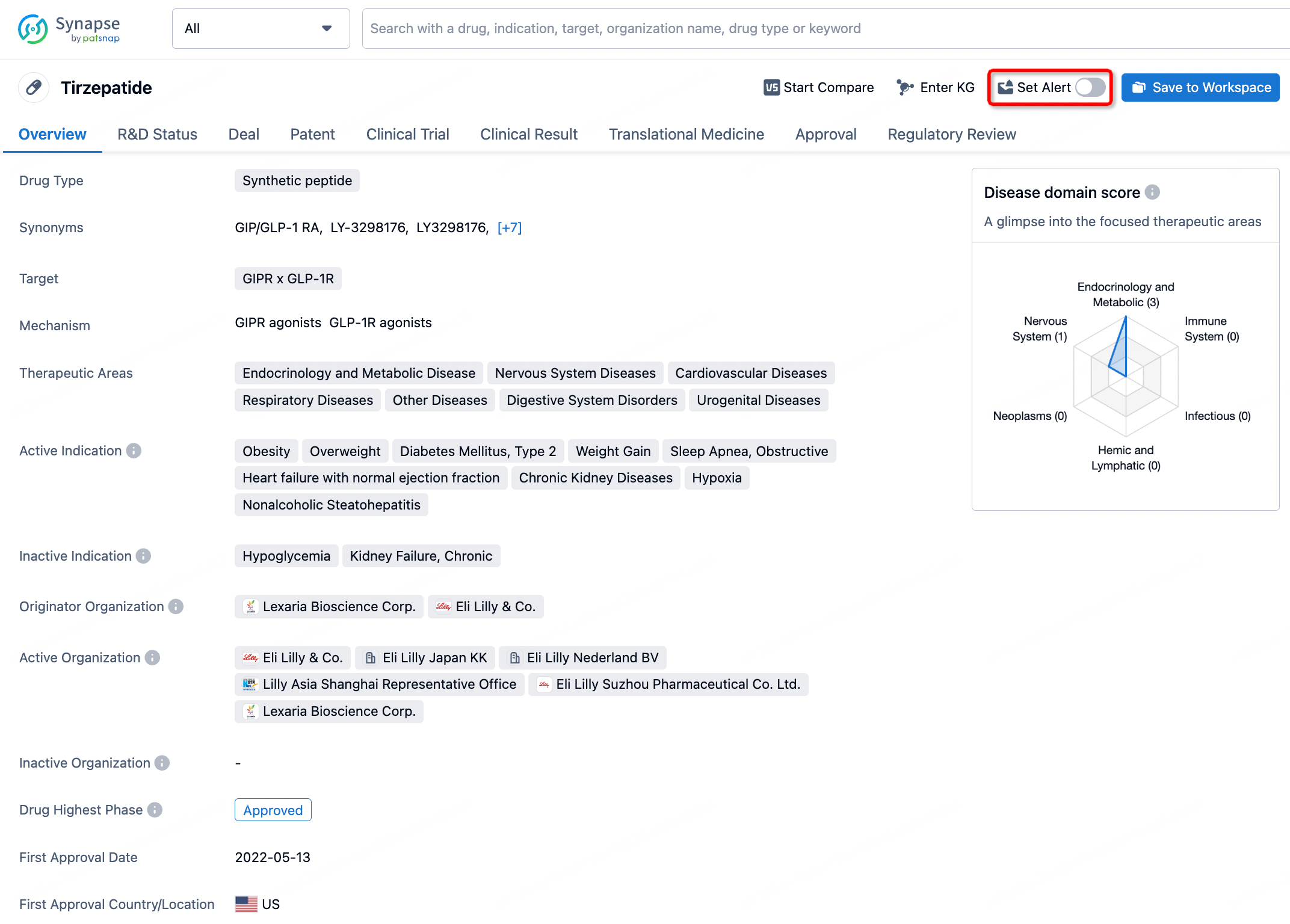
In the Synapse database, you can stay updated on the latest research and development advances of all drugs. This service is accessible anytime and anywhere, with updates available daily or weekly. Use the "Set Alert" function to stay informed. Click on the image below to embark on a brand new journey of drug discovery!


AI Agents Built for Biopharma Breakthroughs
Accelerate discovery. Empower decisions. Transform outcomes.
Get started for free today!
Accelerate Strategic R&D decision making with Synapse, PatSnap’s AI-powered Connected Innovation Intelligence Platform Built for Life Sciences Professionals.
Start your data trial now!
Synapse data is also accessible to external entities via APIs or data packages. Empower better decisions with the latest in pharmaceutical intelligence.