Request Demo
What is the mechanism of PEG-Loxenatide?
17 July 2024
PEG-Loxenatide, also known as PEGylated Loxenatide, is a long-acting glucagon-like peptide-1 (GLP-1) receptor agonist used for managing blood glucose levels in individuals with type 2 diabetes. To understand the mechanism of PEG-Loxenatide, it is essential to delve into both its pharmacological effects and its biochemical properties.
At its core, PEG-Loxenatide is a modified version of exendin-4, a naturally occurring peptide that acts as a GLP-1 receptor agonist. GLP-1 is an incretin hormone that plays a crucial role in glucose homeostasis. When blood glucose levels rise after a meal, GLP-1 is secreted from the L-cells in the intestines. It then binds to GLP-1 receptors on pancreatic beta cells, stimulating insulin secretion. This insulin release helps lower blood glucose levels.
One of the primary mechanisms of PEG-Loxenatide involves its ability to mimic the action of natural GLP-1. By binding to the GLP-1 receptors on pancreatic beta cells, PEG-Loxenatide stimulates the release of insulin in a glucose-dependent manner. This means that insulin secretion is promoted only when blood glucose levels are elevated, thereby reducing the risk of hypoglycemia.
PEG-Loxenatide also exerts several other effects that contribute to its glucose-lowering capabilities. It slows gastric emptying, which delays the absorption of glucose from the intestine into the bloodstream. This results in a slower and more gradual increase in blood glucose levels after meals. Furthermore, PEG-Loxenatide suppresses the inappropriate release of glucagon from pancreatic alpha cells. Glucagon is a hormone that typically raises blood glucose levels by promoting glucose production in the liver. By inhibiting glucagon secretion, PEG-Loxenatide helps to further stabilize blood glucose levels.
Another important aspect of PEG-Loxenatide is its PEGylation. PEGylation is the process of attaching polyethylene glycol (PEG) chains to a molecule. In the case of PEG-Loxenatide, PEGylation serves several purposes. It enhances the molecule's stability and solubility, increases its half-life, and reduces its immunogenicity. The extended half-life allows PEG-Loxenatide to be administered less frequently compared to non-PEGylated GLP-1 receptor agonists. This translates to better patient compliance and convenience.
In addition to its direct effects on insulin and glucagon secretion, PEG-Loxenatide has been shown to have beneficial effects on body weight and cardiovascular health. It promotes satiety and reduces appetite, which can lead to weight loss in individuals with type 2 diabetes. Weight loss is particularly important for managing type 2 diabetes as it can improve insulin sensitivity and glycemic control. Moreover, clinical studies have indicated that GLP-1 receptor agonists, including PEG-Loxenatide, may offer cardiovascular benefits by improving lipid profiles and reducing blood pressure.
In summary, the mechanism of PEG-Loxenatide revolves around its action as a GLP-1 receptor agonist. By mimicking the natural incretin hormone GLP-1, PEG-Loxenatide promotes insulin secretion in a glucose-dependent manner, slows gastric emptying, and suppresses glucagon release. The PEGylation of Loxenatide enhances its pharmacokinetic properties, allowing for less frequent dosing and better patient compliance. Additionally, its effects on weight loss and cardiovascular health make it a comprehensive treatment option for individuals with type 2 diabetes.
At its core, PEG-Loxenatide is a modified version of exendin-4, a naturally occurring peptide that acts as a GLP-1 receptor agonist. GLP-1 is an incretin hormone that plays a crucial role in glucose homeostasis. When blood glucose levels rise after a meal, GLP-1 is secreted from the L-cells in the intestines. It then binds to GLP-1 receptors on pancreatic beta cells, stimulating insulin secretion. This insulin release helps lower blood glucose levels.
One of the primary mechanisms of PEG-Loxenatide involves its ability to mimic the action of natural GLP-1. By binding to the GLP-1 receptors on pancreatic beta cells, PEG-Loxenatide stimulates the release of insulin in a glucose-dependent manner. This means that insulin secretion is promoted only when blood glucose levels are elevated, thereby reducing the risk of hypoglycemia.
PEG-Loxenatide also exerts several other effects that contribute to its glucose-lowering capabilities. It slows gastric emptying, which delays the absorption of glucose from the intestine into the bloodstream. This results in a slower and more gradual increase in blood glucose levels after meals. Furthermore, PEG-Loxenatide suppresses the inappropriate release of glucagon from pancreatic alpha cells. Glucagon is a hormone that typically raises blood glucose levels by promoting glucose production in the liver. By inhibiting glucagon secretion, PEG-Loxenatide helps to further stabilize blood glucose levels.
Another important aspect of PEG-Loxenatide is its PEGylation. PEGylation is the process of attaching polyethylene glycol (PEG) chains to a molecule. In the case of PEG-Loxenatide, PEGylation serves several purposes. It enhances the molecule's stability and solubility, increases its half-life, and reduces its immunogenicity. The extended half-life allows PEG-Loxenatide to be administered less frequently compared to non-PEGylated GLP-1 receptor agonists. This translates to better patient compliance and convenience.
In addition to its direct effects on insulin and glucagon secretion, PEG-Loxenatide has been shown to have beneficial effects on body weight and cardiovascular health. It promotes satiety and reduces appetite, which can lead to weight loss in individuals with type 2 diabetes. Weight loss is particularly important for managing type 2 diabetes as it can improve insulin sensitivity and glycemic control. Moreover, clinical studies have indicated that GLP-1 receptor agonists, including PEG-Loxenatide, may offer cardiovascular benefits by improving lipid profiles and reducing blood pressure.
In summary, the mechanism of PEG-Loxenatide revolves around its action as a GLP-1 receptor agonist. By mimicking the natural incretin hormone GLP-1, PEG-Loxenatide promotes insulin secretion in a glucose-dependent manner, slows gastric emptying, and suppresses glucagon release. The PEGylation of Loxenatide enhances its pharmacokinetic properties, allowing for less frequent dosing and better patient compliance. Additionally, its effects on weight loss and cardiovascular health make it a comprehensive treatment option for individuals with type 2 diabetes.
How to obtain the latest development progress of all drugs?
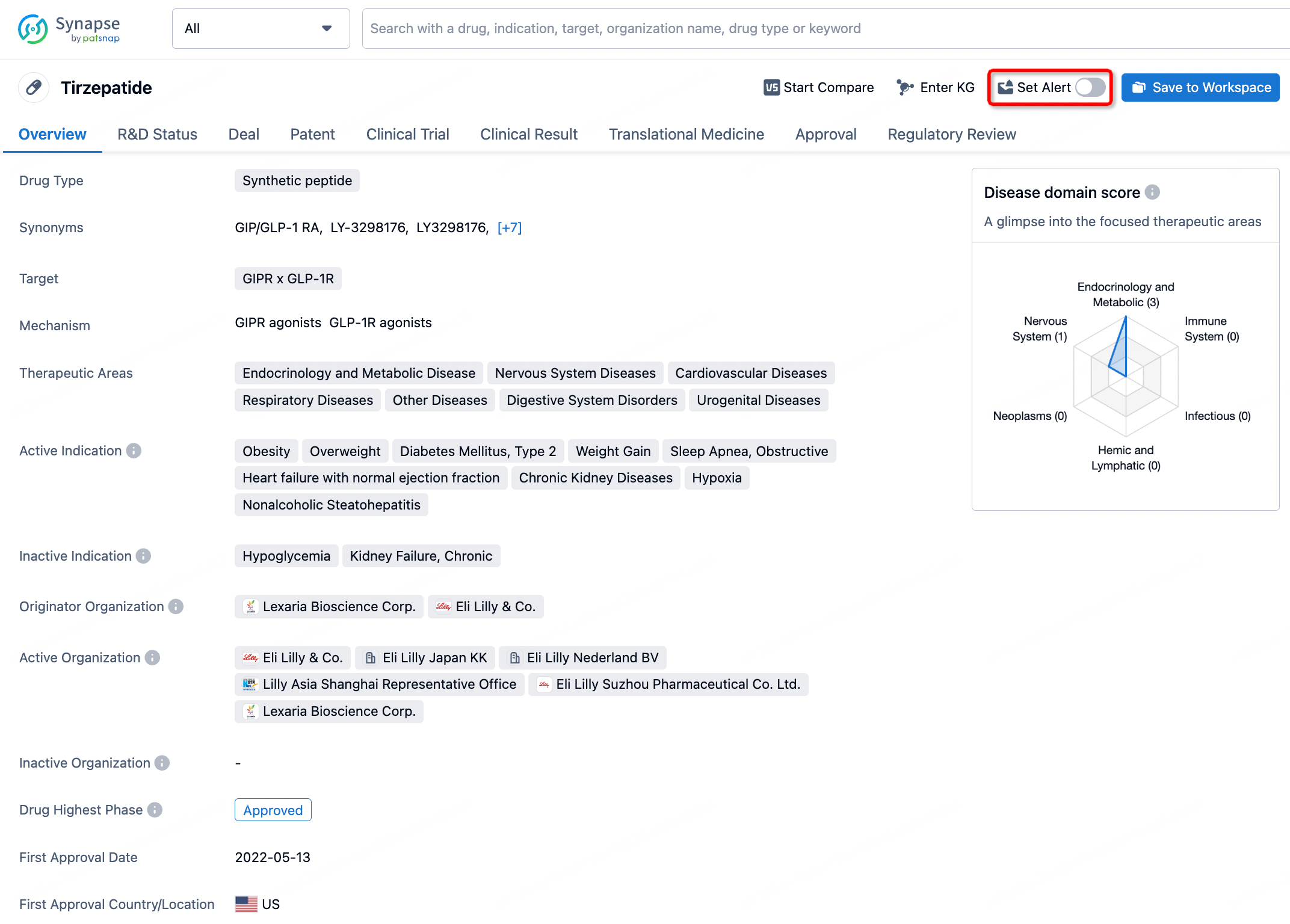
In the Synapse database, you can stay updated on the latest research and development advances of all drugs. This service is accessible anytime and anywhere, with updates available daily or weekly. Use the "Set Alert" function to stay informed. Click on the image below to embark on a brand new journey of drug discovery!


AI Agents Built for Biopharma Breakthroughs
Accelerate discovery. Empower decisions. Transform outcomes.
Get started for free today!
Accelerate Strategic R&D decision making with Synapse, PatSnap’s AI-powered Connected Innovation Intelligence Platform Built for Life Sciences Professionals.
Start your data trial now!
Synapse data is also accessible to external entities via APIs or data packages. Empower better decisions with the latest in pharmaceutical intelligence.