Request Demo
What is the mechanism of Polihexanide?
18 July 2024
Polihexanide, also known as polyhexamethylene biguanide (PHMB), is a synthetic polymer widely utilized for its potent antimicrobial activity. The mechanism by which Polihexanide exerts its effects is intricate and multifaceted, encompassing interactions with microbial cell membranes, disruption of cellular functions, and inhibition of biofilm formation.
Polihexanide is fundamentally a cationic polymer, meaning it carries a positive charge. This characteristic enables it to interact efficiently with the negatively charged components of microbial cell membranes. The initial step in its antimicrobial action involves electrostatic attraction between the positive charges on Polihexanide and the negative charges on bacterial cell membranes. This interaction results in the binding of Polihexanide to the membrane surface.
Upon binding to the membrane, Polihexanide causes destabilization and disruption of the lipid bilayer. This disruption is akin to creating pores or holes in the cell membrane, compromising its integrity. The compromised membrane loses its ability to regulate the influx and efflux of essential ions and molecules, leading to an imbalance that disrupts cellular homeostasis. Consequently, critical cellular processes are hindered, eventually leading to cell death.
Additionally, Polihexanide has been shown to interfere with various cellular functions. One such function is the inhibition of enzymatic activities essential for microbial survival. Enzymes responsible for cell wall synthesis, DNA replication, and energy production can be inhibited by Polihexanide, further contributing to its antimicrobial efficacy. By targeting these essential processes, Polihexanide ensures that the microbial cells are unable to recover from the initial membrane damage.
Another significant aspect of Polihexanide's antimicrobial mechanism is its ability to prevent and disrupt biofilm formation. Biofilms are structured communities of microorganisms encased in a self-produced extracellular matrix that offers protection against antimicrobial agents and the host immune system. Polihexanide disrupts the extracellular matrix components, preventing the establishment and maintenance of biofilms. This action is particularly crucial because biofilms are often associated with chronic infections and are notoriously difficult to eradicate.
Moreover, Polihexanide exhibits a broad spectrum of activity against various microorganisms, including bacteria, fungi, and viruses. Its effectiveness against both Gram-positive and Gram-negative bacteria, as well as its fungicidal and virucidal properties, make it a versatile antimicrobial agent. The broad-spectrum activity of Polihexanide is attributed to its ability to target universal components of microbial cells, such as the cell membrane and essential enzymes.
In clinical and practical applications, Polihexanide is widely used in wound care, disinfection, and preservation. In wound care, it is incorporated into dressings and solutions to prevent and treat infections, promoting a conducive environment for healing. Its use in disinfection spans healthcare settings, where it is employed to sanitize surfaces, instruments, and equipment, reducing the risk of healthcare-associated infections. Additionally, Polihexanide is utilized in personal care products and swimming pool treatments due to its safety profile and effectiveness in low concentrations.
In conclusion, the mechanism of Polihexanide's antimicrobial action is rooted in its ability to disrupt microbial cell membranes, inhibit essential cellular functions, and prevent biofilm formation. Its broad-spectrum activity and multifaceted mode of action make it a valuable tool in various antimicrobial applications. Understanding the underlying mechanisms of Polihexanide enhances our ability to utilize this potent agent effectively in combating infections and ensuring microbial control in diverse settings.
Polihexanide is fundamentally a cationic polymer, meaning it carries a positive charge. This characteristic enables it to interact efficiently with the negatively charged components of microbial cell membranes. The initial step in its antimicrobial action involves electrostatic attraction between the positive charges on Polihexanide and the negative charges on bacterial cell membranes. This interaction results in the binding of Polihexanide to the membrane surface.
Upon binding to the membrane, Polihexanide causes destabilization and disruption of the lipid bilayer. This disruption is akin to creating pores or holes in the cell membrane, compromising its integrity. The compromised membrane loses its ability to regulate the influx and efflux of essential ions and molecules, leading to an imbalance that disrupts cellular homeostasis. Consequently, critical cellular processes are hindered, eventually leading to cell death.
Additionally, Polihexanide has been shown to interfere with various cellular functions. One such function is the inhibition of enzymatic activities essential for microbial survival. Enzymes responsible for cell wall synthesis, DNA replication, and energy production can be inhibited by Polihexanide, further contributing to its antimicrobial efficacy. By targeting these essential processes, Polihexanide ensures that the microbial cells are unable to recover from the initial membrane damage.
Another significant aspect of Polihexanide's antimicrobial mechanism is its ability to prevent and disrupt biofilm formation. Biofilms are structured communities of microorganisms encased in a self-produced extracellular matrix that offers protection against antimicrobial agents and the host immune system. Polihexanide disrupts the extracellular matrix components, preventing the establishment and maintenance of biofilms. This action is particularly crucial because biofilms are often associated with chronic infections and are notoriously difficult to eradicate.
Moreover, Polihexanide exhibits a broad spectrum of activity against various microorganisms, including bacteria, fungi, and viruses. Its effectiveness against both Gram-positive and Gram-negative bacteria, as well as its fungicidal and virucidal properties, make it a versatile antimicrobial agent. The broad-spectrum activity of Polihexanide is attributed to its ability to target universal components of microbial cells, such as the cell membrane and essential enzymes.
In clinical and practical applications, Polihexanide is widely used in wound care, disinfection, and preservation. In wound care, it is incorporated into dressings and solutions to prevent and treat infections, promoting a conducive environment for healing. Its use in disinfection spans healthcare settings, where it is employed to sanitize surfaces, instruments, and equipment, reducing the risk of healthcare-associated infections. Additionally, Polihexanide is utilized in personal care products and swimming pool treatments due to its safety profile and effectiveness in low concentrations.
In conclusion, the mechanism of Polihexanide's antimicrobial action is rooted in its ability to disrupt microbial cell membranes, inhibit essential cellular functions, and prevent biofilm formation. Its broad-spectrum activity and multifaceted mode of action make it a valuable tool in various antimicrobial applications. Understanding the underlying mechanisms of Polihexanide enhances our ability to utilize this potent agent effectively in combating infections and ensuring microbial control in diverse settings.
How to obtain the latest development progress of all drugs?
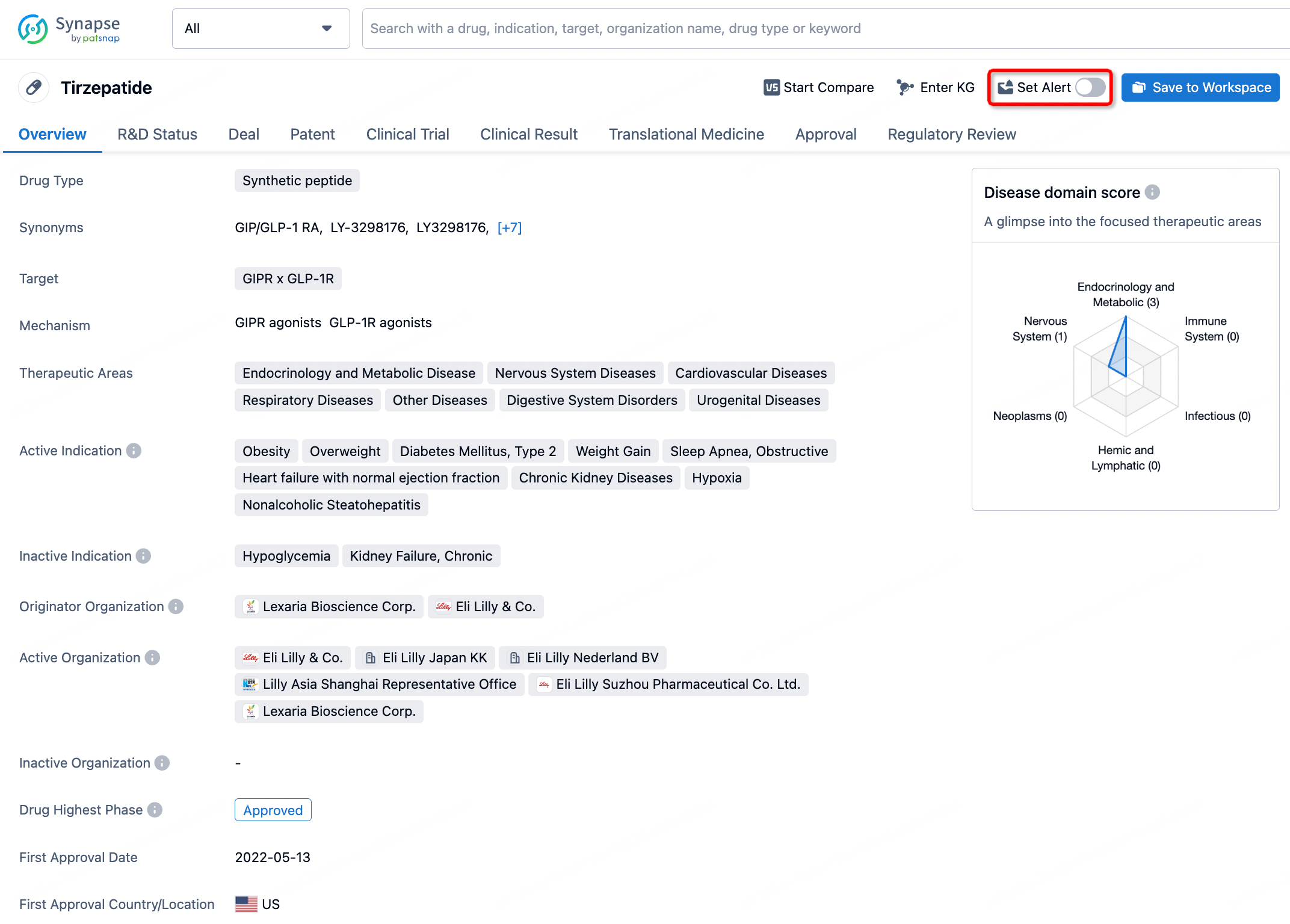
In the Synapse database, you can stay updated on the latest research and development advances of all drugs. This service is accessible anytime and anywhere, with updates available daily or weekly. Use the "Set Alert" function to stay informed. Click on the image below to embark on a brand new journey of drug discovery!

AI Agents Built for Biopharma Breakthroughs
Accelerate discovery. Empower decisions. Transform outcomes.
Get started for free today!
Accelerate Strategic R&D decision making with Synapse, PatSnap’s AI-powered Connected Innovation Intelligence Platform Built for Life Sciences Professionals.
Start your data trial now!
Synapse data is also accessible to external entities via APIs or data packages. Empower better decisions with the latest in pharmaceutical intelligence.