Request Demo
What is the mechanism of Tunlametinib?
17 July 2024
Tunlametinib is a promising therapeutic agent currently under investigation for its potential in treating various types of cancer. Its mechanism of action is primarily based on the inhibition of the mitogen-activated protein kinase (MAPK) pathway, which is a crucial signaling pathway involved in cell proliferation, differentiation, and survival.
The MAPK pathway, also known as the Ras-Raf-MEK-ERK pathway, is frequently dysregulated in cancers. It begins with the activation of the small GTPase protein Ras, which subsequently activates Raf kinases. Raf kinases then phosphorylate and activate MEK (MAPK/ERK kinase), which in turn phosphorylates and activates ERK (extracellular signal-regulated kinase). Activated ERK translocates to the nucleus, where it regulates the expression of genes involved in cell cycle progression, differentiation, and survival.
Tunlametinib specifically targets MEK1 and MEK2, the kinases responsible for the phosphorylation and activation of ERK. By inhibiting MEK1/2, Tunlametinib effectively blocks the downstream signaling cascade that leads to cell proliferation and survival. This inhibition can induce cell cycle arrest and apoptosis (programmed cell death) in cancer cells, thereby limiting tumor growth and progression.
One of the critical aspects of Tunlametinib’s mechanism is its selectivity for MEK1/2. This selectivity is crucial because it minimizes off-target effects and reduces the likelihood of adverse side effects. Tunlametinib achieves this selectivity by binding to the allosteric site of MEK1/2, distinct from the ATP-binding site targeted by many other kinase inhibitors. This unique binding mode enhances the specificity and efficacy of Tunlametinib.
Preclinical studies have shown that Tunlametinib is effective against a wide range of cancers, particularly those harboring mutations that lead to the aberrant activation of the MAPK pathway. Some notable examples include mutations in the BRAF gene, commonly found in melanoma, and mutations in the KRAS gene, frequently seen in colorectal and pancreatic cancers. By targeting these mutations, Tunlametinib can effectively inhibit the growth of these cancer cells.
Moreover, Tunlametinib has demonstrated potential in overcoming resistance to other cancer therapies. Resistance to targeted therapies often arises due to secondary mutations or compensatory activation of alternative signaling pathways. By targeting a critical node in the MAPK pathway, Tunlametinib can help to circumvent these resistance mechanisms and provide a more durable therapeutic response.
Clinical trials are currently underway to evaluate the safety and efficacy of Tunlametinib in various cancer types. Early-phase trials have shown promising results, with manageable side effects and significant antitumor activity observed in patients. As these trials progress, researchers are also investigating potential biomarkers that can predict response to Tunlametinib, which could help to identify patients most likely to benefit from this treatment.
In conclusion, Tunlametinib represents a novel and promising approach to cancer therapy by targeting the MEK1/2 kinases within the MAPK pathway. Its selective inhibition of these kinases offers a mechanism to effectively halt cancer cell proliferation and survival, particularly in tumors with MAPK pathway dysregulation. As clinical trials continue to explore its potential, Tunlametinib holds the promise of becoming an important addition to the arsenal of targeted cancer therapies.
The MAPK pathway, also known as the Ras-Raf-MEK-ERK pathway, is frequently dysregulated in cancers. It begins with the activation of the small GTPase protein Ras, which subsequently activates Raf kinases. Raf kinases then phosphorylate and activate MEK (MAPK/ERK kinase), which in turn phosphorylates and activates ERK (extracellular signal-regulated kinase). Activated ERK translocates to the nucleus, where it regulates the expression of genes involved in cell cycle progression, differentiation, and survival.
Tunlametinib specifically targets MEK1 and MEK2, the kinases responsible for the phosphorylation and activation of ERK. By inhibiting MEK1/2, Tunlametinib effectively blocks the downstream signaling cascade that leads to cell proliferation and survival. This inhibition can induce cell cycle arrest and apoptosis (programmed cell death) in cancer cells, thereby limiting tumor growth and progression.
One of the critical aspects of Tunlametinib’s mechanism is its selectivity for MEK1/2. This selectivity is crucial because it minimizes off-target effects and reduces the likelihood of adverse side effects. Tunlametinib achieves this selectivity by binding to the allosteric site of MEK1/2, distinct from the ATP-binding site targeted by many other kinase inhibitors. This unique binding mode enhances the specificity and efficacy of Tunlametinib.
Preclinical studies have shown that Tunlametinib is effective against a wide range of cancers, particularly those harboring mutations that lead to the aberrant activation of the MAPK pathway. Some notable examples include mutations in the BRAF gene, commonly found in melanoma, and mutations in the KRAS gene, frequently seen in colorectal and pancreatic cancers. By targeting these mutations, Tunlametinib can effectively inhibit the growth of these cancer cells.
Moreover, Tunlametinib has demonstrated potential in overcoming resistance to other cancer therapies. Resistance to targeted therapies often arises due to secondary mutations or compensatory activation of alternative signaling pathways. By targeting a critical node in the MAPK pathway, Tunlametinib can help to circumvent these resistance mechanisms and provide a more durable therapeutic response.
Clinical trials are currently underway to evaluate the safety and efficacy of Tunlametinib in various cancer types. Early-phase trials have shown promising results, with manageable side effects and significant antitumor activity observed in patients. As these trials progress, researchers are also investigating potential biomarkers that can predict response to Tunlametinib, which could help to identify patients most likely to benefit from this treatment.
In conclusion, Tunlametinib represents a novel and promising approach to cancer therapy by targeting the MEK1/2 kinases within the MAPK pathway. Its selective inhibition of these kinases offers a mechanism to effectively halt cancer cell proliferation and survival, particularly in tumors with MAPK pathway dysregulation. As clinical trials continue to explore its potential, Tunlametinib holds the promise of becoming an important addition to the arsenal of targeted cancer therapies.
How to obtain the latest development progress of all drugs?
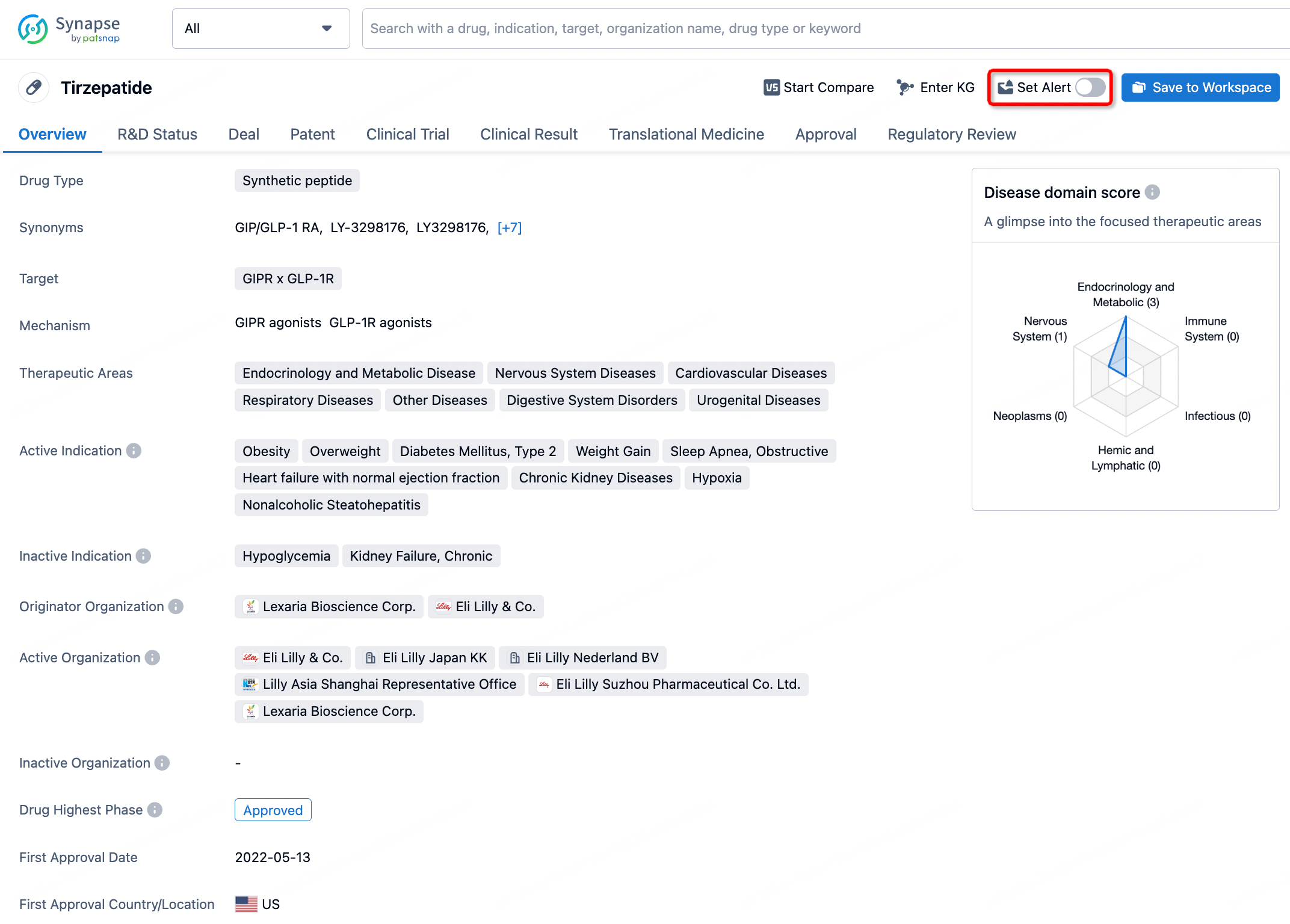
In the Synapse database, you can stay updated on the latest research and development advances of all drugs. This service is accessible anytime and anywhere, with updates available daily or weekly. Use the "Set Alert" function to stay informed. Click on the image below to embark on a brand new journey of drug discovery!


AI Agents Built for Biopharma Breakthroughs
Accelerate discovery. Empower decisions. Transform outcomes.
Get started for free today!
Accelerate Strategic R&D decision making with Synapse, PatSnap’s AI-powered Connected Innovation Intelligence Platform Built for Life Sciences Professionals.
Start your data trial now!
Synapse data is also accessible to external entities via APIs or data packages. Empower better decisions with the latest in pharmaceutical intelligence.