Request Demo
What is the mechanism of Unoprostone Isopropyl?
17 July 2024
Unoprostone isopropyl is a synthetic docosanoid, structurally related to prostaglandin F2α, that has found its primary use in the management of ocular hypertension and open-angle glaucoma. Understanding the mechanism of action of unoprostone isopropyl is crucial for appreciating its therapeutic benefits and potential side effects.
Unoprostone isopropyl primarily works by reducing intraocular pressure (IOP), a critical factor in the pathogenesis and progression of glaucoma. Elevated IOP is a major risk factor for optic nerve damage, which can lead to vision loss. By lowering IOP, unoprostone isopropyl helps to protect the optic nerve and preserve visual function.
The mechanism of action of unoprostone isopropyl involves the enhancement of fluid outflow from the eye. Specifically, it increases the outflow of aqueous humor through the trabecular meshwork and uveoscleral pathways. The trabecular meshwork is a spongy tissue located around the base of the cornea, near the ciliary body, which drains the aqueous humor from the eye. The uveoscleral pathway is an alternative drainage route for the aqueous humor.
Unoprostone isopropyl appears to exert its effect by interacting with specific receptors in the eye. It is believed to act on the FP receptor, a subtype of the prostanoid receptor, which is involved in various physiological functions, including the regulation of intraocular pressure. By binding to and activating these receptors, unoprostone isopropyl can alter the cytoskeletal structure and contractility of cells within the trabecular meshwork and uveoscleral pathways, thereby facilitating increased aqueous humor outflow and reduction in IOP.
Additionally, unoprostone isopropyl has been shown to possess neuroprotective properties. Experimental studies suggest that it can protect retinal ganglion cells from apoptosis, the process of programmed cell death. This neuroprotective effect is thought to be mediated through the activation of mitochondrial potassium channels and the prevention of calcium overload in retinal ganglion cells, both of which are crucial for cell survival under stress conditions.
Furthermore, unoprostone isopropyl may have anti-inflammatory properties, as it can inhibit the production of pro-inflammatory cytokines and other mediators. This anti-inflammatory action could contribute to its overall therapeutic effect in glaucoma, as inflammation is known to play a role in the disease process.
It is also worth noting that unoprostone isopropyl is generally well tolerated by patients. The most common side effects reported are mild to moderate and include ocular burning or stinging upon instillation, conjunctival hyperemia (redness of the eye), and increased pigmentation of the iris and periocular skin. These side effects are typically transient and do not usually necessitate discontinuation of therapy.
In summary, unoprostone isopropyl exerts its therapeutic effects in the treatment of glaucoma and ocular hypertension by enhancing the outflow of aqueous humor through the trabecular meshwork and uveoscleral pathways, thereby reducing intraocular pressure. Its action on the FP receptors, neuroprotective properties, and potential anti-inflammatory effects further contribute to its efficacy in preserving visual function and protecting the optic nerve. Despite its side effects, unoprostone isopropyl remains a valuable option in the arsenal of treatments for glaucoma and ocular hypertension.
Unoprostone isopropyl primarily works by reducing intraocular pressure (IOP), a critical factor in the pathogenesis and progression of glaucoma. Elevated IOP is a major risk factor for optic nerve damage, which can lead to vision loss. By lowering IOP, unoprostone isopropyl helps to protect the optic nerve and preserve visual function.
The mechanism of action of unoprostone isopropyl involves the enhancement of fluid outflow from the eye. Specifically, it increases the outflow of aqueous humor through the trabecular meshwork and uveoscleral pathways. The trabecular meshwork is a spongy tissue located around the base of the cornea, near the ciliary body, which drains the aqueous humor from the eye. The uveoscleral pathway is an alternative drainage route for the aqueous humor.
Unoprostone isopropyl appears to exert its effect by interacting with specific receptors in the eye. It is believed to act on the FP receptor, a subtype of the prostanoid receptor, which is involved in various physiological functions, including the regulation of intraocular pressure. By binding to and activating these receptors, unoprostone isopropyl can alter the cytoskeletal structure and contractility of cells within the trabecular meshwork and uveoscleral pathways, thereby facilitating increased aqueous humor outflow and reduction in IOP.
Additionally, unoprostone isopropyl has been shown to possess neuroprotective properties. Experimental studies suggest that it can protect retinal ganglion cells from apoptosis, the process of programmed cell death. This neuroprotective effect is thought to be mediated through the activation of mitochondrial potassium channels and the prevention of calcium overload in retinal ganglion cells, both of which are crucial for cell survival under stress conditions.
Furthermore, unoprostone isopropyl may have anti-inflammatory properties, as it can inhibit the production of pro-inflammatory cytokines and other mediators. This anti-inflammatory action could contribute to its overall therapeutic effect in glaucoma, as inflammation is known to play a role in the disease process.
It is also worth noting that unoprostone isopropyl is generally well tolerated by patients. The most common side effects reported are mild to moderate and include ocular burning or stinging upon instillation, conjunctival hyperemia (redness of the eye), and increased pigmentation of the iris and periocular skin. These side effects are typically transient and do not usually necessitate discontinuation of therapy.
In summary, unoprostone isopropyl exerts its therapeutic effects in the treatment of glaucoma and ocular hypertension by enhancing the outflow of aqueous humor through the trabecular meshwork and uveoscleral pathways, thereby reducing intraocular pressure. Its action on the FP receptors, neuroprotective properties, and potential anti-inflammatory effects further contribute to its efficacy in preserving visual function and protecting the optic nerve. Despite its side effects, unoprostone isopropyl remains a valuable option in the arsenal of treatments for glaucoma and ocular hypertension.
How to obtain the latest development progress of all drugs?
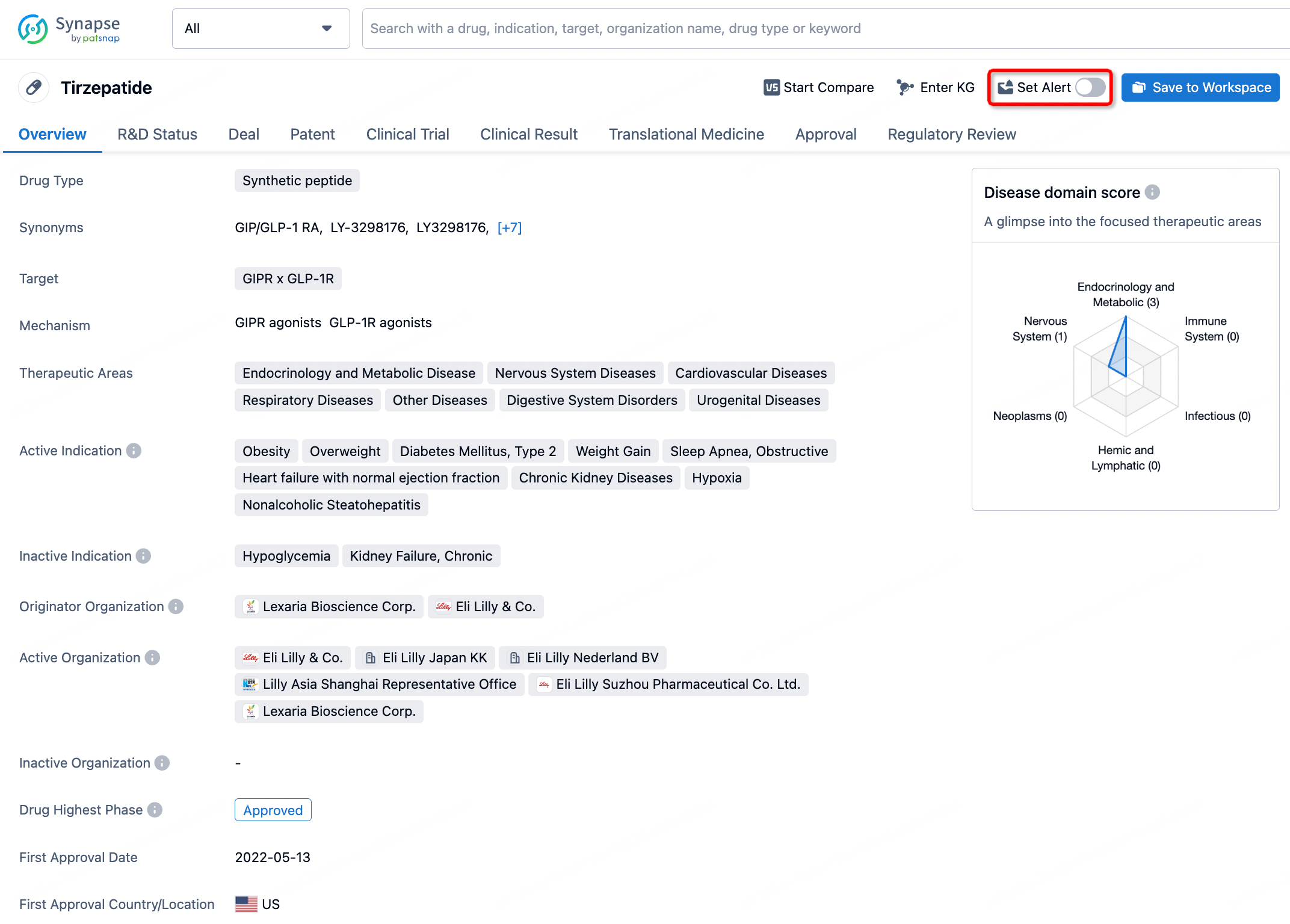
In the Synapse database, you can stay updated on the latest research and development advances of all drugs. This service is accessible anytime and anywhere, with updates available daily or weekly. Use the "Set Alert" function to stay informed. Click on the image below to embark on a brand new journey of drug discovery!


AI Agents Built for Biopharma Breakthroughs
Accelerate discovery. Empower decisions. Transform outcomes.
Get started for free today!
Accelerate Strategic R&D decision making with Synapse, PatSnap’s AI-powered Connected Innovation Intelligence Platform Built for Life Sciences Professionals.
Start your data trial now!
Synapse data is also accessible to external entities via APIs or data packages. Empower better decisions with the latest in pharmaceutical intelligence.