Request Demo
What is Ustekinumab used for?
14 June 2024
Ustekinumab is a biologic medication commonly marketed under the trade name Stelara. It is a monoclonal antibody developed by Janssen Biotech, a subsidiary of Johnson & Johnson. Designed to target specific proteins involved in inflammatory processes, Ustekinumab is widely used to treat a variety of autoimmune conditions. The primary indications for this drug include moderate to severe plaque psoriasis, psoriatic arthritis, Crohn’s disease, and ulcerative colitis. Ongoing research continues to explore its efficacy and safety in treating other inflammatory diseases.
The development of Ustekinumab was driven by a deep understanding of the immune pathways that contribute to chronic inflammatory conditions. Researchers identified the importance of certain interleukins—specifically, interleukin-12 (IL-12) and interleukin-23 (IL-23)—in the pathogenesis of these diseases. Ustekinumab works by targeting these interleukins, thereby modulating the immune response and alleviating symptoms. Since its introduction, Ustekinumab has shown impressive results in clinical trials and has become a cornerstone in the management of autoimmune disorders.
Ustekinumab’s mechanism of action is both targeted and sophisticated. It works by binding to the p40 protein subunit shared by interleukins IL-12 and IL-23. By inhibiting these interleukins, Ustekinumab disrupts the signaling pathways that lead to inflammation and the subsequent immune response. IL-12 and IL-23 are cytokines involved in the activation and differentiation of T-cells, which are crucial for the body’s immune response. In conditions like psoriasis and Crohn’s disease, these cytokines are overproduced, leading to chronic inflammation and tissue damage. By blocking these cytokines, Ustekinumab effectively reduces inflammation, thereby providing relief from symptoms and improving the patient’s quality of life.
The inhibition of IL-12 and IL-23 by Ustekinumab also affects other downstream cytokines and immune cells, creating a broader anti-inflammatory effect. This mechanism underscores the drug's efficacy in treating multiple inflammatory conditions, each with its own unique pathology but sharing a common inflammatory cascade. Clinical studies have demonstrated that Ustekinumab not only reduces symptoms but also helps achieve and maintain remission in conditions like Crohn’s disease and ulcerative colitis.
Administering Ustekinumab involves specific methods designed to optimize its efficacy while minimizing inconvenience to the patient. The drug is typically administered via subcutaneous injection or intravenous infusion, depending on the condition being treated. For conditions like psoriasis and psoriatic arthritis, Ustekinumab is usually given as a subcutaneous injection. The initial dose is followed by a second dose four weeks later, and then maintenance doses are administered every 12 weeks. For Crohn’s disease and ulcerative colitis, the initial dose is given via intravenous infusion, followed by subcutaneous injections every eight weeks.
The onset of action for Ustekinumab can vary depending on the condition being treated. In plaque psoriasis, patients can often see improvement in their symptoms within a few weeks of starting treatment. For Crohn’s disease and ulcerative colitis, it may take several weeks to a few months to notice a significant improvement. The long dosing intervals are one of the advantages of Ustekinumab, offering convenience for patients and ensuring consistent therapeutic effects.
As with any medication, Ustekinumab comes with potential side effects and contraindications that must be considered. Common side effects include upper respiratory infections, headache, and fatigue. Some patients may experience injection site reactions such as redness, swelling, or pain. While these side effects are generally mild and manageable, there are more serious risks associated with Ustekinumab. These include an increased risk of infections due to the immune-suppressing effects of the drug. Patients should be monitored for signs of tuberculosis, and screening for latent TB is recommended before starting treatment. Other serious side effects can include hypersensitivity reactions, which may manifest as hives, difficulty breathing, or swelling of the face and throat.
Patients with a history of malignancy or those who are at increased risk for cancer should use Ustekinumab with caution, as there is some concern that long-term use of immunosuppressive agents could increase the risk of developing malignancies. Additionally, Ustekinumab is contraindicated in individuals with a history of severe hypersensitivity to the drug or any of its components. Pregnant and breastfeeding women should discuss the risks and benefits of Ustekinumab with their healthcare provider, as the safety of the drug in these populations has not been fully established.
The interaction of Ustekinumab with other drugs is an important consideration for patients undergoing treatment. While Ustekinumab is generally well-tolerated with minimal drug-drug interactions, there are some medications that could potentially affect its efficacy or safety. For example, concomitant use of other immunosuppressive agents, such as methotrexate or corticosteroids, could increase the risk of infections. Non-biologic disease-modifying antirheumatic drugs (DMARDs) are sometimes used in combination with Ustekinumab, but this should be done under careful medical supervision.
Vaccinations are another area of concern for patients on Ustekinumab. Live vaccines should be avoided during treatment and for a certain period after the last dose, as the immune-suppressing effects of Ustekinumab could reduce the efficacy of the vaccine or increase the risk of developing the disease it aims to prevent. Inactivated vaccines, on the other hand, are generally considered safe and can be administered as needed.
In summary, Ustekinumab represents a significant advancement in the treatment of autoimmune and inflammatory diseases. Its targeted mechanism of action, convenient dosing schedule, and broad efficacy make it a valuable option for many patients. However, like all medications, it comes with potential risks and side effects that must be carefully managed. By understanding these factors and working closely with healthcare providers, patients can achieve optimal outcomes with Ustekinumab. Ongoing research continues to expand our understanding of this drug, promising even more effective and safer treatments for those suffering from chronic inflammatory conditions.
The development of Ustekinumab was driven by a deep understanding of the immune pathways that contribute to chronic inflammatory conditions. Researchers identified the importance of certain interleukins—specifically, interleukin-12 (IL-12) and interleukin-23 (IL-23)—in the pathogenesis of these diseases. Ustekinumab works by targeting these interleukins, thereby modulating the immune response and alleviating symptoms. Since its introduction, Ustekinumab has shown impressive results in clinical trials and has become a cornerstone in the management of autoimmune disorders.
Ustekinumab’s mechanism of action is both targeted and sophisticated. It works by binding to the p40 protein subunit shared by interleukins IL-12 and IL-23. By inhibiting these interleukins, Ustekinumab disrupts the signaling pathways that lead to inflammation and the subsequent immune response. IL-12 and IL-23 are cytokines involved in the activation and differentiation of T-cells, which are crucial for the body’s immune response. In conditions like psoriasis and Crohn’s disease, these cytokines are overproduced, leading to chronic inflammation and tissue damage. By blocking these cytokines, Ustekinumab effectively reduces inflammation, thereby providing relief from symptoms and improving the patient’s quality of life.
The inhibition of IL-12 and IL-23 by Ustekinumab also affects other downstream cytokines and immune cells, creating a broader anti-inflammatory effect. This mechanism underscores the drug's efficacy in treating multiple inflammatory conditions, each with its own unique pathology but sharing a common inflammatory cascade. Clinical studies have demonstrated that Ustekinumab not only reduces symptoms but also helps achieve and maintain remission in conditions like Crohn’s disease and ulcerative colitis.
Administering Ustekinumab involves specific methods designed to optimize its efficacy while minimizing inconvenience to the patient. The drug is typically administered via subcutaneous injection or intravenous infusion, depending on the condition being treated. For conditions like psoriasis and psoriatic arthritis, Ustekinumab is usually given as a subcutaneous injection. The initial dose is followed by a second dose four weeks later, and then maintenance doses are administered every 12 weeks. For Crohn’s disease and ulcerative colitis, the initial dose is given via intravenous infusion, followed by subcutaneous injections every eight weeks.
The onset of action for Ustekinumab can vary depending on the condition being treated. In plaque psoriasis, patients can often see improvement in their symptoms within a few weeks of starting treatment. For Crohn’s disease and ulcerative colitis, it may take several weeks to a few months to notice a significant improvement. The long dosing intervals are one of the advantages of Ustekinumab, offering convenience for patients and ensuring consistent therapeutic effects.
As with any medication, Ustekinumab comes with potential side effects and contraindications that must be considered. Common side effects include upper respiratory infections, headache, and fatigue. Some patients may experience injection site reactions such as redness, swelling, or pain. While these side effects are generally mild and manageable, there are more serious risks associated with Ustekinumab. These include an increased risk of infections due to the immune-suppressing effects of the drug. Patients should be monitored for signs of tuberculosis, and screening for latent TB is recommended before starting treatment. Other serious side effects can include hypersensitivity reactions, which may manifest as hives, difficulty breathing, or swelling of the face and throat.
Patients with a history of malignancy or those who are at increased risk for cancer should use Ustekinumab with caution, as there is some concern that long-term use of immunosuppressive agents could increase the risk of developing malignancies. Additionally, Ustekinumab is contraindicated in individuals with a history of severe hypersensitivity to the drug or any of its components. Pregnant and breastfeeding women should discuss the risks and benefits of Ustekinumab with their healthcare provider, as the safety of the drug in these populations has not been fully established.
The interaction of Ustekinumab with other drugs is an important consideration for patients undergoing treatment. While Ustekinumab is generally well-tolerated with minimal drug-drug interactions, there are some medications that could potentially affect its efficacy or safety. For example, concomitant use of other immunosuppressive agents, such as methotrexate or corticosteroids, could increase the risk of infections. Non-biologic disease-modifying antirheumatic drugs (DMARDs) are sometimes used in combination with Ustekinumab, but this should be done under careful medical supervision.
Vaccinations are another area of concern for patients on Ustekinumab. Live vaccines should be avoided during treatment and for a certain period after the last dose, as the immune-suppressing effects of Ustekinumab could reduce the efficacy of the vaccine or increase the risk of developing the disease it aims to prevent. Inactivated vaccines, on the other hand, are generally considered safe and can be administered as needed.
In summary, Ustekinumab represents a significant advancement in the treatment of autoimmune and inflammatory diseases. Its targeted mechanism of action, convenient dosing schedule, and broad efficacy make it a valuable option for many patients. However, like all medications, it comes with potential risks and side effects that must be carefully managed. By understanding these factors and working closely with healthcare providers, patients can achieve optimal outcomes with Ustekinumab. Ongoing research continues to expand our understanding of this drug, promising even more effective and safer treatments for those suffering from chronic inflammatory conditions.
How to obtain the latest development progress of all drugs?
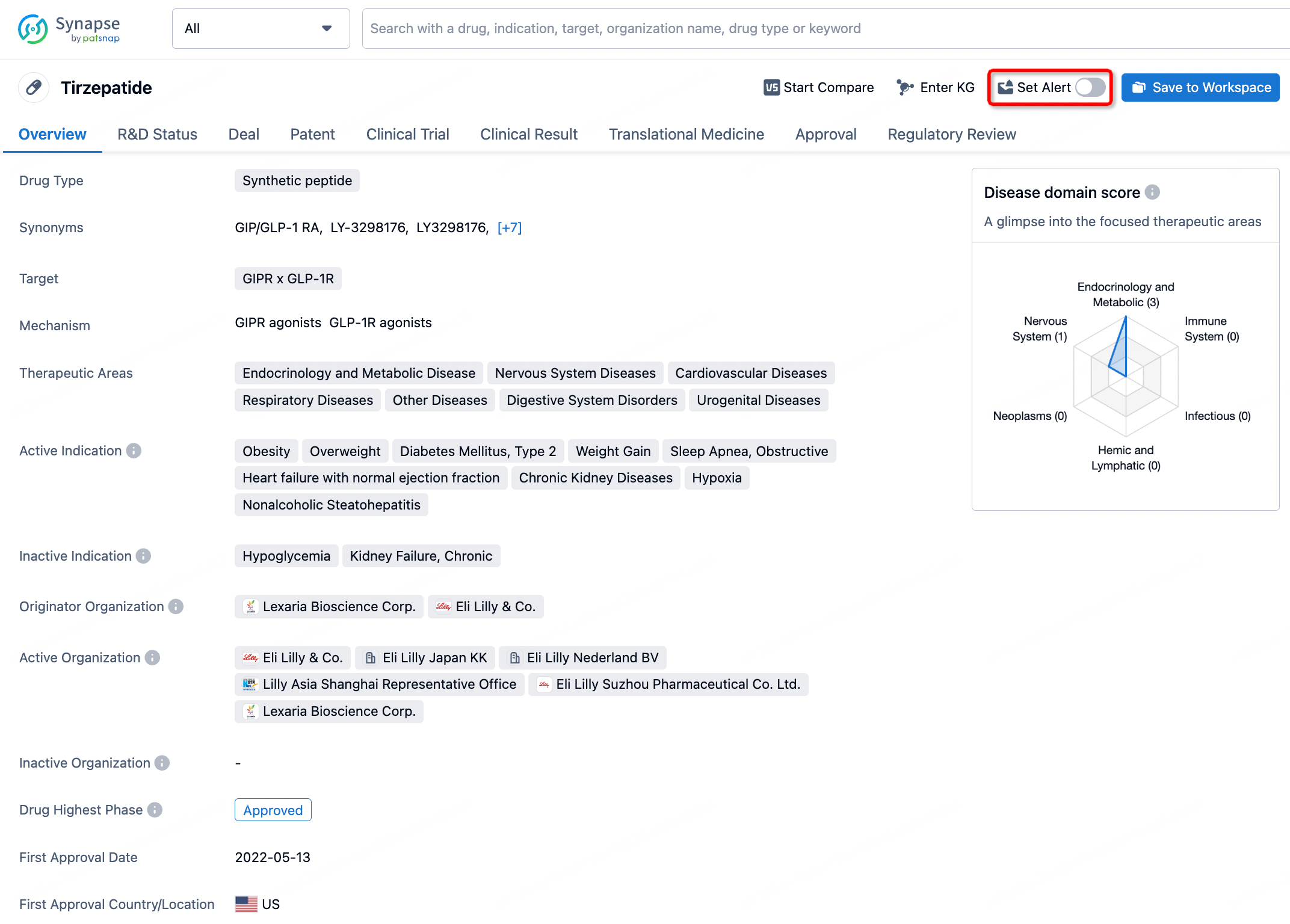
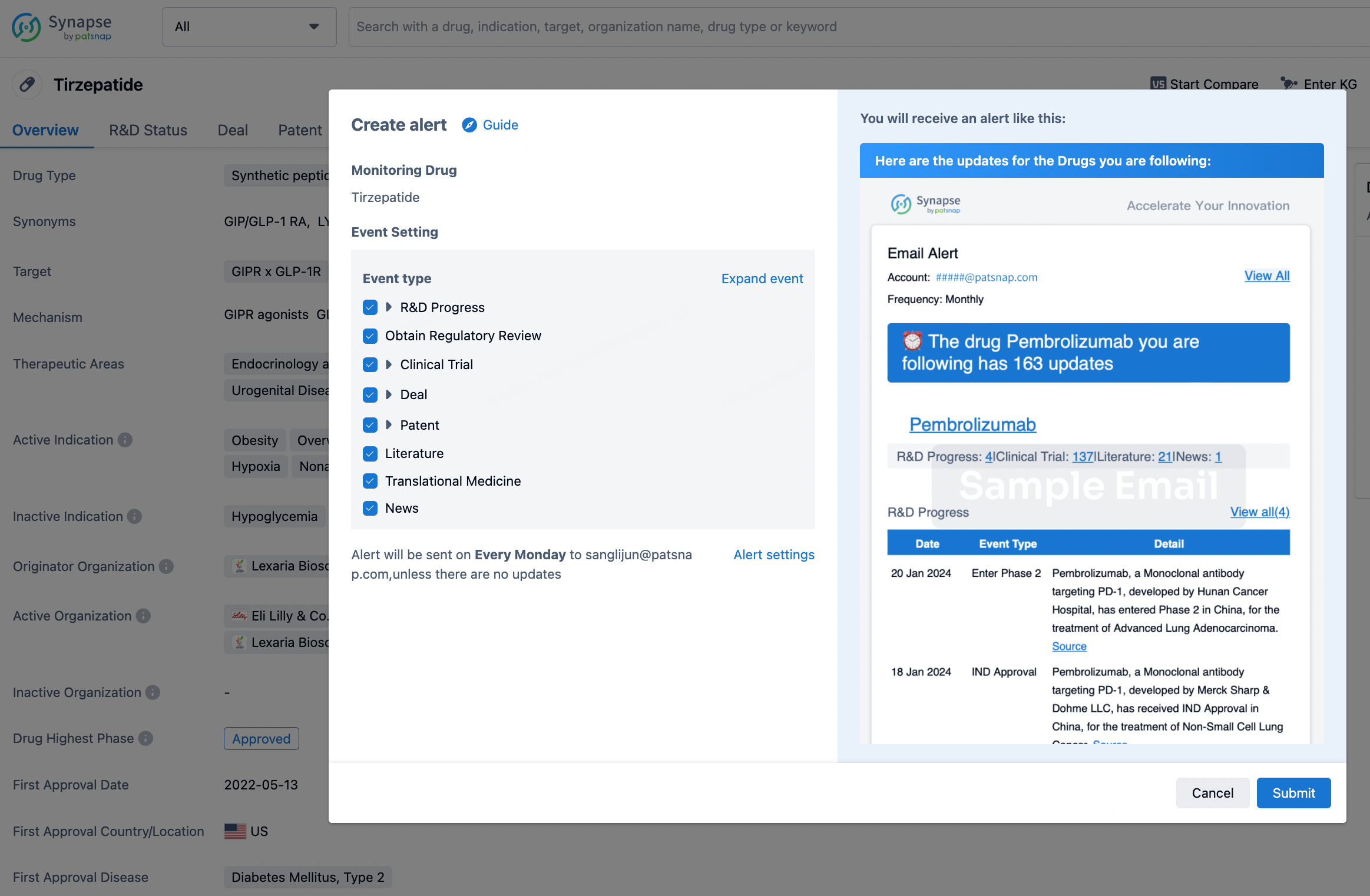
In the Synapse database, you can stay updated on the latest research and development advances of all drugs. This service is accessible anytime and anywhere, with updates available daily or weekly. Use the "Set Alert" function to stay informed. Click on the image below to embark on a brand new journey of drug discovery!
AI Agents Built for Biopharma Breakthroughs
Accelerate discovery. Empower decisions. Transform outcomes.
Get started for free today!
Accelerate Strategic R&D decision making with Synapse, PatSnap’s AI-powered Connected Innovation Intelligence Platform Built for Life Sciences Professionals.
Start your data trial now!
Synapse data is also accessible to external entities via APIs or data packages. Empower better decisions with the latest in pharmaceutical intelligence.