Request Demo
What is Yogliptin used for?
28 June 2024
Yogliptin is an emerging pharmaceutical compound primarily being explored for its potential benefits in managing type 2 diabetes mellitus (T2DM). It belongs to a class of drugs known as dipeptidyl peptidase-4 (DPP-4) inhibitors, which are designed to regulate blood sugar levels. Yogliptin's development has been the collaborative effort of various research institutions and pharmaceutical companies committed to advancing diabetes treatment options.
The discovery and development of Yogliptin have been driven by the need to find more effective and safer treatments for diabetes. The drug is currently undergoing pre-clinical and early clinical trials to evaluate its efficacy and safety profile. Researchers are particularly interested in its long-term effects on blood glucose levels, its impact on pancreatic function, and its potential side effects.
Yogliptin acts by inhibiting the DPP-4 enzyme, which plays a significant role in glucose metabolism. Normally, the DPP-4 enzyme breaks down incretin hormones, such as glucagon-like peptide-1 (GLP-1) and glucose-dependent insulinotropic polypeptide (GIP). These hormones are released after a meal and stimulate the release of insulin from the pancreas, while also inhibiting the release of glucagon. By inhibiting the DPP-4 enzyme, Yogliptin prolongs the activity of these incretin hormones, leading to increased insulin secretion and decreased glucagon levels in the blood. This results in better regulation of blood glucose levels, especially after meals.
The enhancement of incretin activity also has additional benefits, such as promoting satiety and reducing appetite, which can be advantageous for individuals with T2DM who struggle with weight management. Furthermore, the preservation of beta-cell function in the pancreas, which is critical for insulin production, is another potential benefit of DPP-4 inhibitors like Yogliptin.
Yogliptin is primarily indicated for the treatment of type 2 diabetes mellitus. This condition is characterized by insulin resistance and progressive beta-cell dysfunction, leading to chronic hyperglycemia. Managing blood glucose levels effectively is crucial to preventing complications associated with diabetes, such as cardiovascular diseases, neuropathy, nephropathy, and retinopathy.
Yogliptin may be used as a monotherapy for patients who are unable to achieve adequate glycemic control through diet and exercise alone. Additionally, it can be prescribed in combination with other antidiabetic agents, such as metformin, sulfonylureas, or insulin, to enhance its therapeutic effects. The fixed-dose combination of Yogliptin with other antidiabetic medications is also being explored to simplify the treatment regimen for patients and improve adherence.
The drug's safety profile is another important aspect of its development. Early studies indicate that Yogliptin is generally well-tolerated, with a low incidence of hypoglycemia, which is a common side effect of many antidiabetic drugs. However, as with any medication, there is a need for comprehensive clinical trials to fully understand its safety and efficacy across diverse patient populations.
In addition to its primary indication for T2DM, researchers are also investigating the potential benefits of Yogliptin in other metabolic disorders. There is growing interest in its impact on non-alcoholic fatty liver disease (NAFLD) and obesity, given the role of incretin hormones in metabolic regulation. These investigations are still in the early stages, but they highlight the broader therapeutic potential of Yogliptin beyond diabetes management.
In conclusion, Yogliptin represents a promising addition to the arsenal of treatments for type 2 diabetes mellitus. Its mechanism of action as a DPP-4 inhibitor offers significant benefits in regulating blood glucose levels and preserving pancreatic function. While it is still under clinical investigation, the preliminary results are encouraging, and further research will help to establish its role in diabetes care and possibly other metabolic conditions. As the global burden of diabetes continues to rise, innovative treatments like Yogliptin are essential for improving patient outcomes and quality of life.
The discovery and development of Yogliptin have been driven by the need to find more effective and safer treatments for diabetes. The drug is currently undergoing pre-clinical and early clinical trials to evaluate its efficacy and safety profile. Researchers are particularly interested in its long-term effects on blood glucose levels, its impact on pancreatic function, and its potential side effects.
Yogliptin acts by inhibiting the DPP-4 enzyme, which plays a significant role in glucose metabolism. Normally, the DPP-4 enzyme breaks down incretin hormones, such as glucagon-like peptide-1 (GLP-1) and glucose-dependent insulinotropic polypeptide (GIP). These hormones are released after a meal and stimulate the release of insulin from the pancreas, while also inhibiting the release of glucagon. By inhibiting the DPP-4 enzyme, Yogliptin prolongs the activity of these incretin hormones, leading to increased insulin secretion and decreased glucagon levels in the blood. This results in better regulation of blood glucose levels, especially after meals.
The enhancement of incretin activity also has additional benefits, such as promoting satiety and reducing appetite, which can be advantageous for individuals with T2DM who struggle with weight management. Furthermore, the preservation of beta-cell function in the pancreas, which is critical for insulin production, is another potential benefit of DPP-4 inhibitors like Yogliptin.
Yogliptin is primarily indicated for the treatment of type 2 diabetes mellitus. This condition is characterized by insulin resistance and progressive beta-cell dysfunction, leading to chronic hyperglycemia. Managing blood glucose levels effectively is crucial to preventing complications associated with diabetes, such as cardiovascular diseases, neuropathy, nephropathy, and retinopathy.
Yogliptin may be used as a monotherapy for patients who are unable to achieve adequate glycemic control through diet and exercise alone. Additionally, it can be prescribed in combination with other antidiabetic agents, such as metformin, sulfonylureas, or insulin, to enhance its therapeutic effects. The fixed-dose combination of Yogliptin with other antidiabetic medications is also being explored to simplify the treatment regimen for patients and improve adherence.
The drug's safety profile is another important aspect of its development. Early studies indicate that Yogliptin is generally well-tolerated, with a low incidence of hypoglycemia, which is a common side effect of many antidiabetic drugs. However, as with any medication, there is a need for comprehensive clinical trials to fully understand its safety and efficacy across diverse patient populations.
In addition to its primary indication for T2DM, researchers are also investigating the potential benefits of Yogliptin in other metabolic disorders. There is growing interest in its impact on non-alcoholic fatty liver disease (NAFLD) and obesity, given the role of incretin hormones in metabolic regulation. These investigations are still in the early stages, but they highlight the broader therapeutic potential of Yogliptin beyond diabetes management.
In conclusion, Yogliptin represents a promising addition to the arsenal of treatments for type 2 diabetes mellitus. Its mechanism of action as a DPP-4 inhibitor offers significant benefits in regulating blood glucose levels and preserving pancreatic function. While it is still under clinical investigation, the preliminary results are encouraging, and further research will help to establish its role in diabetes care and possibly other metabolic conditions. As the global burden of diabetes continues to rise, innovative treatments like Yogliptin are essential for improving patient outcomes and quality of life.
How to obtain the latest development progress of all drugs?
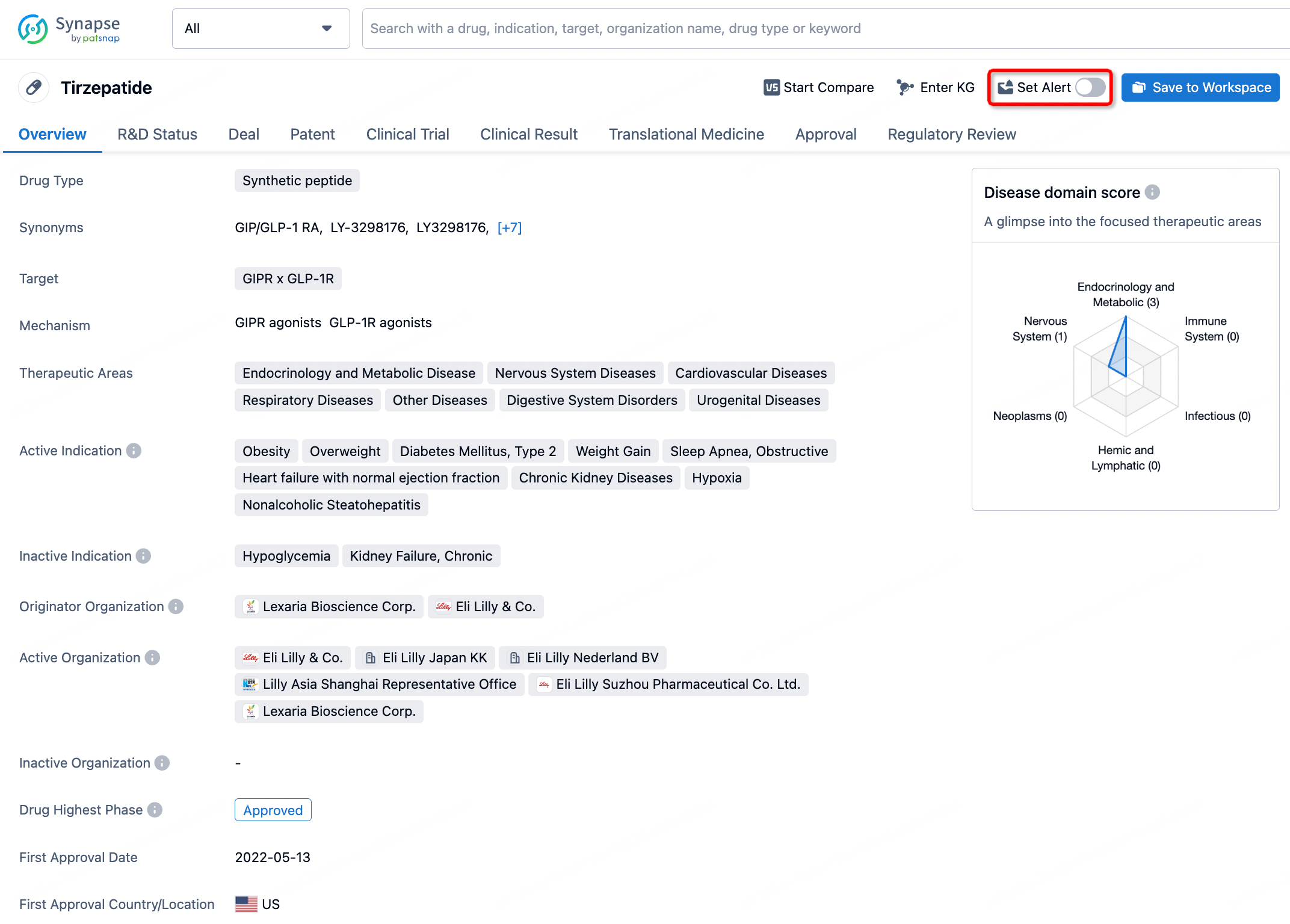
In the Synapse database, you can stay updated on the latest research and development advances of all drugs. This service is accessible anytime and anywhere, with updates available daily or weekly. Use the "Set Alert" function to stay informed. Click on the image below to embark on a brand new journey of drug discovery!

AI Agents Built for Biopharma Breakthroughs
Accelerate discovery. Empower decisions. Transform outcomes.
Get started for free today!
Accelerate Strategic R&D decision making with Synapse, PatSnap’s AI-powered Connected Innovation Intelligence Platform Built for Life Sciences Professionals.
Start your data trial now!
Synapse data is also accessible to external entities via APIs or data packages. Empower better decisions with the latest in pharmaceutical intelligence.