MAPK14 Target Evaluation Report: Biology, Validation, Competition, IP, and R&D Strategy
This MAPK14 target evaluation report was generated from PatSnap Life Sciences MCP data workflows, combining Target & Disease MCP Server outputs for biology and disease context with Clinical Trials MCP Server checks for clinical development and competitive signals.
The analysis below is structured as a decision-ready target evaluation view: biology, validation evidence, clinical competition, IP considerations, and R&D recommendation.
Executive View
MAPK14, commonly known as p38 alpha, is a stress- and cytokine-responsive kinase with a long translational history. Target & Disease MCP shows 99 drug records, 32 development-stage records, and 71 disease associations; Clinical Trials MCP returned 84 related trials, indicating an established but mixed clinical landscape.
99 Tracked drugs 99 drug records were returned by Target & Disease MCP for this target. | 32 Development-stage drugs 32 development records indicate the active R&D footprint. | 71 Linked diseases 71 disease associations frame the indication search space. | 70 Target score 70/100 reflects the combined biology, validation, competition and differentiation view. |
Biology and Disease Rationale
Target & Disease MCP describes MAPK14 as one of the p38 MAPKs that responds to pro-inflammatory cytokines and physical stress, activating transcription factors and downstream kinases that regulate gene expression, inflammation, protein turnover, autophagy, and receptor trafficking.
Mechanistic anchor The core rationale is to modulate stress-response and inflammatory signaling. Depending on disease context, p38 alpha inhibition may affect cytokine biology, neuronal stress responses, tissue injury, and inflammatory remodeling. | Disease logic The 71 disease associations point to a more focused footprint than pan-oncology MAPK targets. Attractive settings include inflammatory disease, neurodegeneration, stroke recovery, and selected oncology or cachexia hypotheses where p38 biology is measurable. | Translational caveat The historical challenge is clinical translation. p38 alpha biology is compelling, but broad anti-inflammatory inhibition has often struggled with efficacy durability and tolerability. |
Validation Evidence
Clinical Trials MCP found 84 related trials. Examples include neflamapimod studies in primary progressive aphasia and motor recovery after acute ischemic stroke, plus Phase 1 pharmacokinetic studies for newer p38-directed agents.
Biology confidence 80/100
Clinical validation 68/100
Competitive intensity 62/100
Differentiation room 66/100
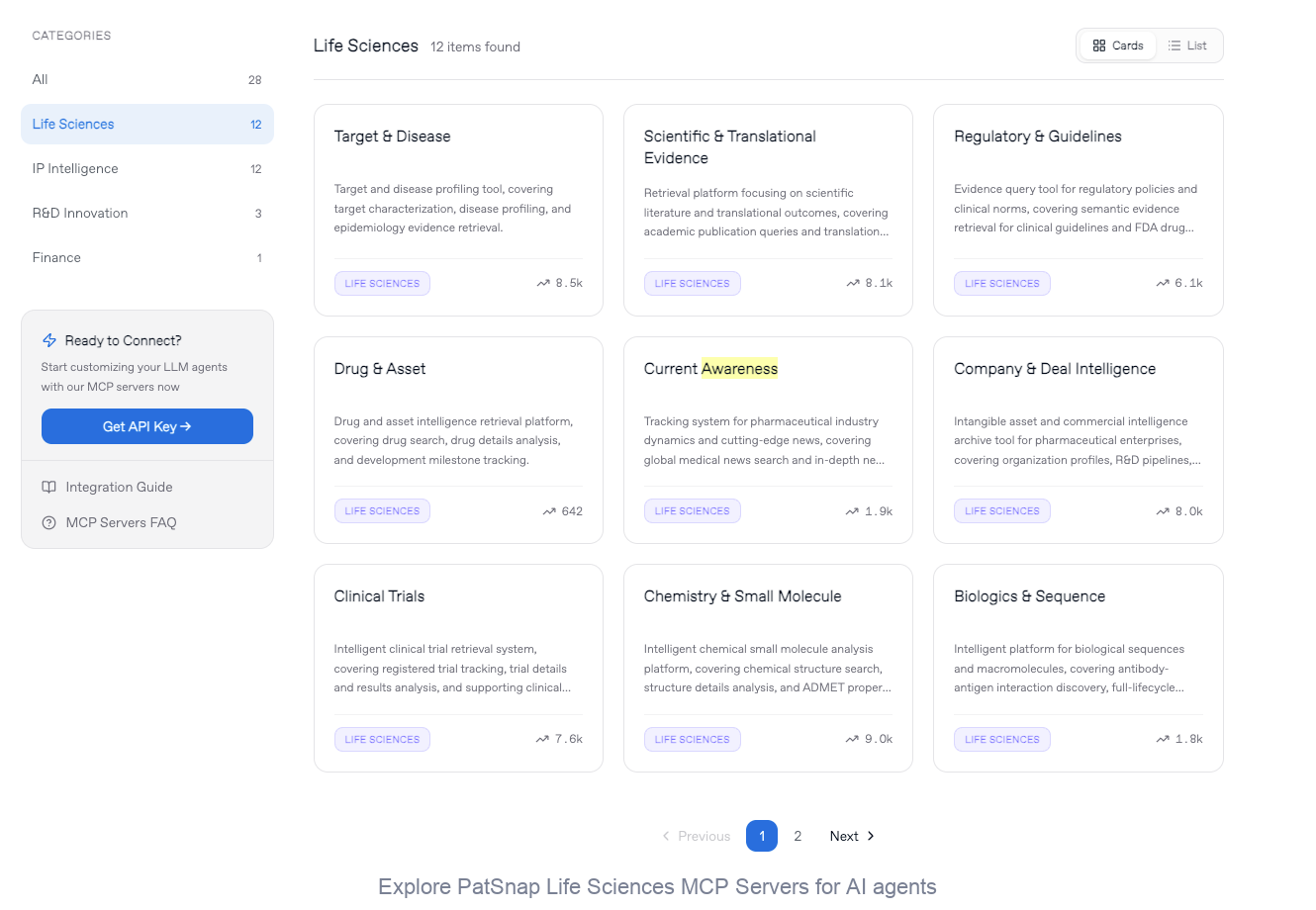
Explore PatSnap Life Sciences MCP Servers for AI agents
Clinical and Competitive Landscape
Competition is moderate and spread across neurology, inflammation, and stress-response indications. Many prior programs create useful benchmarks but also raise expectations for sharper patient selection.
Known development examples MCP-returned trial examples include oral neflamapimod in primary progressive aphasia and acute ischemic stroke recovery. | Competitive implication New MAPK14 programs should compete on indication precision, CNS exposure where relevant, dosing window, and pharmacodynamic proof rather than broad p38 inhibition alone. | What to query next Use Clinical Trials MCP to segment MAPK14 trials by indication, phase, and molecule, then compare endpoints and translational biomarkers. |
IP and Freedom-to-Operate Lens
IP opportunities include selective inhibitors, CNS-optimized compounds, stress-response biomarkers, dosing regimens, and indication-specific method-of-use claims.
R&D Recommendation
MAPK14 is worth evaluating where the disease hypothesis is tight and biomarkers can demonstrate target engagement. It is less attractive as a broad anti-inflammatory bet.

Start building target evaluation agents with PatSnap Life Sciences MCP Servers

